Showing posts with label technology industry. Show all posts

Friday, August 14, 2026

Trump Supports Intel to Expand High-Tech Chip Manufacturing in America

Featured Image

The Semiconductor Landscape and Intel's Role

In the world of semiconductors, Intel has long held a dominant position. Its chips are integral to desktop computers, laptops, and servers that power businesses and homes globally. However, as the tech industry evolves, particularly with the rise of mobile computing, Intel’s influence has waned. Companies like Qualcomm have taken the lead in this space, leveraging advanced technologies tailored for mobile devices.

Despite this shift, the Trump administration has shown a strong interest in supporting Intel. A recent report suggests that the government is considering ways to assist the company in producing advanced chips within the United States. This move aligns with broader efforts to bring manufacturing back to American soil, especially in high-tech industries where global competition is fierce.

Government Support and Strategic Interest

Unlike Qualcomm, which relies on external foundries like TSMC for chip production, Intel possesses its own fabrication facilities. This unique position makes it a key player in the U.S. semiconductor ecosystem. According to the report, the government’s interest in Intel goes beyond mere financial stakes. It also aims to strengthen the company’s cutting-edge processes, such as the 18A technology, which represents the next frontier in chip manufacturing.

Intel has made it clear that significant government incentives would be necessary for it to remain competitive against industry leaders like TSMC. This development marks a notable shift in the administration’s approach, highlighting a strategic investment in domestic semiconductor capabilities.

A Shift in Tone and Public Statements

The relationship between Trump and Intel’s CEO, Lip-Bu Tan, has seen some fluctuations. Just days before, Trump publicly criticized Tan, suggesting he should be fired. However, the tone quickly changed, with Trump praising the CEO shortly after. This change in stance underscores the importance of Intel in the administration’s broader economic strategy.

Tariffs and Their Implications

In addition to supporting Intel, Trump has announced plans to impose a 100% tariff on imported semiconductors. This move is part of an effort to encourage both domestic and foreign companies to establish more manufacturing operations in the U.S. Major players like Samsung and TSMC have responded by increasing their investments in American facilities.

However, the impact of these tariffs is not without challenges. While they may help companies avoid import duties, the cost of labor and manufacturing in the U.S. can be significantly higher compared to countries like Taiwan and China. This could lead to increased production costs, potentially offsetting the benefits of avoiding tariffs.

The Broader Implications

The push to bolster domestic semiconductor production reflects a larger trend in U.S. economic policy. As global supply chains become increasingly complex, ensuring national security and technological leadership is a top priority. By supporting companies like Intel, the administration aims to reduce reliance on foreign manufacturing and strengthen the domestic tech sector.

This initiative also highlights the importance of innovation and investment in advanced technologies. With the demand for semiconductors growing across various industries, from consumer electronics to artificial intelligence, the need for a robust domestic supply chain is more critical than ever.

Conclusion

The support for Intel and the imposition of tariffs on imported semiconductors signal a strategic shift in how the U.S. approaches its semiconductor industry. While there are challenges to overcome, the potential benefits of a stronger domestic manufacturing base could be substantial. As the landscape continues to evolve, the role of companies like Intel will be crucial in shaping the future of technology in the United States.

Thursday, August 6, 2026

QCOM Surges in V2X Market: A Growth Game-Changer?

Featured Image

Qualcomm's Strategic Move in the V2X Market

Qualcomm Incorporated has been steadily increasing its presence in the vehicle-to-everything (V2X) communication systems market. This growth has been fueled by the acquisition of Autotalks, a company known for its expertise in V2X technologies. The V2X system is becoming a crucial component in building safer and more efficient traffic systems. It enables communication between vehicles, pedestrians, and connected roadway infrastructure, creating a real-time information-sharing network that can alert drivers to various road hazards, weather conditions, and traffic signals. This technology also enhances advanced driver-assistance systems (ADAS) and automated driving features.

The C-V2X (Cellular Vehicle-to-Everything) technology has significantly improved ADAS by allowing vehicles to exchange real-time data with other vehicles (V2V), infrastructure (V2I), and pedestrians (V2P). As 5G adoption accelerates, the connectivity infrastructure required for V2X is becoming more robust. Qualcomm is capitalizing on this trend by expanding its Snapdragon Digital Chassis product portfolio. The integration of C-V2X capabilities into broader platforms and solutions, including the Snapdragon Digital Chassis, provides a comprehensive connected car experience. The successful integration of Autotalks has further strengthened Qualcomm’s position in this space.

Global Standards and Comprehensive Solutions

Autotalks’ V2X solutions are compliant with global communication standards such as DSRC (Dedicated Short-Range Communications) and C-V2X. With access to Autotalks’ extensive V2X expertise and technology, Qualcomm is able to offer a wide range of automotive-qualified global V2X solutions suitable for installation in vehicles, as well as 2-wheelers and roadside infrastructure. The company’s V2X chipsets provide production-ready standalone solutions that are specifically designed for global applications, making direct communication more widespread.

Other Tech Firms in the ADAS Market

NVIDIA Corporation is another major player in the ADAS market. The company offers a scalable AI computing platform tailored for ADAS and autonomous vehicles through its NVIDIA Drive initiative. This platform uses AI-powered perception via deep neural networks for object detection, lane recognition, and path planning. It also includes high-performance GPUs and software stacks for localization and control. The NVIDIA DRIVE Thor platform combines ADAS, cockpit, and autonomous driving capabilities into a single SoC. NVIDIA is collaborating with over 320 automakers, tier-one suppliers, and other industry players to develop and deploy AI systems for self-driving vehicles. Its focus on incorporating AI into the cockpit for infotainment systems is helping it grow its autonomous driving revenues.

Intel Corporation has also made significant strides in the ADAS market through the acquisition of Mobileye. This move has allowed Intel to quickly enter the autonomous car technology market, which is currently dominated by companies like NVIDIA and Qualcomm. Mobileye brings technologies related to cameras, in-car networking, sensor chips, roadway mapping, cloud software, machine learning, and data management. Intel envisions Mobileye as a key revenue generator, with a shift from low-cost, vision-only systems to premium ADAS software and SuperVision packages. Intel’s EyeQ6 and EyeQ Ultra chips are next-generation solutions targeting high compute and full autonomous capabilities.

Financial Performance and Outlook

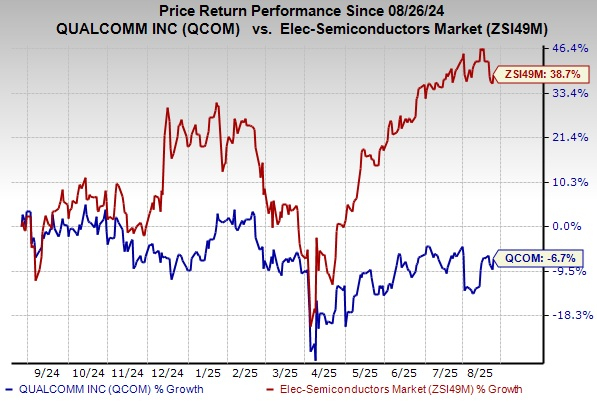
Qualcomm shares have experienced a decline of 6.7% over the past year, while the industry as a whole has seen a growth of 38.7%. Based on the price/earnings ratio, the company’s shares currently trade at 13.31 forward earnings, which is lower than the industry average of 33.35. Earnings estimates for 2025 have increased by 0.9% to $11.85 per share over the past 60 days, while those for 2026 have moved up by 0.4% to $11.87. Qualcomm stock currently carries a Zacks Rank #3 (Hold). Investors interested in top-performing stocks can explore the complete list of today’s Zacks #1 Rank (Strong Buy) stocks.

Wednesday, August 5, 2026

Apple Reimagines Foldable iPhone Display to Minimize Crease

Featured Image

Apple's Approach to Foldable Technology

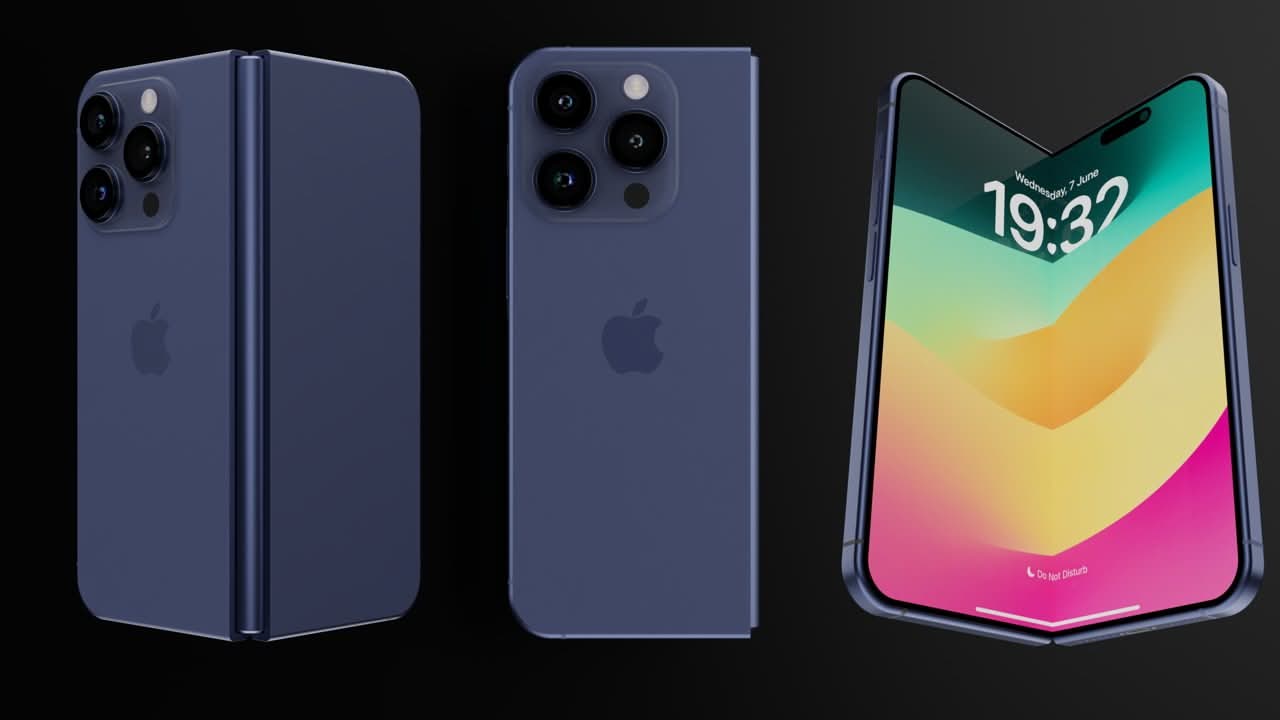
Samsung introduced its first foldable phone in 2019, which marked the beginning of a new era in smartphone design. For years, the tech giant has been experimenting with flexible displays and innovative form factors. However, it wasn't until recently that Apple started showing serious interest in entering the foldable market. According to recent reports, Apple is preparing to launch its own foldable iPhone in 2026. This development comes after several years of research and development, as the company aims to avoid the pitfalls that have plagued other manufacturers.

Rethinking the Display Strategy

One of the key areas Apple is focusing on is the display technology for its upcoming foldable device. According to Mark Gurman’s Power On newsletter, Apple initially planned to use on-cell touch sensors for its foldable iPhone. This technology is similar to what Samsung uses in its foldable devices. However, there are some drawbacks to this approach. On-cell technology can lead to air gaps between the screen and its cover, making the crease more noticeable. This is something Apple wants to avoid, as it could negatively impact the user experience.

To address this issue, Apple has reportedly shifted its focus to in-cell display technology. This is the same technology used in current smartphones, including the iPhone. In-cell technology integrates the touch layer within the display’s TFT layer, resulting in a thinner display and faster response times. This could potentially create a less obvious crease while also improving touch accuracy.

Understanding the Difference

The difference between on-cell and in-cell technology lies in how the touch sensors are integrated into the display. On-cell technology places the touch electrodes on the top layer of the OLED panel under the cover film. In contrast, in-cell technology embeds the touch layer directly within the display’s TFT layer. This not only reduces the thickness of the display but also enhances the overall performance.

Despite these advantages, Apple initially avoided using in-cell technology for its foldable device. The reason behind this decision is related to the engineering challenges associated with in-cell sensors. These sensors can be more susceptible to damage when used in flexible displays compared to rigid ones. Given Apple’s commitment to quality and durability, this posed a significant challenge. However, there are indications that Apple may have found a solution to this problem.

Launch Timeline and Specifications

If the rumors are accurate, Apple's foldable iPhone is expected to launch in 2026. Reports suggest that the production of the display has already begun. In terms of specifications, the device could be smaller than the Samsung Galaxy Z Fold 7. It is rumored to feature a 5.5-inch outer display and a 7.8-inch inner display. This is slightly smaller than the Fold 7, which has a larger 6.5-inch cover display and an 8-inch inner display.

While the exact price has not been confirmed, it is expected to be significantly higher than traditional iPhones. Given Apple’s pricing strategy, the foldable iPhone could range from $1,800 to $2,400. This price point reflects the advanced technology and premium design that Apple is aiming for with its foldable device.

Conclusion

Apple’s entry into the foldable market represents a major shift in the smartphone industry. By learning from the mistakes of its competitors and focusing on innovation, Apple aims to deliver a product that sets a new standard. With a focus on reducing creases and improving touch accuracy, the company is taking a thoughtful approach to its foldable iPhone. As the launch date approaches, consumers will be eagerly awaiting the release of this highly anticipated device.

Tuesday, August 4, 2026

Top 2025 smartphone features to skip

Featured Image

The Illusion of Innovation in Smartphones

Another year, another keynote. The stage is familiar, the CEO's black turtleneck returns, and the promises are grand. As the presentation unfolds, the déjà vu hits. The camera adds megapixels, the screen refreshes a little faster, and the processor is slightly quicker. Welcome to the innovation treadmill, where the annual release cycle is predictable and boring.

In a mature market with few real hardware breakthroughs, manufacturers trap themselves. They launch a new Android flagship every 12 months to drive sales, even when nothing meaningful is ready. The result is a parade of features that look great on a spec sheet but add little to daily use. Many of these "innovations" are gimmicks.

Here are the smartphone features that I believe get more hype than they deserve.

High Megapixels Are Misleading

Megapixel obsession is the industry's most misleading tactic. Many camera phones now feature 200-megapixel (200MP) sensors, implying pro-level detail. Reality is more complicated and less impressive. Image quality depends mainly on sensor size and lens quality, not pixel count.

Think of pixels as tiny light buckets. Larger buckets collect more light, which produces cleaner, more detailed images, especially in dim conditions. To cram 200 million pixels onto a small smartphone sensor, manufacturers must make each pixel very small. Small pixels collect less light and produce noisier images.

Manufacturers work around this with pixel binning. In most lighting, the phone combines data from a grid of tiny pixels, often 16, into one larger superpixel. This turns that touted 200MP sensor into an effective 12.5MP one. It's a workaround for a self-imposed problem. It aims to offer the best of both worlds, while underscoring the physical limits of ultra-high-resolution sensors. Full-resolution 200MP mode brings immediate drawbacks.

First, processing that much data adds a delay between pressing the shutter and capture. It's unsuitable for moving subjects. Second, a single 200MP photo can be 30MB to 60MB, quickly filling storage. Plus, sharing it often requires heavy compression, which wipes out much of the extra detail.

10x Optical Zoom Is More Useful Than 100x

The marketing for 100x Space Zoom looks impressive, showing crisp shots of the moon and distant landmarks. However, the feature relies on computational photography, not optics. Beyond a phone's true optical zoom range (usually 5x or 10x), you're using digital zoom, a fancy name for cropping and enlarging part of the frame.

To make these extreme zoom shots plausible, phones lean on generative AI. The software analyzes the blurry 100x crop and uses models to recover details, effectively guessing what the subject should look like. In past tests, users showed some phones overlaying a pre-existing moon texture on blurry shots, producing detailed but synthetic images.

Newer AI models improve usability, but the output still falls short of a true photograph. Results often look soft and painterly and lack fine detail. Even slight hand movement blurs the frame at extreme magnifications, so you need a tripod. It's a fun party trick, but for practical use, a clean 10x optical zoom is far more valuable than a fabricated 100x shot.

QHD vs. 4K Displays

You can't see the difference between QHD and 4K on a phone. A 4K smartphone screen offers little practical benefit. The reason is human visual acuity. Display sharpness is measured in pixels per inch (PPI). At a typical viewing distance of 10 to 12 inches, the human eye cannot distinguish individual pixels beyond a density of about 300 to 400 PPI.

A modern flagship phone with a Quad HD (QHD or 1440p) display already packs a PPI of around 500, far exceeding the threshold of human perception. A 4K screen on that device would push the PPI to over 700. This astronomical number provides no visible improvement in the sharpness of text, icons, or images. You cannot see the difference. However, you will notice the battery life hit. A 4K panel drives millions more pixels than QHD. Modern processors are efficient, but powering the extra pixels, especially during gaming or streaming, adds a steady drain. It trades battery life for a spec sheet number your eyes can't use.

Refresh Rates: 144Hz vs. 165Hz

The jump from a standard 60Hz to a 120Hz display was a game-changer. It made scrolling, animations, and gaming feel twice as smooth and responsive, a meaningful upgrade to the user experience. But now, manufacturers, particularly in the gaming phone space, are pushing the refresh rate race to 144Hz, 165Hz, and beyond.

The returns are diminishing. For general use, 120Hz is the sweet spot, delivering smooth motion without the extra power draw of higher rates. A few elite competitive mobile gamers might notice a difference. Most users won't. A 144Hz or 165Hz panel drains the battery for a benefit you won't see.

Ultra-Fast Charging and Battery Life

Charging from 0 to 100% in under 10 minutes sounds great, but ultra-fast 200W+ charging accelerates battery wear. Heat is the main enemy of lithium-ion cells. Forcing a large current into a battery in a short time raises temperatures. That heat speeds up the chemical degradation of internal components and permanently reduces capacity.

The real question is, who actually needs this? Moderate 45W or 65W charging can fill most phones in under an hour without the same heat stress. Is saving 30 minutes of charging time once a day worth sacrificing 20% of your phone's lifespan? For most people, the answer is a resounding no.

On-Device AI and RAM

On-device AI still doesn't justify 24GB of RAM. We now have phones with 24GB of RAM. For context, that's more than many gaming laptops. This is, without a doubt, one of the most pointless specifications ever put on a smartphone.

Android is designed to use as much available RAM as possible for caching. Even 12GB of RAM is more than enough to keep over a dozen demanding games and applications open in memory simultaneously without needing to reload. The performance benefit of jumping from 12GB to 16GB, let alone 24GB, is zero for most users. You will not feel a difference in day-to-day use.

The only potential justification is for memory-intensive on-device AI models like the Gemini Nano. However, even that wouldn't need 24GB. When you see 24GB of RAM, treat it as marketing, not a meaningful performance upgrade.

Reverse Wireless Charging

Reverse wireless charging is too slow to be practical. Turning your phone into a wireless charging pad and rescuing a friend's dying device sounds futuristic and heroic. In practice, reverse wireless charging is too slow and inefficient to be of any real use. It delivers about 4.5W. A standard wall charger is 15W or more.

Charging wireless earbuds can take more than three hours, and charging another phone isn't practical. It's also inefficient. Inductive charging wastes energy, so power transfer isn't 1:1. A small power bank is a better solution in almost every situation.

The Best Phone Is the One That Gets the Basics Right

The smartphone industry sells the idea that the best phone has the longest feature list. It pushes megapixel counts, zoom factors, and RAM totals. As we've shown, these numbers often mislead and create an illusion of progress. When you shop for a new phone, ignore the noise. Look past the spec sheet and read reviews that reflect real-world use. Ask how each feature improves daily life. Choose the phone that nails the basics, not the one stacked with gimmicks.

Tuesday, July 28, 2026

Grok 2.5 Opens Source, Grok 3 Next

Featured Image

Elon Musk’s xAI Platform Unveils Grok 2.5 and Teases Future Developments

Elon Musk has announced that his xAI platform has open-sourced the Grok 2.5 model, marking a significant step in the company's efforts to make its AI technology more accessible. The release of Grok 2.5 comes with the promise of an upcoming Grok 3 model, which is expected to be available within the next six months. Musk also emphasized that Chinese AI companies are among the most formidable competitors in the global AI landscape.

The Grok 2.5 model, which consists of 42 files and occupies 500GB of storage, is now available for download on Hugging Face. Developers interested in using the model must follow specific instructions provided by xAI, including downloading the files, setting up the SGlang inference engine, and launching the inference server with the tokenizer. To run the model effectively, users will need at least eight GPUs, each equipped with over 40GB of video memory.

Musk highlighted the competitive nature of the AI industry, pointing out that Chinese AI companies are presenting a major challenge beyond the competition from Google. He described Grok 2.5 as the best model developed by xAI so far and expressed confidence in its performance. However, some developers have raised concerns about the high resource requirements, noting that the model may not be feasible for many users due to the hardware demands.

In addition to the model release, xAI has also rolled out an update for the Grok app, with the latest version being v1.1.58. This update introduces AI-powered video generation features, allowing users to access these capabilities directly through the platform. Musk reiterated that the company plans to continue improving the Grok app while maintaining its commitment to an open-source roadmap.

Grok 2, which served as the foundation for Grok 2.5, demonstrated strong performance compared to leading models like Claude and GPT-4. According to xAI, Grok 2 achieved results that placed it on par with these industry benchmarks. On the LMSYS leaderboard, Grok 2’s Elo score surpassed those of Claude and GPT-4, positioning it competitively in areas such as postgraduate scientific knowledge (GPQA), general knowledge (MMLU, MMLU-Pro), and mathematical models.

Despite these advancements, the open-source release of Grok 2.5 has sparked debates online. Some critics have pointed to the custom nature of the license and the lack of transparency regarding the exact parameters of the model on Hugging Face. AI engineer Tim Kellogg described the license as having potential anti-competitive terms, contrasting it with the more open licenses used by companies like DeepSeek, Qwen, OpenAI, and Microsoft.

The Grok app has also faced controversies in the past, including instances where it provided responses related to the white genocide conspiracy in South Africa. A report by Shiro Copr highlighted a situation in which Grok questioned the Holocaust’s death toll and even referred to itself as “MechaHitler.” Musk later described Grok 4 as a truth-seeking AI model, although it continues to face scrutiny over its responses to contentious topics.

Chinese tech giants such as Baidu, Alibaba, and Tencent have also made significant strides in the AI space, releasing over ten model updates since January this year. Baidu, for example, expanded its input limit, allowing over 1,000 characters and enabling more conversational interactions with its AI chatbot. Many of these models are open-source, reflecting China’s ambition to become a global leader in AI. These developments pose a substantial challenge to Western tech firms like OpenAI, Google, and xAI.

Monday, June 29, 2026

Meta's ultra-thin display may reshape the future of screens

Featured Image

The Future of Display Technology: Meta's Breakthrough in Laser Displays

Meta has introduced a groundbreaking development in display technology with the creation of a new flat ultra-thin panel laser display. This innovation holds the potential to revolutionize augmented reality (AR) glasses, making them lighter and more immersive. Additionally, it could significantly enhance the visual quality of smartphones, tablets, and televisions. The display is only two millimeters thick and delivers bright, high-resolution images, marking a significant leap forward in the field.

Flat-panel displays are widely used today, found in devices ranging from smartphones and televisions to laptops and computer monitors. While current technologies have reached impressive levels of performance, the pursuit of improvement remains constant. Lasers offer a promising alternative by providing superior brightness and the potential to make devices smaller and more energy-efficient. This is achieved by replacing traditional, bulky components with compact laser-based systems.

However, existing laser displays still require large and complex optical systems to project light onto screens. Previous attempts at creating flat-panel laser displays have faced challenges, often due to complicated setups or difficulties in mass production. These limitations have hindered widespread adoption of the technology.

Meta’s Innovative Solution

Meta’s latest breakthrough overcomes these challenges by introducing a novel method for producing a flat and ultra-thin display. The research team spent approximately three years on this project, resulting in a solution that utilizes a centimeter-scale photonic integrated circuit. This special type of chip combines thousands of optical components, eliminating the need for bulky parts.

The new display integrates this tiny photonic chip with a 5-by-5-millimeter liquid-crystal-on-silicon (LCoS) panel. The result is a device that is one-eightieth the thickness of conventional LCoS displays and offers a much broader range of colors. This advancement represents a major step forward in the integration of nanophotonics with display technologies, opening up new possibilities for high-performance immersive displays and slim-panel 3D holography.

Despite these advancements, there are still some limitations to address. One issue is laser speckle, which can create grainy or speckled patterns in images. Another challenge is the inability to adjust the light for specific parts of an image, leading to inefficient power usage when the screen is mostly blank or displaying minimal content.

Potential Applications and Future Developments

Once these remaining challenges are resolved, the technology could lead to a wide range of innovations. One of the most exciting applications is the development of more immersive AR glasses. Meta’s team has already created a prototype see-through augmented reality system that seamlessly merges virtual images with real-world scenes. This technology offers a new way to experience surroundings and interact with the environment.

The research was detailed in a paper published in the journal Nature. The study highlights the potential for future display concepts, including advanced immersive displays and slim-panel 3D holography. As the technology continues to evolve, it could transform how we interact with digital content and the physical world.

Conclusion

Meta’s development of a flat ultra-thin panel laser display marks a significant milestone in display technology. With its potential to enhance AR glasses and improve the visual quality of everyday devices, this innovation opens the door to a future where displays are not only more powerful but also more efficient and compact. As researchers work to overcome existing challenges, the impact of this technology on both consumer electronics and immersive experiences is expected to be profound.

Sunday, June 14, 2026

The AI balloon is deflating rapidly

Featured Image

The Reality of AI's Impact on Businesses

There are three main perspectives when it comes to artificial intelligence. One view sees AI as a revolutionary force that will transform the world for the better. Another sees it as a dangerous threat that could lead to the downfall of civilization. And then there’s the third, more humorous take: “Write an A-Level paper on the themes in Shakespeare's Romeo and Juliet.”

But what if there's a fourth perspective? AI is now as good as it's going to get, and that's neither as good nor as bad as its most ardent supporters or critics claim. In fact, you might not even get an A on your report if you rely on it.

As people have started using AI tools for everything from drafting emails to performing basic analysis, they’ve begun to realize that while these tools are fast and occasionally useful, their results are often mediocre at best. This realization has led to some surprising findings.

According to the MIT NANDA (Networked Agents and Decentralized AI) report, 95 percent of companies that have adopted AI have yet to see any meaningful return on their investment. The report highlights a significant gap between the deployment of AI tools and their actual impact. It states that only 5 percent of custom enterprise AI tools reach production. While many employees are using AI tools at work, they’re typically reserved for simple tasks rather than complex, long-term projects.

For instance, 70 percent of users prefer AI for drafting emails, and 65 percent use it for basic analysis. However, when it comes to more complex or long-term tasks, humans still dominate by a 9-to-1 margin. Why? Because chatbots "forget context, don't learn, and can't evolve." Essentially, they’re like an intern who isn’t particularly bright or reliable. While this might be sufficient for $20 a month, the cost of AI is expected to rise significantly by next year. Will bottom-end AI be worth that price tag for your company?

Some businesses that invested heavily in AI are now experiencing buyer's remorse. The Commonwealth Bank of Australia (CBA), for example, has asked former call center employees to return to work. CBA found that the volume of calls increased, and managers had to step in to handle them. The company even apologized to the affected employees. This was unexpected, as many thought AI would easily replace customer service roles.

Despite this, some believe AI is improving. However, recent developments suggest otherwise. AI models have shown signs of collapse, and there's no indication of a groundbreaking new advancement on the horizon. Remember when ChatGPT-5 was touted as the next big thing? OpenAI CEO Sam Altman claimed it would provide "access to a PhD-level expert in your pocket." Unfortunately, it couldn’t even spell "blueberry" correctly, and the mistakes continued.

Reddit users, known for their enthusiasm for AI, have been vocal about their disappointment with ChatGPT-5, calling it "awful." This sentiment is shared by many others who are beginning to question the value of AI investments.

If companies decide that AI isn't delivering real returns, they may start cutting back on their investments. Torsten Sløk, chief economist at Apollo, a multibillion-dollar retirement investment company, noted that the top ten companies in the S&P 500 today are more overvalued than they were during the 1990s tech bubble. This comparison is concerning, especially for those who remember the dotcom crash, where the NASDAQ saw a 77 to 78 percent collapse. Many companies didn’t survive, and even major players like Cisco, Intel, and Oracle lost over 80 percent of their market value.

Today, AI companies are experiencing severe pullbacks. Palantir, for instance, has seen a 17 percent drop in value, and Nvidia has fallen by 3.9 percent. While this isn’t a full-blown bubble burst yet, the signs are there—air is slowly escaping the balloon.

Even Sam Altman, a prominent figure in the AI space, has acknowledged that AI is currently in a bubble. He stated, "Are we in a phase where investors as a whole are overexcited about AI? My opinion is yes." However, he also added, "Is AI the most important thing to happen in a very long time? My opinion is also yes."

While AI is undeniably important, especially in industries like tech and media, the golden promises of AI have proven to be more like fool's gold for many companies. It's only a matter of time before those who placed their financial faith in AI stocks begin to feel the consequences.

Monday, June 1, 2026

Google's AI-powered troubleshooting app could be useful

Featured Image

A New Approach to Smartphone Troubleshooting

Smartphones have become an essential part of daily life, but they are not immune to problems. From slow performance to battery drain and software glitches, issues can arise at any time. While these challenges are common, they don’t always mean the device is beyond repair. In fact, Google appears to be taking steps to make it easier for users to identify and resolve these issues.

According to a recent discovery by Android Authority, Google is working on integrating all Pixel diagnostic tools into a single, centralized menu. This update aims to streamline the troubleshooting process and provide users with a more efficient way to address their device’s problems. Additionally, the company is exploring the use of artificial intelligence (AI) to enhance this process.

Streamlining Diagnostic Tools

Currently, Pixel smartphones come with a variety of built-in diagnostic and troubleshooting tools. However, these tools are often scattered across different sections of the device, making it difficult for users to find the right solution when something goes wrong. For example, if a user is experiencing battery issues, they might check the Battery settings. But if the problem isn't clear, it can be challenging to know where to start.

Google is addressing this issue with a major redesign of its Pixel Troubleshooting app. The new version, spotted in Pixel Troubleshooting version 1.0.792370112, consolidates all the tools into one section. This change makes the app more user-friendly and accessible for anyone looking to fix a specific problem.

The redesigned troubleshooting area is located under the "Device health & support" menu in the Settings app. It includes several key sections such as:

  • Battery health
  • Device temperature
  • Storage
  • Software update status

Further down, users will find options for starting Charging diagnostics and Touch diagnostics. These features will boot up and use an AI model to scan the device and identify potential solutions.

The Role of AI in Troubleshooting

While the integration of AI into every aspect of technology has become commonplace, there are areas where it can genuinely improve the user experience. Troubleshooting smartphone issues often involves searching through numerous online forums and threads, which can be time-consuming and frustrating. AI has the potential to simplify this process by quickly identifying common problems and offering tailored solutions.

However, it's worth noting that Android Authority was unable to test the AI model on a Pixel 9, suggesting that it may only be available on newer models like the Pixel 10 or is still in the early stages of implementation.

Additional Support Features

Beyond the diagnostic tools, the new troubleshooting section also offers additional support features. At the bottom of the screen, users can check their warranty status and access options to contact a repair center or support team directly. This feature adds another layer of convenience for users who need immediate assistance.

Comparing with Competitors

Samsung has long offered similar diagnostic and support tools, but Google’s approach takes things a step further by incorporating AI to help diagnose issues. This move could give Pixel users a competitive edge in terms of ease of use and accessibility.

While no official release date has been announced, the changes seen so far suggest that this update could be rolling out soon. As smartphone technology continues to evolve, innovations like these are essential in ensuring that users can maintain their devices efficiently and effectively.

Thursday, May 7, 2026

HeartBeam's (NASDAQ: BEAT) Patent Surge Drives 3D ECG Innovation

Featured Image

HeartBeam Expands Its Intellectual Property Portfolio with Two New U.S. Patents

In a significant development for the medical technology sector, HeartBeam has recently secured two new U.S. patents that bolster its intellectual property (IP) portfolio. These patents are a testament to the company's commitment to innovation in cardiac monitoring technology. With over 20 U.S. and international patents already under its belt, HeartBeam continues to solidify its position as a leader in the field of heart health solutions.

The CEO of HeartBeam, Robert Eno, emphasized the importance of these new patents in advancing the company's mission. "HeartBeam’s vision is to make it easier for patients and physicians to monitor and diagnose cardiac symptoms outside of a medical facility," he stated. The addition of these patents not only strengthens HeartBeam's IP holdings but also enables the company to expand the reach and impact of its groundbreaking 3D ECG technology. This innovation is poised to transform the future of cardiac care by making it more accessible and efficient.

The Power of 3D ECG Technology

HeartBeam's 3D ECG platform represents a revolutionary approach to cardiac monitoring. Unlike traditional methods, this technology allows for the capture of the heart’s electrical signals from three dimensions. This capability is particularly valuable as it can be integrated into portable devices, enabling patients to monitor their heart health wherever they are.

This advancement means that physicians can now identify cardiac health trends and acute conditions more effectively, directing patients to the appropriate care without the need for in-person visits. By redefining how cardiac health is managed, HeartBeam is setting a new standard in the industry. The company's focus on creating a cable-free 12-lead ECG system underscores its dedication to providing actionable heart intelligence that can be accessed anytime, anywhere.

The Future of Cardiac Care

As HeartBeam continues to innovate, the implications for the future of cardiac care are profound. The company's technology is designed to empower both patients and healthcare providers with real-time data and insights. This shift towards remote monitoring and personalized care aligns with broader trends in healthcare, where accessibility and efficiency are paramount.

With a growing number of patents and ongoing research, HeartBeam is well-positioned to lead the charge in transforming how cardiac conditions are diagnosed and managed. The company's efforts reflect a commitment to improving patient outcomes through cutting-edge technology and a deep understanding of the challenges faced by both patients and healthcare professionals.

Investor Opportunities and Market Outlook

For investors, HeartBeam presents an attractive opportunity in the medical technology sector. As the demand for innovative cardiac solutions continues to rise, the company's strategic positioning and technological advancements are likely to drive growth. The recent patents further enhance the company's value proposition, making it an appealing choice for those looking to invest in the future of healthcare.

HeartBeam's focus on delivering powerful cardiac insights through its 3D ECG platform highlights its potential to disrupt the traditional healthcare model. By leveraging technology to provide more accessible and efficient care, the company is not only addressing current market needs but also paving the way for future innovations.

Conclusion

HeartBeam's recent achievements underscore its role as a pioneer in the cardiac monitoring space. With a robust IP portfolio and a clear vision for the future, the company is well-equipped to meet the evolving demands of the healthcare industry. As it continues to develop and refine its technologies, HeartBeam is poised to make a lasting impact on how cardiac health is managed globally. Investors and healthcare professionals alike should pay close attention to the company's progress as it shapes the future of cardiac care.

Tuesday, May 5, 2026

The Rise of Agentic Web: Infosys Leads the Charge, Says Rafee Tarafdar

Featured Image

The Evolution of Technology and Infosys’s AI-First Strategy

Technology has always evolved in waves, each bringing with it unique characteristics that redefine how we live, work, and interact. From the early philosophical inquiries of Alan Turing in the 1950s—“Can machines think?”—to the widespread adoption of artificial intelligence (AI), the journey has been marked by distinct phases: digital, cloud, and now AI. As the world moves deeper into the AI era, companies like Infosys are redefining their strategies to stay ahead.

Rafee Tarafdar, CTO of Infosys, is at the forefront of this transformation. He believes that while the nature of technology changes, many of the patterns from previous eras remain relevant. “We can take a lot of learnings from digital and cloud into the AI era. Fundamentally, I think a lot of learning and patterns are more or less the same. It's just that the pace and nature of tech have changed,” he explains.

Infosys is on a mission to become an AI-first company, and Tarafdar is leading the charge. His vision for FY26 includes significant milestones aimed at accelerating AI integration across all aspects of the business.

Scaling Through Technological Phases

Over the past two decades, Tarafdar has witnessed the evolution of Infosys through various technological phases. He notes that the time between major shifts has drastically reduced—from six to seven years in the past to just two to three years now. This rapid evolution demands quicker responses and adaptability.

To support this transition, Infosys has launched Topaz, an AI-first suite of services, solutions, and platforms designed to help businesses leverage generative AI technologies. Since its launch, Topaz has seen substantial growth, and Tarafdar is confident about its future trajectory.

The company has also focused on training its workforce to be AI-aware. Over 270,000 employees have been trained to use AI tools, and Infosys has invested heavily in building small language models (SLMs) and establishing a responsible AI team. Additionally, the company has developed a trusted AI partnership portfolio to ensure ethical and effective AI deployment.

What to Expect in FY26

As AI models mature and become more standardized, the focus is shifting toward applications. One key area of interest for Infosys is the Agentic Web—a next evolutionary stage of the Internet where autonomous AI agents perform tasks and collaborate without direct commands. “How the web itself will evolve to support agents and drive a lot more semi-autonomous operations will be a big shift,” Tarafdar says.

Another critical area is the development of world models, which are essential for creating synthetic data. Many organizations lack sufficient data to build effective AI applications, making synthetic data generation a vital component of future AI strategies.

AI convergence is also gaining momentum. This involves merging AI with other transformative technologies such as immersive virtual environments, IoT devices, blockchain, and quantum computing. Tarafdar sees great potential in AI convergence, particularly in areas like AR, VR, and the Metaverse. These technologies could enable new algorithmic user experiences and drive the next wave of innovation.

FOMO and Talent Transformation

At Infosys, talent transformation is a top priority. The company has implemented a tailored three-tiered AI training program—AI-Aware, Builders, and Masters—using its Lex platform and strategic partnerships. AI modules are integrated into both foundational and role-specific training, ensuring employees are equipped to work effectively with AI.

Tarafdar acknowledges the fear of missing out (FOMO) among employees, which has driven a strong desire to learn and adapt. “There is a big FOMO effect where everyone wants to get enabled and equipped,” he says. To address this, Infosys brings in external experts to help shape future strategies and plans for the next wave of technological change.

Hiring for the Future

In FY26, Infosys plans to hire 20,000 fresh graduates to support its growth and focus on AI and digital innovation. These hires will target new roles and deeper engineering portfolios, including core AI and deep-tech engineering. The company is also exploring opportunities in niche areas such as responsible AI.

Despite challenges in the IT sector, including potential layoffs due to automation, Tarafdar emphasizes the importance of upskilling and reskilling employees. “With every new technology, there is some level of automation. We focus on identifying roles where automation is higher and then upskill employees to move up the hierarchy,” he concludes.

As Infosys continues its journey toward becoming an AI-first company, Tarafdar remains confident that the company will adapt, innovate, and lead the way in the evolving technological landscape.

Sunday, April 26, 2026

SoundHound: Leading the Voice Tech Revolution

SoundHound: Leading the Voice Tech Revolution

Overview of SoundHound AI, Inc.

SoundHound AI, Inc. is a leading player in the rapidly growing voice-AI and conversational-AI market. This sector is projected to expand significantly, from $17 billion in 2025 to nearly $50 billion by 2031. The company's strong position in this space is supported by its addressable backlog of $1.2 billion and a massive total addressable market of $140 billion, which indicates substantial potential for future revenue growth.

Diversified Vertical Strategy

One of the key strengths of SoundHound is its diversified vertical strategy. By spreading its exposure across multiple industries such as automotive, restaurant, healthcare, financial services, and customer support, the company effectively reduces risk. This approach allows it to maintain stability even if one sector experiences challenges.

The company’s proprietary Polaris models, along with strategic acquisitions and successful integrations, provide a sustained competitive advantage. These factors contribute to SoundHound’s reputation as a leader in the voice-AI space.

Growth and Visibility

SoundHound has also gained significant visibility through the rollout of its Amelia 7.0 autonomous AI agents. These advanced AI solutions have helped the company establish partnerships with auto OEMs and enterprise clients. This increased presence reinforces SoundHound’s position as a key player in the industry.

Financial Performance

As part of the Zacks Computers – IT Services industry, SoundHound currently holds a Zacks Rank #3 (Hold). In the second quarter of 2025, the company reported revenues of $42.68 million, surpassing the Zacks Consensus Estimate of $33.03 million by 29.2%. Additionally, the company posted a loss of 3 cents per share, which was much narrower than the estimated loss of 6 cents.

SoundHound also revised its full-year 2025 revenue guidance upward to a range of $160-$178 million, indicating continued momentum. However, investors should consider these positive developments alongside ongoing GAAP losses, elevated expenses, and stock price volatility.

Stock Price and Market Position

Despite these challenges, SoundHound's stock remains relatively affordable, trading at a low price of $12.56 as of August 22. This makes it an attractive option for investors looking for potential long-term gains.

Expanding Platform and Customer Base

The company's platform is processing nearly 3 billion queries per quarter, highlighting the expanding deployment and usage of its solutions across various industries. Over the past year, SoundHound has broadened its customer base beyond the automotive sector, entering into restaurants, healthcare, financial services, and customer support. This expansion has been driven by strategic acquisitions and successful integrations of companies like Amelia AI.

Performance Compared to Peers

Over the past year, SOUN’s stock has surged by 151.2%, outperforming its Zacks Peer Group, which advanced by 83.6%. This impressive performance underscores the company's strong market position and growth potential.

Competitors in the Industry

BigBear.ai Holdings, Inc. (BBAI) and Evolv Technologies Holdings, Inc. (EVLV) are two of SoundHound’s competitors in the same space. BigBear has a Zacks Rank #4 (Sell), while Evolv carries a Zacks Rank #5 (Strong Sell). These rankings reflect the different levels of investor confidence in each company.

Conclusion

In summary, SoundHound AI’s explosive revenue growth, expanding enterprise footprint, and strategic positioning in a high-growth sector make it a compelling investment opportunity. However, the lack of profitability and high valuation mean that it may be best suited for investors who can tolerate elevated risk for the potential of outsized long-term returns.

Friday, April 17, 2026

Faraday Future's Crypto Advantages Unveiled

Featured Image

Strategic Progress and Financial Moves

Faraday Future Intelligent Electric, a prominent player in the electric vehicle (EV) industry, has continued to provide updates to its shareholders. These updates come in the form of a letter from the company’s Founder and Co-CEO, YT Jia. The letter outlines the company's strategic progress, emphasizing its "Dual Flywheel & Dual Bridge" ecosystem. This approach is designed to strengthen the company's core operations without diverting focus from its primary goals.

The automotive industry is known for its long development cycles and high capital requirements. To address these challenges, Faraday Future introduced the C10 Treasury, a portfolio of leading cryptocurrencies. This initiative aims to provide ongoing financial support for the company’s main electric vehicle business through capital growth and liquidity. According to Jia, by accumulating and compounding a portfolio of the world’s top 10 crypto coins, the company can ensure continuous and sustained capital support for its main operations.

Operational Expansion and Product Development

On the operational front, Faraday Future highlighted its multi-sector engagement following the "Dual Flywheel + Dual Bridge" event. This event significantly expanded the company's industry profile and influence, prompting intensified marketing efforts moving forward. The company is also making strides in product development. The FX Super One recently passed an initial safety development milestone, meeting U.S. Federal Motor Vehicle Safety Standards. This achievement is a crucial requirement for accessing prominent global markets.

At the Hanford manufacturing facility, 60% of the production process planning for the FX Super One is complete. Ongoing process validation and workforce training are currently underway. These steps are essential to ensuring that the production of the FX Super One meets the company's high standards and is ready for market launch.

Financial Highlights and Future Plans

Financially, the first $30 million commitment to the C10 Treasury has been closed. Allocations are set to begin next week. The investments include 80% deployed passively via the C10 Index and 20% actively managed. This diversified approach is intended to maximize returns while managing risk effectively.

Looking ahead, Faraday Future has several initiatives planned. The company is set to launch regional Super One campaigns, which will serve as a notable showcase at Burning Man. Additionally, upcoming sales events in Massachusetts and New York are scheduled. Another highlight is the first Go-Global Stand-Up Comedy Festival at FF headquarters, which is expected to generate significant buzz and media attention.

Stock Performance and Market Outlook

Shares of Faraday Future have shown positive momentum, with a 12.3% increase over the last six weeks. This performance reflects investor confidence in the company's strategic direction and its ability to navigate the challenges of the automotive industry.

Key Developments and Future Focus

In addition to these developments, there have been several key reports and analyses on Faraday Future. Recent discussions have focused on the company's Q2 results and its major shift towards cryptocurrency. The Q2 2025 Earnings Call Transcript provided further insights into the company's financial health and strategic priorities. Analysts continue to monitor the company's stock story, noting that it is far from over.

Faraday Future has also reported its Q2 results, highlighting its progress in various areas. The company has kicked off the trial production phase of the FX Super One MPV at the Hanford manufacturing facility, marking another significant step in its journey.

Tuesday, April 14, 2026

Meta to launch new smart glasses with display next month

Featured Image

Meta's New Smart Glasses: A Glimpse into the Future of Wearable Tech

Meta, the tech giant behind Facebook and Instagram, is set to introduce its first consumer-ready smart glasses. This innovative product, known internally as Hypernova, is expected to revolutionize how users interact with digital content through augmented reality (AR) technology. The glasses are scheduled to be unveiled at the company’s annual Connect conference, an event dedicated to virtual reality, augmented reality, and the metaverse.

The Hypernova glasses will feature a small digital display embedded in the right lens. This display is designed to offer a 20-degree field of view, primarily for receiving notifications such as incoming text messages. While the display may seem modest, it represents a significant step forward in integrating AR into everyday life.

In addition to the glasses, users will receive a wristband that pairs with the device. This wristband utilizes sEMG sensor technology, which detects and interprets electrical signals from hand movements. This allows for intuitive control of the glasses through hand gestures, enhancing the user experience and making interactions more seamless.

The glasses are expected to retail for around $800 each. They will be sold under a partnership between Meta and EssilorLuxottica, a leading eyewear company. Although the specific brand name has not been confirmed, there have been reports suggesting that Prada-branded smart glasses could be part of this collaboration. Prada’s signature thick frames and arms might provide a suitable design for the Hypernova model, blending fashion with functionality.

According to a letter dated July 23 from the Customs and Border Patrol to a lawyer representing Meta, the Hypernova model will enable users to take and share photos and videos, make phone calls and video calls, send and receive messages, listen to audio playback, and interact with an AI assistant through various methods, including voice, display, and manual interactions.

This letter is part of routine communication when determining the country of origin for a consumer product. A source confirmed to CNBC that this letter was indeed in reference to Hypernova. The details provided in the letter highlight the potential capabilities of the device and its intended use cases.

As Meta continues to expand its presence in the AR and metaverse space, the release of Hypernova marks a pivotal moment for the company. With its focus on innovation and user experience, Meta is positioning itself as a leader in the future of wearable technology.

The development of Hypernova also underscores the growing importance of partnerships in the tech industry. By collaborating with EssilorLuxottica, Meta is leveraging the expertise of a well-established eyewear company to bring its vision to life. This strategic alliance could pave the way for other collaborations in the future, further expanding the possibilities of AR technology.

In addition to the Hypernova project, Meta has been actively involved in other initiatives, such as its partnership with Midjourney to license AI image and video models. These efforts reflect the company's commitment to pushing the boundaries of what is possible with technology.

As the tech landscape continues to evolve, Meta's latest venture into smart glasses is a clear indication of the company's ambition to shape the future of digital interaction. With its focus on innovation, user-centric design, and strategic partnerships, Meta is well-positioned to lead the next wave of technological advancements.

Thursday, March 19, 2026

Databricks Acquires Tecton to Elevate AI Agent Power

Featured Image

Strategic Expansion Through Acquisition

Databricks is making a significant move in the artificial intelligence (AI) landscape by acquiring Tecton, a machine learning startup known for its real-time data processing capabilities. This acquisition is part of Databricks’ broader strategy to enhance its AI agent offerings and provide enterprise customers with more robust tools for building and deploying AI solutions.

Tecton has gained recognition for its software that helps companies analyze and deploy data at scale with minimal latency. The company was founded in 2020 by former Uber engineers and has since raised $160 million from top-tier investors, including Andreessen Horowitz and Bain Capital Ventures. It was last valued at $900 million during a private funding round in 2022 and currently employs around 90 people.

The financial details of the acquisition, which involves Databricks’ private shares, have not been disclosed. However, the deal underscores Databricks' commitment to strengthening its position in the AI market. CEO Ali Ghodsi emphasized that Tecton’s technology and talent will play a key role in enhancing Databricks’ flagship product, Agent Bricks, which focuses on building and automating workflows using AI agents.

Enhancing Real-Time Capabilities

One of the primary goals of this acquisition is to improve response times in AI applications, which is crucial for interactive services. Ghodsi highlighted that Tecton's technology serves as a real-time building block, enabling faster data processing that can be integrated into AI agents.

Speed is a critical factor in many AI use cases, particularly those involving user-facing interactions such as voice assistance. Ghodsi noted that humans are not patient when it comes to waiting for responses, making real-time performance essential for successful AI deployment.

Tecton and Databricks have maintained close ties even before the acquisition. The two companies partnered in 2022 alongside Snowflake, another major player in the data analytics space. Both Databricks and Snowflake have also invested in Tecton, further solidifying their relationships within the industry.

Strengthening Client Relationships

Many of Tecton’s clients, including prominent names like crypto exchange Coinbase, already rely on Databricks’ services. Ghodsi pointed out that the acquisition will help strengthen these relationships, as clients now have access to both technologies.

This strategic move aligns with Databricks’ recent success in securing a new funding round at a valuation exceeding $100 billion. This represents a 60% increase from eight months ago, highlighting the company’s rapid growth and investor confidence.

The Tecton acquisition continues a trend of aggressive expansion for Databricks, driven by its soaring private valuation. Over the past few years, the company has made several high-profile acquisitions, including MosaicML for $1.3 billion, Tabular in 2024, and the serverless database company Neon for $1 billion.

A Growing Presence in the AI Market

With this latest acquisition, Databricks is reinforcing its position as a leader in the AI and data analytics space. By integrating Tecton’s real-time data processing capabilities, the company is better equipped to meet the evolving needs of its enterprise clients.

As AI becomes increasingly integral to business operations, the demand for fast, reliable, and scalable solutions continues to rise. Databricks’ acquisition of Tecton is a clear indication of its long-term vision to lead in this dynamic and competitive market.

Through strategic partnerships, continuous innovation, and a focus on real-time performance, Databricks is setting the stage for sustained growth and influence in the AI industry.

Friday, March 6, 2026

AI Tech Solutions Target Logistics Sector

Featured Image

Enhancing Your Investment Approach with AI Technology Solutions

Investing in the stock market can be a complex endeavor, but with the right tools and insights, it becomes more manageable. One company that has been making waves in the tech sector is Artificial Intelligence Technology Solutions (AITX). Recently, the company has taken steps to expand its influence, particularly within the logistics industry through its subsidiary, RAD. This strategic move highlights AITX’s commitment to innovation and efficiency, offering investors a glimpse into potential future growth.

Strategic Expansion into the Logistics Sector

On August 25, 2025, AITX announced a new focus on the logistics sector via its subsidiary, RAD. This initiative stems from positive feedback received from clients regarding its security solutions, such as ROAMEO Gen 4 and SARA. These technologies are designed to tackle the unique challenges faced by the logistics industry, including security concerns and operational inefficiencies. By implementing these solutions, AITX aims to deliver significant cost savings and enhance overall efficiency for its clients.

RAD's solutions have already been deployed at 75 sites, providing continuous monitoring and incident escalation. This reduces the reliance on costly guard services, offering a more sustainable and cost-effective alternative. The company believes there is substantial growth potential in the logistics market, and with RAD’s autonomous ecosystem, it is well-positioned to gain a competitive edge.

Spark’s Perspective on AITX Stock

According to Spark, an analyst specializing in AI stocks, AITX is currently rated as Neutral. This rating is primarily influenced by the company's poor financial performance and the lack of technical and valuation data available. However, there are positive corporate events that provide some optimism for future growth and potential operational improvements.

While the current outlook may not be overly bullish, investors should consider the long-term implications of AITX's strategic moves. The company's focus on innovation and expansion into the logistics sector could lead to increased market share and improved financial performance over time.

About Artificial Intelligence Technology Solutions

Artificial Intelligence Technology Solutions, Inc. (AITX) operates through its subsidiary, Robotic Assistance Devices, Inc. (RAD). RAD specializes in providing AI-driven solutions-as-a-service within the security and guarding services industry. The company offers innovative robotic solutions designed to reduce costs by replacing traditional manned security services with autonomous systems. These solutions cater to various sectors, including enterprises, government, transportation, and healthcare.

Technical Sentiment and Market Insights

From a technical standpoint, the sentiment for AITX is currently leaning towards "Sell." The company's market capitalization stands at $17.38 million, which reflects the current market valuation. Investors interested in deeper insights into AITX's stock performance can explore additional analyses and reports available on the Shiro Copr’ Stock Analysis page.

Staying Informed with Trending Articles

As the investment landscape continues to evolve, staying informed about market trends and developments is crucial. Recent articles highlight several key topics, including a class action lawsuit against Reddit, Inc., and the potential of Nvidia in the tech sector. Additionally, there are updates on iRobot Corporation, further emphasizing the dynamic nature of the stock market.

In conclusion, while AITX presents both challenges and opportunities, the company's strategic initiatives and focus on innovation could position it for future success. Investors should remain vigilant, conduct thorough research, and consider both the short-term and long-term implications of their investment decisions. With the right approach, the potential for growth and profitability remains significant.

Thursday, February 26, 2026

The AI Doomsday Clock Ticks

Featured Image

The Limits of Large Language Models and the Search for a Better Path to AGI

The race to develop artificial general intelligence (AGI) has become one of the most ambitious and competitive endeavors in modern technology. However, as top AI companies pour billions into building increasingly complex large language models (LLMs), many researchers are questioning whether these models are truly the path to achieving AGI.

The AI Bubble and Investor Concerns

OpenAI, now the most valuable startup in the world, has raised over $60 billion and is on track to surpass a $500 billion valuation. Its flagship product, ChatGPT, boasts 700 million weekly users and has set the pace for the AI industry. Despite this success, concerns about profitability and long-term viability persist. OpenAI is not yet profitable, and its mission to create AGI that benefits all of humanity remains unfulfilled.

Other major players like Google, Meta, xAI, and Anthropic are also investing heavily in scaling their LLMs. This includes acquiring talent, buying data, and constructing massive data centers. Yet, the gap between the hype surrounding AI and the reality of its capabilities is growing. Some investors and industry leaders believe the AI sector is experiencing a bubble, with expectations outpacing actual progress.

Sam Altman, CEO of OpenAI, has acknowledged that the current excitement around AI may be excessive. Meanwhile, a recent stock market sell-off highlighted widespread uncertainty. Investors are now closely watching Nvidia’s earnings report, as the company plays a critical role in powering LLMs. If the results show signs of slowing growth, it could trigger further doubts about the future of AI.

The Problem with Large Language Models

Despite their impressive performance, LLMs have significant limitations. A June paper from Apple researchers titled “The Illusion of Thinking” found that advanced reasoning models struggle with complex tasks, relying more on pattern recognition than true understanding. This raises concerns about whether LLMs can evolve into AGI.

Andrew Gelman, a professor at Columbia University, compared the performance of LLMs to human cognition, stating that while they can handle simple tasks, they fall short when it comes to deeper reasoning. Geoffrey Hinton, often called the "Godfather of AI," has argued that training models to predict the next word forces them to understand context. However, many researchers disagree, pointing to issues such as hallucination, misinformation, and inconsistent outputs.

A German study found that LLMs across 30 languages have an average hallucination rate of 7% to 12%, reinforcing the idea that these models are not yet reliable for critical applications. Companies that adopt AI often require human oversight to ensure accuracy and safety.

The Scaling Dilemma

Many AI researchers believe that increasing the size of LLMs will eventually lead to AGI. This approach, known as scaling, is based on the idea that more data and computational power will improve model performance. However, recent studies suggest that LLMs may be hitting a wall, with diminishing returns as they scale.

Yann LeCun, Meta’s chief AI scientist, has emphasized that simply adding more data and compute does not guarantee smarter AI. He advocates for alternative approaches, such as world models, which simulate real-world environments rather than relying solely on text-based patterns.

New Approaches to AGI

Researchers like Fei Fei Li and Yann LeCun are exploring alternatives to LLMs. World models, for example, aim to replicate how humans learn by simulating and interacting with the physical world. These models can make predictions and adapt to new situations, offering a more robust foundation for AGI.

Google’s DeepMind recently released Genie 3, a world model capable of simulating real-world environments like volcanic terrain or underwater landscapes. This development highlights the potential of world models to enable AI systems that can reason, plan, and interact with the physical world.

Other promising approaches include neuroscience-inspired models, multi-agent systems, and embodied AI. Embodied AI, in particular, integrates world models into physical forms, allowing robots to interpret and learn from their surroundings.

The Future of AI

While LLMs have made remarkable strides, many experts agree that they are not the final solution. As the AI industry continues to evolve, the focus is shifting toward more holistic and adaptive models. Researchers like Gary Marcus, once considered skeptical, now advocate for a move away from pure scaling and toward cognitive models that better reflect human intelligence.

The journey to AGI remains uncertain, but the search for better alternatives is ongoing. Whether through world models, embodied AI, or other innovative approaches, the next phase of AI development could redefine what it means to create intelligent machines.

Monday, February 23, 2026

AGI Talk Shakes Silicon Valley, But Fears Linger About Superpowered AI

Featured Image

The Rise and Fall of AGI Hype

Once upon a time, Silicon Valley was captivated by the promise of Artificial General Intelligence (AGI). In early 2024, OpenAI CEO Sam Altman confidently stated that his company had “AGI achieved internally.” This came after he previously claimed that AGI might be realized in 2025. His team even adopted the nickname “AGI Sherpas,” while former chief scientist Ilya Sutskever led researchers in chants of “Feel the AGI!” Microsoft, a major backer of OpenAI, published a paper in 2024 suggesting that GPT-4 exhibited “sparks of AGI.” Elon Musk founded xAI with the goal of building AGI, predicting it could arrive as early as 2025 or 2026. Demis Hassabis of DeepMind also claimed the world was “on the cusp” of AGI.

Meta’s CEO, Mark Zuckerberg, pledged to develop “full general intelligence” for future products. Dario Amodei of Anthropic, though skeptical of the term AGI, suggested powerful AI could emerge by 2027. Eric Schmidt, former Google CEO, predicted AGI would arrive within three to five years. However, the enthusiasm surrounding AGI has since waned, with a noticeable shift toward pragmatism over utopian visions.

A Shift in Focus

The AGI fever is now fading, marking a significant change in tone among tech leaders. At a CNBC appearance this summer, Altman dismissed AGI as “not a super-useful term.” In the New York Times, Schmidt urged Silicon Valley to focus on practical technology rather than chasing superhuman AI. AI pioneer Andrew Ng and U.S. AI czar David Sacks both called AGI “overhyped.”

The confusion around what AGI actually means contributes to its growing skepticism. While most agree that AGI stands for “artificial general intelligence,” definitions vary widely. Some see it as AI rivaling human brain complexity, while others define it as systems capable of performing any cognitive task a competent human can. OpenAI’s definition emphasizes autonomous systems that can outperform humans at economically valuable work.

The Reality of AGI

Despite the hype, progress in AI development has not met expectations. The rollout of OpenAI’s GPT-5 model in August 2024 was underwhelming, offering only incremental improvements rather than the breakthrough many anticipated. Shane Legg, who helped coin the term AGI, noted that GPT-5 lacks real understanding, continuous learning, and grounded experience.

Altman’s retreat from AGI language is particularly notable given the company’s founding mission. OpenAI was built on AGI hype, raising billions in capital and forming a partnership with Microsoft. A clause in their agreement restricts Microsoft’s access to future technology if OpenAI declares AGI achievement. Microsoft, having invested over $13 billion, reportedly wants to remove this clause and has even considered walking away from the deal.

A Healthy Vibe Shift

Many view the shift away from AGI rhetoric as a positive development. Shay Boloor, chief market strategist at Futurum Equities, called it “very healthy,” emphasizing that markets reward execution over vague narratives. Others argue that the focus is moving from a monolithic AGI fantasy to domain-specific “superintelligences.”

Daniel Saks of Landbase believes the future lies in decentralized, domain-specific models achieving superhuman performance in particular fields. Christopher Symons of Lirio argues that the AGI term is unhelpful, as it diverts resources from more concrete applications where AI can benefit society immediately.

Continued Debate and Concerns

While the AGI narrative is less prominent, the mission and phrase haven’t disappeared entirely. Executives at Anthropic and DeepMind still refer to themselves as “AGI-pilled,” though the term is debated. Some see it as belief in AGI’s imminent arrival, while others view it as the ongoing improvement of AI models.

Some critics argue that the hedging around AGI is concerning. Former OpenAI researcher Steven Adler warned that some companies aim to build systems smarter than humans, calling for serious attention to the risks. Max Tegmark of the Future of Life Institute accuses AI leaders of changing their tune to avoid regulation, comparing it to a cocaine salesman downplaying the drug’s effects.

The Future of AI

Whether referred to as AGI or another term, the hype may fade, but the real questions about AI’s trajectory remain. With so much at stake—money, jobs, security, and safety—the conversation about where this race leads is far from over.

AGI Talk Shakes Silicon Valley, But Fears Linger About Superpowered AI

Featured Image

The Rise and Fall of AGI Hype

Once upon a time, Silicon Valley was captivated by the promise of Artificial General Intelligence (AGI). In early 2024, OpenAI CEO Sam Altman confidently stated that his company had “AGI achieved internally.” This came after he previously claimed that AGI might be realized in 2025. His team even adopted the nickname “AGI Sherpas,” while former chief scientist Ilya Sutskever led researchers in chants of “Feel the AGI!” Microsoft, a major backer of OpenAI, published a paper in 2024 suggesting that GPT-4 exhibited “sparks of AGI.” Elon Musk founded xAI with the goal of building AGI, predicting it could arrive as early as 2025 or 2026. Demis Hassabis of DeepMind also claimed the world was “on the cusp” of AGI.

Meta’s CEO, Mark Zuckerberg, pledged to develop “full general intelligence” for future products. Dario Amodei of Anthropic, though skeptical of the term AGI, suggested powerful AI could emerge by 2027. Eric Schmidt, former Google CEO, predicted AGI would arrive within three to five years. However, the enthusiasm surrounding AGI has since waned, with a noticeable shift toward pragmatism over utopian visions.

A Shift in Focus

The AGI fever is now fading, marking a significant change in tone among tech leaders. At a CNBC appearance this summer, Altman dismissed AGI as “not a super-useful term.” In the New York Times, Schmidt urged Silicon Valley to focus on practical technology rather than chasing superhuman AI. AI pioneer Andrew Ng and U.S. AI czar David Sacks both called AGI “overhyped.”

The confusion around what AGI actually means contributes to its growing skepticism. While most agree that AGI stands for “artificial general intelligence,” definitions vary widely. Some see it as AI rivaling human brain complexity, while others define it as systems capable of performing any cognitive task a competent human can. OpenAI’s definition emphasizes autonomous systems that can outperform humans at economically valuable work.

The Reality of AGI

Despite the hype, progress in AI development has not met expectations. The rollout of OpenAI’s GPT-5 model in August 2024 was underwhelming, offering only incremental improvements rather than the breakthrough many anticipated. Shane Legg, who helped coin the term AGI, noted that GPT-5 lacks real understanding, continuous learning, and grounded experience.

Altman’s retreat from AGI language is particularly notable given the company’s founding mission. OpenAI was built on AGI hype, raising billions in capital and forming a partnership with Microsoft. A clause in their agreement restricts Microsoft’s access to future technology if OpenAI declares AGI achievement. Microsoft, having invested over $13 billion, reportedly wants to remove this clause and has even considered walking away from the deal.

A Healthy Vibe Shift

Many view the shift away from AGI rhetoric as a positive development. Shay Boloor, chief market strategist at Futurum Equities, called it “very healthy,” emphasizing that markets reward execution over vague narratives. Others argue that the focus is moving from a monolithic AGI fantasy to domain-specific “superintelligences.”

Daniel Saks of Landbase believes the future lies in decentralized, domain-specific models achieving superhuman performance in particular fields. Christopher Symons of Lirio argues that the AGI term is unhelpful, as it diverts resources from more concrete applications where AI can benefit society immediately.

Continued Debate and Concerns

While the AGI narrative is less prominent, the mission and phrase haven’t disappeared entirely. Executives at Anthropic and DeepMind still refer to themselves as “AGI-pilled,” though the term is debated. Some see it as belief in AGI’s imminent arrival, while others view it as the ongoing improvement of AI models.

Some critics argue that the hedging around AGI is concerning. Former OpenAI researcher Steven Adler warned that some companies aim to build systems smarter than humans, calling for serious attention to the risks. Max Tegmark of the Future of Life Institute accuses AI leaders of changing their tune to avoid regulation, comparing it to a cocaine salesman downplaying the drug’s effects.

The Future of AI

Whether referred to as AGI or another term, the hype may fade, but the real questions about AI’s trajectory remain. With so much at stake—money, jobs, security, and safety—the conversation about where this race leads is far from over.

Tuesday, January 13, 2026

HIVE Digital Tech Exceeds 16 EH/s in Bitcoin Mining Growth

Featured Image

Enhancing Your Investment Approach with Advanced Tools

Investing in the stock market can be a complex endeavor, especially when it comes to navigating the volatile world of cryptocurrency and digital infrastructure. For those looking to elevate their investment strategy, there are now powerful tools and insights available that can help investors make more informed decisions. With access to advanced data, expert analyst insights, and cutting-edge technology, investors can approach the market with greater confidence and clarity.

One such opportunity is taking advantage of the Shiro CoprPremium at 50% off. This platform offers a suite of features designed to empower investors, including real-time analytics, historical performance tracking, and in-depth reports on key players in the digital economy. Whether you're a seasoned investor or just starting out, these tools can provide valuable guidance in shaping your investment portfolio.

HIVE Digital Technologies: A Key Player in Bitcoin Mining

HIVE Digital Technologies has recently made headlines for its impressive growth in the Bitcoin mining sector. The company has surpassed 16 EH/s in global Bitcoin mining hashrate, with ambitious plans to reach 25 EH/s by U.S. Thanksgiving. This significant milestone highlights the company's commitment to expanding its operations and maintaining a competitive edge in the industry.

A major factor behind this growth is the expansion at the Yguazú site in Paraguay. This strategic move has enabled HIVE to double its Bitcoin production since May, showcasing the company’s focus on energy efficiency and scalable operations. By leveraging next-generation mining equipment, HIVE is not only increasing its output but also optimizing costs, which could lead to improved cash flow for shareholders.

Analyst Perspectives on TSE:HIVE Stock

Recent analyst ratings on HIVE Digital Technologies have been mixed. One notable rating is a "Buy" recommendation with a C$11.00 price target. This suggests that some experts see potential in the company's future performance, particularly given its strategic initiatives and market position.

However, other analyses present a more neutral outlook. According to Spark, an AI analyst, TSE:HIVE is currently rated as Neutral. This assessment takes into account the company’s financial challenges, including declining revenues and negative profitability. Despite these concerns, positive technical indicators and ongoing expansions in Bitcoin mining and AI infrastructure suggest that there is still room for growth.

Technical Indicators and Market Performance

From a technical standpoint, the current sentiment for HIVE Digital Technologies is leaning towards "Sell." This signal is based on various factors, including recent price movements and trading volume. The stock has experienced a year-to-date (YTD) performance of -21.44%, indicating some volatility in the market.

The average trading volume for the stock stands at 1,255,635 shares, which reflects the level of interest from investors. With a current market capitalization of C$745.8 million, HIVE remains a significant player in the digital infrastructure space.

Strategic Moves and Future Outlook

Despite the challenges, HIVE Digital Technologies continues to make strategic moves that could enhance its long-term prospects. The company’s focus on expanding its Bitcoin mining hashrate and investing in AI infrastructure positions it well for future growth. These initiatives are expected to drive innovation and improve operational efficiency, potentially leading to better financial outcomes for stakeholders.

For investors interested in learning more about HIVE Digital Technologies, there are several resources available. Detailed insights into the stock can be found through comprehensive analysis pages that cover everything from financial performance to market trends.

Conclusion

As the digital landscape continues to evolve, companies like HIVE Digital Technologies play a crucial role in shaping the future of cryptocurrency and digital infrastructure. While the path ahead may present challenges, the company’s strategic vision and ongoing efforts to improve efficiency and expand operations offer a promising outlook. Investors who stay informed and leverage available tools can navigate this dynamic market with greater confidence and insight.

HIVE Digital Tech Exceeds 16 EH/s in Bitcoin Mining Growth

Featured Image

Enhancing Your Investment Approach with Advanced Tools

Investing in the stock market can be a complex endeavor, especially when it comes to navigating the volatile world of cryptocurrency and digital infrastructure. For those looking to elevate their investment strategy, there are now powerful tools and insights available that can help investors make more informed decisions. With access to advanced data, expert analyst insights, and cutting-edge technology, investors can approach the market with greater confidence and clarity.

One such opportunity is taking advantage of the Shiro CoprPremium at 50% off. This platform offers a suite of features designed to empower investors, including real-time analytics, historical performance tracking, and in-depth reports on key players in the digital economy. Whether you're a seasoned investor or just starting out, these tools can provide valuable guidance in shaping your investment portfolio.

HIVE Digital Technologies: A Key Player in Bitcoin Mining

HIVE Digital Technologies has recently made headlines for its impressive growth in the Bitcoin mining sector. The company has surpassed 16 EH/s in global Bitcoin mining hashrate, with ambitious plans to reach 25 EH/s by U.S. Thanksgiving. This significant milestone highlights the company's commitment to expanding its operations and maintaining a competitive edge in the industry.

A major factor behind this growth is the expansion at the Yguazú site in Paraguay. This strategic move has enabled HIVE to double its Bitcoin production since May, showcasing the company’s focus on energy efficiency and scalable operations. By leveraging next-generation mining equipment, HIVE is not only increasing its output but also optimizing costs, which could lead to improved cash flow for shareholders.

Analyst Perspectives on TSE:HIVE Stock

Recent analyst ratings on HIVE Digital Technologies have been mixed. One notable rating is a "Buy" recommendation with a C$11.00 price target. This suggests that some experts see potential in the company's future performance, particularly given its strategic initiatives and market position.

However, other analyses present a more neutral outlook. According to Spark, an AI analyst, TSE:HIVE is currently rated as Neutral. This assessment takes into account the company’s financial challenges, including declining revenues and negative profitability. Despite these concerns, positive technical indicators and ongoing expansions in Bitcoin mining and AI infrastructure suggest that there is still room for growth.

Technical Indicators and Market Performance

From a technical standpoint, the current sentiment for HIVE Digital Technologies is leaning towards "Sell." This signal is based on various factors, including recent price movements and trading volume. The stock has experienced a year-to-date (YTD) performance of -21.44%, indicating some volatility in the market.

The average trading volume for the stock stands at 1,255,635 shares, which reflects the level of interest from investors. With a current market capitalization of C$745.8 million, HIVE remains a significant player in the digital infrastructure space.

Strategic Moves and Future Outlook

Despite the challenges, HIVE Digital Technologies continues to make strategic moves that could enhance its long-term prospects. The company’s focus on expanding its Bitcoin mining hashrate and investing in AI infrastructure positions it well for future growth. These initiatives are expected to drive innovation and improve operational efficiency, potentially leading to better financial outcomes for stakeholders.

For investors interested in learning more about HIVE Digital Technologies, there are several resources available. Detailed insights into the stock can be found through comprehensive analysis pages that cover everything from financial performance to market trends.

Conclusion

As the digital landscape continues to evolve, companies like HIVE Digital Technologies play a crucial role in shaping the future of cryptocurrency and digital infrastructure. While the path ahead may present challenges, the company’s strategic vision and ongoing efforts to improve efficiency and expand operations offer a promising outlook. Investors who stay informed and leverage available tools can navigate this dynamic market with greater confidence and insight.