Showing posts with label healthcare and medicine. Show all posts

Monday, August 31, 2026

Local Sleep Institute Unveils Training Program

Featured Image

Addressing Sleep Disorders Through Training Programs

In Sioux Falls, South Dakota, a new initiative is taking shape to address the growing need for sleep technicians. This program aims to bring more individuals into a field that plays a critical role in helping people achieve better quality of sleep. While sleeping is a universal necessity, many people face challenges in getting the rest they need, which can have serious health implications.

According to Nathan Coombs, the program director at Solstice Sleep Institute, sleep disorders are a widespread issue. He highlights that approximately 30 million people are diagnosed with sleep apnea each year, and between 20% to 30% of these cases remain undiagnosed. This statistic underscores the urgent need for trained professionals who can help identify and treat such conditions.

Coombs explains that there is currently a shortage of qualified sleep technicians in the area. At Pulmonary and Sleep Consultants, where the program is based, there are five different locations that require the services of sleep techs. However, the organization only has two full-time staff members to meet this demand. This gap in staffing highlights the importance of expanding training opportunities to fill these roles.

To address this issue, Coombs launched a 10-day, 80-hour training program designed to prepare individuals for careers as sleep technicians. The first session was held in July, and the first graduate completed the course on July 25. She immediately began working with one of the physicians at the clinic. This quick transition from training to employment demonstrates the program’s effectiveness and the immediate need for skilled workers in the field.

The Solstice Sleep Institute program operates out of the Pulmonary and Sleep Consultants’ office located within the Independent Medical Arts Building. Britney Christianson, the sleep center coordinator, emphasizes that this program offers a valuable opportunity for those who may not want to pursue a traditional four-year degree. It provides a pathway into a meaningful career without requiring extensive academic commitments.

Christianson notes that while a medical background can be beneficial, it is not a prerequisite for applying to the program. This inclusivity makes the training accessible to a broader range of individuals who are interested in making a difference in the lives of others.

Coombs is optimistic about the future of the program and its impact on the community. He believes that by increasing the number of trained sleep technicians, the program can help address the current shortage and improve access to care for those struggling with sleep-related issues.

The next session of the training program is scheduled for September 15 through September 26. This upcoming cohort will continue to build on the success of the previous group and further contribute to the growth of the sleep technology field in Sioux Falls.

With the rising awareness of sleep disorders and their effects on overall health, programs like this are becoming increasingly vital. They not only provide career opportunities for individuals but also play a crucial role in enhancing public health outcomes. As the demand for sleep technicians continues to grow, initiatives like the Solstice Sleep Institute program are essential in meeting this need and ensuring that more people receive the care they deserve.

Sunday, August 23, 2026

Universal Plug-and-Play CAR-T Therapy Could Revolutionize Cancer Immunotherapy

Featured Image

A New Era in Cancer Immunotherapy

Researchers at the University of Chicago have developed a groundbreaking "universal" chimeric antigen receptor (CAR) platform that promises to enhance the safety, adaptability, and effectiveness of cancer immunotherapy. Early results from testing, published in Science Advances, indicate that this new form of CAR-T cell therapy could significantly transform the treatment landscape for certain cancers.

CAR-T cell therapy involves harvesting a patient's immune cells and genetically modifying them to recognize and attack specific tumor antigens. While this approach has shown remarkable success in treating certain blood cancers, it has faced significant challenges when applied to solid tumors. These challenges include poor tumor penetration, toxic side effects, the development of resistance mechanisms, and the complex, patient-specific engineering required for each treatment.

Traditional CAR-T cells rely on a fixed antigen-binding domain, which limits their ability to target only one type of cancer antigen. This single-target approach can be problematic since tumors often display antigens in varying degrees and may escape therapy by losing targeted antigens.

A Simpler and Safer Cell Therapy Approach

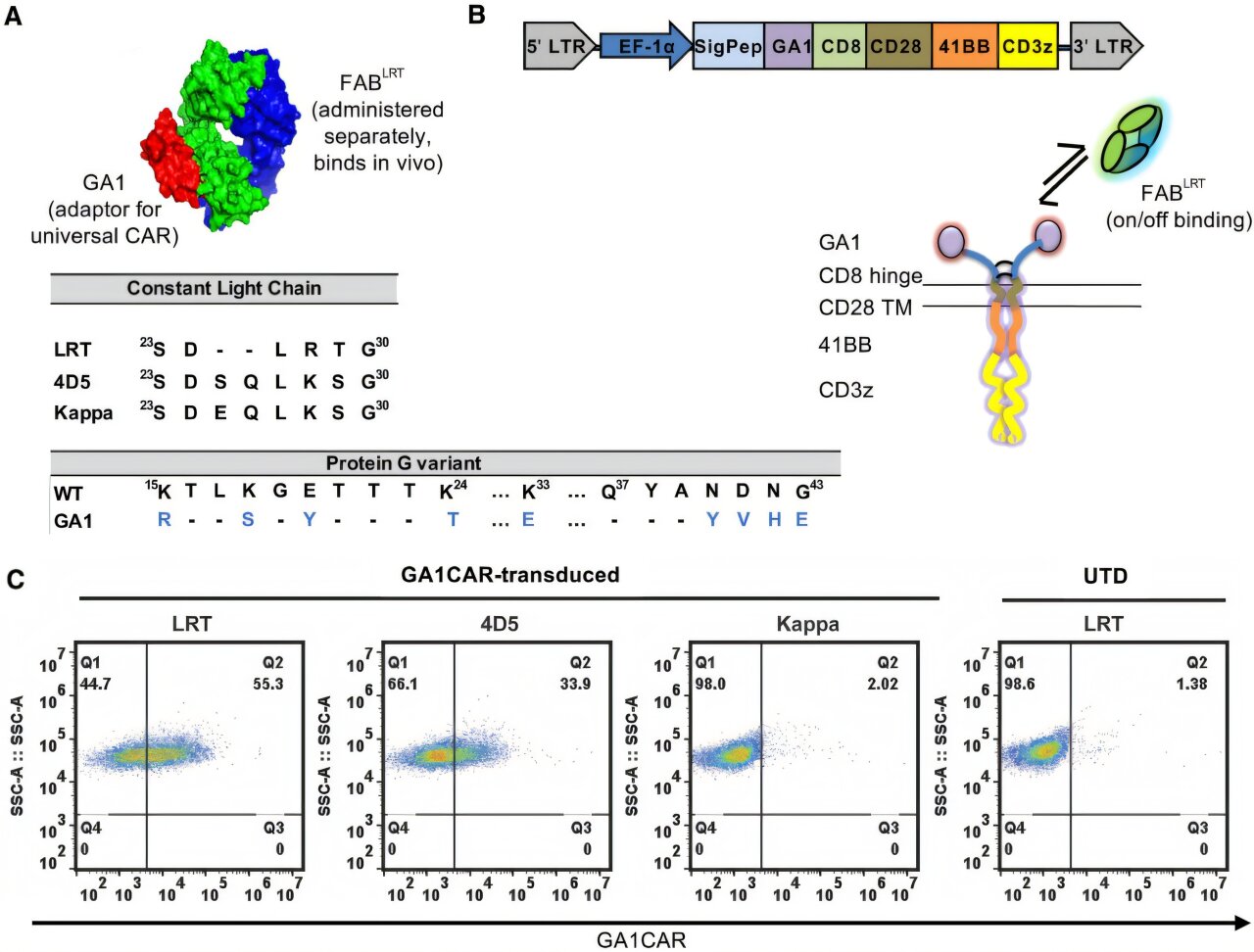
To address these limitations, UChicago researchers created a new platform called GA1CAR. In this system, an engineered protein G variant (GA1) is fused to the T cell receptor signaling machinery. The part that recognizes tumor targets is delivered as short-lived antibody pieces known as Fab fragments.

These Fab fragments are designed to specifically bind to the GA1 component on the surface of CAR-T cells, creating a strong yet reversible connection with a circulation lifespan of about two days. Without the Fab, GA1CAR-T cells remain inactive—unable to recognize or attack targets.

This modular "split" design separates the antigen-recognition element from the signaling machinery within the CAR-T cell, giving clinicians precise control over how, when, and where the engineered T cells attack cancer.

"This new CAR-T system acts like a plug-and-play device," said co-lead author Anthony Kossiakoff, Ph.D., Otho S.A. Sprague Distinguished Service Professor of Biochemistry and Molecular Biology. "By simply switching the antibody fragment (Fab), we can redirect the same CAR-T cells to attack different cancer targets with greater safety and flexibility."

One of the main limitations of traditional CAR-T cell therapy is toxicity. The GA1CAR system provides an "on-off" switch for enhanced safety.

"In our system, the targeting Fab has a short half-life—around two to three days in circulation—and if there's a side effect, we can stop administering the Fab and essentially 'pause' the therapy without removing the CAR-T cells from the patient," said Ainhoa Arina, Ph.D., Research Associate Professor in the laboratory of Ralph Weichselbaum, MD, Chair and Daniel K. Ludwig Distinguished Service Professor of Radiation and Cellular Oncology.

Multi-Targeting and Personalization Approach

Beyond safety, the GA1CAR system's flexible design offers rapid retargeting. Clinicians can administer one Fab to attack a specific tumor antigen and later switch to another Fab if the tumor evolves or develops resistance—without generating new CAR-T cells.

This flexibility is particularly valuable in solid tumors, where tumor heterogeneity—the presence of multiple antigens within the same tumor—has limited the effectiveness of single-target therapies.

In animal models of breast and ovarian cancer, GA1CAR-T cells were able to find and attack tumors by using different antibody pieces that target specific markers on cancer cells, such as HER2 and EGFR. These markers are often found in high amounts on certain cancer cells, so targeting them helps the T cells recognize and destroy the tumors more effectively.

"With this flexible system, we envision a future where a single CAR-T cell infusion can be reprogrammed with Fabs tailored to each patient's tumor profile," Arina said.

GA1CAR-T Cells May Be the Way Forward

In animal studies, GA1CAR-T cells performed the same as or better than conventional CAR-T cells, and both therapies reduced tumor burden; however, GA1CAR-T cells showed greater activation and produced more inflammatory cytokines in response to the same antigen dose.

Importantly, GA1CAR-T cells maintained their function over extended periods and could be reactivated weeks later with a fresh dose of Fab. This capability opens the door for repeatable therapy where the dose can be adjusted as needed, without having to create new T cells each time.

Clinical Implications and Future Plans

The research team is now exploring ways to integrate radiation therapy with the GA1CAR platform and to develop next-generation Fab fragments that stay in the body longer and reach tumors more effectively.

This study was a collaboration between the Department of Radiation and Cellular Oncology and the Department of Biochemistry and Molecular Biology at UChicago. Kossiakoff, an expert in protein engineering, developed the GA1 and Fab variants using phage display technology.

"Our lab handled the biochemical design and validation of the modular system," Kossiakoff said. "Then we conducted in vivo testing in cancer models to prove that this strategy works beyond the test tube."

With further refinements, the GA1CAR system could serve as a universal platform for precision immunotherapy—suitable for a wide range of cancers and potentially other diseases.

Thursday, May 7, 2026

HeartBeam's (NASDAQ: BEAT) Patent Surge Drives 3D ECG Innovation

Featured Image

HeartBeam Expands Its Intellectual Property Portfolio with Two New U.S. Patents

In a significant development for the medical technology sector, HeartBeam has recently secured two new U.S. patents that bolster its intellectual property (IP) portfolio. These patents are a testament to the company's commitment to innovation in cardiac monitoring technology. With over 20 U.S. and international patents already under its belt, HeartBeam continues to solidify its position as a leader in the field of heart health solutions.

The CEO of HeartBeam, Robert Eno, emphasized the importance of these new patents in advancing the company's mission. "HeartBeam’s vision is to make it easier for patients and physicians to monitor and diagnose cardiac symptoms outside of a medical facility," he stated. The addition of these patents not only strengthens HeartBeam's IP holdings but also enables the company to expand the reach and impact of its groundbreaking 3D ECG technology. This innovation is poised to transform the future of cardiac care by making it more accessible and efficient.

The Power of 3D ECG Technology

HeartBeam's 3D ECG platform represents a revolutionary approach to cardiac monitoring. Unlike traditional methods, this technology allows for the capture of the heart’s electrical signals from three dimensions. This capability is particularly valuable as it can be integrated into portable devices, enabling patients to monitor their heart health wherever they are.

This advancement means that physicians can now identify cardiac health trends and acute conditions more effectively, directing patients to the appropriate care without the need for in-person visits. By redefining how cardiac health is managed, HeartBeam is setting a new standard in the industry. The company's focus on creating a cable-free 12-lead ECG system underscores its dedication to providing actionable heart intelligence that can be accessed anytime, anywhere.

The Future of Cardiac Care

As HeartBeam continues to innovate, the implications for the future of cardiac care are profound. The company's technology is designed to empower both patients and healthcare providers with real-time data and insights. This shift towards remote monitoring and personalized care aligns with broader trends in healthcare, where accessibility and efficiency are paramount.

With a growing number of patents and ongoing research, HeartBeam is well-positioned to lead the charge in transforming how cardiac conditions are diagnosed and managed. The company's efforts reflect a commitment to improving patient outcomes through cutting-edge technology and a deep understanding of the challenges faced by both patients and healthcare professionals.

Investor Opportunities and Market Outlook

For investors, HeartBeam presents an attractive opportunity in the medical technology sector. As the demand for innovative cardiac solutions continues to rise, the company's strategic positioning and technological advancements are likely to drive growth. The recent patents further enhance the company's value proposition, making it an appealing choice for those looking to invest in the future of healthcare.

HeartBeam's focus on delivering powerful cardiac insights through its 3D ECG platform highlights its potential to disrupt the traditional healthcare model. By leveraging technology to provide more accessible and efficient care, the company is not only addressing current market needs but also paving the way for future innovations.

Conclusion

HeartBeam's recent achievements underscore its role as a pioneer in the cardiac monitoring space. With a robust IP portfolio and a clear vision for the future, the company is well-equipped to meet the evolving demands of the healthcare industry. As it continues to develop and refine its technologies, HeartBeam is poised to make a lasting impact on how cardiac health is managed globally. Investors and healthcare professionals alike should pay close attention to the company's progress as it shapes the future of cardiac care.

Monday, April 27, 2026

CareCloud Acquires Medsphere Systems

Featured Image

Enhancing Your Investment Approach

Investing in the stock market can be both exciting and challenging. To make informed decisions, it's essential to have access to reliable tools and insights. One way to elevate your investing strategy is by utilizing advanced resources that provide in-depth analysis and expert perspectives. These tools can help you navigate the complexities of the market with greater confidence and clarity.

CareCloud’s Strategic Acquisition

CareCloud, Inc. has recently made a significant move in the healthcare technology sector. On August 22, 2025, the company completed the acquisition of Medsphere Systems Corporation, a provider of inpatient and ambulatory solutions. This strategic move expands CareCloud’s presence in the hospital IT market, offering affordable and scalable solutions tailored for small and mid-sized hospitals. By integrating Medsphere’s technology with its AI capabilities, CareCloud aims to enhance patient care and improve operational efficiency within the healthcare industry.

Analyst Insights on CareCloud Stock

The most recent analyst rating for CareCloud (CCLD) is a "Hold" with a price target of $3.00. Analysts are closely monitoring the company’s performance and future prospects. While there are positive aspects to consider, such as a stable financial position and strong cash flow, challenges remain in terms of revenue growth. The technical analysis suggests a positive outlook with bullish momentum, indicating potential for upward movement in the stock price.

Spark’s Evaluation of CCLD Stock

According to Spark, an AI-driven analyst, CareCloud’s stock is currently rated as "Neutral." The company's overall stock score reflects a solid financial foundation, with a strong balance sheet and consistent cash flow. However, factors such as a negative P/E ratio and the absence of a dividend yield may affect the valuation score. Despite these challenges, the earnings call highlighted positive developments in the company’s strategic direction and operational achievements.

Understanding CareCloud’s Services

CareCloud, Inc. is a leader in healthcare technology, offering a wide range of services including revenue cycle management, practice management, electronic health records, business intelligence, patient experience management, and digital health solutions. The company supports over 40,000 providers, helping them enhance patient care while reducing administrative burdens and operating costs.

Key Metrics for CCLD Stock

  • Average Trading Volume: 356,793
  • Technical Sentiment Signal: Hold
  • Current Market Cap: $119.8M

These metrics provide a snapshot of the current state of CareCloud’s stock and can be useful for investors looking to assess its performance and potential.

Additional Resources for Investors

For a comprehensive evaluation of CCLD stock, investors can explore detailed reports and analyses. These resources often include insights from expert analysts, historical data, and forecasts that can aid in making informed investment decisions. Staying updated with the latest trends and developments in the healthcare technology sector is crucial for long-term success in the stock market.

Conclusion

CareCloud’s recent acquisition of Medsphere Systems Corporation marks a pivotal moment in its journey within the healthcare technology landscape. With a focus on innovation and efficiency, the company is well-positioned to capitalize on emerging opportunities. While challenges exist, the combination of strong financials, technological advancements, and strategic moves provides a compelling case for continued interest in CareCloud’s stock. As always, investors should conduct thorough research and consider multiple factors before making any investment decisions.

Friday, March 20, 2026

Theravance Finalizes Phase 3 CYPRESS Trial Enrollment

Featured Image

Enhance Your Investment Approach with Premium Tools

Investors are always on the lookout for ways to refine their strategies and make more informed decisions. One opportunity that stands out is taking advantage of The Shiro CoprPremium, currently available at a 50% discount. This premium offering provides access to powerful investing tools, advanced data analytics, and expert analyst insights—resources that can significantly boost confidence when making investment choices.

Theravance Biopharma Announces Key Development

Theravance Biopharma recently shared an important update regarding its ongoing research into ampreloxetine, a potential treatment for neurogenic orthostatic hypotension (nOH) caused by multiple system atrophy (MSA). On August 25, 2025, the company announced that it had completed enrollment in the open-label portion of its pivotal Phase 3 CYPRESS study. This condition affects approximately 80% of MSA patients, often leading to severe symptoms such as dizziness and fainting. The study aims to address the lack of effective treatments for nOH, with top-line results expected in the first quarter of 2026. If successful, ampreloxetine could become the first therapy to offer long-term benefits for the estimated 40,000 U.S. patients suffering from MSA-related nOH, potentially transforming care in this underserved area.

Analyst Perspectives on TBPH Stock

Recent analyst ratings for Theravance Biopharma (TBPH) have been mixed. The most recent rating is a "Hold" with a $14.50 price target. Investors looking for a broader view of analyst forecasts can refer to the TBPH Stock Forecast page for more details.

According to Spark’s AI Analyst, TBPH is currently rated as Neutral. The company's stock score reflects strong technical momentum and positive earnings call highlights, including strategic financial transactions and product advancements. However, factors like a high P/E ratio and profitability challenges negatively impact the valuation and financial performance scores.

For a deeper understanding of the stock, investors can explore Spark’s full report on TBPH stock.

Overview of Theravance Biopharma

Theravance Biopharma, Inc. is a biopharmaceutical company dedicated to developing and commercializing innovative medicines. The company focuses on treating serious medical conditions, including the FDA-approved YUPELRI® for chronic obstructive pulmonary disease (COPD).

Key metrics for TBPH include:

  • Average Trading Volume: 310,783
  • Technical Sentiment Signal: Buy
  • Current Market Cap: $700.5M

Investors seeking a comprehensive analysis of TBPH stock can visit The Shiro Copr’ Stock Analysis page for detailed insights.

Additional Insights and Resources

For those interested in staying updated on market trends and developments, there are several trending articles worth exploring. These include alerts about class-action lawsuits against companies like Reddit and iRobot, as well as analyses on how major players like Nvidia are positioned in the current market landscape.

By leveraging these resources and staying informed, investors can make more strategic decisions and navigate the complexities of the stock market with greater confidence.

Sunday, March 15, 2026

CCSI joins MEDITECH Alliance Program as perinatal tech leader

Featured Image

Strategic Collaboration Between CCSI and MEDITECH Alliance Program

Clinical Computer Systems (CCSI), a leading US-based provider of perinatal software, has recently become a collaborator within the MEDITECH Alliance Program. This partnership marks a significant step in enhancing the integration of perinatal care solutions with broader electronic health record (EHR) systems.

The MEDITECH Alliance is an ecosystem that brings together partner organizations offering interoperable solutions. These solutions are designed to complement, enhance, or extend the capabilities of the MEDITECH Expanse EHR platform. By joining this alliance, CCSI aims to contribute its expertise in perinatal data systems to improve clinical workflows and patient outcomes across healthcare facilities.

Focus on OBIX Perinatal Data System Integration

The latest collaboration between CCSI and MEDITECH centers around integrating the OBIX Perinatal Data System with the MEDITECH Expanse platform. This initiative is focused on optimizing labor and delivery workflows, ultimately leading to better patient care. Since 2016, the two companies have been working together to develop interfaces that support an integrated perinatal medical record. Their joint efforts aim to improve hospitals’ clinical workflows and interoperability strategies.

OBIX is an advanced electronic foetal monitoring solution that offers a range of features, including bedside, central, and remote monitoring. It also provides point-of-care charting, archiving, and single-click management reports. The system’s decision support tools assist clinicians in promoting patient safety and improving clinical practices by leveraging current technology tailored for various environments.

Benefits of the Partnership

Stephanie Goetz, senior vice president at CCSI, expressed enthusiasm about the collaboration, stating, “We are excited to continue our work with MEDITECH to integrate the OBIX system with MEDITECH Expanse, providing hospitals with a strategic perinatal solution and a single patient medical record.” She emphasized that the partnership will enable healthcare providers to access relevant data quickly and easily, which can enhance the quality of care and improve patient outcomes.

This collaboration is expected to drive progress in electronic foetal monitoring and perinatal care. By combining their resources and expertise, CCSI and MEDITECH are working toward creating more efficient and effective healthcare solutions.

About CCSI

Based in Hoffman Estates, Illinois, CCSI has been specializing in the development of perinatal systems since 1996. Over the years, the company has built a reputation for innovation and reliability in the field of perinatal technology. Its commitment to advancing perinatal care aligns well with the goals of the MEDITECH Alliance Program.

Ongoing Commitment to Innovation

CCSI remains dedicated to its collaboration with MEDITECH, aiming to continue driving advancements in perinatal care. The integration of OBIX with MEDITECH Expanse represents a key milestone in this ongoing effort. As healthcare continues to evolve, such partnerships play a crucial role in ensuring that medical professionals have access to the most up-to-date tools and technologies.

By fostering these kinds of collaborations, CCSI and MEDITECH are helping to shape the future of perinatal care. Their combined efforts not only improve clinical workflows but also contribute to better patient outcomes and overall healthcare quality.

Wednesday, January 21, 2026

Tempus Acquires AI Pathology Firm Paige

Featured Image

Strategic Acquisition of Paige by Tempus AI

Technology company Tempus AI has made a significant move in the healthcare and artificial intelligence sector by announcing the acquisition of Paige, a leading firm in digital pathology and AI, for a total of $81.25 million. This strategic move is expected to strengthen Tempus’s position in the field and enhance its capabilities in data analysis and machine learning.

The transaction will be settled through the issuance of Tempus common stock, along with the assumption of Paige's existing commitments related to Microsoft Azure cloud services. This acquisition not only represents a financial investment but also a strategic partnership that could lead to groundbreaking advancements in oncology diagnostics.

Enhancing Datasets and Technical Expertise

Tempus founder and CEO, Eric Lefkofsky, highlighted the importance of this acquisition, stating that Paige is a leader in digital pathology and has built one of the most comprehensive digital pathology datasets globally through its collaboration with Memorial Sloan Kettering Cancer Centre. He emphasized that the team at Paige brings deep generative AI experience, which will be instrumental in advancing Tempus's AI initiatives.

Paige, founded in 2017, has been at the forefront of developing AI applications, including the first Food and Drug Administration (FDA)-cleared AI tool in pathology. This technology assists pathologists and researchers in detecting cancer, enabling healthcare teams to make more informed treatment decisions.

Comprehensive Data and Global Reach

One of the key strengths of Paige lies in its extensive dataset, which includes nearly seven million digitized pathology slide images along with molecular and clinical data. All data is anonymized to ensure patient privacy. The dataset spans de-identified information from 45 countries, representing diverse demographics such as various genders, races, ethnicities, and regions.

This rich dataset has allowed Paige to develop the first million-slide foundation cancer model. This model supports life sciences organizations and researchers in understanding pathology data and advancing drug discovery and development. The global reach of this dataset underscores the potential impact of Paige's technology on a worldwide scale.

Strengthening Collaborations and Expanding Impact

Paige CEO and CTO, Razik Yousfi, expressed confidence in the partnership with Tempus, stating that it will allow their innovations to reach a broader patient population and deliver greater impact. He believes that this collaboration is uniquely positioned to maximize and expand the reach of their technology, ensuring it fulfills their mission of delivering powerful, data-driven insights.

In May of this year, Tempus AI expanded its partnership with Verastem Oncology to create a companion diagnostic (CDx) for the latter’s KRAS-mutant recurrent low-grade serous ovarian cancer (LGSOC) combination therapy. This initiative highlights Tempus's commitment to advancing personalized medicine and improving patient outcomes.

Future Prospects and Industry Implications

The acquisition of Paige by Tempus AI signals a growing trend in the healthcare industry, where technology and data science are being leveraged to improve diagnostic accuracy and treatment efficacy. As both companies continue to innovate, the combined resources and expertise are poised to drive significant advancements in oncology and digital pathology.

With the integration of Paige's advanced AI tools and extensive datasets into Tempus's existing framework, the potential for breakthroughs in cancer research and treatment is immense. This partnership not only enhances the capabilities of both organizations but also sets a new benchmark for the application of AI in healthcare.

As the healthcare landscape continues to evolve, the collaboration between Tempus AI and Paige exemplifies the power of innovation and strategic partnerships in transforming patient care and medical research. The future looks promising for both companies as they work together to unlock new possibilities in the fight against cancer.

Tempus Acquires AI Pathology Firm Paige

Featured Image

Strategic Acquisition of Paige by Tempus AI

Technology company Tempus AI has made a significant move in the healthcare and artificial intelligence sector by announcing the acquisition of Paige, a leading firm in digital pathology and AI, for a total of $81.25 million. This strategic move is expected to strengthen Tempus’s position in the field and enhance its capabilities in data analysis and machine learning.

The transaction will be settled through the issuance of Tempus common stock, along with the assumption of Paige's existing commitments related to Microsoft Azure cloud services. This acquisition not only represents a financial investment but also a strategic partnership that could lead to groundbreaking advancements in oncology diagnostics.

Enhancing Datasets and Technical Expertise

Tempus founder and CEO, Eric Lefkofsky, highlighted the importance of this acquisition, stating that Paige is a leader in digital pathology and has built one of the most comprehensive digital pathology datasets globally through its collaboration with Memorial Sloan Kettering Cancer Centre. He emphasized that the team at Paige brings deep generative AI experience, which will be instrumental in advancing Tempus's AI initiatives.

Paige, founded in 2017, has been at the forefront of developing AI applications, including the first Food and Drug Administration (FDA)-cleared AI tool in pathology. This technology assists pathologists and researchers in detecting cancer, enabling healthcare teams to make more informed treatment decisions.

Comprehensive Data and Global Reach

One of the key strengths of Paige lies in its extensive dataset, which includes nearly seven million digitized pathology slide images along with molecular and clinical data. All data is anonymized to ensure patient privacy. The dataset spans de-identified information from 45 countries, representing diverse demographics such as various genders, races, ethnicities, and regions.

This rich dataset has allowed Paige to develop the first million-slide foundation cancer model. This model supports life sciences organizations and researchers in understanding pathology data and advancing drug discovery and development. The global reach of this dataset underscores the potential impact of Paige's technology on a worldwide scale.

Strengthening Collaborations and Expanding Impact

Paige CEO and CTO, Razik Yousfi, expressed confidence in the partnership with Tempus, stating that it will allow their innovations to reach a broader patient population and deliver greater impact. He believes that this collaboration is uniquely positioned to maximize and expand the reach of their technology, ensuring it fulfills their mission of delivering powerful, data-driven insights.

In May of this year, Tempus AI expanded its partnership with Verastem Oncology to create a companion diagnostic (CDx) for the latter’s KRAS-mutant recurrent low-grade serous ovarian cancer (LGSOC) combination therapy. This initiative highlights Tempus's commitment to advancing personalized medicine and improving patient outcomes.

Future Prospects and Industry Implications

The acquisition of Paige by Tempus AI signals a growing trend in the healthcare industry, where technology and data science are being leveraged to improve diagnostic accuracy and treatment efficacy. As both companies continue to innovate, the combined resources and expertise are poised to drive significant advancements in oncology and digital pathology.

With the integration of Paige's advanced AI tools and extensive datasets into Tempus's existing framework, the potential for breakthroughs in cancer research and treatment is immense. This partnership not only enhances the capabilities of both organizations but also sets a new benchmark for the application of AI in healthcare.

As the healthcare landscape continues to evolve, the collaboration between Tempus AI and Paige exemplifies the power of innovation and strategic partnerships in transforming patient care and medical research. The future looks promising for both companies as they work together to unlock new possibilities in the fight against cancer.

Friday, August 29, 2025

AstraZeneca's Breakthrough CAR T-Cell Therapy for Multiple Myeloma

Featured Image

Overview of AstraZeneca’s Clinical Study

AstraZeneca has recently shared an update on its ongoing clinical study, which is focused on a groundbreaking treatment for multiple myeloma. The trial, known as a Phase 1 study, is titled “A Phase 1 Study of GC012F (AZD0120), a Chimeric Antigen Receptor T-cell (CAR T) Therapy Targeting CD19 and B-cell Maturation Antigen (BCMA) in Early-Line Treatment in Subjects With Multiple Myeloma.” This initiative aims to assess the safety and effectiveness of GC012F (AZD0120) as an early-line treatment option for patients with newly diagnosed or relapsed refractory multiple myeloma.

The significance of this study lies in its potential to offer a new therapeutic approach that could improve outcomes for those suffering from multiple myeloma. This form of treatment represents a major step forward in the field of oncology, particularly in the development of personalized therapies.

Understanding the Intervention

The intervention being tested in the study is a biological treatment called GC012F (AZD0120). It is a dual CAR T-cell therapy designed to target both CD19 and BCMA. These are specific proteins found on the surface of certain cancer cells, particularly those associated with multiple myeloma. By targeting these proteins, the therapy aims to enhance the immune system's ability to identify and eliminate cancer cells.

This innovative approach could potentially offer a more effective treatment option for patients who have not responded well to traditional therapies. The use of CAR T-cell therapy has shown promise in other cancers, and this study seeks to extend those benefits to multiple myeloma patients.

Study Design and Structure

The study is structured as an interventional, open-label, multicenter trial with a single-group assignment. Participants will receive a single infusion of GC012F (AZD0120). There is no masking involved, meaning that both the researchers and participants are aware of the treatment being administered. The primary purpose of the study is to evaluate the treatment's efficacy and safety profile.

This design allows for a comprehensive assessment of how the therapy performs in a real-world setting, providing valuable insights into its potential as a viable treatment option.

Key Dates and Progress

The study commenced on July 10, 2025, marking the start of a critical phase in the development of this innovative therapy. The latest update was submitted on August 20, 2025, indicating active recruitment and ongoing research efforts. These dates are essential as they highlight the timeline of the study and the progress made thus far.

As the study continues, it is expected to yield important data that could influence future treatment strategies for multiple myeloma.

Market Implications

The progress of this study holds significant implications for AstraZeneca’s market position. Successful outcomes could solidify the company’s reputation as a leader in innovative cancer therapies. This could impact the competitive landscape within the oncology sector, as investors and healthcare professionals alike take notice of the potential advancements.

Investors are likely to monitor the study closely, as positive results could lead to increased confidence in AstraZeneca’s stock performance. The company’s commitment to developing cutting-edge treatments may also attract interest from those seeking investment opportunities in the biotechnology and pharmaceutical sectors.

Ongoing Research and Availability of Information

Currently, the study remains ongoing, with additional details available through the ClinicalTrials portal. This resource provides transparency and accessibility for those interested in learning more about the study and its objectives.

As the research progresses, it is anticipated that further updates will be released, offering insights into the study’s findings and their potential impact on patient care.

In conclusion, AstraZeneca’s clinical study represents a promising advancement in the treatment of multiple myeloma. The focus on innovative therapies like GC012F (AZD0120) highlights the company’s dedication to improving patient outcomes and advancing the field of oncology. As the study continues, it will be crucial to follow developments and understand the potential implications for both patients and the broader healthcare industry.

AstraZeneca's Breakthrough CAR T-Cell Therapy for Multiple Myeloma

Featured Image

Overview of AstraZeneca’s Clinical Study

AstraZeneca has recently shared an update on its ongoing clinical study, which is focused on a groundbreaking treatment for multiple myeloma. The trial, known as a Phase 1 study, is titled “A Phase 1 Study of GC012F (AZD0120), a Chimeric Antigen Receptor T-cell (CAR T) Therapy Targeting CD19 and B-cell Maturation Antigen (BCMA) in Early-Line Treatment in Subjects With Multiple Myeloma.” This initiative aims to assess the safety and effectiveness of GC012F (AZD0120) as an early-line treatment option for patients with newly diagnosed or relapsed refractory multiple myeloma.

The significance of this study lies in its potential to offer a new therapeutic approach that could improve outcomes for those suffering from multiple myeloma. This form of treatment represents a major step forward in the field of oncology, particularly in the development of personalized therapies.

Understanding the Intervention

The intervention being tested in the study is a biological treatment called GC012F (AZD0120). It is a dual CAR T-cell therapy designed to target both CD19 and BCMA. These are specific proteins found on the surface of certain cancer cells, particularly those associated with multiple myeloma. By targeting these proteins, the therapy aims to enhance the immune system's ability to identify and eliminate cancer cells.

This innovative approach could potentially offer a more effective treatment option for patients who have not responded well to traditional therapies. The use of CAR T-cell therapy has shown promise in other cancers, and this study seeks to extend those benefits to multiple myeloma patients.

Study Design and Structure

The study is structured as an interventional, open-label, multicenter trial with a single-group assignment. Participants will receive a single infusion of GC012F (AZD0120). There is no masking involved, meaning that both the researchers and participants are aware of the treatment being administered. The primary purpose of the study is to evaluate the treatment's efficacy and safety profile.

This design allows for a comprehensive assessment of how the therapy performs in a real-world setting, providing valuable insights into its potential as a viable treatment option.

Key Dates and Progress

The study commenced on July 10, 2025, marking the start of a critical phase in the development of this innovative therapy. The latest update was submitted on August 20, 2025, indicating active recruitment and ongoing research efforts. These dates are essential as they highlight the timeline of the study and the progress made thus far.

As the study continues, it is expected to yield important data that could influence future treatment strategies for multiple myeloma.

Market Implications

The progress of this study holds significant implications for AstraZeneca’s market position. Successful outcomes could solidify the company’s reputation as a leader in innovative cancer therapies. This could impact the competitive landscape within the oncology sector, as investors and healthcare professionals alike take notice of the potential advancements.

Investors are likely to monitor the study closely, as positive results could lead to increased confidence in AstraZeneca’s stock performance. The company’s commitment to developing cutting-edge treatments may also attract interest from those seeking investment opportunities in the biotechnology and pharmaceutical sectors.

Ongoing Research and Availability of Information

Currently, the study remains ongoing, with additional details available through the ClinicalTrials portal. This resource provides transparency and accessibility for those interested in learning more about the study and its objectives.

As the research progresses, it is anticipated that further updates will be released, offering insights into the study’s findings and their potential impact on patient care.

In conclusion, AstraZeneca’s clinical study represents a promising advancement in the treatment of multiple myeloma. The focus on innovative therapies like GC012F (AZD0120) highlights the company’s dedication to improving patient outcomes and advancing the field of oncology. As the study continues, it will be crucial to follow developments and understand the potential implications for both patients and the broader healthcare industry.

Wednesday, August 27, 2025

AstraZeneca's Breakthrough CAR T-Cell Therapy for Multiple Myeloma

Featured Image

Overview of AstraZeneca’s Clinical Study

AstraZeneca has recently shared an update on its ongoing clinical study, which is focused on a groundbreaking treatment for multiple myeloma. The trial, known as a Phase 1 study, is titled “A Phase 1 Study of GC012F (AZD0120), a Chimeric Antigen Receptor T-cell (CAR T) Therapy Targeting CD19 and B-cell Maturation Antigen (BCMA) in Early-Line Treatment in Subjects With Multiple Myeloma.” This initiative aims to assess the safety and effectiveness of GC012F (AZD0120) as an early-line treatment option for patients with newly diagnosed or relapsed refractory multiple myeloma.

The significance of this study lies in its potential to offer a new therapeutic approach that could improve outcomes for those suffering from multiple myeloma. This form of treatment represents a major step forward in the field of oncology, particularly in the development of personalized therapies.

Understanding the Intervention

The intervention being tested in the study is a biological treatment called GC012F (AZD0120). It is a dual CAR T-cell therapy designed to target both CD19 and BCMA. These are specific proteins found on the surface of certain cancer cells, particularly those associated with multiple myeloma. By targeting these proteins, the therapy aims to enhance the immune system's ability to identify and eliminate cancer cells.

This innovative approach could potentially offer a more effective treatment option for patients who have not responded well to traditional therapies. The use of CAR T-cell therapy has shown promise in other cancers, and this study seeks to extend those benefits to multiple myeloma patients.

Study Design and Structure

The study is structured as an interventional, open-label, multicenter trial with a single-group assignment. Participants will receive a single infusion of GC012F (AZD0120). There is no masking involved, meaning that both the researchers and participants are aware of the treatment being administered. The primary purpose of the study is to evaluate the treatment's efficacy and safety profile.

This design allows for a comprehensive assessment of how the therapy performs in a real-world setting, providing valuable insights into its potential as a viable treatment option.

Key Dates and Progress

The study commenced on July 10, 2025, marking the start of a critical phase in the development of this innovative therapy. The latest update was submitted on August 20, 2025, indicating active recruitment and ongoing research efforts. These dates are essential as they highlight the timeline of the study and the progress made thus far.

As the study continues, it is expected to yield important data that could influence future treatment strategies for multiple myeloma.

Market Implications

The progress of this study holds significant implications for AstraZeneca’s market position. Successful outcomes could solidify the company’s reputation as a leader in innovative cancer therapies. This could impact the competitive landscape within the oncology sector, as investors and healthcare professionals alike take notice of the potential advancements.

Investors are likely to monitor the study closely, as positive results could lead to increased confidence in AstraZeneca’s stock performance. The company’s commitment to developing cutting-edge treatments may also attract interest from those seeking investment opportunities in the biotechnology and pharmaceutical sectors.

Ongoing Research and Availability of Information

Currently, the study remains ongoing, with additional details available through the ClinicalTrials portal. This resource provides transparency and accessibility for those interested in learning more about the study and its objectives.

As the research progresses, it is anticipated that further updates will be released, offering insights into the study’s findings and their potential impact on patient care.

In conclusion, AstraZeneca’s clinical study represents a promising advancement in the treatment of multiple myeloma. The focus on innovative therapies like GC012F (AZD0120) highlights the company’s dedication to improving patient outcomes and advancing the field of oncology. As the study continues, it will be crucial to follow developments and understand the potential implications for both patients and the broader healthcare industry.

AbbVie's Upadacitinib: A Breakthrough for Atopic Dermatitis?

Featured Image

AbbVie Advances Clinical Research for Atopic Dermatitis Treatment

AbbVie, a leading pharmaceutical company, has recently provided an update on its ongoing clinical study aimed at evaluating the effectiveness and safety of a potential new treatment for moderate to severe atopic dermatitis. This condition, commonly known as eczema, affects millions of people worldwide and can significantly impact quality of life.

The study, titled “A Phase 3b/4 Randomized, Open-label, Efficacy Assessor-Blinded Study, to Evaluate the Efficacy and Safety of Upadacitinib for the Treatment of Adult Subjects With Moderate to Severe Atopic Dermatitis and Inadequate Response to Dupilumab (SWITCH-UP),” is designed to assess how well upadacitinib performs in patients who have not seen sufficient relief from dupilumab, another widely used treatment for this condition.

Understanding the Study Design

This interventional study follows a randomized, sequential intervention model without masking, meaning that both participants and researchers are aware of the treatment being administered. The primary goal is to compare the outcomes of two different treatment options: upadacitinib, which is taken orally, and dupilumab, which is administered via subcutaneous injection.

Participants in the study are assigned to one of the treatment arms, where they will receive either upadacitinib or dupilumab. The dosage may be adjusted based on individual responses to the treatment, allowing for a more personalized approach to care.

The study began on April 25, 2024, and while the primary completion date has not yet been determined, the most recent update was submitted on August 19, 2025. These milestones are essential for tracking the progress of the research and anticipating potential results.

Potential Implications for AbbVie

If the findings of the SWITCH-UP study demonstrate that upadacitinib is a more effective treatment option than dupilumab, it could significantly enhance AbbVie’s market position. This could lead to increased investor confidence and potentially boost the company’s stock performance.

In the competitive landscape of dermatological treatments, the success of upadacitinib could position AbbVie as a key player in addressing the needs of patients who have not responded well to existing therapies. This development is particularly important given the growing demand for innovative solutions in the treatment of chronic skin conditions.

Ongoing Research and Future Outlook

Currently, the study remains active, with additional information available through the ClinicalTrials portal. Researchers and healthcare professionals continue to monitor the progress of the trial, with the hope of gaining valuable insights into the efficacy and safety of upadacitinib.

As the study progresses, the data collected will play a crucial role in shaping future treatment guidelines and strategies for managing atopic dermatitis. The results could also influence the broader pharmaceutical industry by highlighting the importance of continued innovation in dermatology.

For investors and stakeholders, the outcome of this study represents a significant opportunity to evaluate the potential of upadacitinib and its impact on AbbVie’s long-term growth and market presence. As the research unfolds, it will be essential to stay informed about the latest developments and their implications for patient care and business strategy.

AbbVie's Upadacitinib: A Breakthrough for Atopic Dermatitis?

Featured Image

AbbVie Advances Clinical Research for Atopic Dermatitis Treatment

AbbVie, a leading pharmaceutical company, has recently provided an update on its ongoing clinical study aimed at evaluating the effectiveness and safety of a potential new treatment for moderate to severe atopic dermatitis. This condition, commonly known as eczema, affects millions of people worldwide and can significantly impact quality of life.

The study, titled “A Phase 3b/4 Randomized, Open-label, Efficacy Assessor-Blinded Study, to Evaluate the Efficacy and Safety of Upadacitinib for the Treatment of Adult Subjects With Moderate to Severe Atopic Dermatitis and Inadequate Response to Dupilumab (SWITCH-UP),” is designed to assess how well upadacitinib performs in patients who have not seen sufficient relief from dupilumab, another widely used treatment for this condition.

Understanding the Study Design

This interventional study follows a randomized, sequential intervention model without masking, meaning that both participants and researchers are aware of the treatment being administered. The primary goal is to compare the outcomes of two different treatment options: upadacitinib, which is taken orally, and dupilumab, which is administered via subcutaneous injection.

Participants in the study are assigned to one of the treatment arms, where they will receive either upadacitinib or dupilumab. The dosage may be adjusted based on individual responses to the treatment, allowing for a more personalized approach to care.

The study began on April 25, 2024, and while the primary completion date has not yet been determined, the most recent update was submitted on August 19, 2025. These milestones are essential for tracking the progress of the research and anticipating potential results.

Potential Implications for AbbVie

If the findings of the SWITCH-UP study demonstrate that upadacitinib is a more effective treatment option than dupilumab, it could significantly enhance AbbVie’s market position. This could lead to increased investor confidence and potentially boost the company’s stock performance.

In the competitive landscape of dermatological treatments, the success of upadacitinib could position AbbVie as a key player in addressing the needs of patients who have not responded well to existing therapies. This development is particularly important given the growing demand for innovative solutions in the treatment of chronic skin conditions.

Ongoing Research and Future Outlook

Currently, the study remains active, with additional information available through the ClinicalTrials portal. Researchers and healthcare professionals continue to monitor the progress of the trial, with the hope of gaining valuable insights into the efficacy and safety of upadacitinib.

As the study progresses, the data collected will play a crucial role in shaping future treatment guidelines and strategies for managing atopic dermatitis. The results could also influence the broader pharmaceutical industry by highlighting the importance of continued innovation in dermatology.

For investors and stakeholders, the outcome of this study represents a significant opportunity to evaluate the potential of upadacitinib and its impact on AbbVie’s long-term growth and market presence. As the research unfolds, it will be essential to stay informed about the latest developments and their implications for patient care and business strategy.

AbbVie's Upadacitinib: A Breakthrough for Atopic Dermatitis?

Featured Image

AbbVie Advances Clinical Research for Atopic Dermatitis Treatment

AbbVie, a leading pharmaceutical company, has recently provided an update on its ongoing clinical study aimed at evaluating the effectiveness and safety of a potential new treatment for moderate to severe atopic dermatitis. This condition, commonly known as eczema, affects millions of people worldwide and can significantly impact quality of life.

The study, titled “A Phase 3b/4 Randomized, Open-label, Efficacy Assessor-Blinded Study, to Evaluate the Efficacy and Safety of Upadacitinib for the Treatment of Adult Subjects With Moderate to Severe Atopic Dermatitis and Inadequate Response to Dupilumab (SWITCH-UP),” is designed to assess how well upadacitinib performs in patients who have not seen sufficient relief from dupilumab, another widely used treatment for this condition.

Understanding the Study Design

This interventional study follows a randomized, sequential intervention model without masking, meaning that both participants and researchers are aware of the treatment being administered. The primary goal is to compare the outcomes of two different treatment options: upadacitinib, which is taken orally, and dupilumab, which is administered via subcutaneous injection.

Participants in the study are assigned to one of the treatment arms, where they will receive either upadacitinib or dupilumab. The dosage may be adjusted based on individual responses to the treatment, allowing for a more personalized approach to care.

The study began on April 25, 2024, and while the primary completion date has not yet been determined, the most recent update was submitted on August 19, 2025. These milestones are essential for tracking the progress of the research and anticipating potential results.

Potential Implications for AbbVie

If the findings of the SWITCH-UP study demonstrate that upadacitinib is a more effective treatment option than dupilumab, it could significantly enhance AbbVie’s market position. This could lead to increased investor confidence and potentially boost the company’s stock performance.

In the competitive landscape of dermatological treatments, the success of upadacitinib could position AbbVie as a key player in addressing the needs of patients who have not responded well to existing therapies. This development is particularly important given the growing demand for innovative solutions in the treatment of chronic skin conditions.

Ongoing Research and Future Outlook

Currently, the study remains active, with additional information available through the ClinicalTrials portal. Researchers and healthcare professionals continue to monitor the progress of the trial, with the hope of gaining valuable insights into the efficacy and safety of upadacitinib.

As the study progresses, the data collected will play a crucial role in shaping future treatment guidelines and strategies for managing atopic dermatitis. The results could also influence the broader pharmaceutical industry by highlighting the importance of continued innovation in dermatology.

For investors and stakeholders, the outcome of this study represents a significant opportunity to evaluate the potential of upadacitinib and its impact on AbbVie’s long-term growth and market presence. As the research unfolds, it will be essential to stay informed about the latest developments and their implications for patient care and business strategy.

AbbVie's Upadacitinib: A Breakthrough for Atopic Dermatitis?

Featured Image

AbbVie Advances Clinical Research for Atopic Dermatitis Treatment

AbbVie, a leading pharmaceutical company, has recently provided an update on its ongoing clinical study aimed at evaluating the effectiveness and safety of a potential new treatment for moderate to severe atopic dermatitis. This condition, commonly known as eczema, affects millions of people worldwide and can significantly impact quality of life.

The study, titled “A Phase 3b/4 Randomized, Open-label, Efficacy Assessor-Blinded Study, to Evaluate the Efficacy and Safety of Upadacitinib for the Treatment of Adult Subjects With Moderate to Severe Atopic Dermatitis and Inadequate Response to Dupilumab (SWITCH-UP),” is designed to assess how well upadacitinib performs in patients who have not seen sufficient relief from dupilumab, another widely used treatment for this condition.

Understanding the Study Design

This interventional study follows a randomized, sequential intervention model without masking, meaning that both participants and researchers are aware of the treatment being administered. The primary goal is to compare the outcomes of two different treatment options: upadacitinib, which is taken orally, and dupilumab, which is administered via subcutaneous injection.

Participants in the study are assigned to one of the treatment arms, where they will receive either upadacitinib or dupilumab. The dosage may be adjusted based on individual responses to the treatment, allowing for a more personalized approach to care.

The study began on April 25, 2024, and while the primary completion date has not yet been determined, the most recent update was submitted on August 19, 2025. These milestones are essential for tracking the progress of the research and anticipating potential results.

Potential Implications for AbbVie

If the findings of the SWITCH-UP study demonstrate that upadacitinib is a more effective treatment option than dupilumab, it could significantly enhance AbbVie’s market position. This could lead to increased investor confidence and potentially boost the company’s stock performance.

In the competitive landscape of dermatological treatments, the success of upadacitinib could position AbbVie as a key player in addressing the needs of patients who have not responded well to existing therapies. This development is particularly important given the growing demand for innovative solutions in the treatment of chronic skin conditions.

Ongoing Research and Future Outlook

Currently, the study remains active, with additional information available through the ClinicalTrials portal. Researchers and healthcare professionals continue to monitor the progress of the trial, with the hope of gaining valuable insights into the efficacy and safety of upadacitinib.

As the study progresses, the data collected will play a crucial role in shaping future treatment guidelines and strategies for managing atopic dermatitis. The results could also influence the broader pharmaceutical industry by highlighting the importance of continued innovation in dermatology.

For investors and stakeholders, the outcome of this study represents a significant opportunity to evaluate the potential of upadacitinib and its impact on AbbVie’s long-term growth and market presence. As the research unfolds, it will be essential to stay informed about the latest developments and their implications for patient care and business strategy.

Saturday, August 23, 2025

Traverse City Fire Department enhances emergency care with new video laryngoscope

TRAVERSE CITY, Mich. — Traverse City firefighters and paramedics have a new tool to aid in life-saving efforts during emergencies. The CuraPlex One scope, a video laryngoscope, was recently introduced to the department, providing enhanced capabilities for intubation procedures.

"Obviously, we hope nobody experiences an emergency where they need it, but if they do, we absolutely want to be able to provide them with the equipment that's going to give them the best outcome," said TCFD Firefighter and Paramedic Cole Kushner.

The device, equipped with a tiny camera, allows paramedics to clearly see the windpipe, increasing the success rate of inserting the tube on the first attempt to about 90%. This is crucial in situations where every second counts, such as in cases of cardiac arrest where paramedics need to breathe for the patient.

"So typically we're going to be tubing people who are unconscious. A lot of the time it's going to be a cardiac arrest situation, somebody who we have to breathe for," Kushner explained.

The new equipment is especially beneficial in challenging environments, such as dark or cramped spaces. "We could be in someone's house where the lights don't work, the light bulbs are burned out, dark hallway, dark bathroom. The situation is totally different. You could be in the backseat of a car after a car accident," Kushner said.

Kathryn Dunklow, Administrator of Traverse City EMS, expressed her enthusiasm for the new tool. "Honestly, it's a little emotional for me because this is something, EMS is near and dear to my heart and caring for the community is really important to me, but also we need to care for the people that care for us too, right?" she said.

The department has acquired two of the new devices, which automatically record each use for evaluation and training purposes. Dunklow emphasized the importance of community support in acquiring such equipment. "We are so humbled to be supported in the way that we are by our community. Stuff like this just can't happen without their support and it's so important. So we want to make sure that the community knows that we're using this to help benefit them and their money's going toward a good thing," she said.

As Traverse City Fire Department prepares to become the primary EMS transport provider, the introduction of the CuraPlex One scope marks a significant step in enhancing their emergency response capabilities.

Doctors reveal how smaller Indian cities are rewriting healthcare rules

For many years, patients in India believed that the best medical care was only available in big metro hospitals. But new technologies are changing that perception.

Smaller towns and cities are rapidly evolving, and technologies such as robotic-assisted surgery, better infrastructure, and skilled doctors are now enabling Tier 2 and Tier 3 cities to offer treatments once thought possible only in metropolitan areas.

KERALA: BREAKING THE URBAN-RURAL DIVIDE

According to Dr. Bipin T. Varghese, Head of Surgical Services at the Regional Cancer Centre, Kerala, the state is unique because healthcare is well spread across both big and small towns. "It's difficult to even classify cities here as Tier 1 or Tier 2. Advanced healthcare is accessible almost everywhere," he explains.

At his center, robotic-assisted surgeries are now part of routine care. Common procedures include head and neck cancer surgeries, thyroid surgeries, and reconstructive operations. Dr. Varghese says patients are often curious about robotic surgery but sometimes misunderstand the role of technology.

"Many think the robot operates by itself, but it's fully controlled by the surgeon," he clarifies.

Cost also plays a big role. At public hospitals like RCC, robotic surgeries are far more affordable compared to private centers, and insurance coverage is gradually improving. This could attract patients from other states in the future.

GUJARAT: SMALLER CITIES OFFERING ADVANCED UROLOGY CARE

Dr. Arvind Ganpule, Senior Consultant at Muljibhai Patel Urological Hospital in Nadiad, Gujarat, believes patients themselves are driving change. "People today are well-informed, they know what treatments are available globally, and they want the best results with less pain and faster recovery," he says.

His hospital was one of the first in India to adopt the da Vinci robotic system back in 2010. Today, they perform 20-25 robotic surgeries a month, including prostate and kidney operations. Patients travel from states like Rajasthan, Madhya Pradesh, and even Assam to undergo treatment here.

Dr. Ganpule points out that smaller cities offer a more personal, homely environment, which many patients prefer. Costs are also significantly lower—not just for surgery but also for stay, food, and other expenses. "The belief that only metro hospitals offer advanced care is changing," he says.

TAMIL NADU: BUILDING TRUST IN SMALLER TOWNS

In Namakkal, Dr. Saravana Rajamanickam, a Surgical Oncologist at Thangam Cancer Centre, has witnessed a major shift in patient perception over the last five years. "Earlier, patients thought advanced cancer surgeries could only be done in Chennai or Bangalore. Now they are surprised to see that robotic lung and esophageal surgeries are available right here in Namakkal," he says.

His center offers complex surgeries such as lung segmentectomy, airway resections, and esophageal procedures using robotic technology.

The key advantage for patients is cost, treatment in Namakkal can be up to 50% cheaper than in metros. Add to that shorter waiting times and more personal attention from doctors, and patients increasingly prefer smaller towns for treatment.

"Today, many patients come asking for robotic surgery themselves. Some even travel from metros to smaller towns for treatment because of affordability and trust," notes Dr. Saravana, pointing out that awareness has grown.

Doctors agree on one point: smaller cities are no longer behind when it comes to advanced healthcare. Investment from both government and private sectors, improved insurance coverage, and better patient awareness are helping bridge the gap.

But challenges remain. Misconceptions about robotic surgery, limited affordability, and the need for continuous surgeon training are issues that hospitals must address.

Still, the trend is clear: India's smaller towns are steadily emerging as centers for world-class surgeries.

Apple Watch proves its capabilities again, helping a 57-year-old discover a brain tumor.

Apple Watch is one piece of technology that has proven its worth in identifying potential health issues. There have been multiple instances in the past about how the company's wearable saved lives, some even life-threatening. Multiple health features like fall detection, ECG, blood oxygen monitoring, and others help in this regard. In one such case, a 57-year-old woman from Brighton, East Sussex, claims that her Apple Watch helped her discover a brain tumor, which ultimately led to timely medical attention.

Apple Watch helps discover a brain tumor

Going into the story, Sam Adams told The Sun that her Apple Watch kept flagging an unusually low heart rate after she returned from a trip to Costa Rica. Adams believed this could be a result of stress, jet lag, and exhaustion. She was also recovering from the grief of "losing a parent, a pet, and her marriage."

As the alerts from the Apple device kept coming, she decided to visit a pharmacist to have her blood pressure checked. This led to further tests that eventually discovered a treatable heart condition, which likely triggered the alerts.

Apple Watch to the rescue

Adams mentioned how she experienced constant headaches, which alerted doctors to get a CT scan. This is when doctors discovered the brain tumor. She now requires constant monitoring with daily medication and regular scans to track the progress. All of which she's now able to get.

Sam Adams feels she's fortunate that the Apple Watch has been a hero in her case. This is despite her uncertain health condition. It pushed her to seek medical attention sooner. “I am so grateful for my Apple Watch," Adams says. "I don't know what would have happened if it had not gone off. I still live with the tumor, but I'm well, managing it, and grateful that technology gave me the early warning I didn't know I needed.," said Sam.

The postApple Watch proves its capabilities again, helping a 57-year-old discover a brain tumorappeared first onAndroid Headlines.

Friday, August 22, 2025

Thermo Fisher Scientific brings jobs to Mebane with a brand-new facility

MEBANE, N.C. (WGHP) — A world-leader in the sciences is moving into Mebane.

Thermo Fisher Scientific unveiled its brand-new facility in the area, bringing in new job opportunities.

State and city leaders, as well as representatives from Thermo Fisher, cut the red ribbon, welcoming the global company's new 375,000 square foot manufacturing facility to the area.

It is going to be one of the many Thermo Fisher locations in North Carolina, creating a great benefit for the state and Mebane.

"It's a centrally located place halfway between the Triangle and the Triad, which means it's really an attractive destination. I see a future of dramatic growth in Mebane, and this is just a perfect example of what is in Mebane's future," said North Carolina Governor Josh Stein.

It's set to bring in business and jobs to the area.

"It's also close to a customer base and a workforce base for us as well as a lot of community colleges. So in many ways it was the perfect location for us to have that customer base nearby as well as the talent base nearby," said Erica Hirsch, President of Thermo Fisher Scientific.

Hirsch said the new location, producing pipette tips for scientific research, currently employs 45 people, with plans to grow to 100.

It's something Hirsch is excited about.

"We expect to scale our employee base around here. We'll have a lot of openings from an operator, from an automation engineer perspective. We're super excited to have this site underway and to not just break ground today but to actually open up for customers in the future," Hirsh said.

Hirsch did not mention the exact date when the facility will be operational, but said the company expects production to start in the coming weeks.

Copyright 2025 Nexstar Media, Inc. All rights reserved. This material may not be published, broadcast, rewritten, or redistributed.

For the latest news, weather, sports, and streaming video, visit FOX8 WGHP.

New software could reduce NHS waiting lists for prosthetic legs, study finds

A study has found that new software which personalizes prosthetic leg fittings based on data from previous patients could help reduce NHS waiting lists.

The data-driven fittings for below-the-knee prosthetics were, on average, as comfortable for patients as those created by highly skilled prosthetists, the NHS trial suggested.

Technology developed by Radii Devices and the University of Southampton is hoping to halve the number of clinical visits for fitting from an average of four to two using the software.

The new technology is designed to provide a personalized "socket" using data from other fittings and a 3D scan of the residual limb to immediately generate a basic design.

The CEO and founder of Radii Devices, Dr. Joshua Steer, said analyzing hundreds of previous sockets allowed them to "identify trends" between different patient characteristics.

"We can then scan a new patient's residual limb and generate a personalized design recommendation based on features that have been successful for similar patients in the past," he explained.

The results of an NHS trial published on Friday in JMIR Rehabilitation and Assistive Technology suggest that the new designs are on average as comfortable as those created by a prosthetist.

Nineteen sockets were made for 17 participants, as two participants were double amputees, and all but one of the sockets were above the "NHS comfort score target," said the CEO of Radii Devices.

Of those 19 sockets, six of the new designs were reportedly more comfortable than normal prosthetics, while five were less and eight were very similar.

Prosthetic sockets are personalized to ensure they are comfortable and functional, as they need to bear a person's body weight without damaging limb tissue or causing discomfort.

Traditionally, a prosthetist makes a plaster cast of the leg and reshapes it to produce a socket which achieves the right balance, producing trial versions before settling on a definitive one.

Radii Devices says the NHS currently tries to deliver a prosthetic in four clinical visits, roughly a month from their first appointment, while the new system can aim for a "gold standard" of two appointments.

Alex Dickinson, Professor of Prosthetics Engineering at the University of Southampton - who helped develop the new method, acknowledges that it has limitations.

He said: "Only a highly skilled prosthetist can identify things like bone spurs and neuromas, and know how to tweak designs to avoid causing pain or damage at these sensitive areas."

We developed the data-driven socket design approach to save prosthetists' time by giving them a solid base to work from so they can use their expertise where it is most valuable, in making precise adaptations tailored to their patients' specific needs.

The method effectively helps prosthetists to learn from each other.

Another co-author, Professor Maggie Donovan-Hall, said it was "surprising and encouraging" that the data-driven sockets performed so well in a test designed as a "worst case" scenario where they received no additional input from prosthetists.

Nearly 100 people have now had a prosthetic leg designed this way, across multiple centers in the UK and the USA.

The study has now moved into its final stage where the new software is developed in collaboration with clinicians to see how it can be best incorporated into their practices.