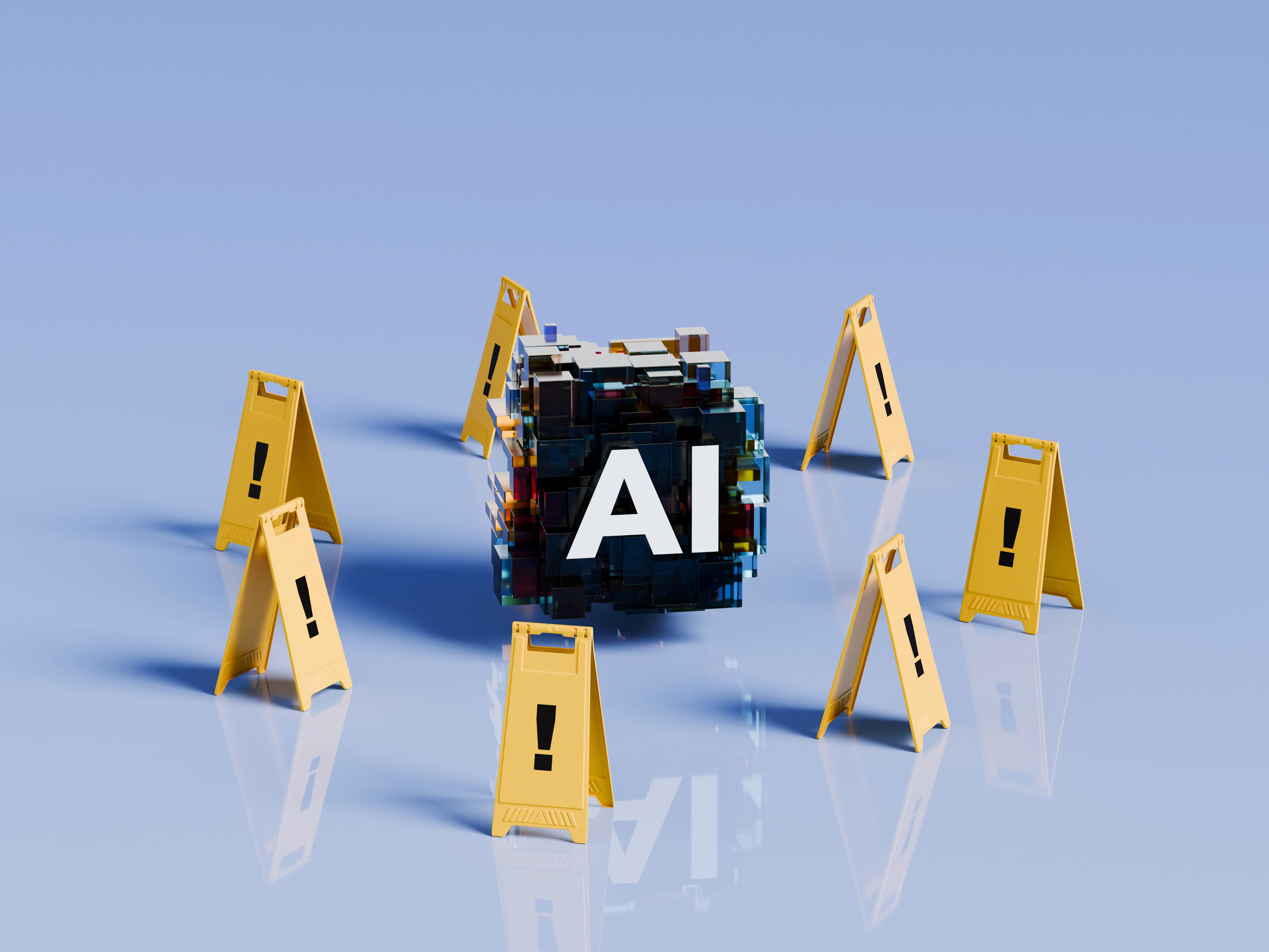
The Limits of Large Language Models and the Search for a Better Path to AGI
The race to develop artificial general intelligence (AGI) has become one of the most ambitious and competitive endeavors in modern technology. However, as top AI companies pour billions into building increasingly complex large language models (LLMs), many researchers are questioning whether these models are truly the path to achieving AGI.
The AI Bubble and Investor Concerns
OpenAI, now the most valuable startup in the world, has raised over $60 billion and is on track to surpass a $500 billion valuation. Its flagship product, ChatGPT, boasts 700 million weekly users and has set the pace for the AI industry. Despite this success, concerns about profitability and long-term viability persist. OpenAI is not yet profitable, and its mission to create AGI that benefits all of humanity remains unfulfilled.
Other major players like Google, Meta, xAI, and Anthropic are also investing heavily in scaling their LLMs. This includes acquiring talent, buying data, and constructing massive data centers. Yet, the gap between the hype surrounding AI and the reality of its capabilities is growing. Some investors and industry leaders believe the AI sector is experiencing a bubble, with expectations outpacing actual progress.
Sam Altman, CEO of OpenAI, has acknowledged that the current excitement around AI may be excessive. Meanwhile, a recent stock market sell-off highlighted widespread uncertainty. Investors are now closely watching Nvidia’s earnings report, as the company plays a critical role in powering LLMs. If the results show signs of slowing growth, it could trigger further doubts about the future of AI.
The Problem with Large Language Models
Despite their impressive performance, LLMs have significant limitations. A June paper from Apple researchers titled “The Illusion of Thinking” found that advanced reasoning models struggle with complex tasks, relying more on pattern recognition than true understanding. This raises concerns about whether LLMs can evolve into AGI.
Andrew Gelman, a professor at Columbia University, compared the performance of LLMs to human cognition, stating that while they can handle simple tasks, they fall short when it comes to deeper reasoning. Geoffrey Hinton, often called the "Godfather of AI," has argued that training models to predict the next word forces them to understand context. However, many researchers disagree, pointing to issues such as hallucination, misinformation, and inconsistent outputs.
A German study found that LLMs across 30 languages have an average hallucination rate of 7% to 12%, reinforcing the idea that these models are not yet reliable for critical applications. Companies that adopt AI often require human oversight to ensure accuracy and safety.
The Scaling Dilemma
Many AI researchers believe that increasing the size of LLMs will eventually lead to AGI. This approach, known as scaling, is based on the idea that more data and computational power will improve model performance. However, recent studies suggest that LLMs may be hitting a wall, with diminishing returns as they scale.
Yann LeCun, Meta’s chief AI scientist, has emphasized that simply adding more data and compute does not guarantee smarter AI. He advocates for alternative approaches, such as world models, which simulate real-world environments rather than relying solely on text-based patterns.
New Approaches to AGI
Researchers like Fei Fei Li and Yann LeCun are exploring alternatives to LLMs. World models, for example, aim to replicate how humans learn by simulating and interacting with the physical world. These models can make predictions and adapt to new situations, offering a more robust foundation for AGI.
Google’s DeepMind recently released Genie 3, a world model capable of simulating real-world environments like volcanic terrain or underwater landscapes. This development highlights the potential of world models to enable AI systems that can reason, plan, and interact with the physical world.
Other promising approaches include neuroscience-inspired models, multi-agent systems, and embodied AI. Embodied AI, in particular, integrates world models into physical forms, allowing robots to interpret and learn from their surroundings.
The Future of AI
While LLMs have made remarkable strides, many experts agree that they are not the final solution. As the AI industry continues to evolve, the focus is shifting toward more holistic and adaptive models. Researchers like Gary Marcus, once considered skeptical, now advocate for a move away from pure scaling and toward cognitive models that better reflect human intelligence.
The journey to AGI remains uncertain, but the search for better alternatives is ongoing. Whether through world models, embodied AI, or other innovative approaches, the next phase of AI development could redefine what it means to create intelligent machines.

0 comments:
Ikutan Komentar