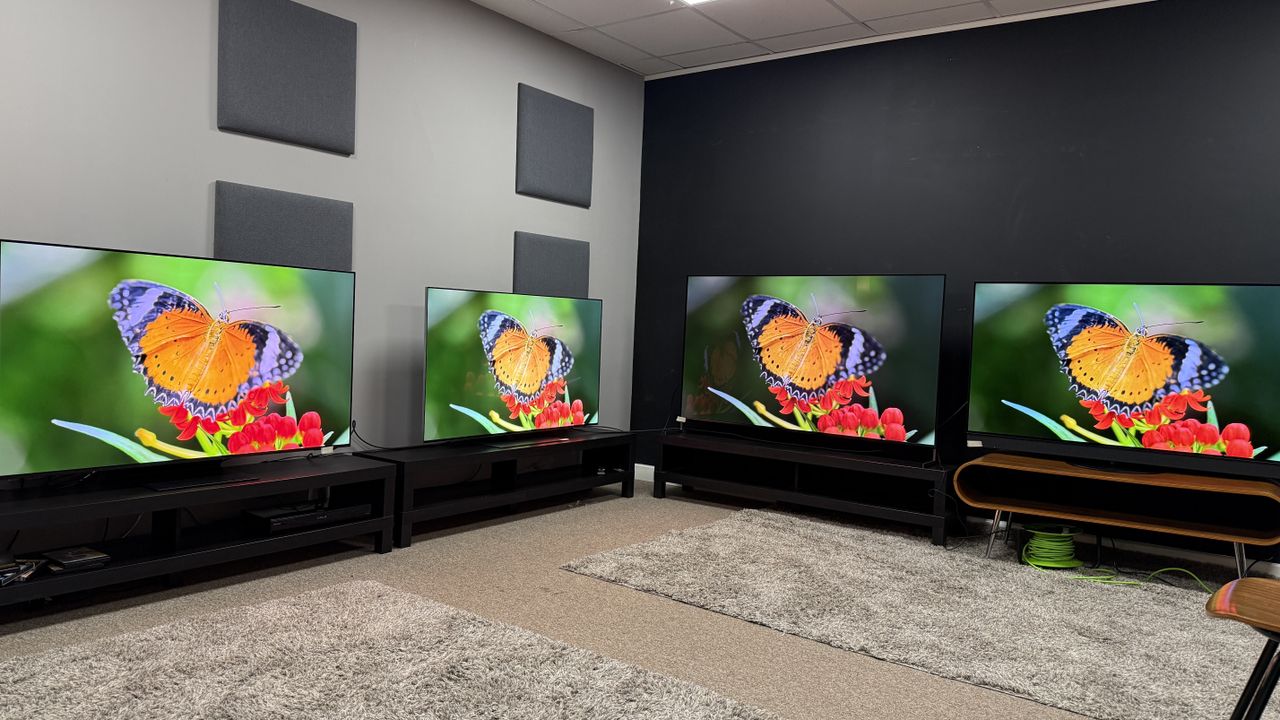
The OLED TV Market: A Battle for Supremacy
The competition between LG and Samsung in the OLED TV market has been fierce, especially since Samsung made a strong return with its QD-OLED technology. These two Korean giants have consistently dominated the market, outpacing other brands like Panasonic, Sony, and Philips in terms of market share. While these other brands offer high-quality TVs, they often fall short when it comes to features, design, and pricing.
One of the main reasons for LG and Samsung's success is their comprehensive range of features. Their smart TV interfaces are more user-friendly, and they provide better gaming capabilities, including support for higher refresh rates and multiple HDMI 2.1 ports. Additionally, their sleek designs make them more appealing to consumers who value aesthetics as much as performance.
Despite this, it’s important to note that Panasonic, Sony, and Philips still produce excellent TVs. For example, Sony and Panasonic are known for delivering some of the best sound quality in the industry, while Philips offers unique features like Ambilight to differentiate itself from competitors.
Picture Brightness and Innovation
A key area where LG and Samsung have had an edge is in picture brightness. Traditionally, OLED TVs were not ideal for bright room conditions, but recent models from LG and Samsung have significantly improved in this aspect. Samsung introduced the OLED Glare Free screen on the S95D, which enhances visibility in well-lit environments. This innovation has helped LG and Samsung maintain their lead in picture quality.
However, price has also played a crucial role in their dominance. Until recently, LG and Samsung were able to offer their flagship OLED TVs at lower prices than their rivals. For instance, the LG G4 and Samsung S95D were available for around $2,600, while the Panasonic Z95A was priced at $3,100. Despite the Z95A’s superior sound system and potentially better picture quality, the price gap made it less attractive to many consumers.
Sony’s Bravia 9 mini-LED TV offered a competitive alternative, but the preference for OLED over mini-LED remained strong for some buyers.
Current Pricing Trends in 2025
In 2025, the landscape has shifted slightly. The LG G5 and Samsung S95F launched at similar prices, around $3,399 for the 65-inch model. However, both saw price drops in anticipation of major sales events. What caught many off guard was how aggressively Sony and Panasonic priced their new models.
The Sony Bravia 8 II and Panasonic Z95B were launched at prices close to those of LG and Samsung. As of mid-August 2025, the prices have continued to fluctuate:
- LG G5 65-inch: $2,999 / £2,699 / AU$5,295
- Samsung S95F 65-inch: $3,299 / £2,799
- Panasonic Z95B 65-inch: $2,999 / £2,799
- Sony Bravia 8 II 65-inch: $2,999 / £2,499 / AU$5,295
This shift indicates that Panasonic and Sony are now offering competitive pricing, making them more attractive options for consumers.
Performance and Preferences
Opinions on these four TVs vary widely. Recent blind tests revealed different preferences among viewers and experts. One test, conducted by The Shiro Copr, favored the Samsung S95F and LG G5 for their brightness and vibrant colors. Another test by Value Electronics highlighted the Sony Bravia 8 II and Panasonic Z95B for their accurate SDR and HDR performance.
While the Z95B and Bravia 8 II may lack some of the advanced gaming features found in the G5 and S95F, they offer superior built-in sound systems. Comparisons between the Z95B and Bravia 8 II showed that both outperformed LG and Samsung in audio quality, reducing the need for additional soundbars.
Although LG and Samsung still lead in picture brightness, the gap in other aspects of picture quality has narrowed significantly. As the year progresses, the competition between these OLED TVs is expected to intensify, making the choice for the “OLED TV of the Year” increasingly difficult.
Final Thoughts
The OLED TV market continues to evolve, with LG and Samsung maintaining a strong presence. However, the emergence of competitive models from Sony and Panasonic has created a more balanced playing field. Consumers now have more choices than ever, and the decision will depend on individual priorities such as price, features, and performance.

0 comments:
Ikutan Komentar