Showing posts with label telecommunications. Show all posts

Thursday, August 6, 2026

QCOM Surges in V2X Market: A Growth Game-Changer?

Featured Image

Qualcomm's Strategic Move in the V2X Market

Qualcomm Incorporated has been steadily increasing its presence in the vehicle-to-everything (V2X) communication systems market. This growth has been fueled by the acquisition of Autotalks, a company known for its expertise in V2X technologies. The V2X system is becoming a crucial component in building safer and more efficient traffic systems. It enables communication between vehicles, pedestrians, and connected roadway infrastructure, creating a real-time information-sharing network that can alert drivers to various road hazards, weather conditions, and traffic signals. This technology also enhances advanced driver-assistance systems (ADAS) and automated driving features.

The C-V2X (Cellular Vehicle-to-Everything) technology has significantly improved ADAS by allowing vehicles to exchange real-time data with other vehicles (V2V), infrastructure (V2I), and pedestrians (V2P). As 5G adoption accelerates, the connectivity infrastructure required for V2X is becoming more robust. Qualcomm is capitalizing on this trend by expanding its Snapdragon Digital Chassis product portfolio. The integration of C-V2X capabilities into broader platforms and solutions, including the Snapdragon Digital Chassis, provides a comprehensive connected car experience. The successful integration of Autotalks has further strengthened Qualcomm’s position in this space.

Global Standards and Comprehensive Solutions

Autotalks’ V2X solutions are compliant with global communication standards such as DSRC (Dedicated Short-Range Communications) and C-V2X. With access to Autotalks’ extensive V2X expertise and technology, Qualcomm is able to offer a wide range of automotive-qualified global V2X solutions suitable for installation in vehicles, as well as 2-wheelers and roadside infrastructure. The company’s V2X chipsets provide production-ready standalone solutions that are specifically designed for global applications, making direct communication more widespread.

Other Tech Firms in the ADAS Market

NVIDIA Corporation is another major player in the ADAS market. The company offers a scalable AI computing platform tailored for ADAS and autonomous vehicles through its NVIDIA Drive initiative. This platform uses AI-powered perception via deep neural networks for object detection, lane recognition, and path planning. It also includes high-performance GPUs and software stacks for localization and control. The NVIDIA DRIVE Thor platform combines ADAS, cockpit, and autonomous driving capabilities into a single SoC. NVIDIA is collaborating with over 320 automakers, tier-one suppliers, and other industry players to develop and deploy AI systems for self-driving vehicles. Its focus on incorporating AI into the cockpit for infotainment systems is helping it grow its autonomous driving revenues.

Intel Corporation has also made significant strides in the ADAS market through the acquisition of Mobileye. This move has allowed Intel to quickly enter the autonomous car technology market, which is currently dominated by companies like NVIDIA and Qualcomm. Mobileye brings technologies related to cameras, in-car networking, sensor chips, roadway mapping, cloud software, machine learning, and data management. Intel envisions Mobileye as a key revenue generator, with a shift from low-cost, vision-only systems to premium ADAS software and SuperVision packages. Intel’s EyeQ6 and EyeQ Ultra chips are next-generation solutions targeting high compute and full autonomous capabilities.

Financial Performance and Outlook

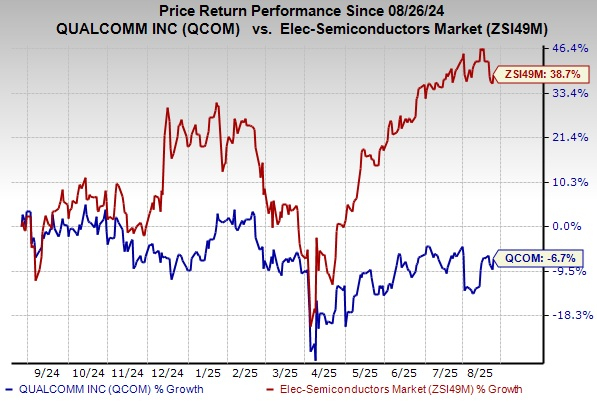
Qualcomm shares have experienced a decline of 6.7% over the past year, while the industry as a whole has seen a growth of 38.7%. Based on the price/earnings ratio, the company’s shares currently trade at 13.31 forward earnings, which is lower than the industry average of 33.35. Earnings estimates for 2025 have increased by 0.9% to $11.85 per share over the past 60 days, while those for 2026 have moved up by 0.4% to $11.87. Qualcomm stock currently carries a Zacks Rank #3 (Hold). Investors interested in top-performing stocks can explore the complete list of today’s Zacks #1 Rank (Strong Buy) stocks.

Saturday, August 23, 2025

VoIP vs. Landlines

VoIP vs. Landlines

When selecting your company's business phone system, you will likely be offered one of two choices: a business VoIP system or a traditional landline-based system, also known as a plain old telephone service (POTS).

Here's an overview ofbusiness VoIPand traditional landline telephones, including the advantages and disadvantages of each, to help you decidewhich type of business phone systemis best for your organization.

What is VoIP?

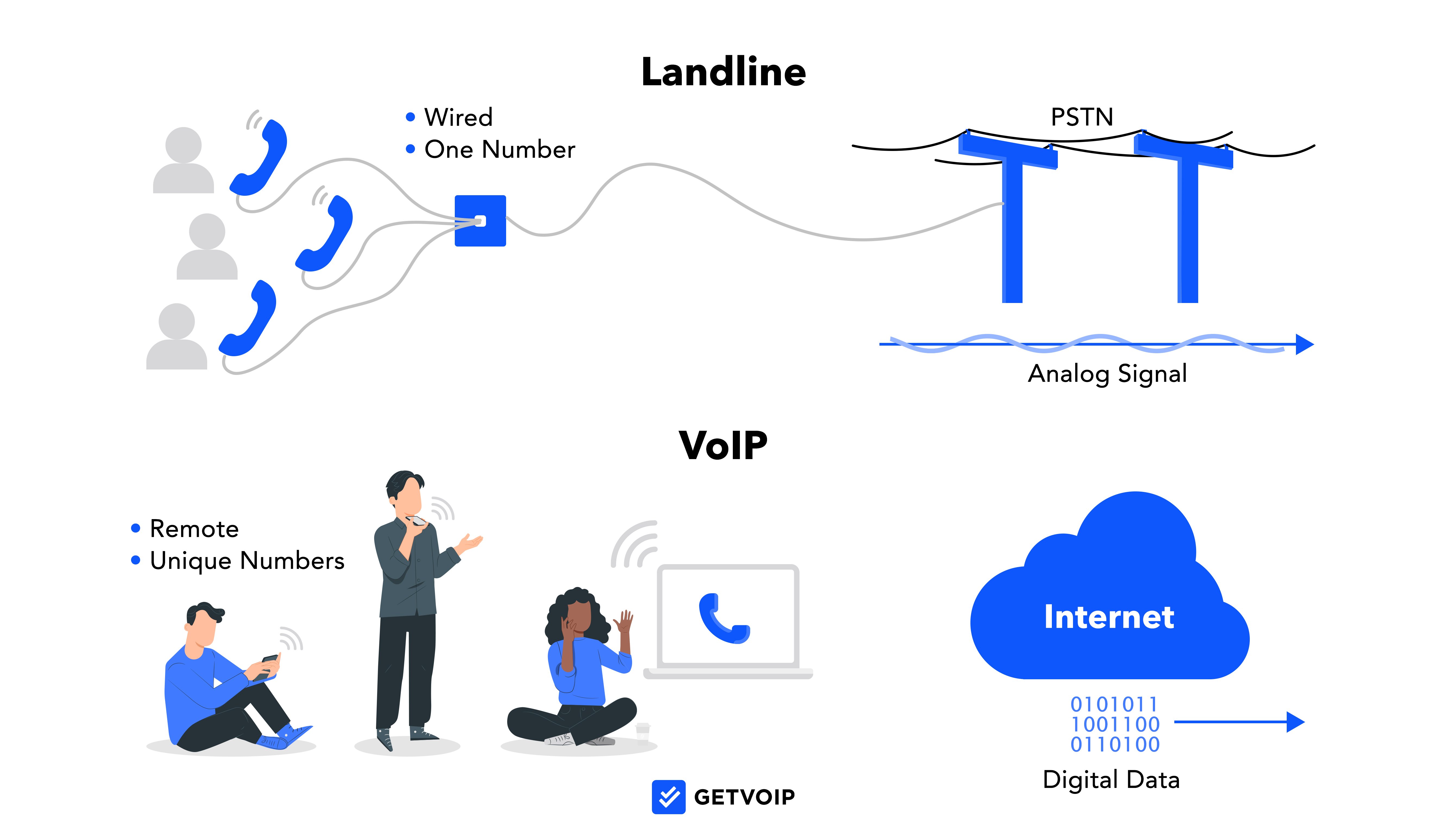
A Voice over Internet Protocol (VoIP) system uses a broadband internet connection to make calls. By contrast, traditional, land-based phone lines require a physical connection to a telephone network, which needs switches to transmit analog audio to other phones worldwide.

As working from home becomes more common, more people are switching to VoIP because they can use it over aBusiness broadband internetconnection. AVoIP phone numberIt is virtually identical to a traditional phone number, so you can still call friends, family or colleagues using traditional phone services.

There are free VoIP services, such as Google Voice, in which long-distance calls may be limited or have reduced audio quality. There are also paid VoIP services (we'll review some later) that can handle multiple phone numbers and allow you to run inbound and outbound contact centers, communicate with customers via text message and more.

What's the difference between VoIP and a landline?

The most significant difference between VoIP and a landline is the flexibility of VoIP. Traditional, land-based phone lines require a physical connection to a telephone network, which needs switches to transmit analog audio to other phones worldwide. VoIP, by contrast, relies on a broadband internet connection.

VoIP has three key advantages over traditional copper-wire-based landlines:

  • Cost:Because VoIP relies on your existing internet connection, you don't need to buy additional hardware, like handsets or aPrivate Branch Exchange (PBX)system.
  • Scalability:With VoIP, you can add a new number to your corporate plan with just a few clicks. It's much more complicated with landlines. A technician must physically connect a new line to the network, which can be expensive. Physical lines also require regular maintenance to ensure nothing is deteriorating and everything is functioning as it should.
  • Capabilities:A VoIP phone line is much better equipped to handle different forms of communication, like text messages and video conferencing. It also offers access to features such as call recording and archiving. However, if there is ever a power or internet outage, you will lose your ability to communicate with the outside world.

FYI:VoIP could be your answer if youneed a business phone numberbut don't necessarily want to install business phones.

What are the advantages and disadvantages of VoIP?

VoIP technology is an excellent business phone system option, but it isn't suitable for every organization. Here are its advantages and disadvantages.

Pros:Lower cost, Rich functionality, Portability, Scalability

Cons:Dependence on a broadband connection, Limited emergency services, Audio and latency issues, Ideal solution for global teams

VoIP pros

  • Lower cost:Because they are compatible with multiple devices, VoIP phone lines tend to have a lower total cost of ownership than landlines. An employee is usually assigned a corporate computer so they can easily access a dedicated VoIP phone line without needing extra hardware. VoIP phone lines start at just $10 per user per month, making it easy to add lines as your business expands and your workforce grows.
  • Rich functionality:VoIP lines can send text messages, images, videos and faxes. They often also provide access to professional business phone system features such as caller ID, conference calling andVideo conferencingA VoIP number can easily forward calls to remote teams or employees working from home so you can provide constant support for your customers.
  • Portability:VoIP phone lines are completely independent of specific devices or locations. You can link your VoIP number to a mobile device or laptop to receive calls from clients and colleagues wherever you go.
  • Scalability:Cloud-based VoIP platforms are easily scalable for teams and growing businesses. In fact, they are designed to bemultiline phone systems, so it's easy for users to add or delete new lines within seconds without contacting a service provider. Once a new VoIP line is created, a new team member can make and receive calls on PCs and cellphones, so you don't have to purchase extra equipment.[Learn more aboutCloud PBXand othercloud-based phone systems]
  • Ideal solution for global teams:Thanks to its flexibility and scalability, VoIP is an ideal solution for remote teams. You can create VoIP phone lines for specific regions or countries to provide local support without long-distance charges. Alternatively, your business could use a VoIP line to forward calls to the proper team members and ensure consistent customer support.

Did you know?Many VoIP systems integrate with apps such asSlack to enhance workplace communicationwith in-office and remote staff.

VoIP cons

  • Dependence on broadband connection:The biggest drawback of VoIP is its reliance on a stable broadband internet connection. A VoIP phone line transmits data packets through a broadband connection to another line. Without a consistent connection, you could lose audio quality or drop a call entirely. In an internet or power service outage, a VoIP line won't work.
  • Limited emergency services:When someone makes a 911 call, emergency service providers track the phone number to find a home address or GPS location so they can send help. This is a problem with VoIP numbers. Because a VoIP phone line appears as an IP address, it's challenging for emergency services to pinpoint someone's physical location. A delay can be catastrophic in a situation where every second counts.
  • Audio and latency issues:If there is a bandwidth or latency issue, such as an unstable connection or multiple simultaneous users on a single network, problems could occur. Without the proper connection, the call quality on a VoIP line could be affected, resulting in stuttering audio or delays in teleconferences.

What are the advantages and disadvantages of landlines?

Many businesses use traditional landline phone systems. Here's a look at their advantages and disadvantages.

Pros:Reliability in emergencies, Good audio quality, Ease of use

Cons:Higher cost, Limited functionality, Stationary devices

Landline pros

  • Reliability in emergencies:Traditional landlines operate on their own power source, independent of the electricity that connects to a home or office. If the electricity goes out in your neighborhood, you can still dial 911 and connect to an operator. Because a landline is linked to a physical location and device, emergency services can quickly and easily locate an address and send help.
  • Good audio quality:A land-based phone line uses a tried-and-tested network of physical copper lines that may still be operational for years. With a landline's strong connection, you'll get fewer dropped calls, and every call you make will deliver clean, clear audio.
  • Ease of use:Traditional phone line hardware is easy to learn and use. These devices usually have a handset or a receiver and a keypad. All you have to do is enter the correct number and your call will go through. Landlines are usually stationary within a business or home (unless you have a wireless receiver), so they're easy to access when someone calls.

Landline cons

  • Higher cost:Traditional landlines cost more, and the more numbers you add, the more that cost increases. For example, if you have a business with 100 people and pay $25 per month for each number, you're looking at $2,500 per month.
  • Limited functionality:A landline is best for audio calls. Because they were created before text messaging, video conferencing or image sharing, traditional phone lines cannot perform many of the tasks that VoIP can.
  • Stationary devices:When someone calls your landline number, they are not calling you; they are calling your desk or whatever surface your phone is mounted on. If you are away from your desk, you miss the call if you don't have voicemail. You could miss a sale or an important call.

Did you know?Many VoIP platforms make theBest business phone systems for restaurantsAuto-attendants can direct incoming calls, and restaurants can integrate their VoIP system to target the right customers for promotions via email and text messaging, all from one screen.

How to choose between a VoIP service and a landline

There are a few important questions you should ask when you're deciding between a VoIP phone service and a traditional landline:

  • How big is your team?VoIP may be the right choice if you have a large team that works from home or employees who are scattered across different regions. Because of VoIP's inherent scalability and portability, it's an ideal, reasonably priced option for teams that don't work in the same location. On the other hand, if you have a small, local team that needs just a few no-frills phone lines, a landline phone service may be the best option.

Tip:One great way for companies with outbound telemarketing teams to squeeze more value out of their phone system, whether VoIP or a landline, is to add an auto-dialer. An auto-dialer predicts when a call is about to end and starts dialing the next number, thereby reducing downtime and increasing productivity.

  • What are your equipment concerns?Consider VoIP if you want to avoid the extra costs of buying a new phone for each employee. However, if you take into account the cost of hardware in a new phone system, a landline option may be within your budget.
  • Which features do you need?A landline is a good option if you only need to make short local calls. However, VoIP is far more suitable if you want to transfer files from the field, send videos to employees or colleagues, or hold video conferences with an entire workforce.

Best business phone systems for VoIP

We've shown how VoIP is much more flexible and capable than POTS lines because of the technical architecture that supports it.

Many of thebest business phone systemsOffer improved functionality and scalability because they run on VoIP. Below, we have highlighted some of the most popular services.

Zoom

Zoom, probably best known as a video conferencing app, is also a capable and scalable VoIP platform that's ideal for businesses of all sizes. Prices start at $10 per user per month. For that price, you get access to a wide range of features, including SMS integration, free extension-to-extension calling, unlimited outbound calls and direct-dial numbers for over 40 countries.

Read our in-depthZoom review.

Vonage

Vonage is an attractive option for companies investing in their first phone system or upgrading their current one. It offers over 30 built-in switchboard features, such as call groups, multilevel auto-attendants, call monitoring, and HD voice quality. It's easy to set up, and you can add or remove new lines instantly when needed. Pricing starts at $17.99 per user per month.

Read our comprehensiveVonage review.

RingCentral

RingCentral is a powerhouse. This scalable and easy-to-use system supports internet faxing, voicemail (and voicemail-to-text and voicemail-to-email), automatic call recording, team messaging, call recording, call queueing and much more. The support for SMS, video conferencing, social media messaging and other communication channels is excellent. Pricing starts at $20 per user per month.

Read our latestRingCentral review.

Ooma Office

We love that Ooma's comprehensive VoIP system makes it easy to operate the platform. The Express Setup Assistant makes it easy to launch and configure your system. You then connect devices by downloading theSoftphone app. The platform's features include SMS, video conferencing, message analytics, hunt and ring groups, virtual faxing, call routing and more. Pricing starts at $19.95 per user per month.

Read our up-to-dateOoma Office review.

NextivaONE

Nextiva offers an impressive array of valuable VoIP features, including SMS/MMS, unlimited audio conference calls, online faxing, auto-attendants, call popping (on-screen notifications of incoming calls) and video conferencing. The online dashboard makes system configuration simple, and it's easy to add and delete users, lines and numbers. Prices start at $23.95 per user per month.

Read our in-depthReview of NextivaONE.

GoTo Connect

The GoTo Connect platform is popular with small and midsize businesses thanks to features such as unlimited calling to more than 50 countries, advanced analytics for monitoring call quality, video conferencing, SMS and call queuing, and intelligent call routing. Priced from $27 per user per month, the platform offers excellent native integrations with Oracle Sales Cloud, Microsoft Teams, Salesforce CRM, Zendesk, HubSpot, Salesforce Service Cloud and more.

Read our comprehensiveReview of GoTo Connect.

Dialpad

Dialpad is a feature-rich and competitively priced option that starts at just $15 per user per month. This artificial intelligence (AI)-powered platform provides a wide range of capabilities, including SMS, video conferencing, advanced call routing, self-service chatbots, social media messaging, outbound dialing and call transcription. The AI integration is excellent and delivers meaningful insights about company performance by monitoring call and contact metrics.

Read our up-to-dateReview of Dialpad.

8x8

8x8's impressive unified communications platform offers a great range of features, including call routing, call queueing, advanced call routing and multilevel auto-attendants. This flexible platform offers options to interact with customers by video, mobile, web, text message and other channels so they can contact you easily. Pricing starts at $24 per user per month.

Read our latestReview of 8x8.

Eduardo Vasconcellos contributed to this article.
Measuring a previously mysterious imaginary component of wave scattering

There has long been a mystery in calculating how an incoming light wave scatters off an object and becomes a modified, outgoing light wave. In particular, the time delay of the transition from one to the other comes out to be a complex number, a regular real number but with a nonzero imaginary part.

Subscribe to ournewsletterfor the latest science and technology news updates.

The imaginary part of thecomplex numberis a regular real number multiplied by the square root of -1, designated by "i." Physicists have found that the first part, the regular real number (usually a mathematical function of energy, or frequency), is well predicted, but they have been so puzzled by the imaginary part, and a bit embarrassed, that they deemed it "unphysical" and ignored it.

But now a pair of physicists from the University of Maryland in the U.S. have shown that the complex part does indeed have a meaning, related to the frequency shift of the transition from incoming to outgoing wave. Their work has beenpublishedinPhysical Review Letters.

The mathematical function that describes the linear transition from one wave function to the other is called the scattering matrix or S-matrix. The scattering matrix, a square array with as many rows and columns as the number of channels of the incoming wave, in principle contains all there is to know, scattering-wise, about the system doing the scattering, which may be glass such as a frosted window or lens, water, a fiber optic cable, atomic nuclei, atoms, molecules and many-body quantum systems.

Inside the system, the velocity of the light wave typically changes; such a system is called a "dispersive medium." In particular, the scattering matrix for a dispersive medium can provide the time delay of the wave's transition from incoming to outgoing—how long the wave stays in the system.

In turn, the time delay provides scientists, engineers and technicians with parameters such as the phase evolution of quantum waves, the delay of a wave group in an optical fiber cable and the group delay in waveguides, among other quantities.

But what to make of the imaginary parts of the scattering matrix? In a2016 paperinNature Communicationsby lead author M. Asano from Japan, a group of scientists from several countries around the world recognized that for light pulses that meet certain requirements, the imaginary part of the scattering matrix - more precisely, the real number before "i", the square root of -1 - represented the "frequency shift" of the transitioning wave due to its passage through the scattering system. In particular, it represents the shift of the frequency in the center of the pulse (shaped as a Bell curve, a Gaussian distribution) of the incoming light pulse.

The requirements are straightforward and not uncommon. The frequency bandwidth, or range of frequencies in the pulse, must be small and the scattering system must be linear and dispersive—that is, the outgoing wave channels are a linear sum of the incoming wave channels, proportional to each—and the properties of the scattering system depend on the incoming wave's frequency components. (It is equivalent when discussing the scattering system's effects in terms of wavelengths or energies.)

The co-authors of the current paper inPhysical Review Letters, Isabella L. Giovannelli and Steven M. Anlage of the Maryland Quantum Materials Center at the University of Maryland decided to test this theoretical prediction.

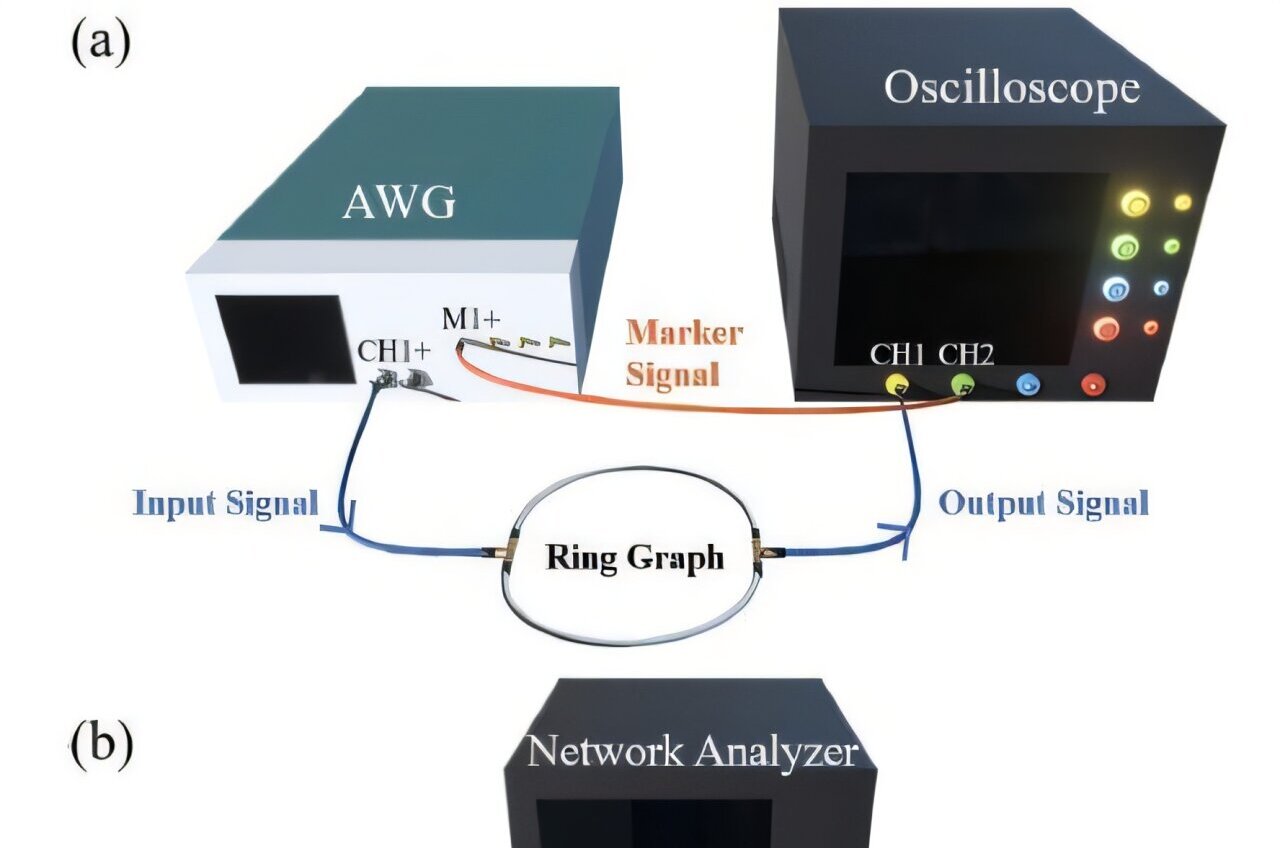
For their experiments, they used a two-port microwave ring graph as the scattering system. This device is a resonator, a closed loop waveguide in which electromagnetic waves circulate (the microwaves) and formstanding wavepatterns where the circumference of the ring is an integer number of wavelengths.

Ring graphs are often used as filters or switches. The actual ring consisted of two coaxial cables of different lengths, 28 cm and 31 cm long, and two T-junctions.

The microwave pulses sent through the ring graph had a center frequency of 5 gigahertz (a standard microwave oven uses microwaves of 2.45 GHz), with a narrow bandwidth of only 5 megahertz (0.005 GHz).

The experimentalists chose a frequency domain setup for their measurements, meaning the light pulses were analyzed as functions of frequency—how much of each frequency is present. The alternative is a time domain setup, where the signals are analyzed as functions of time— how the signal's amplitude changes over time. The frequency domain setup uses electronics which apply mathematical transforms to show amplitude and phase as functions of frequency.

In this way, the pair sent the 5 GHz microwaves through the resonator and measured the time delay of the wave pulse to be -7.95 nanoseconds (ns), and a frequency shift of the center of the pulse's Bell curve of 0.48 megahertz.

The prediction for the imaginary time delay, or frequency shift, is 3.03 radians per microsecond, which is 0.482 million cycles per second or 0.482 MHz. The measured frequency shift is, they write, "in excellent agreement with the predictions of Asano et al."

With the confirmed theory, 'we can now make predictions for reflection time delays, along with reflection time-delay difference,' they conclude, among other time delay differences in more complicated systems.

Written for you by our authorDavid Appell, edited bySadie Harley, and fact-checked and reviewed byRobert Egan—this article is the result of careful human work. We rely on readers like you to keep independent science journalism alive. If this reporting matters to you, please consider adonation(especially monthly).

More information:Isabella L. Giovannelli et al., Physical Interpretation of Imaginary Time Delay,Physical Review Letters(2025).DOI: 10.1103/nnk7-xy4v

© 2025 Science X Network

This story was originally published onThe Shiro Copr.

Google Pixel 10 is the first to add WhatsApp satellite calls

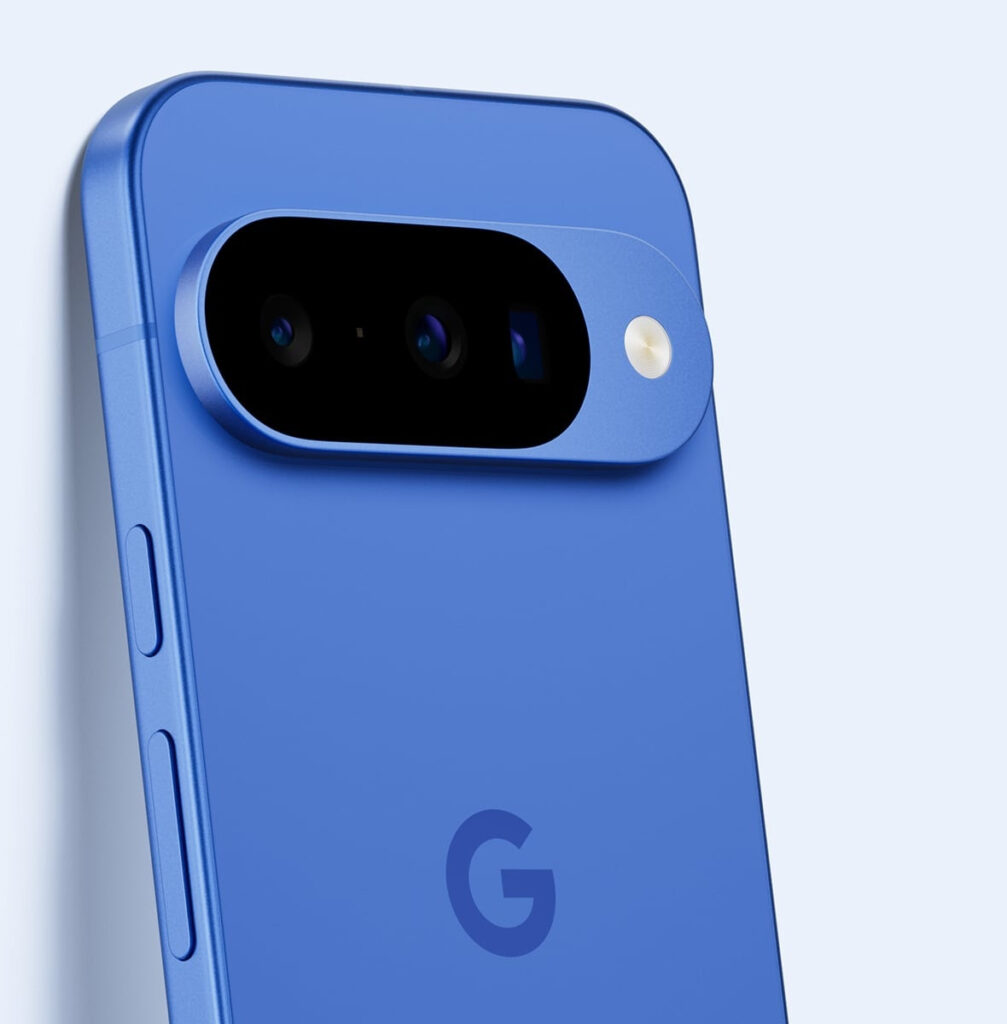
Google's newPixel 10Phones are out in the world, but the company isn't done revealing surprises. Just days after announcing the lineup at its August 20 Made by Google event, Google confirmed that the Pixel 10 series will gain a unique new feature. It can make WhatsApp voice and video calls over a satellite connection.

The update is set to roll out on August 28, the same day the phones officially go on sale. Google shared the news on X (formerly Twitter), along with a short teaser video that shows how the feature will look in action.

When a WhatsApp call is made through a satellite link, a small satellite icon will appear in the status bar. From there, users will be able to answer and make WhatsApp voice or video calls just like they would on Wi-Fi or mobile data.

The Pixel 10 series is the first in the world to support satellite calls in WhatsApp.

It is the first time WhatsApp calls will work over satellite networks, and Google says the Pixel 10 series will be the first smartphones in the world to support it. Still, there are a few caveats. The feature will only work with carriers that support satellite connectivity, and Google has warned that additional charges may apply depending on the provider.

So far, the company hasn't said whether WhatsApp messages will also work over satellite. Right now, text messaging over satellite is possible on certain platforms, but it looks like this rollout is focused squarely on calls.

Apple and Samsung have already introduced satellite features on some of their devices, but Google's partnership with WhatsApp adds a communication layer that feels more everyday and practical.

Apart from the Pixel 10 series, Google has not clarified whether the feature will be rolled out to Pixel 9 series devices. Currently, the Pixel 9 and Pixel 10 series are the only phones in Google's portfolio with satellite connectivity.

Don't miss a thing!Join our Telegram communityfor instant updates and grab ourfree daily newsletterfor the best tech stories!

For more daily updates, please visit ourNews Section.

The postGoogle Pixel 10 is the first to add WhatsApp satellite callsappeared first onThe Shiro Copr.

Friday, August 22, 2025

Using old crank-style telephones leads to citation for poacher

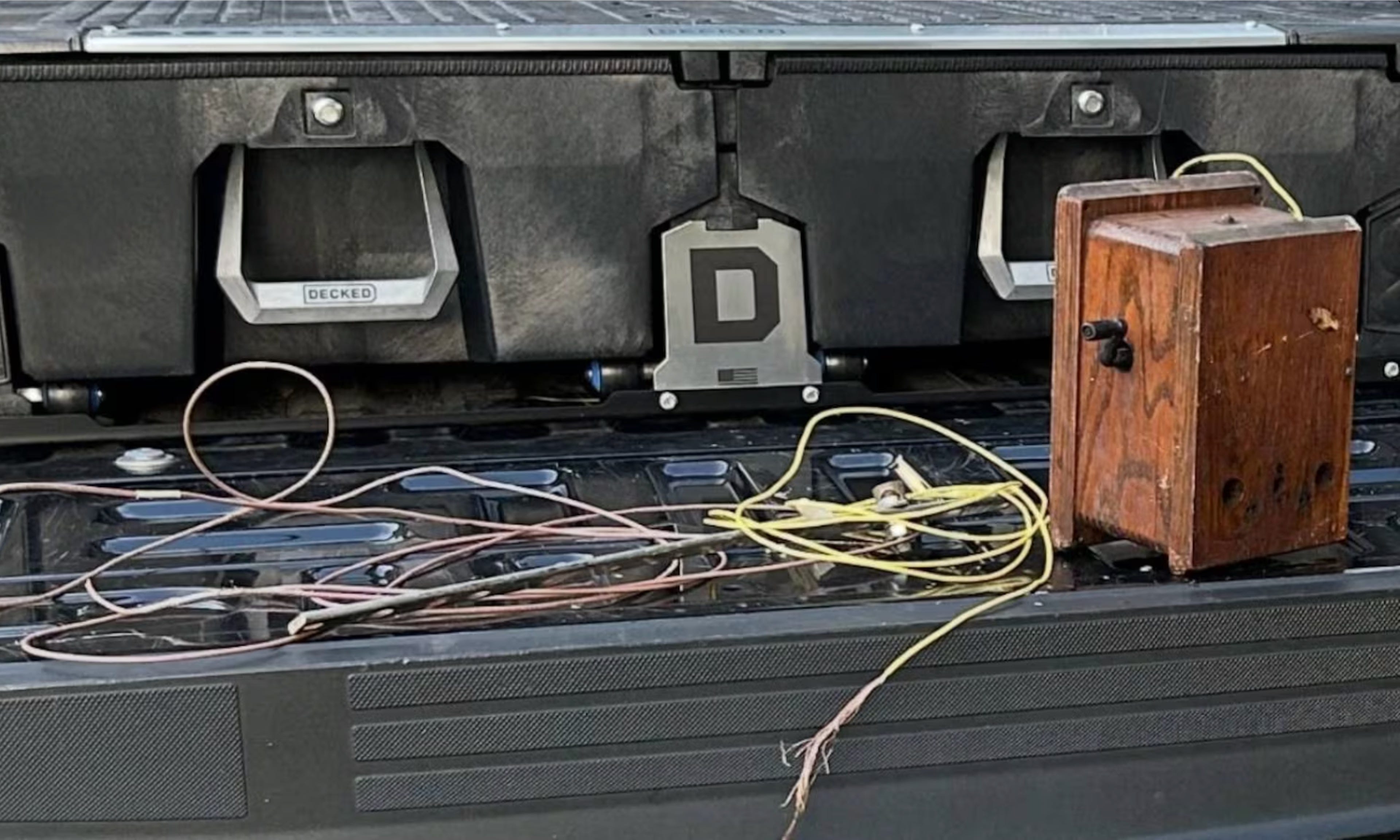
Georgia game wardens checking on fishermen on a creek in Wilkes County encountered a man and woman attempting to electroshock fish with an old crank-style telephone.

Sgt. Matt Garthright and Chason Brogdon noticed the pair acting suspiciously around 7:30 p.m. last Friday, and as they approached, they saw the man moving away with a wooden box in his hands, according toGeorgia Public Broadcastingand theGeorgia Department of Natural Resources, Law Enforcement Division.

As they got closer, the man threw the box into the creek," GDNR reported in its Facebook post. "Sergeant Garthright was able to retrieve the box from the creek and identified it as an outlawed fishing technique—an old crank telephone used to shock fish.

Neither had a fishing license, but both were given the opportunity to immediately purchase one online. Then, the male, identified as a 29-year-old from Mississippi who was in Georgia for work, was charged with electrofishing, and the old crank telephone was confiscated.

It's been reported that fishermen in the south used jury-rigged components of old crank-style telephones to send an electric current through the water to stun fish.

The old crank-style telephones were used from the late 19thcentury through the mid-20thcentury, and the hand crank was used to ring up the operator.

Also, from theA.W. Perry Homestead MuseumDid you know the ring of the hand-crank telephone was based on how long the crank was turned? Different households were assigned different patterns of long and short rings so people would know who they were calling and who was calling them. They were also attached to what were called 'party lines,' meaning multiple homes were on the same line. This also means a neighbor could eavesdrop on conversations!

This article originally appeared on For The Win:Using old crank-style telephones leads to citation for poacher