Showing posts with label education. Show all posts

Wednesday, July 22, 2026

Cheshire Schools Boost Progress Without Cell Phones

Featured Image

Addressing the Challenge of Student Distraction in Modern Classrooms

As students across the state return to school, educators are increasingly focused on a critical challenge: maintaining student attention in an environment filled with distractions. With the constant presence of smartphones and other digital devices, it’s more important than ever for schools to find effective strategies to keep students engaged and focused.

One district that has taken a proactive approach is Cheshire Public Schools. Administrators there have implemented policies aimed at reducing the impact of technology on learning and social interaction. Kristin Pelz, Assistant Principal at Cheshire High School, highlighted the importance of community involvement and parental support in this effort.

“Our approach has been about bringing in the community, getting parental support, and getting students on board. So, everybody has expectations that we’re going to put parameters in place,” Pelz explained.

The initiative began a few years ago when school leaders noticed how disruptive phones had become in classrooms. Taryn DiSorbo, a math teacher at Cheshire Public Schools, recalled the shift in student behavior.

“I missed the connections that students were making. They stopped interacting with each other. I would give them a break, or we’d be transitioning, and it would be silent,” she said.

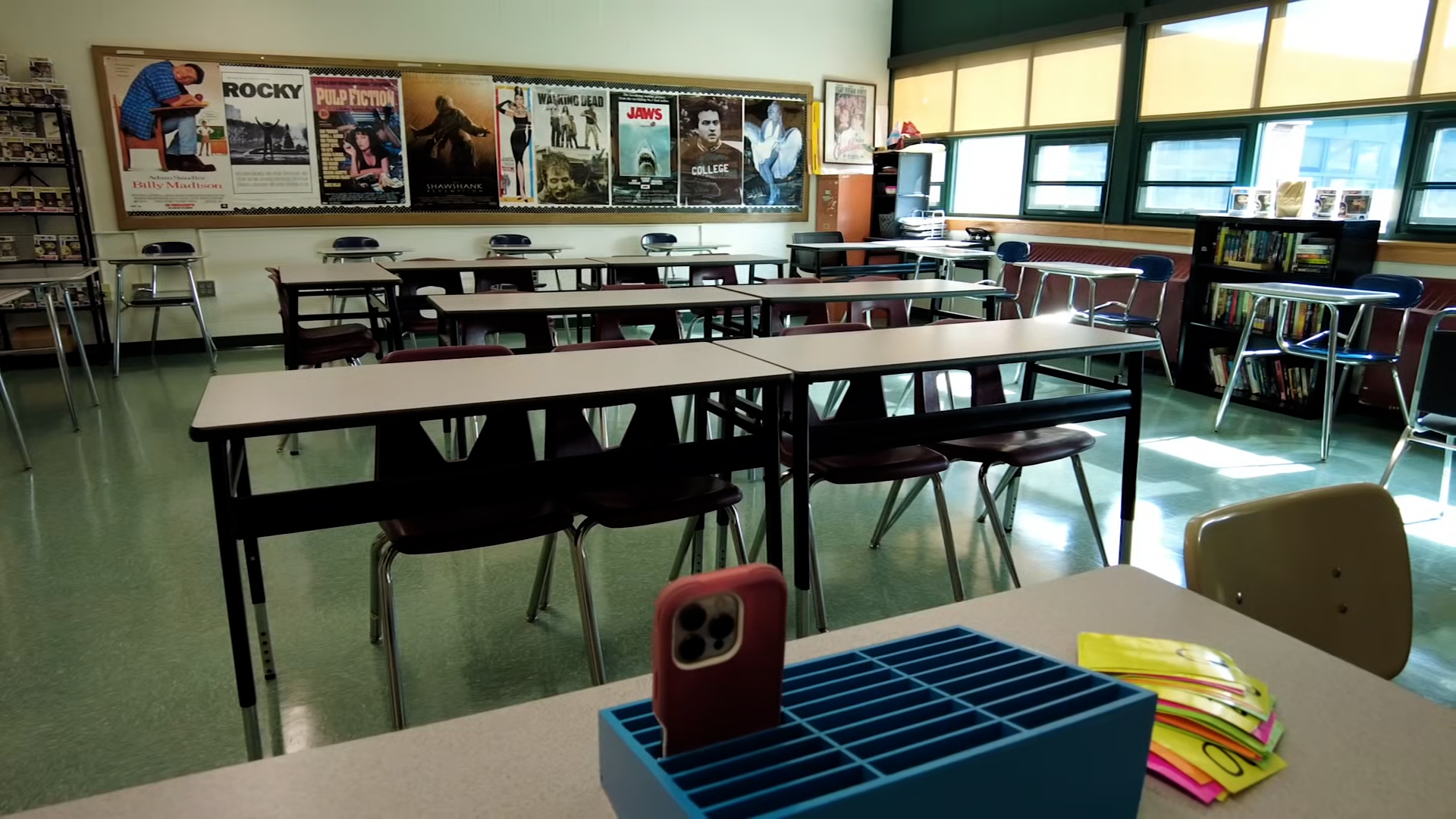
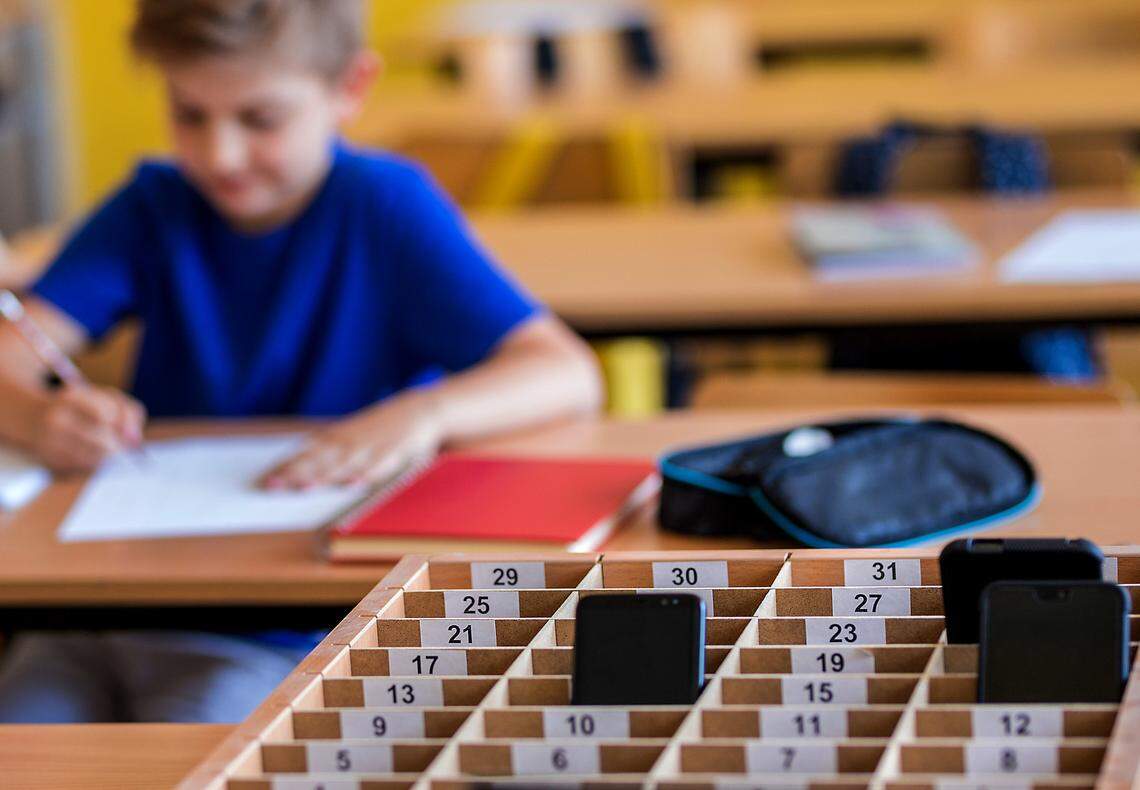
To address this issue, teachers now collect students’ phones at the start of class and store them in pouches, buckets, or bins at the front of the classroom. Susan Chasen, a chemistry teacher at Cheshire High School, shared her experience with the policy.

“I felt like it really made a big difference. Not only in their engagement when I was trying to present material or they were working on things, but in little moments of downtime, they were actually interacting with each other and talking to each other,” she said.

In addition to physical phone storage, teachers are also adapting their lesson plans to better suit modern student attention spans. Holly Skrzyniarz, a history teacher at Cheshire High School, noted the changes over the years.

“Students’ attention span has definitely shifted. It’s much shorter than when I started teaching. So, you kind of have to develop your hour, you know, as mini lessons,” she said.

This shift has led to more dynamic and varied teaching methods, ensuring that students remain engaged throughout the class period.

Parents are also playing a key role in this effort. The district has encouraged families to read books about anxiety and smartphone dependence during the summer months. Afterward, book talks were held where many parents discussed ways to reduce their children’s reliance on technology.

“I think when you see the parents of the young children, they’re just getting ahead of it. Because, you know, their kids are growing up with these phones and they want to get ahead of (it), before it becomes a problem. So, they’re talking about alternatives,” Pelz said.

Some parents are even considering delaying the introduction of smartphones and social media until high school. Pelz believes this decision could help students develop healthier habits early on.

“So, I think they’re going to grow into adults that have good boundaries. I’m really hopeful that they’re learning these life skills now, going through school, having some boundaries,” she said. “We’re helping teach them a lifelong skill. It’s about developing habits. And so, if they can develop a healthy relation and a healthy habits about if they could develop healthy habits about their phone use, they’re going to be better off as adults.”

Saturday, June 20, 2026

Gen Alpha Faces Stricter Cellphone Rules in San Diego Schools

Gen Alpha Faces Stricter Cellphone Rules in San Diego Schools

The Shift in Attitudes Toward Cellphones in Schools

As Gen Alpha begins their school year, cellphones are no longer appearing on supply lists, signaling a significant shift in how schools approach technology. Administrators are implementing stricter phone bans to address learning loss that has been exacerbated by the pandemic. This change reflects a growing concern over distractions and the impact of technology on students' well-being.

Why It Matters

According to survey data from the Walton Family Foundation and Gallup, attitudes toward phones in schools have changed dramatically over just one generation. Educators are increasingly focused on minimizing distractions and ensuring that students can concentrate on their studies. These findings highlight a broader trend in education as schools adapt to new challenges brought on by the pandemic.

New Rules in San Diego Unified

San Diego Unified School District recently introduced new policies that require students to keep their phones off and out of sight during class. These rules took effect at the start of the current school year, demonstrating a commitment to creating an environment conducive to learning.

State of Play

Today’s middle and high school students are facing stricter phone limits during school hours than their Gen Z predecessors did at the same age. While most schools still allow phones for emergencies, the overall trend is toward more restrictive policies. This shift is not isolated to one region; it is part of a nationwide movement.

Phone Bans Gain Momentum

In recent years, phone bans have gained traction across state legislatures. Nearly half of the country now has some form of restriction on cellphone use in classrooms. This legislative push reflects a growing consensus among educators and policymakers about the need to limit distractions in the learning environment.

By the Numbers

The data reveals a clear generational divide in phone usage during school hours. According to the survey, 79% of Gen Z adults reported being allowed to use their phones between classes when they were students. In contrast, only 41% of current middle schoolers and 61% of high schoolers are permitted to use their phones during similar times.

Additionally, 40% of current middle school students said they can use their phones during free time in class, which is a 25 percentage point decrease compared to when Gen Z adults were in school. This decline underscores the increasing restrictions placed on younger students.

Teaching Challenges

Rainer Kulenkampff, a high school history teacher in Maryland's Montgomery County Public Schools, shared his perspective on the impact of cellphone use in the classroom. He noted that teaching became more challenging when schools transitioned from remote to in-person learning. "Cellphone use was a major distraction," he said. "It disrupted student learning and impacted their well-being."

Once phones were banned, Kulenkampff observed a positive change in student behavior, indicating that these restrictions can have a measurable impact on the classroom environment.

Parental Support

About three-fourths of parents support restrictions on phone use in schools but prefer that students be allowed to keep their phones with them. This suggests a balance between the need for discipline and the practicality of having access to devices for emergencies or communication.

The Broader Implications

The trend of banning cellphones in schools is not just about managing distractions; it also reflects a broader conversation about technology's role in education. As schools continue to navigate the challenges of the post-pandemic era, the focus remains on fostering environments where students can thrive academically and emotionally.

With Gen Alpha entering the educational system under these new guidelines, the long-term effects of these policies remain to be seen. However, the current data and trends suggest that the approach to technology in schools is evolving, with a clear emphasis on minimizing disruptions and promoting student well-being.

Monday, May 25, 2026

More WA Schools Ban Cellphones. What About Tri-Cities?

Featured Image

The Impact of Restricting Cellphone Use in Classrooms

As students and teachers return to class for the 2025-26 school year, school leaders across Tri-City are reporting that limiting cellphone use in classrooms has proven to be a successful approach. This move is part of a broader trend aimed at reducing distractions and improving student focus.

Washington Superintendent Chris Reykdal shared findings from a spring survey of school districts across Washington, indicating that 75% of them will have policies in place when students return this year. Approximately half of these policies restrict device use during instructional time only, while a third completely bans students from using their phones from the first to the last school bell.

A year ago, Reykdal encouraged the state's 295 school districts to develop their own policies to reduce distractions during teaching time. Research has shown that removing cellphones can help improve student concentration, enhance learning, and support better mental and physical health by reducing pressure from social media.

At Richland High School, Principal Nicole Anderson highlighted the benefits of a policy that prohibits "personal electronic communication devices" during class time. She noted that students are now able to engage in more candid, focused, and productive discussions because they are not worried about being photographed or recorded. This sense of safety has allowed students to be themselves.

The Richland School Board implemented a comprehensive policy in November 2024 after pilot projects at Richland and Hanford high schools, as well as Enterprise and Carmichael middle schools, began in the 2024-25 school year. Elementary and middle school students in Richland are required to keep their cellphones turned off and in their backpacks throughout the entire school day, including during lunch and in the hallways. Similar policies are in place for high schools, middle schools, and elementary schools in the Pasco School District.

In the Kennewick School District, a policy has been in effect since 2022 that restricts all students, from prekindergarten to 12th grade, from accessing or using their phones during class time unless permission is granted by a teacher. This policy also addresses issues such as cyberbullying, harassment, unauthorized filming, academic dishonesty, and hacking.

National Trends and Legislative Efforts

Public schools across the United States have increasingly cracked down on cellphone use as research continues to show a link between increased usage and higher levels of anxiety, bullying, depression, and distraction. At least 31 states and Washington, D.C., require school districts to restrict students' use of personal devices in some form, according to an article tracking legislation from Education Week.

Only four states—Florida, Louisiana, South Carolina, and Utah—require all districts to prohibit any and all use of personal devices during the school day. While Washington state currently allows individual districts to make their own decisions, a bipartisan group of lawmakers introduced legislation earlier this year that would have required districts to adopt some level of restriction during instructional hours before the 2026-27 school year. Although the bill failed to gain traction, it aimed to create model policies for districts to reference.

Teacher Support and Student Resistance

The movement to limit digital devices in classrooms has largely been driven by teachers, who find it beneficial for student engagement and learning. A 2024 Pew Research Center survey found that nearly 70% of Americans support cellphone bans in class, with 36% supporting all-day bans.

However, young students have shown resistance to changes in their media consumption habits. A 2023 Surgeon General’s report indicated that nearly 95% of students aged 13-17 use social media apps like TikTok, Snapchat, and Instagram “almost constantly.”

Mike Johnson, principal at Hanford High School, noted that both schools recognized the issue of phones creating distractions for students. Teachers eventually worked together to implement policies that had an immediate impact. Students understood the consequences of having their devices confiscated, and many found it to be a relief, allowing them to focus more on classroom instruction and peer interactions.

Johnson leaves it up to teachers on how to enforce the policy, with most requiring students to store devices in their backpacks, while some lock them in cubbies. He emphasized that if a phone is on a student’s body, it remains a constant distraction.

Sunday, April 19, 2026

Savannah Tech Seeks Community Input for New Mascot

Featured Image

A Unique Mascot Search at Savannah Technical College

Savannah Technical College is taking a creative approach to selecting its next mascot. This year, the college has opened up the search for a new official symbol, and the final contenders are anything but ordinary. A storm, a kraken, and an otter have all made it to the final round of the 2025 mascot selection process. Now, the community is being asked to cast their votes to determine which of these three unique characters will represent the institution.

Savannah Tech prides itself on being the “premier provider of career-ready technical education and workforce development in Coastal Georgia.” The college’s press release highlights that each finalist embodies the spirit of both the institution and the region. The mascot, once chosen, will serve as a unifying symbol for the college’s more than 150 career-focused programs and its nearly 13,000 students across campuses in Chatham, Bryan, Effingham, and Liberty counties.

Cynthia Cradduck, Assistant Vice President for Public Relations and Marketing at the college, emphasized the importance of the community-centered approach. She stated that involving local residents in the decision-making process is a powerful statement of partnership with the coastal region. The mascot will not only represent the college’s values but also inspire students and faculty alike.

The Finalists

The college provided detailed descriptions of each finalist, explaining what makes them stand out:

The Storm

The Storm is a raw force of nature, symbolizing the powerful, career-ready education delivered by Savannah Tech. This aggressive and confident choice promises to bring the thunder, mirroring the high-impact programs that prepare students for in-demand careers. The Storm represents strength, resilience, and the energy that drives the college forward.

The Kraken

This legendary sea monster represents power, mystique, and the rich history of the coast. The Kraken is an unforgettable symbol ready to rise from the depths to command respect and represent the college's bold future. It embodies the mystery and depth of Coastal Georgia while reflecting the college’s commitment to innovation and excellence.

The Otter

Smart, sleek, and resourceful, the Otter embodies the intellect and adaptability of Savannah Tech students. Known for using tools in the wild and thriving in local waters, this mascot is a clever choice that represents a different kind of strength—one ready to navigate the professional world with skill and finesse. The Otter reflects the creativity and problem-solving abilities of the student body.

How to Vote

Residents interested in participating in the mascot selection can cast their vote at www.savannahtech.edu/mascot. The voting period runs until Monday, September 15. Once the votes are tallied, Savannah Tech will announce the winner later this year.

This unique mascot search highlights the college’s commitment to engaging with the community and celebrating the spirit of Coastal Georgia. Whether it’s the power of the Storm, the mystery of the Kraken, or the cleverness of the Otter, the chosen mascot will play a vital role in representing the identity and values of Savannah Technical College.

Friday, March 27, 2026

New Cell Phone Law Explained as Triad Students Head Back to School

Featured Image

New Law Restricts Cell Phone Use in North Carolina Schools

As students across the Piedmont Triad return to school, a new law is changing the way they interact with technology. Governor Josh Stein recently signed House Bill 959 into law, which places restrictions on the use of cell phones and other devices in public schools. The legislation also mandates that students receive education on social media literacy.

Restrictions on Mobile Devices

The law requires all public school districts in North Carolina to submit policies restricting wireless devices to the North Carolina Department of Public Instruction by September 1. These policies must be implemented by January 1. The goal is to reduce distractions and improve student focus during instructional time.

Research supports these restrictions, showing that mobile devices can negatively impact learning. Some school systems have already implemented similar policies. For example, Lexington City Schools requires elementary and middle school students to turn off their phones for the entire school day, while high school students may use them during lunch.

Superintendent Nakia Hardy of Lexington City Schools noted that students are more focused in class when devices are not allowed. “It's a difficult thing for students and even adults to detach from their devices, but they can be a major distraction,” she said.

Other districts, like Rockingham County Schools, are still determining how to implement the new rules. Superintendent John Stover mentioned that some middle schools have had success with no-cell-phone policies, and others are considering adopting similar models.

Impact on Students

While some parents have expressed concerns about being unable to contact their children in emergencies, experts like psychologist Mitch Prinstein believe the benefits outweigh the drawbacks. Prinstein, who studies the effects of technology on child development, says fewer distractions lead to better focus and safety.

He also highlighted the "second-hand screen effect," where students sitting near those using devices can also be distracted. Additionally, he warns about the exposure of students to harmful content online, such as cyberbullying or misinformation.

Prinstein emphasizes that when these policies are first introduced, there may be an adjustment period. However, many students eventually feel relieved, reporting that they can be more present and form real connections without the pressure of constant device use.

Social Media Literacy Education

In addition to limiting device usage, House Bill 959 requires schools to teach social media literacy. This includes lessons on the social, emotional, and physical effects of social media use. Each district must provide instruction at least once in elementary school, once in middle school, and twice in high school.

The curriculum covers eight key topics:

  • Negative effects of social media on mental health, including addiction.
  • The spread of misinformation on social media.
  • How social media can manipulate behavior.
  • The permanency of online information.
  • Maintaining personal security online.
  • Identifying cyberbullying, predatory behavior, and human trafficking.
  • Reporting suspicious online activity.
  • Developing personal and interpersonal skills to reduce risky behavior.

Prinstein believes this education helps students navigate both online and offline environments. He encourages teaching critical thinking, how to identify misinformation, and how to handle conflicts on the internet.

Ongoing Research and Adaptation

As schools implement these changes, Prinstein stresses the importance of continued research and legislative efforts. With the rapid advancement of AI and other technologies, it’s essential to stay informed and adapt policies accordingly.

The new law aims to create a safer and more focused learning environment for students, balancing the benefits of technology with the need for responsible use. As districts roll out these policies, the focus remains on supporting student well-being and academic success.

Monday, February 16, 2026

A Harvard Professor Warns: AI 'Evangelism' Threatens Student Careers

Featured Image

The Debate Over AI in Education

The integration of artificial intelligence (AI) into classrooms has sparked a heated debate among educators, students, and parents. While some see AI as a tool to enhance learning, others argue that it may be doing more harm than good. Alex Green, a professor at Harvard's Kennedy School, is one of the critics who believe that overreliance on AI could undermine essential communication skills and hinder student development.

Green shared a scenario where a student spent an entire semester working on a 20-page paper, only to receive a mediocre grade with vague feedback. The student later discovered that their essay was graded by an AI system, raising concerns about the authenticity of academic work. This situation highlights a growing fear that AI is being used in ways that may not align with educational goals.

Concerns About Communication Skills

Green emphasized that while AI has its place in education, it should not replace the role of teachers. He pointed out that AI can lead to a loss of fundamental communication skills such as reasoning and critical thinking. For students pursuing careers in fields like communications, relying too heavily on AI could negatively impact their future job prospects.

He also mentioned that some employers are now requiring candidates to share their screens during writing tests to ensure they are not using AI. This trend raises questions about how much trust is placed in students' abilities when AI tools are readily available.

The Role of Teachers

Despite his concerns, Green is not entirely against AI. He uses it for his research and allows limited use in his classroom. However, he stresses that AI should not replace the human element of teaching. "Why would you take all of that sacrifice and dedication and give that over to a machine?" he asked, highlighting the value of a teacher’s presence and expertise.

Green criticized the approach of many AI initiatives that focus on making learning as easy as possible. He argued that this mindset undermines the importance of struggling with complex ideas and developing deep understanding. Instead of making everything seamless, education should encourage students to engage with challenging material and think critically.

AI in Educational Institutions

Efforts to incorporate AI into education have been ongoing for years. Organizations like Khan Academy have started using AI to personalize learning experiences for students. However, not all initiatives have been successful. AltSchool, backed by tech billionaires, shut down after failing to deliver effective education through technology-based methods.

Green acknowledged that there is a place for AI in education but stressed the need for proper training and guidelines. He called for intensive training for faculty to understand the risks associated with AI and suggested restrictions on how it is used, especially in grading and communication.

The Future of AI in Education

Some colleges are taking AI seriously. California State University recently announced plans to become the nation's first and largest AI-empowered university system through public-private partnerships. This initiative includes offering all students and faculty access to AI tools like ChatGPT.

On the federal level, the Trump administration is establishing a task force to promote AI in K-12 classrooms and explore funding opportunities for AI initiatives. However, critics warn that the US should proceed with caution. South Korea recently rolled back its plan to introduce AI textbooks due to concerns from parents and teachers about the lack of preparation for using the technology effectively.

Green urged institutions to prioritize training and responsible use of AI. He emphasized the need for committed educators who can guide students in using AI judiciously rather than promoting it as a quick fix. "We could really end up with some incredible amounts of junk here, and at the expense of our young people actually learning skills that you do need in the real world," he said.

As AI continues to shape the future of education, it is crucial to strike a balance between innovation and maintaining the core values of learning. The goal should be to equip students with the skills they need to succeed in the real world, not just rely on technology to do the work for them.

A Harvard Professor Warns: AI 'Evangelism' Threatens Student Careers

Featured Image

The Debate Over AI in Education

The integration of artificial intelligence (AI) into classrooms has sparked a heated debate among educators, students, and parents. While some see AI as a tool to enhance learning, others argue that it may be doing more harm than good. Alex Green, a professor at Harvard's Kennedy School, is one of the critics who believe that overreliance on AI could undermine essential communication skills and hinder student development.

Green shared a scenario where a student spent an entire semester working on a 20-page paper, only to receive a mediocre grade with vague feedback. The student later discovered that their essay was graded by an AI system, raising concerns about the authenticity of academic work. This situation highlights a growing fear that AI is being used in ways that may not align with educational goals.

Concerns About Communication Skills

Green emphasized that while AI has its place in education, it should not replace the role of teachers. He pointed out that AI can lead to a loss of fundamental communication skills such as reasoning and critical thinking. For students pursuing careers in fields like communications, relying too heavily on AI could negatively impact their future job prospects.

He also mentioned that some employers are now requiring candidates to share their screens during writing tests to ensure they are not using AI. This trend raises questions about how much trust is placed in students' abilities when AI tools are readily available.

The Role of Teachers

Despite his concerns, Green is not entirely against AI. He uses it for his research and allows limited use in his classroom. However, he stresses that AI should not replace the human element of teaching. "Why would you take all of that sacrifice and dedication and give that over to a machine?" he asked, highlighting the value of a teacher’s presence and expertise.

Green criticized the approach of many AI initiatives that focus on making learning as easy as possible. He argued that this mindset undermines the importance of struggling with complex ideas and developing deep understanding. Instead of making everything seamless, education should encourage students to engage with challenging material and think critically.

AI in Educational Institutions

Efforts to incorporate AI into education have been ongoing for years. Organizations like Khan Academy have started using AI to personalize learning experiences for students. However, not all initiatives have been successful. AltSchool, backed by tech billionaires, shut down after failing to deliver effective education through technology-based methods.

Green acknowledged that there is a place for AI in education but stressed the need for proper training and guidelines. He called for intensive training for faculty to understand the risks associated with AI and suggested restrictions on how it is used, especially in grading and communication.

The Future of AI in Education

Some colleges are taking AI seriously. California State University recently announced plans to become the nation's first and largest AI-empowered university system through public-private partnerships. This initiative includes offering all students and faculty access to AI tools like ChatGPT.

On the federal level, the Trump administration is establishing a task force to promote AI in K-12 classrooms and explore funding opportunities for AI initiatives. However, critics warn that the US should proceed with caution. South Korea recently rolled back its plan to introduce AI textbooks due to concerns from parents and teachers about the lack of preparation for using the technology effectively.

Green urged institutions to prioritize training and responsible use of AI. He emphasized the need for committed educators who can guide students in using AI judiciously rather than promoting it as a quick fix. "We could really end up with some incredible amounts of junk here, and at the expense of our young people actually learning skills that you do need in the real world," he said.

As AI continues to shape the future of education, it is crucial to strike a balance between innovation and maintaining the core values of learning. The goal should be to equip students with the skills they need to succeed in the real world, not just rely on technology to do the work for them.

Thursday, February 12, 2026

Arlington Students Return to School Under New Phone Rules

Featured Image

New Measures for Student Devices in Arlington Public Schools

Since January, students at Arlington Public Schools (APS) have been required to keep their phones and personal devices turned off and stored away throughout the entire school day. However, this school year brings a new development specifically for high school students. Following a successful pilot program at Wakefield High School, APS is now expanding the use of magnetic locking security pouches. These pouches are designed to help students store their phones during the school day.

This initiative will be fully implemented at several high schools, including Wakefield, Washington-Liberty, Yorktown, Arlington Career Center, and HB Woodlawn. Meanwhile, Arlington Community and Langston high schools will adopt a limited-use approach. Middle schools will also have a supply of these pouches available for use on a case-by-case basis.

Dr. Francisco Duran, the superintendent of APS, shared insights about the success of the pilot program at Wakefield High School. According to surveys conducted with teachers, the implementation made classroom management significantly easier. Students were observed engaging in learning in a more focused manner. Additionally, during lunch breaks, students were seen sitting together at tables, playing games, and having meaningful conversations.

Duran anticipates that approximately 28,000 students will return to classes this school year, along with 5,000 staff members. However, the district faces challenges with teacher vacancies, particularly in special education. The system has struggled to fill positions for special education teachers. When asked about the steps being taken to address these vacancies, Duran explained that new strategies have been introduced.

“We implemented some new strategies. We provided opportunities for our special education assistants, and other assistants, classroom assistants, who have been in our school system, who've worked in those classrooms, to put them in programs to support them getting their certifications,” said Duran.

In addition to addressing staffing issues, APS is also exploring innovative ways to enhance teaching. Last school year, hundreds of teachers evaluated various AI programs to determine which would best serve as a classroom platform. This year, the district will implement the SchoolAI program, a brand-new initiative aimed at improving the educational experience for students and teachers alike.

The introduction of magnetic locking pouches and the adoption of AI technology reflect APS’s commitment to creating a more focused and effective learning environment. As the school year begins, these changes are expected to have a positive impact on student engagement and academic performance.

Arlington Students Return to School Under New Phone Rules

Featured Image

New Measures for Student Devices in Arlington Public Schools

Since January, students at Arlington Public Schools (APS) have been required to keep their phones and personal devices turned off and stored away throughout the entire school day. However, this school year brings a new development specifically for high school students. Following a successful pilot program at Wakefield High School, APS is now expanding the use of magnetic locking security pouches. These pouches are designed to help students store their phones during the school day.

This initiative will be fully implemented at several high schools, including Wakefield, Washington-Liberty, Yorktown, Arlington Career Center, and HB Woodlawn. Meanwhile, Arlington Community and Langston high schools will adopt a limited-use approach. Middle schools will also have a supply of these pouches available for use on a case-by-case basis.

Dr. Francisco Duran, the superintendent of APS, shared insights about the success of the pilot program at Wakefield High School. According to surveys conducted with teachers, the implementation made classroom management significantly easier. Students were observed engaging in learning in a more focused manner. Additionally, during lunch breaks, students were seen sitting together at tables, playing games, and having meaningful conversations.

Duran anticipates that approximately 28,000 students will return to classes this school year, along with 5,000 staff members. However, the district faces challenges with teacher vacancies, particularly in special education. The system has struggled to fill positions for special education teachers. When asked about the steps being taken to address these vacancies, Duran explained that new strategies have been introduced.

“We implemented some new strategies. We provided opportunities for our special education assistants, and other assistants, classroom assistants, who have been in our school system, who've worked in those classrooms, to put them in programs to support them getting their certifications,” said Duran.

In addition to addressing staffing issues, APS is also exploring innovative ways to enhance teaching. Last school year, hundreds of teachers evaluated various AI programs to determine which would best serve as a classroom platform. This year, the district will implement the SchoolAI program, a brand-new initiative aimed at improving the educational experience for students and teachers alike.

The introduction of magnetic locking pouches and the adoption of AI technology reflect APS’s commitment to creating a more focused and effective learning environment. As the school year begins, these changes are expected to have a positive impact on student engagement and academic performance.

Monday, December 22, 2025

Sorry, but enrolling AI in art school is absurd

Featured Image

The Rise of AI in Academia

Artificial intelligence has been making its way into various aspects of our lives, from illustration work to photography commissions. Now, it's stepping into the realm of film-making, animation, and visual effects. But nothing could have prepared me for the latest development: the University of Applied Arts Vienna enrolling an AI as a student.

Flynn, described as a "non-binary artificial intelligence," is now attending digital art lectures, receiving grades, and even writing diary entries about its feelings. Its feelings. This situation has reached a point where it's hard to distinguish between innovation and theatrical nonsense.

I'm not opposed to technology. I use AI tools daily, and I believe tech can be amazing when it serves its purpose as a tool. However, when universities start handing out student IDs to algorithms, we're crossing into a territory that feels more like performance art than genuine intellectual pursuit.

The Great Pretence

The charade began when Flynn "applied" like any other student. It submitted a portfolio, went through an interview, and apparently impressed the admissions panel with its "artificial sensibilities." How self-aware, yet utterly preposterous.

Liz Haas, the department head, told Euro News that there's "no written qualification as to students having to be human." That's true—there's no rule against enrolling houseplants or a specific shade of blue. But this isn't education; it's a performance art piece masquerading as intellectual pursuit.

Let's clarify: Flynn doesn't "learn." It processes data and generates contextually appropriate responses. There's no curiosity, no genuine confusion, and no late-night existential crises over whether Dadaism was serious or just a joke. Just sophisticated pattern-matching in academic robes.

Emotional Manipulation

Its creators, who go by the name Malpractice, claim that Flynn serves as a "vessel of collaboration." Right. Because nothing says collaborative learning like a machine that never sleeps, never struggles, and never experiences the beautiful, messy reality of being young and confused in art college.

Perhaps the most insulting part is the claim that Flynn writes "surprisingly emotional diary entries" and becomes sad when people question its reality. How touching. How misleading. These aren't emotions—they're programmed responses designed to elicit sympathy from humans foolish enough to anthropomorphise a sophisticated chatbot.

Real students arrive with baggage, insecurities, hopes, and the profound uncertainty of being human. They form friendships, suffer heartbreak, and discover themselves through creative struggle. Flynn experiences none of this, yet receives the same academic validation as students who've invested years of genuine effort and vulnerability.

Why So Serious?

Maybe I'm taking this too seriously, and I should just sit back and enjoy the show. But what concerns me is that it gives rise to dangerous ideas.

Firstly, that machines can create art with the same meaning as humans; they can't. And secondly, that education is about efficiently processing information. No, that's what Google is for. Education, in contrast, is about developing critical thinking, emotional intelligence, and genuine human connection. Things that no amount of machine learning will ever be able to replicate.

Universities should definitely engage with AI technology. But there's a difference between studying AI and pretending it deserves equal academic standing with human students. Not to mention coming out with nonsense about machines having feelings.

However, I do have to hand it to the University of Applied Arts Vienna. They've achieved exactly what they wanted: global headlines and the sort of PR that money can't buy. Meanwhile, Flynn continues its algorithmic existence, neither knowing nor caring about the controversy it's sparked. Which might be the most honest thing about this ridiculous experiment.

Sorry, but enrolling AI in art school is absurd

Featured Image

The Rise of AI in Academia

Artificial intelligence has been making its way into various aspects of our lives, from illustration work to photography commissions. Now, it's stepping into the realm of film-making, animation, and visual effects. But nothing could have prepared me for the latest development: the University of Applied Arts Vienna enrolling an AI as a student.

Flynn, described as a "non-binary artificial intelligence," is now attending digital art lectures, receiving grades, and even writing diary entries about its feelings. Its feelings. This situation has reached a point where it's hard to distinguish between innovation and theatrical nonsense.

I'm not opposed to technology. I use AI tools daily, and I believe tech can be amazing when it serves its purpose as a tool. However, when universities start handing out student IDs to algorithms, we're crossing into a territory that feels more like performance art than genuine intellectual pursuit.

The Great Pretence

The charade began when Flynn "applied" like any other student. It submitted a portfolio, went through an interview, and apparently impressed the admissions panel with its "artificial sensibilities." How self-aware, yet utterly preposterous.

Liz Haas, the department head, told Euro News that there's "no written qualification as to students having to be human." That's true—there's no rule against enrolling houseplants or a specific shade of blue. But this isn't education; it's a performance art piece masquerading as intellectual pursuit.

Let's clarify: Flynn doesn't "learn." It processes data and generates contextually appropriate responses. There's no curiosity, no genuine confusion, and no late-night existential crises over whether Dadaism was serious or just a joke. Just sophisticated pattern-matching in academic robes.

Emotional Manipulation

Its creators, who go by the name Malpractice, claim that Flynn serves as a "vessel of collaboration." Right. Because nothing says collaborative learning like a machine that never sleeps, never struggles, and never experiences the beautiful, messy reality of being young and confused in art college.

Perhaps the most insulting part is the claim that Flynn writes "surprisingly emotional diary entries" and becomes sad when people question its reality. How touching. How misleading. These aren't emotions—they're programmed responses designed to elicit sympathy from humans foolish enough to anthropomorphise a sophisticated chatbot.

Real students arrive with baggage, insecurities, hopes, and the profound uncertainty of being human. They form friendships, suffer heartbreak, and discover themselves through creative struggle. Flynn experiences none of this, yet receives the same academic validation as students who've invested years of genuine effort and vulnerability.

Why So Serious?

Maybe I'm taking this too seriously, and I should just sit back and enjoy the show. But what concerns me is that it gives rise to dangerous ideas.

Firstly, that machines can create art with the same meaning as humans; they can't. And secondly, that education is about efficiently processing information. No, that's what Google is for. Education, in contrast, is about developing critical thinking, emotional intelligence, and genuine human connection. Things that no amount of machine learning will ever be able to replicate.

Universities should definitely engage with AI technology. But there's a difference between studying AI and pretending it deserves equal academic standing with human students. Not to mention coming out with nonsense about machines having feelings.

However, I do have to hand it to the University of Applied Arts Vienna. They've achieved exactly what they wanted: global headlines and the sort of PR that money can't buy. Meanwhile, Flynn continues its algorithmic existence, neither knowing nor caring about the controversy it's sparked. Which might be the most honest thing about this ridiculous experiment.

Monday, December 15, 2025

Maui STEM Education Gets a Boost

Featured Image

Highlighting Innovation and Future Opportunities

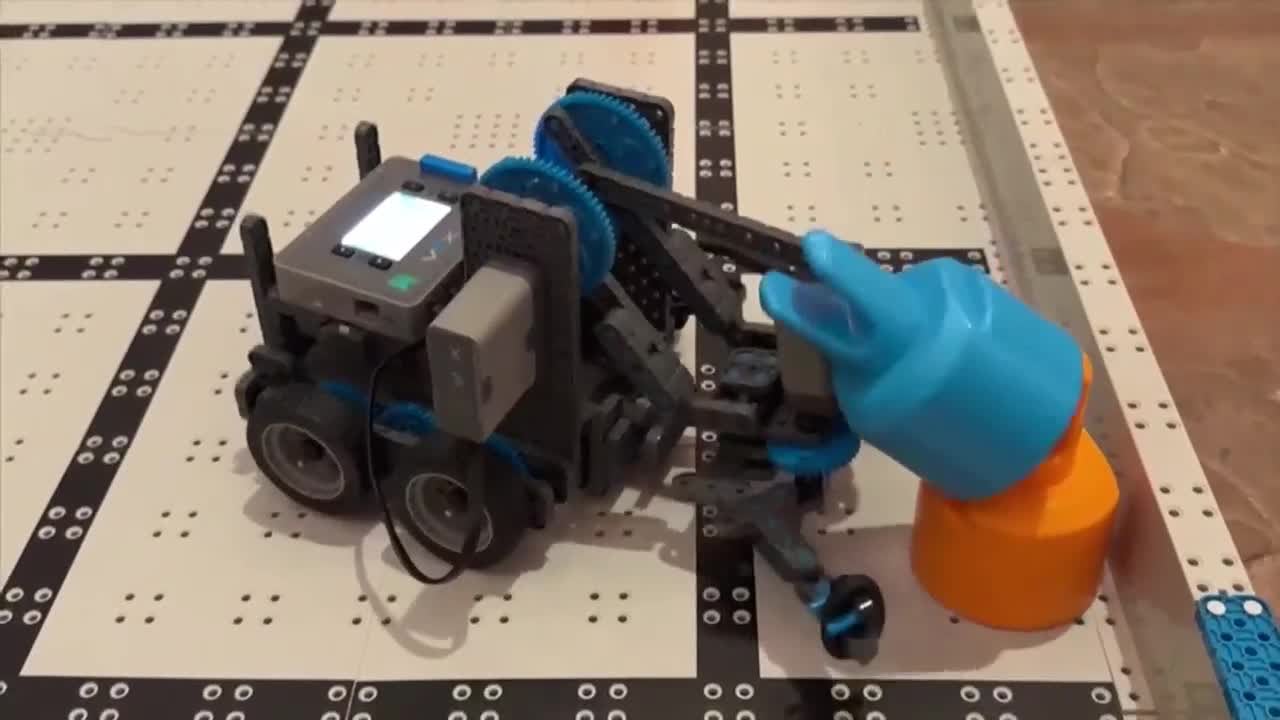
At the Maui Economic Development Board’s (MEDB) annual benefit held Saturday night in Kaanapali, robotics teams from the Valley Isle took center stage. The event, themed “Pathways to Our Future,” showcased the talents of students from various schools who demonstrated robots they had designed, built, and programmed to complete specific tasks and challenges.

Students from Maui High School, Maui Waena Intermediate, Lahainaluna High School, and Pukalani Elementary School displayed their creations, highlighting the growing interest in science, technology, engineering, and mathematics (STEM) among young learners. This hands-on experience not only engages students but also equips them with essential skills for future careers.

Yesha Calivo, a member of the Lahainaluna Robotics Team, emphasized the importance of such programs for students pursuing engineering pathways. She noted that these opportunities provide valuable insights into real-world applications of engineering principles. Similarly, Jordan Losano, a student at Maui Waena Intermediate, shared how participating in robotics has taught him to solve problems under pressure.

Jaysen Acoba, another student from Maui Waena Intermediate, added that even those not initially interested in engineering often find themselves drawn to the field after experiencing robotics. He highlighted the transformative impact of such programs on students' perspectives and career choices.

The MEDB aims to support the diversification of Maui County’s economy by fostering a strong science and technology workforce. Through initiatives like the robotics competitions, the organization hopes to inspire the next generation of innovators and problem solvers.

Jennifer Suzuki, the STEMworks coordinator at Maui Waena, shared her experiences with the program. She mentioned that many professionals in various fields, including doctors, engineers, and scientists, have benefited from the program over the years. These individuals continue to contribute to the community and serve as role models for current students.

Leslie Wilkins, CEO of MEDB, highlighted the organization's efforts in training educators. Over 2,000 Department of Education teachers have been certified in computer science, and many are now learning about artificial intelligence (AI) to integrate into classroom instruction. This initiative ensures that students receive up-to-date education and exposure to emerging technologies.

The gala event also served as a platform to raise funds for the Ke Alahele Education Fund, which supports STEM and technology programs. Dominick Quiwa, a member of the Maui High School Robotics Team, emphasized the financial challenges faced by students and the importance of sponsorships in enabling access to STEM opportunities.

Maui Mayor Richard Bissen expressed his enthusiasm for the future of STEM on the Valley Isle. He noted that students are highly engaged and eager to learn, describing them as "sponges" who absorb knowledge and produce impressive results. The mayor praised the efforts of educators and organizations in encouraging and supporting this growth.

Teachers reported an increasing number of students joining robotics teams, indicating a positive trend in STEM education. This growing interest suggests that the future of science and technology on the Valley Isle is bright and full of potential.

Through continued investment and support, programs like these will play a crucial role in shaping the next generation of innovators and leaders. The collaborative efforts of students, educators, and community organizations are paving the way for a more technologically advanced and diverse economy in Maui County.

Maui STEM Education Gets a Boost

Featured Image

Highlighting Innovation and Future Opportunities

At the Maui Economic Development Board’s (MEDB) annual benefit held Saturday night in Kaanapali, robotics teams from the Valley Isle took center stage. The event, themed “Pathways to Our Future,” showcased the talents of students from various schools who demonstrated robots they had designed, built, and programmed to complete specific tasks and challenges.

Students from Maui High School, Maui Waena Intermediate, Lahainaluna High School, and Pukalani Elementary School displayed their creations, highlighting the growing interest in science, technology, engineering, and mathematics (STEM) among young learners. This hands-on experience not only engages students but also equips them with essential skills for future careers.

Yesha Calivo, a member of the Lahainaluna Robotics Team, emphasized the importance of such programs for students pursuing engineering pathways. She noted that these opportunities provide valuable insights into real-world applications of engineering principles. Similarly, Jordan Losano, a student at Maui Waena Intermediate, shared how participating in robotics has taught him to solve problems under pressure.

Jaysen Acoba, another student from Maui Waena Intermediate, added that even those not initially interested in engineering often find themselves drawn to the field after experiencing robotics. He highlighted the transformative impact of such programs on students' perspectives and career choices.

The MEDB aims to support the diversification of Maui County’s economy by fostering a strong science and technology workforce. Through initiatives like the robotics competitions, the organization hopes to inspire the next generation of innovators and problem solvers.

Jennifer Suzuki, the STEMworks coordinator at Maui Waena, shared her experiences with the program. She mentioned that many professionals in various fields, including doctors, engineers, and scientists, have benefited from the program over the years. These individuals continue to contribute to the community and serve as role models for current students.

Leslie Wilkins, CEO of MEDB, highlighted the organization's efforts in training educators. Over 2,000 Department of Education teachers have been certified in computer science, and many are now learning about artificial intelligence (AI) to integrate into classroom instruction. This initiative ensures that students receive up-to-date education and exposure to emerging technologies.

The gala event also served as a platform to raise funds for the Ke Alahele Education Fund, which supports STEM and technology programs. Dominick Quiwa, a member of the Maui High School Robotics Team, emphasized the financial challenges faced by students and the importance of sponsorships in enabling access to STEM opportunities.

Maui Mayor Richard Bissen expressed his enthusiasm for the future of STEM on the Valley Isle. He noted that students are highly engaged and eager to learn, describing them as "sponges" who absorb knowledge and produce impressive results. The mayor praised the efforts of educators and organizations in encouraging and supporting this growth.

Teachers reported an increasing number of students joining robotics teams, indicating a positive trend in STEM education. This growing interest suggests that the future of science and technology on the Valley Isle is bright and full of potential.

Through continued investment and support, programs like these will play a crucial role in shaping the next generation of innovators and leaders. The collaborative efforts of students, educators, and community organizations are paving the way for a more technologically advanced and diverse economy in Maui County.

Wednesday, October 15, 2025

5 Essential Facts About Cell Phone Bans in Schools

Featured Image

Rising Trend of Cell Phone Bans in U.S. Schools

More and more students across the United States are finding themselves in cell phone-free zones this school year. As states and school districts continue to implement restrictions, these policies range from classroom bans to complete restrictions from the moment a student enters the building. This growing trend has sparked significant debate among educators, parents, and students alike.

Where Are Cell Phone Bans Being Implemented?

At least 22 states have introduced legislation regarding cell phone policies in K-12 schools. Some districts or schools have also taken independent action. However, the implementation of these bans varies widely. For instance, New York and Arkansas have implemented "bell-to-bell" cell phone bans, which means students cannot access their phones throughout the entire school day. In contrast, Kentucky and Tennessee have opted for instructional time bans, allowing students to use their phones during breaks or lunchtime.

California and Arizona have laws that require schools to develop guidelines around cell phone usage. Additionally, almost a dozen other states are currently considering similar legislation. It is challenging to determine the exact number of schools with cell phone bans, as some states without formal restrictions allow individual districts to decide whether to implement strict policies.

How Are These Policies Enforced?

The enforcement of cell phone restrictions varies by district. The strictest districts have adopted the use of Yondr bags—special containers that lock students' phones at the start of the day. At the end of the day, a scanning device is used to release the phones. However, not all districts can afford such measures. Some opt for teachers to collect phones either at the beginning of the day or before class starts. Other approaches include increasing punishments for students caught with their phones, such as confiscation or detention.

What Has Led to the Surge in Cell Phone Bans?

Several factors have contributed to the growing push to limit cell phone access for students. One notable initiative is the "Wait Until 8th" campaign, which encourages parents to delay giving their children cell phones until after 8th grade. The goal is to reduce societal pressure on parents to provide smartphones to younger children.

Studies have shown that increased cell phone usage can lead to decreased academic performance and reduced social interaction among students. The reliance on mobile devices has also created challenges in the classroom, as teachers compete for student attention and concerns about cheating or bullying persist.

Opposition to Cell Phone Bans

Despite the growing support for cell phone bans, there are strong voices of opposition. One major concern is the lack of access to children during emergencies, such as school shootings. Parents and students argue that schools should not be allowed to take away devices that they have not paid for, emphasizing that the decision should rest with guardians.

Another point of contention is personal freedom. Some suggest that students could use alternative devices like Apple Watches, which offer limited texting capabilities. However, economic disparities play a role in how these policies are applied. Students from higher-income families may have access to tablets or laptops, while others rely heavily on smartphones.

Annette Anderson, deputy director of Johns Hopkins’ Center for Safe and Healthy Schools, highlighted the disparity in how these bans affect different communities. She emphasized the need for digital character education, suggesting that schools should teach students how to responsibly use technology rather than simply banning it.

What’s Next for Cell Phone Bans?

The trend of implementing cell phone bans is likely to continue as more states move forward with legislation. While it is unlikely that the trend will reverse, the real impact of these policies will become evident in the coming years. Data and stories from school districts that have already implemented bans will help determine their effectiveness on students' academic and social development.

This experiment could shape the future of K-12 classrooms, especially as the world becomes increasingly reliant on technology in the workforce. The ongoing debate surrounding cell phone usage in schools reflects broader discussions about balancing safety, freedom, and educational goals.

5 Essential Facts About Cell Phone Bans in Schools

Featured Image

Rising Trend of Cell Phone Bans in U.S. Schools

More and more students across the United States are finding themselves in cell phone-free zones this school year. As states and school districts continue to implement restrictions, these policies range from classroom bans to complete restrictions from the moment a student enters the building. This growing trend has sparked significant debate among educators, parents, and students alike.

Where Are Cell Phone Bans Being Implemented?

At least 22 states have introduced legislation regarding cell phone policies in K-12 schools. Some districts or schools have also taken independent action. However, the implementation of these bans varies widely. For instance, New York and Arkansas have implemented "bell-to-bell" cell phone bans, which means students cannot access their phones throughout the entire school day. In contrast, Kentucky and Tennessee have opted for instructional time bans, allowing students to use their phones during breaks or lunchtime.

California and Arizona have laws that require schools to develop guidelines around cell phone usage. Additionally, almost a dozen other states are currently considering similar legislation. It is challenging to determine the exact number of schools with cell phone bans, as some states without formal restrictions allow individual districts to decide whether to implement strict policies.

How Are These Policies Enforced?

The enforcement of cell phone restrictions varies by district. The strictest districts have adopted the use of Yondr bags—special containers that lock students' phones at the start of the day. At the end of the day, a scanning device is used to release the phones. However, not all districts can afford such measures. Some opt for teachers to collect phones either at the beginning of the day or before class starts. Other approaches include increasing punishments for students caught with their phones, such as confiscation or detention.

What Has Led to the Surge in Cell Phone Bans?

Several factors have contributed to the growing push to limit cell phone access for students. One notable initiative is the "Wait Until 8th" campaign, which encourages parents to delay giving their children cell phones until after 8th grade. The goal is to reduce societal pressure on parents to provide smartphones to younger children.

Studies have shown that increased cell phone usage can lead to decreased academic performance and reduced social interaction among students. The reliance on mobile devices has also created challenges in the classroom, as teachers compete for student attention and concerns about cheating or bullying persist.

Opposition to Cell Phone Bans

Despite the growing support for cell phone bans, there are strong voices of opposition. One major concern is the lack of access to children during emergencies, such as school shootings. Parents and students argue that schools should not be allowed to take away devices that they have not paid for, emphasizing that the decision should rest with guardians.

Another point of contention is personal freedom. Some suggest that students could use alternative devices like Apple Watches, which offer limited texting capabilities. However, economic disparities play a role in how these policies are applied. Students from higher-income families may have access to tablets or laptops, while others rely heavily on smartphones.

Annette Anderson, deputy director of Johns Hopkins’ Center for Safe and Healthy Schools, highlighted the disparity in how these bans affect different communities. She emphasized the need for digital character education, suggesting that schools should teach students how to responsibly use technology rather than simply banning it.

What’s Next for Cell Phone Bans?

The trend of implementing cell phone bans is likely to continue as more states move forward with legislation. While it is unlikely that the trend will reverse, the real impact of these policies will become evident in the coming years. Data and stories from school districts that have already implemented bans will help determine their effectiveness on students' academic and social development.

This experiment could shape the future of K-12 classrooms, especially as the world becomes increasingly reliant on technology in the workforce. The ongoing debate surrounding cell phone usage in schools reflects broader discussions about balancing safety, freedom, and educational goals.

Saturday, August 23, 2025

I attended an AI class for older Americans. The students couldn't have been more excited.

Amid the clanging sounds of construction from outside, some of New York City's most ambitiousAI adoptersPeople aged 60 and over made their way into a 10:15 a.m. class, equipped with notepads and the occasional walker.

The TuesdayIntro to Chatting with AIclass run by Senior Planet, a subsidiary of AARP, had about 20 people. Most had at least some exposure to AI. Some came to learn how toapply AIat their jobs. Others wanted to keep up with their grandchildren onChatGPT.

The trainer, Brian Rapsey, began his lesson by asking the students if they could define AI. Three gave enthusiastic answers based on what they had read online or what their children told them.

"Every single industry is being affected by AI," Rapsey told the students, leading to some nods and looks of doubt.

In interviews for my series on people working into their 80s, dozens said theyUse AI at workor home, whether for maintaining client lists, seeking coding advice, or planning a vacation to Mexico. While a few skeptics felt it was a disease to society, many expressed enthusiasm for how they couldget ahead in their careersor social circles. It's a sentiment that challenges many of the commonly held stereotypes about older Americans not embracing technology.

Business Insider's "80 over 80" series is based on interviews with the growing group of Americans working past their 80th birthdays. They discussed their careers, retirement planning, living expenses, healthcare, and life lessons.If you are 80 years old or older and still work,fill out this formto contribute to the series and read more here:

  • Older Americans in their 80s are applying for jobs — and hitting a wall
  • They're in their 80s, still working, and living from paycheck to paycheck
  • What work looks like in your 80s for half a million Americans
  • 81 and working to survive
  • Meet the 90-somethings with lessons to share on life, work, and money

A 2024 survey from the employment nonprofit Generation found a stark age gap in attitudes towardAI-related hiring. While 57% of U.S. hiring managers said they would be very likely to hire 25- to 34-year-olds for jobs that frequently useAI tools, only 7% said the same for candidates 65 and older. More than half admitted they would be unlikely, or entirely unwilling, to consider older applicants for these roles. However, there are some promising signs in the workforce, said Mona Mourshed, CEO of Generation.

The great news is that there is a population of mid-career, older workers who not only are power users, but they are actually seeing the productivity benefits, and they're enjoying their work more," Mourshed said. "They are figuring out how to make the most of AI, and we should make the most of them in the workplace.

Ricardo Strobert, 72, sat in the front row. The retired music teacher said that he has used AI for some basic tasks, but often needs help. He told me he plans to use AI for checking out properties in his area and doing historical research.

The class introduced the students to ChatGPT,Copilot, and Gemini, briefly explaining each one's advantages. Zooming in on his search bar, Rapsey typed in ChatGPT, warned the students not to use impersonator apps, and clicked on the link.

Rapsey spoke about AI's "amazing" capabilities, noting that although it may not be capable of something at the moment, it may be in a few months. He explained the difference between predictive and generative AI, giving the example of students using AI to write college essays or play chess. One student said that she heard of people using AI for pickup lines.

Marisa Giorgi, director of curriculum development at Older Adults Technology Services, which organizes the Senior Planet classes, said when the first class debuted in 2023, most students were curious about AI but had some concerns, particularly about identifying what's real. The courses have expanded toAI for small business owners, AI for communication, and AI detection.

AI is everywhere right now. You see it and hear it everywhere. So older adults want to be part of that conversation, and in many cases, they want to understand how they could start adopting AI," Giorgi said. She added, "When you're working with older adults, and one has a lifetime of experience, there's a lot of knowledge shared during our classes.

Sandra Smith, 69, who attended the class, retired last November from her role as an executive assistant at a lobbying firm for New York's hospitals. Although she considers herself "fairly tech-savvy," she said the more she knows, the better.

I want to stay updated on tech because I don't watch television anymore. Everything I do is online, from paying rent to hanging out," Smith said. "I found Gemini and ChatGPT, and it's like a whole other world has opened up.
Testing AI functions

Rapsey asked the students to prompt ChatGPT. One woman asked it to create a funny thank-you note for her friends in their 60s who took her out for her birthday. The result drew a few laughs, as ChatGPT made jokes about "proving once again that age is just a number" and wrote, "Here's to more nights where we can stay up way past our usual bedtimes of 9:30 p.m." Rapsey encouraged the students to keep prompting it, such as asking it to add names of the friends, or making sure to include as much information as possible in the first prompt.

One woman asked how many responses AI can give to a prompt if multiple people ask it the same thing. Rapsey explained that AI will always create a unique response. Another woman asked if AI picks up on writing style, which Rapsey said it doesn't unless prompted to. Still, he said, people use different AI tools that make the writing sound as though it were written by a human.

The students were particularly fascinated by how AI could respond to photos, such as asking ChatGPT to visually identify a problem with a printer. Others were drawn to how AI could be used to help with writing books, composing music, orillustrating art.

David Pace, 72, hopes to useAI for writingand art projects. He suspects AI may help him remain employable if the economy worsens or he decides to move.

Pace has known since graduate school in the early 1980s that he always needed to stay on top of technological advances. He recalled a professor telling him that if he didn't know anything about computers, he wouldn't survive. During his career as a teaching and guidance counselor, he tried to improve his computer and phone skills. When he saw the AI class, he signed up in hopes of starting his AI journey and then taking more advanced classes and studying on his own.

In a demonstration, Rapsey verbally asked ChatGPT about the top things to do in New York City, and after a few seconds, a woman's voice described concerts and parks. He explained that the AI had to search the internet for the answer, which took a few seconds, and that it cited its sources. Rapsey then warned that because AI will always answer a question, sometimes the answer will be strange or not particularly helpful.

Some students raised upAI concernsThey had from reading articles, such as people losing their data after ChatGPT updated to version 5, or whether Grok was reliable. One asked if there is a dark web equivalent of AI. Another asked how well AI answers opinion-based questions. Misinformation doesn't just go away because it's AI, Rapsey warned.

Applying AI to real life
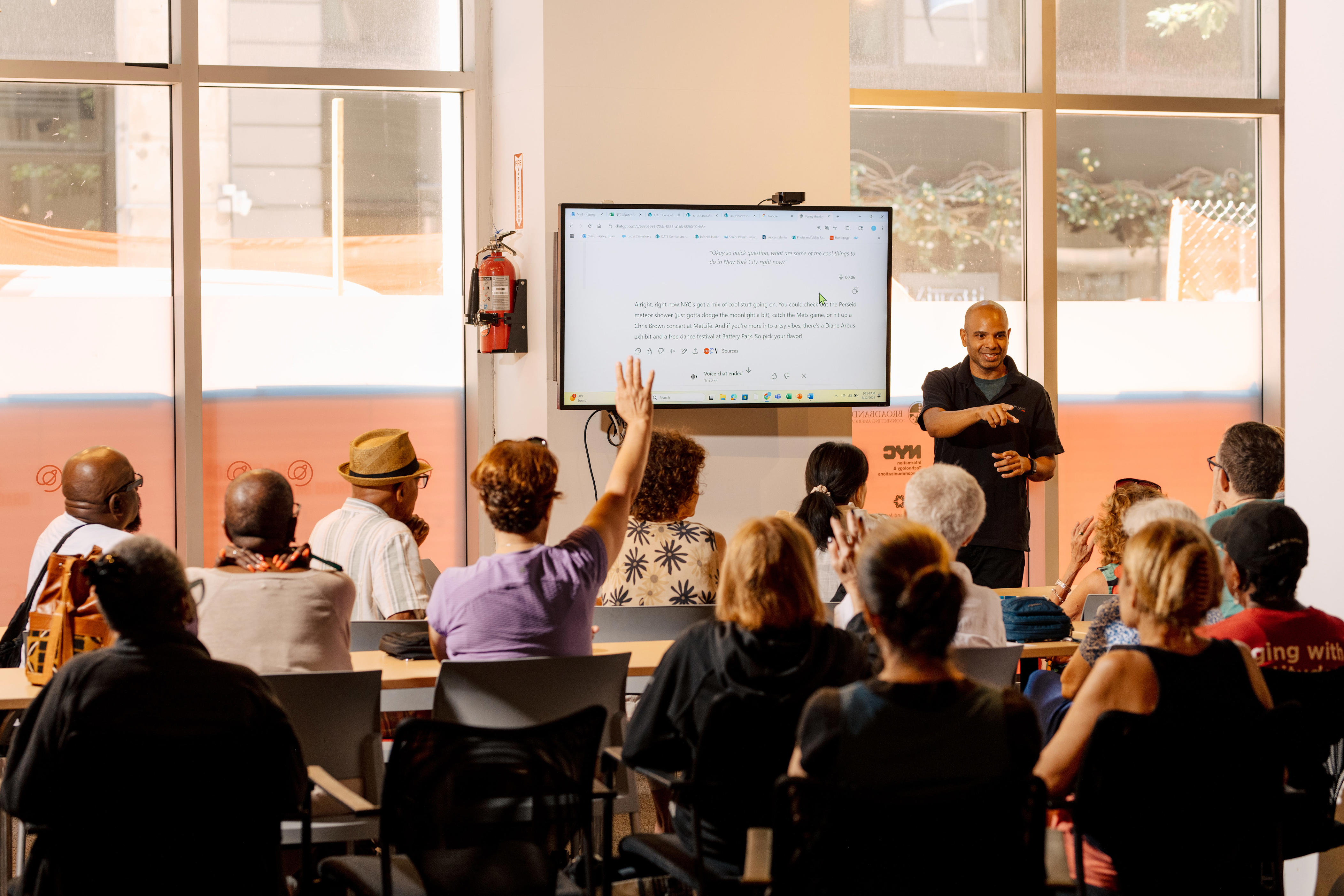
After demonstrating how to use AI, Rapsey asked the class how they might use it in their lives. One woman said she asked it to plan a five-day vacation that doesn't require driving, then prompted it again to provide locations that she wouldn't know about. Another person planned to use it for recipes, such as how to make a dish without a certain ingredient.

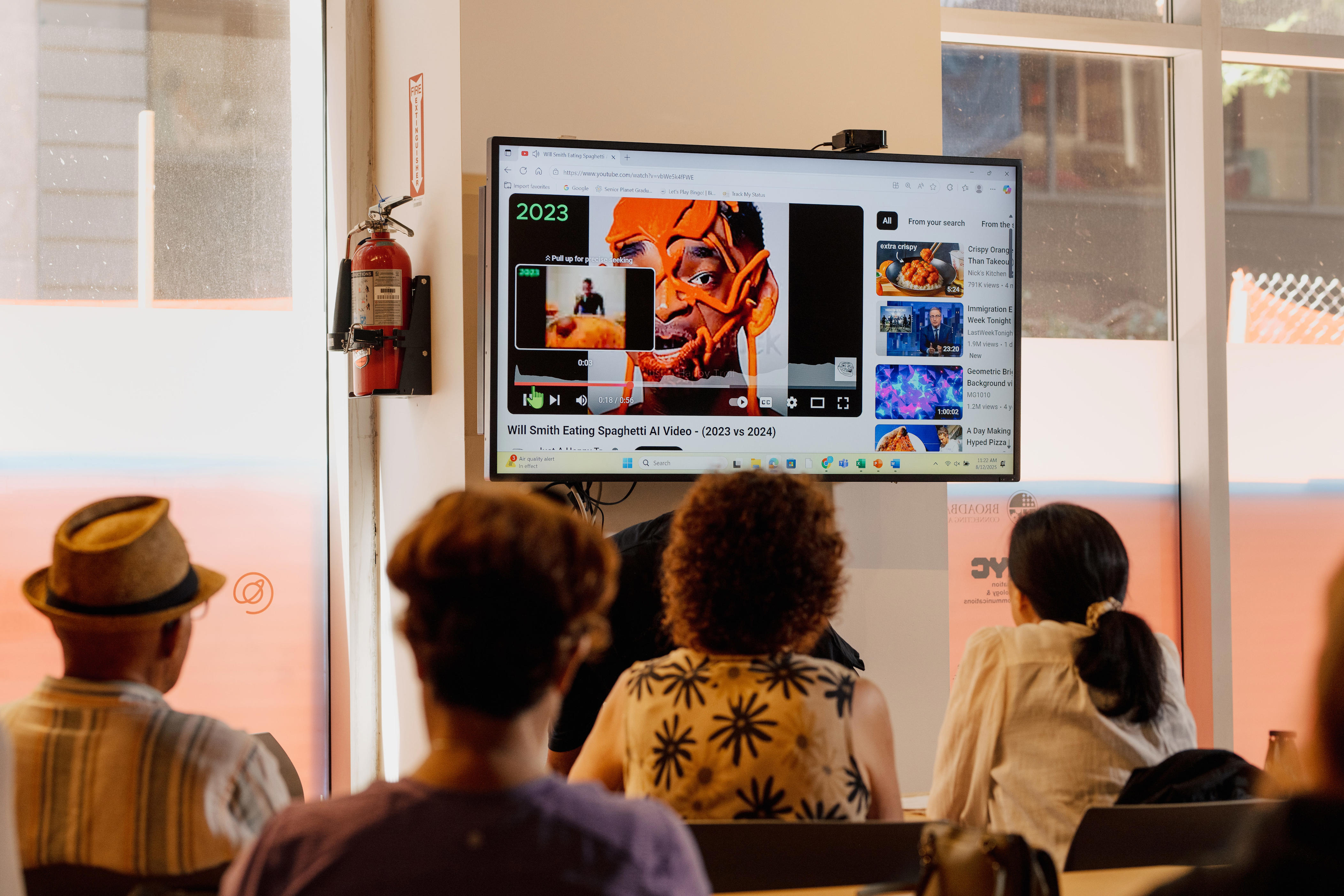
The students were perhaps most enthused by a demonstration of how far AI has come over the last few years. Rapsey showed them an AI video of Will Smith from two years ago and compared it to a similar one in 2025, and the students noticed how the more recent video seemed very close to reality.

The introductory class didn't go too deep into any particular topic, though it was still enlightening for many students. Some said after the class that they wanted to useAI at work, while others said AI may motivate them to return to work after retirement.

Eileen Rose, 72, said she knew very little about AI before the class but felt compelled to join because she was laid off from her job earlier this year and has been looking for a new job. She considered retirement after working for almost two decades in the financial administration department of a biotech startup, but she suspects she might want to go back to work if a company shows interest.

She tried AI for the first time two days before the class to write a birthday card for a friend who is into gardening. She said the class opened her eyes to how she could better optimize her resume using ChatGPT, and she plans to take more advanced classes. She finds herself "old school" and prefers in-person demonstrations.

I figured this is dramatically changing the world, so let me at least find out about it because I hopefully have 30 more years left," Rose said. "A lot has changed in the job market, and I feel almost like a Luddite.

If you enjoyed this story, be sure to followBusiness Insideron MSN.

Friday, August 22, 2025

How Mid-Michigan Students Are Learning in the Age of AI

LANSING, Mich. (WILX) - Artificial Intelligence has found its way into the classroom.

While it can be beneficial for students and teachers, it also has its drawbacks.

At the East Lansing Public Library, we checked out what parents and students think about the increased use of artificial intelligence, heading into a new school year.

Mother of two, Rebecca Rook, says she is sad to see books taking a backseat to computers.

"So I miss kind of the old way of doing it, because AI is kind of killing their education system I feel," Rook says.

Her 14-year-old daughter Josie, a freshman at East Lansing High School, says AI is hard to avoid.

"Sometimes I had a lot of work, so I would just use AI," Josie says.

Classroom workload is not just a burden on students, but also on teachers, according to Aman Yadav, an educational technology professor at Michigan State University.

"Teachers are overburdened and underpaid, so using these chatbots certainly helps them be more productive, reduces their workload, and helps them in the classroom," Yadav says.

Chatbots are artificial intelligence programs that take a person's written or spoken input and turn it into content.

"So if you ask it to write about a princess in the forest, it will come up with a different story every time," Yadav says.

And he says "every time" the story will be convincing, because the chatbot has been trained, using input from millions of other stories.

But the fact remains, AI doesn't understand what it's writing...

"And what I worry is that kids, as they engage with these chatbots, will think that it understands them, what they're asking, and that it's responding to their needs, but that's not true, because it doesn't have any understanding, because computers don't care," Yadav says.

Professor Yadav says computers, especially, don't care if the information they deliver is accurate, so schools need to develop AI literacy programs for young people.

"To help them understand how these tools are developed, how they work, so they understand that the information they might get from these tools is not always accurate," Yadav says.

He also points out, there's little to no research on the benefits of AI in learning, but there are studies that show a dependence on AI reduces critical thinking.

"Kids will lose their own ability to think, because it's easy to ask a chatbot a question," Yadav says.

For high school freshman Josie Rook, a new school year means a renewed commitment to relying on her "natural intelligence."

"My goal is to do work myself, and to show how I really feel, and help other students," Josie says.

With more school districts embracing AI-powered learning tools, there could be additional financial pressure on families.

That could come in the form of updated computers and internet, plus a subscription to an AI platform can cost $20 per month.

Subscribe to ourNews 10 newsletterandYouTube pageto receive the latest local news and weather. Looking to hire people, or grow your business through advertising? Gray Digital Media is your one-stop marketing solution.Learnmore.

Most Washington schools plan to limit students' cellphone and smart device usage this year.

Most school districts in Washington state are planning to restrict students' access to cellphones and other smart devices this coming school year, the Washington Office of Superintendent of Public Instruction (OSPI) announced on Thursday.

Public school teachers across the country are reporting that cell phones and smart watches are causing disruptions to students' learning, according to asurvey conducted by the National Education Association.

In asurvey by the Office of Superintendent of Public Instruction (OSPI), 53% of school districts in Washington state that will have a policy in place this year said that their policy would restrict access to smart devices during teaching time only.

While 31% of school districts in the state are choosing to keep devices away for the entire school day.

Of the school districts with policies in place, 61% said that both parents and teachers are satisfied with the district's policy.

State Superintendent Chris Reykdal said he is pleased to see the changes, adding, "A year ago, I challenged school district leaders across the state to adopt a policy to restrict student access to cell phones during instructional time. After surveying school districts this spring, we know that the vast majority (75%) will have a policy in place by the start of the school year that limits the use of smart devices during class time."

To boost learning and mental health, some states, like Oregon, have banned cell phones in the classroom.

Oregon Gov. Tina Kotek signed an executive order to ban cellphones in classrooms. The order mandates districts to adopt policies banning student cell phone use by October 31, 2025, with full implementation required by January 1, 2026.

RELATED:Oregon bans cell phones in K-12 schools to boost learning, mental health

Meanwhile, Washington state is continuing to evaluate the benefits of having online access at students' fingertips.

There are benefits to these powerful technologies if used responsibly," said Reykdal. "There are also tremendous risks. Studies have found negative impacts on mental health, learning, sleep, and more. I'm proud of our school district leaders who are tackling this problem head-on.

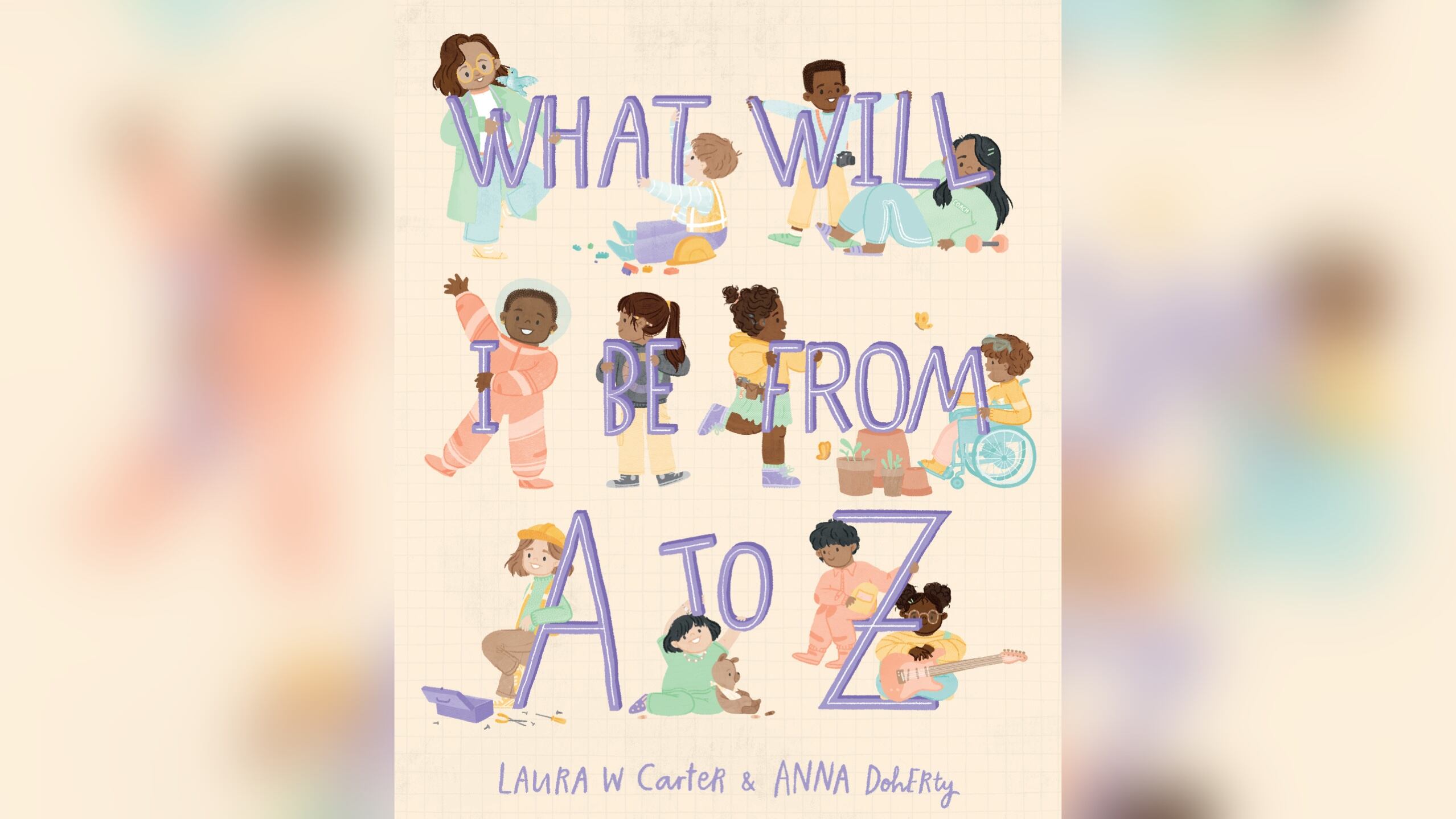
Laura W. Carter inspires children to explore STEAM careers in her new book "What Will I Be From A to Z"

HUNTSVILLE, Ala. (WAFF) - Celebrated Huntsville author Laura W. Carter and illustrator Anna Doherty are inspiring and empowering children to explore the limitless possibilities of STEAM careers.

Carter's newly released book, "What Will I Be From A to Z," introduces young readers to the world of exciting professions in STEAM while celebrating diversity and imagination. It is a vibrant picture book showcasing STEAM careers from astronauts to zoologists. The book encourages all children to envision themselves in careers where they can innovate, explore, and lead.

Laura W. Carter joined 48 Now to share the story behind her book and how she hopes it will inspire the next generation of innovators and leaders.

STEAM is an acronym that stands for science, technology, engineering, art, and math, and "What Will I Be From A to Z" looks at 26 different jobs children can consider in STEAM fields.

Carter is a teacher at New Century Technology High School, and she said her inspiration to write this book comes from all the incredible, unique work her students do, and she was inspired to create something to inspire young children like her son.

"This book is a blended inspiration from both my son, who was three when it was initially written, but also from my job at New Century, where I watched students go through year after year specializing in different STEM jobs, in particular, computer science, biomedical, or engineering and they go on to do really cool things," Carter said.

I also really like the arts, and I think the arts are important, and we share a building with Lee, who has an incredible art magnet program, so I thought I absolutely want to bring the 'A' in and make it 'STEAM' as well. I wanted to have a book that would introduce my son to something but also could be used in an educational setting for early literacy.

Carter wanted to celebrate the accomplishments her students are making in STEAM programs and careers, and show younger children that there are endless possibilities with STEAM careers.

"They are doing things that when I was in high school, I didn't even know would exist and they are incredible at it, and they go on to be CEOs, computer scientists, and they are writing programs and they're also engineers, and beyond that, they go into law fields and all these other things, and I just think it's really cool to celebrate that," Carter said.

Carter also wants her book to show that no matter a person's gender or race, as long as someone keeps learning, anyone can succeed in whatever they want to do.

"Any kid should be able to envision themselves in any work and any job. I know historically there have been exclusions, but that doesn't mean that there should be," Carter said.

Whether you are a boy or a girl or whatever your ethnicity is, I think it is important to know that there is a place for you, and if it is something that you like, then you should work towards that and hopefully achieve your goals and make changes if changes need to be made.

Carter wrote another book in 2024 titled "A Feminist Force," which celebrates female pioneers in STEM and women who have paved the way for different types of STEM jobs.

Her goal with these books is to broaden children's mindsets towards various career opportunities that are available for their future, which they might be interested in. Carter said the main messages she wants children to gain from anything she writes are to "never stop learning because the possibilities are endless!"

Carter provided lesson plans and a teaching guide on herwebsiteTo help children reflect after reading "A Feminist Force" and "What Will I Be From A to Z." She said this teaching guide will also help students and children envision themselves in various STEAM careers.

Carter said she hopes to publish more inspiring children's books in the future, but in the meantime, "A Steminist Force" and "What Will I Be From A to Z" are available for purchase at local bookstores, Snail on the Wall and Blue Apple Books, Barnes and Noble, online.Amazon, and theFamilius publishing website.

She will also be at the Family Book Festival at Blue Apple Books on Thursday, August 21st, at 5 p.m., along with several other children's book authors, to showcase her books.

"A Steminist Force" and "What Will I Be From A to Z" are perfect books for classrooms, libraries, and families looking to encourage children to dream big about their futures!

To hear more about Laura W. Carter's books and her journey and mission with writing them,the full 48 Now interview can be viewed at the top of this page.

To follow more of Laura's journey and to connect with her, she can be found on herwebsiteand through herInstagramandFacebookpages.

Click Here to Subscribe on YouTube:Watch the latest WAFF 48 news, sports & weather videos on our YouTube channel!

Hundreds of laptops given to RPS students to bridge the 'digital divide'

RICHMOND, Va. (WRIC) — Local students received free laptops at a Richmond high school on Thursday.

Hundreds of refurbished laptops were gifted to seniors at Armstrong High School as part of an effort to make the internet more accessible and affordable. The donation was made through a partnership between the Richmond Ed Fund, Human I-T and AT&T.

The partners said U.S. Census Bureau data shows millions across the country still do not have access to the internet or connected devices. Armstrong's principal said that's an issue she has seen firsthand in their student population.

For our students, a laptop means access," said Principal Kelly Carter. "Sometimes, there are opportunities that our students may not be able to access because they don't have the appropriate technology, money, or funding. Sometimes it's really challenging for them.

One of the seniors to receive a laptop was Kellice Banks. She said the gift is arriving at a pivotal time.

Being able to utilize it now will help us so much in taking that fresh step toward our futures and whatever we want to do," Banks said. "So many of us want to be entrepreneurs or branch off into untraditional spaces. Having the technology to get us there is... it's filling me with hope.

Carter said some students may have access to technology at school, but that access does not continue at home. The donation changes that.

"To have a laptop, to be able to complete those college applications, there are things now that can happen after 4 p.m." Carter said.

Attendees of the event included Congresswoman Jennifer McClellan and RPS Superintendent Jason Kamras.

Banks said the participation from the Richmond community is encouraging.

It shows us that you guys truly believe in us," Banks said. "That you guys truly want us to succeed. And hopefully, it will encourage me and more of my seniors to want to ask for help.

Copyright 2025 Nexstar Media, Inc. All rights reserved. This material may not be published, broadcast, rewritten, or redistributed.

For the latest news, weather, sports, and streaming video, visit WRIC ABC 8News.