Showing posts with label automation. Show all posts

Sunday, May 10, 2026

Inside the F-22's AI-Controlled Drone Command

Featured Image

The F-22 Raptor: A Human Pilot at the Helm

The F-22 Raptor is one of the most advanced fighter aircraft ever built, yet it still relies on a human pilot to operate. This fact challenges the common misconception that the plane can "fly itself." Instead, the aircraft's sophisticated onboard systems are designed to process radar data, infrared signals, and electronic emissions into a single, clear picture for the pilot. This integration of sensors is a hallmark of fifth-generation aviation technology, which helps reduce cognitive load and allows pilots to make faster, more informed decisions. However, these systems do not replace the pilot; they enhance their capabilities.

Evolution of the F-22’s Role in Modern Warfare

As the battlefield becomes more dynamic, the role of the F-22 is evolving. Starting in Fiscal Year 2026, the U.S. Air Force plans to equip 142 combat-coded F-22s with ruggedized tablet-style control kits. Each of these devices costs around $86,000 and will allow pilots to directly manage AI-driven Collaborative Combat Aircraft (CCA) from the cockpit. These unmanned aerial vehicles, such as General Atomics’ YFQ-42A and Anduril’s YFQ-44A, are designed to scout ahead, jam enemy sensors, or deliver precision strikes. This expansion of capabilities increases the reach and survivability of manned aircraft.

The communication backbone for these operations will likely be the Raptor’s secure Inter-Flight Data Link, a system already used for internal fleet data exchange. Lockheed Martin has demonstrated that a single pilot can issue tactical commands to multiple UAVs through a touchscreen interface. However, managing this complex system presents significant challenges. As an industry official noted, “It was really hard to fly the airplane, let alone manage the weapon system and think spatially and temporally about the other thing.” Despite these hurdles, the Air Force sees this as a critical step toward more integrated manned-unmanned teaming.

Upgrades Enhancing Survivability and Lethality

The modernization plan for the F-22 includes additional enhancements to improve its effectiveness. One key upgrade is the integration of the Infrared Defensive System (IRDS), a network of TacIRST sensors that detect and track heat-emitting threats. Hank Tucker, vice president at Lockheed Martin Mission Systems, emphasized the importance of such systems in making missions more survivable and lethal against current and future adversaries. These upgrades reinforce the Raptor’s air dominance mission while preparing it for more complex, networked operations.

Training with AI-Powered Simulations

Training for F-22 pilots is also undergoing a transformation. Pilots now use AI-powered virtual enemies in simulators and augmented reality environments. This approach, first developed by systems like Red 6’s Airborne Tactical Augmented Reality System (ATARS), allows pilots to face intelligent, evasive aggressors during real flights. By simulating realistic combat scenarios without the cost or limitations of live threat aircraft, these systems provide valuable training opportunities.

The AlphaDogfight Trials conducted by the Defense Advanced Research Projects Agency have shown that reinforcement learning algorithms can outperform human pilots in simulated dogfights. This highlights the potential of AI-based training systems in refining tactics and decision-making skills.

The Road to Full Autonomy

Despite these advancements, fully autonomous fighter operations remain distant. Brig. Gen. Doug Wickert, who oversees AI piloting tests at the 412th Test Wing, stated, “There may be someday we can completely rely on robotized warfare, [but] it is centuries away.” Current AI systems excel at specific tasks but struggle with unexpected decisions in complex, real-world situations. For lethal missions, a human remains essential in the decision-making loop.

Manned-Unmanned Teamwork: A New Era

The concept of manned-unmanned teaming around the F-22 represents a balanced approach that combines human intuition with machine speed. AI-powered drones can take risks, fly in groups, and perform maneuvers beyond human physical limits. Meanwhile, the pilot maintains a strategic overview of the battle. With the Air Force fleet smaller and older than it has been since World War II, CCAs offer a way to regain operational mass and flexibility without the high cost of adding more manned fighters.

By integrating the Raptor’s stealth, supercruise capability, and advanced avionics with AI-driven support, the Air Force is positioning its most advanced jet as a command node in a distributed, data-driven battlespace. The pilot remains in the cockpit, but increasingly, they are no longer flying alone.

Sunday, May 3, 2026

AI Tools Finally Keep Up with Design Needs

Featured Image

Streamline Your Business Visuals with AI-Powered Tools

Running a business today involves managing a wide range of tasks, from marketing and client communication to internal planning. Each of these areas can benefit greatly from clear and professional visuals. However, hiring a designer every time you need an infographic, chart, or logo can be expensive. On the other hand, using DIY solutions often takes up too much time that could be better spent on growing your business.

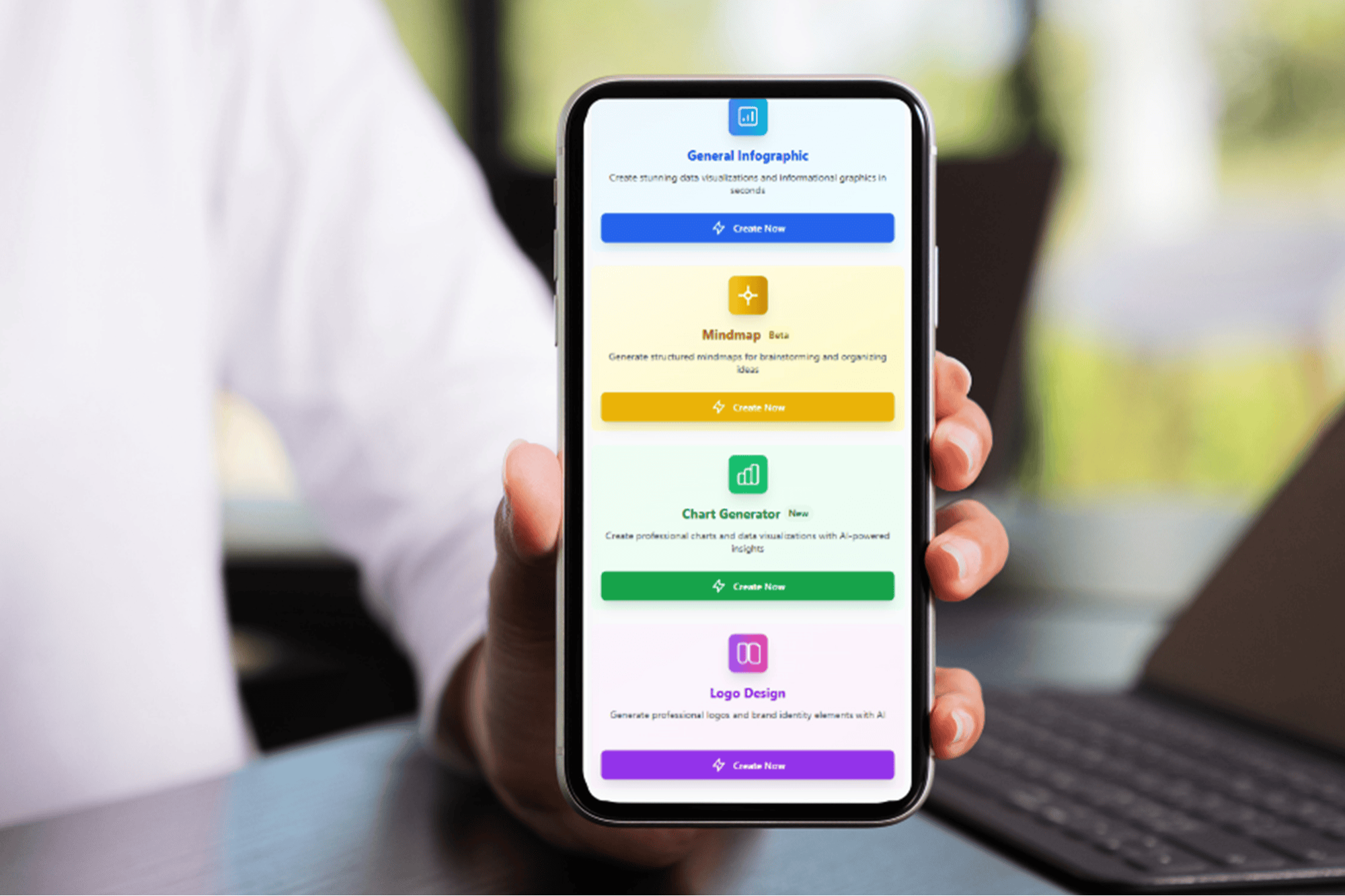
This is where InfographsAI comes in. It’s an AI-powered tool designed to generate polished infographics, charts, mind maps, and logos in as little as four minutes. Instead of struggling with generic templates that look like everyone else’s, the platform creates unique designs based on your actual content. Right now, it’s available for a limited-time offer of just $49.99 for a lifetime subscription, which is a significant discount from its regular price of $360.

Professional-Quality Designs at Your Fingertips

Saving time is crucial for any business owner, and InfographsAI helps achieve that. Whether you need a sales report transformed into a bar graph for a client presentation or a long block of text turned into a shareable infographic for social media, the tool makes it easy. If you're building a brand identity, the AI logo generator provides multiple professional variations in seconds. Everything you create can be manually edited, allowing you to fine-tune details and ensure consistency across different platforms.

One standout feature of InfographsAI is its built-in fact-checking system. This helps ensure that your data is up to date, reducing the risk of presenting outdated numbers or information. The platform supports more than 100 languages and offers automatic brand integration, making it ideal for businesses that need to reach diverse audiences quickly.

Continuous Improvements and Expansive Features

InfographsAI continues to evolve with frequent updates that add new features such as image generators and fresh design templates. Users have praised the tool for transforming messy notes, static PDFs, or pitch deck drafts into impressive visuals that impress both teams and clients.

Whether you're looking to enhance your marketing materials, simplify your internal planning, or build a strong brand presence, InfographsAI offers a powerful solution. It's particularly beneficial for those who need high-quality visuals but don't have the budget for a full-time designer.

A Smart Investment for Business Growth

With its combination of speed, ease of use, and professional results, InfographsAI is a valuable tool for entrepreneurs and small business owners. The current lifetime subscription deal at $49.99 makes it an even more attractive option for those looking to streamline their workflow and elevate their visual content.

By leveraging AI technology, businesses can save time, reduce costs, and maintain a consistent brand image. InfographsAI is not just a tool—it's a strategic asset that can help drive growth and improve communication with clients and stakeholders.

If you're ready to take your business visuals to the next level, consider exploring what InfographsAI has to offer. With its powerful features and affordable pricing, it's a smart investment that can pay off in the long run.

Saturday, May 2, 2026

Japanese researchers use quantum entanglement to enhance robot balance

Featured Image

A New Approach to Robot Movement Using Quantum Computing

Researchers from Shibaura Institute of Technology, Waseda University, and Fujitsu have introduced a groundbreaking method that allows robots to move more smoothly and efficiently by leveraging the power of quantum computing. This innovation could significantly change how robots are designed and controlled, especially in complex environments.

Understanding the Challenge

When a robot moves, its computer must determine how each joint should bend so that the end of its limb—such as a hand or foot—reaches the correct position. This process is known as inverse kinematics, and it poses a significant challenge for humanoid robots due to the vast number of possible joint configurations. Traditional computers typically use trial-and-error methods to solve these problems, which can be time-consuming and require substantial computational resources.

The Quantum Solution

The team's new approach uses qubits to represent the position and orientation of each part of the robot. More importantly, they utilize quantum entanglement, a unique feature of quantum mechanics where particles are connected such that the movement of one affects the other. This concept mirrors how real robot joints function, where moving one joint influences the others.

Another key element of this research is the hybrid approach that combines classical and quantum computing. While forward kinematics—calculating where the robot’s hand or foot ends up given certain joint angles—is handled by quantum circuits, the inverse kinematics step is still managed by classical computers. This division of labor allows the system to benefit from the speed advantages of quantum computing while maintaining stability through traditional methods.

Faster and More Accurate Calculations

By implementing this hybrid model, the researchers were able to reduce the number of calculations needed. Tests on Fujitsu’s quantum simulator demonstrated that the method reduced errors by up to 43% compared to classical methods and operated faster. The results were further validated using a 64-qubit quantum computer developed with RIKEN.

In one test, the team attempted to calculate the movements of a full-body robot with 17 joints—similar to a human. Normally, this would require an impractical amount of computing power and take approximately 30 minutes to complete. With the new method, this task became significantly more manageable.

Implications for Future Robots

This breakthrough has important implications for future robots, particularly humanoid robots that work closely with humans. These robots need to move fluidly, respond quickly, and navigate complex environments in real time. Current methods often simplify the model, such as reducing the number of joints in the calculation from 17 to 7, which leads to stiff and less lifelike movements.

With the new quantum-based method, smoother and more realistic robot movement could become possible. Moreover, the technology is already compatible with today’s "NISQ" (Noisy Intermediate-Scale Quantum) computers—machines that are not yet perfect but are usable for specific tasks.

In the long term, this technology could enhance various robotic applications, including real-time control, obstacle avoidance, multi-joint manipulators, and energy optimization tasks.

Looking Ahead

The researchers believe that their approach could see further improvements if combined with advanced quantum algorithms, such as the quantum Fourier transform, which might accelerate calculations even more. By integrating quantum computing with robotics, the team has made a significant leap toward developing the next generation of intelligent, human-like robots.

Takuya Otani from the Shibaura Institute of Technology and Atsuo Takanishi from Waseda University collaborated on this research, alongside Nobuyuki Hara, Yutaka Takita, and Koichi Kimura from Fujitsu Limited. This research was published in the Scientific Reports journal.

Thursday, April 9, 2026

LG CNS Launches AI Assistant for Hiring, Interviews, and Budgets

Featured Image

Introducing AgenticWorks and AXThink: LG CNS Unveils New AI Innovations

LG CNS, a leading technology company, recently introduced two groundbreaking AI solutions at its headquarters in Magok-dong, western Seoul. These innovations, AgenticWorks and AXThink, are designed to revolutionize how enterprises utilize artificial intelligence, offering more advanced capabilities than traditional digital assistants.

AgenticWorks is an agentic AI platform that enables companies to think and act like humans. Unlike conventional AI systems that simply respond to commands, AgenticWorks can set goals and perform tasks autonomously. This new system is aimed at enhancing productivity by integrating AI agents with enterprise infrastructure seamlessly.

Key Features of AgenticWorks

The platform consists of six essential components:

  • Builder: Allows for coding-based customization.
  • Studio: Offers no-code development options.
  • Knowledge Lake: Facilitates data preprocessing.
  • Hub: Integrates AI agents with enterprise systems.
  • Refiner: Enhances industry-specific AI models.
  • Router: Selects the optimal model for specific tasks.

These components enable companies to tailor their AI solutions according to unique business needs. For instance, in human resources, AgenticWorks can analyze job applications, cross-check aptitude test results, recommend suitable candidates, and generate tailored interview questions. According to LG CNS, this process has increased productivity by 26 percent.

AI for All Employees

In addition to AgenticWorks, LG CNS unveiled AXThink, a service that applies AI to seven common office tasks for all employees. AXThink includes features such as a “Daily Briefing,” which summarizes important emails and schedules with voice guidance, automatic email summarization, real-time meeting translation, and digital approvals and signatures.

According to LG CNS, when Group affiliate LG Display adopted AXThink, workplace productivity improved by about 10 percent per day on average. Additionally, the company saved more than 10 billion won ($7.2 million) annually compared to outsourcing similar services.

The Growing AI Market

The global AI transformation market is expanding rapidly. Market research firm Statista projects the sector to grow from 355 trillion won this year to 970 trillion won by 2029. In Korea, Samsung SDS is securing market share with its Brity Copilot collaboration solution and FabricX AI platform, which have attracted more than 150,000 users.

Future of AI in Enterprises

LG CNS CEO Hyun Shin-gyoon emphasized the importance of connecting AI agents and enterprise infrastructure organically. He stated that through this approach, companies can dramatically enhance productivity. The introduction of AgenticWorks and AXThink marks a significant step forward in the integration of AI into everyday business operations.

As enterprises continue to seek ways to improve efficiency and reduce costs, the adoption of advanced AI solutions like AgenticWorks and AXThink is becoming increasingly essential. These innovations not only streamline processes but also provide valuable insights that can drive better decision-making.

With the rapid growth of the AI market, it's clear that companies that embrace these technologies will be well-positioned to succeed in the evolving business landscape. LG CNS’s latest offerings demonstrate a commitment to innovation and a vision for the future of AI in the enterprise world.

Monday, March 30, 2026

Dwaraka Nath Kummari Launches AI Tax Compliance System to Revolutionize Global Reporting

Featured Image

Modernizing Tax Compliance with Predictive Analytics

Businesses dealing with tax obligations across multiple jurisdictions are increasingly facing challenges in managing data preparation, interpreting regulations, and ensuring audit readiness. Dwaraka Nath Kummari has introduced an innovative framework that incorporates machine learning into critical parts of the tax reporting process. This approach aims to enhance accuracy, reduce manual work, and allow for more efficient prioritization of audits.

The Shift Toward Predictive Tools

Traditional tax processes often depend on manually gathered data, isolated systems, and reactive audits. Kummari suggests a move toward predictive analytics, where compliance risks are assessed early using both structured and unstructured data sources. By utilizing machine learning, the framework can detect potential inconsistencies, allowing tax teams to address issues earlier in the reporting cycle.

Key Lifecycle Phases in the Framework

Kummari’s system is divided into three main stages, each leveraging artificial intelligence to achieve specific operational benefits:

Data Intake and Preparation

  • Natural language processing (NLP) is used to standardize regulatory texts and unstructured inputs.
  • Structured data such as ledgers and transactions are cleaned, transformed, and analyzed for outliers or inconsistencies.
  • Analytical tools identify early signs of compliance gaps, including delayed remittances or mismatches between different jurisdictions.

Risk Classification and Case Prioritization

  • Predictive models, such as Random Forests and Logistic Regression, assess the likelihood of non-compliance.
  • Entities are categorized based on their compliance risk levels, helping teams allocate audit resources effectively.
  • Models are continuously updated with feedback from past audit results to improve their predictive accuracy over time.

Scalable Deployment and Reporting

  • AI components are deployed across secure, distributed environments using privacy-preserving techniques like federated learning.
  • Model decisions and supporting evidence are documented for audit readiness, with version control applied to regulatory logic.
  • The system incorporates changes to tax rules through modular updates, ensuring minimal disruption to core analytics.

Observed Benefits in Early Implementation

In a trial involving a commercial organization operating in three tax jurisdictions, the prototype processed over 10 million transactions. The results showed a 40% increase in identifying potentially non-compliant cases, with a 25% reduction in false-positive classifications. By flagging risks earlier in the cycle, internal tax teams were able to resolve issues proactively, potentially reducing financial exposure by nearly one-fifth.

Ensuring Accountability in Model Use

To maintain transparency, the system includes explanation tools that link model outputs to observable data factors—such as missing documentation or unusual transaction values. This traceability supports both internal reviews and external audit requirements. Security protocols are implemented throughout, including encrypted data storage and strict access governance.

Future Applications

Looking ahead, the framework could support additional features such as automated document preparation when anomalies are detected or simulation tools that help tax teams anticipate the impact of new legislative proposals.

Kummari emphasizes that the goal is not to replace human oversight but to enable a more structured, data-informed approach to tax governance. By integrating predictive models with domain knowledge and operational safeguards, organizations can better manage regulatory complexity while maintaining accountability and control.

Monday, March 2, 2026

America's Robot-Powered Auto Plant Needs Humans

Featured Image

A New Era of Manufacturing at Hyundai’s Ellabell Plant

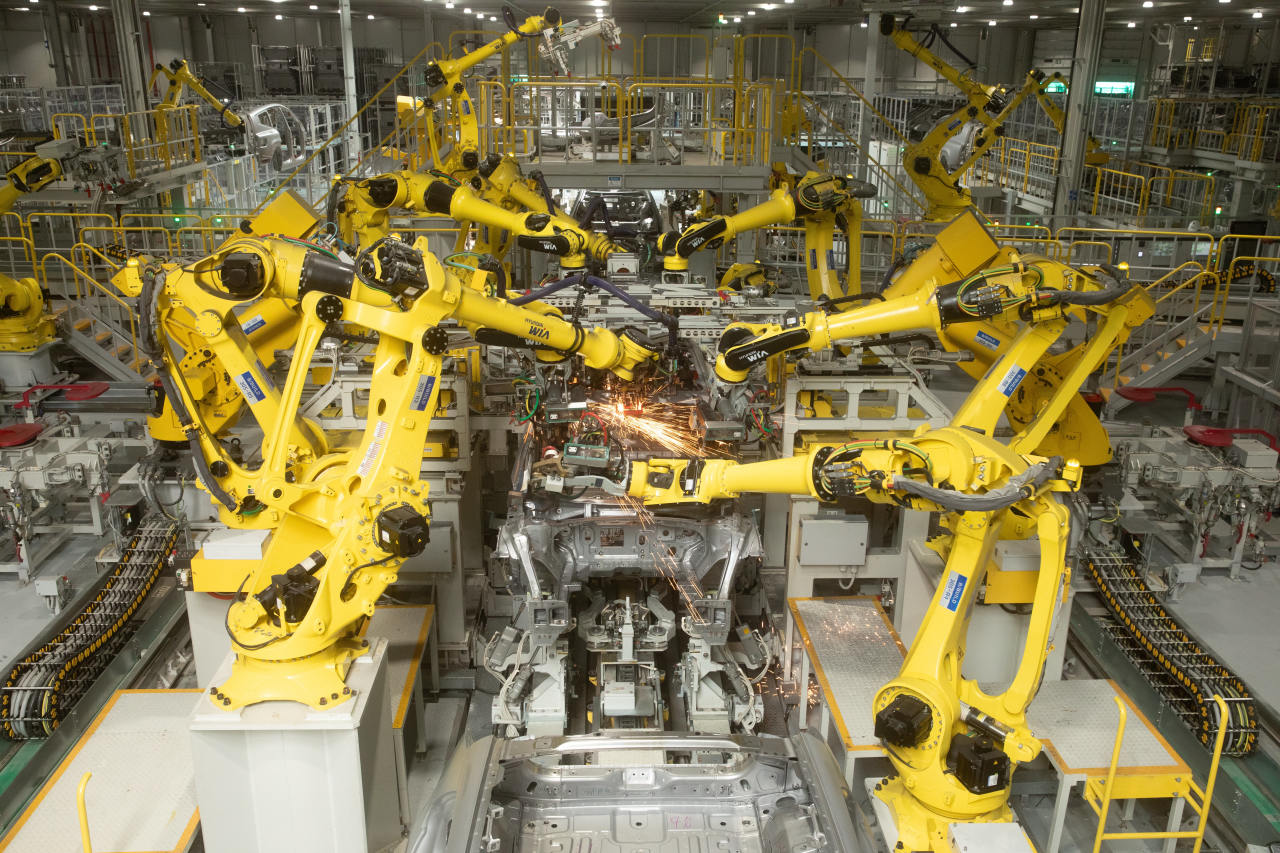
In the heart of Georgia, near Savannah, a state-of-the-art automobile manufacturing facility has taken shape. This is the new plant operated by the Hyundai Motor Group, a hub of innovation where technology and human expertise converge. The factory is home to an impressive array of robotic systems that perform a wide range of tasks, from moving materials and attaching doors to conducting nearly all welding operations.

Among the most eye-catching features are the dog-like robots equipped with cameras, which roam the floor to inspect partially assembled Ioniq electric vehicles. These robots are part of a larger system that includes 750 robots, not counting the hundreds of autonomous guided vehicles (AGVs) that navigate the facility. Approximately 1,450 employees work alongside these machines, maintaining a human-to-robot ratio of about 2-to-1, significantly lower than the U.S. auto-industry average of 7-to-1.

While robots handle many tasks, humans still play a crucial role in certain areas. They are responsible for identifying imperfections such as burrs or trim issues, installing fabric door panels, connecting electrical components, and accessing tight spaces to secure seats and shock absorbers. According to Hyundai Motor Co. CEO José Muñoz, the design of the plant ensures that robots tackle dangerous, repetitive, or physically demanding tasks, while humans focus on troubleshooting, quality monitoring, and adding craftsmanship to the process.

Unice Youmans exemplifies this human touch. She works on the metal-finishing line, removing dents, sanding imperfections, and cleaning frames before they move to the paint shop. “I don’t think it’s something that a machine can do because we have to be very hands-on with these cars,” she says.

Hyundai has committed to hiring 8,500 people at the Ellabell site by 2031 as part of a $2 billion incentive package from the state of Georgia. However, some workers express concerns about job security given the prevalence of robots. Salem Elzway, a postdoctoral fellow at Vanderbilt University, notes that automation increases when human labor becomes more costly or less efficient.

The integration of robots into the workplace is not a new phenomenon. Industrial robotics began in 1961 when General Motors introduced Unimate, a claw-handed robot, into a New Jersey factory. Since then, the use of robots in manufacturing has expanded significantly, particularly in countries like South Korea, which has one of the lowest birthrates globally. This demographic trend has driven the adoption of automated systems.

Despite the high level of automation, the U.S. still faces a shortage of over 400,000 manufacturing jobs. Hyundai claims its Ellabell factory is meeting its hiring goals, offering a starting hourly wage of $23.66 for entry-level positions—higher than local averages. New hires undergo training at a state-funded center, learning to program robots to trace patterns and manipulate objects. They also develop manual skills, such as checking for scratches and selecting the correct number of bolts by feel.

Trainees often have mixed feelings about their robotic counterparts. Some fear being blamed for a robot's mistake, while others worry about job displacement. Stephanie Redmon, who moved from Houston to join the factory, sees the opportunity as exciting. “I just think it’s going to be really cool,” she said.

The Role of Advanced Robotics in Manufacturing

The human workforce is sparse in many parts of the Hyundai plant. Metal arms move steel slabs through presses that stamp out vehicle components, and an array of robots weld these parts together without human oversight. It is only after the frames emerge from the paint shop that people take over, working along two assembly lines to add seats, dashboards, and other components.

At one station, a robot installs the powertrain beneath the frame, fastening it with large bolts, while two workers add additional fasteners. Jerry Roach, head of the factory’s general assembly department, explains that tasks requiring tactile feedback, adaptability, and problem-solving are best handled by humans.

Hyundai plans to introduce humanoid robots known as Atlas, developed by Boston Dynamics—a company in which Hyundai holds a controlling stake. Videos show Atlas sorting and carrying parts, but details about its potential role in the Ellabell plant remain unclear.

Experts believe a complete robot takeover is still decades away. Jorgen Pedersen, CEO of the Advanced Robotics for Manufacturing Institute, points out that robots struggle with flexible materials like fabric and lack the adaptability of humans. He emphasizes that human capabilities in handling complex tasks are often underestimated.

Quality control remains a critical responsibility for human workers, both during and after the assembly process. Vehicles undergo final inspections on a test track outside the factory, where team leader Chico Murphy drives Ioniqs over uneven pavement, checks brakes, and listens for loose parts. He believes that as long as people drive cars, they will value human verification.

“I think they like knowing that a human is there,” Murphy said. “It makes them feel a little safer than just relying on some machine.”

Wednesday, February 18, 2026

Video: Japan Tests Massive Robot Hand on Excavator to Clear Earthquake Debris

Featured Image

A Revolutionary Robotic Hand for Disaster Response

In a groundbreaking development, researchers from Japan and Switzerland have unveiled a giant robotic hand that has the potential to revolutionize how communities prepare for and respond to natural disasters. This innovative machine is the result of a collaborative effort between Kumagai Gumi, Tsukuba University, Nara Institute of Science and Technology, and ETH Zurich. The project, known as CAFE (Collaborative AI Field Robot Everywhere), is funded by Japan’s Cabinet Office and the Japan Science and Technology Agency.

The initiative has been in development for five years and is designed to bring enhanced safety and precision to disaster zones, which are often filled with unstable debris, flooded areas, and collapsed cliffs. The robotic hand stands out due to its ability to adapt its grip to different objects, making it an essential tool in chaotic environments.

Advanced Robotics and Artificial Intelligence

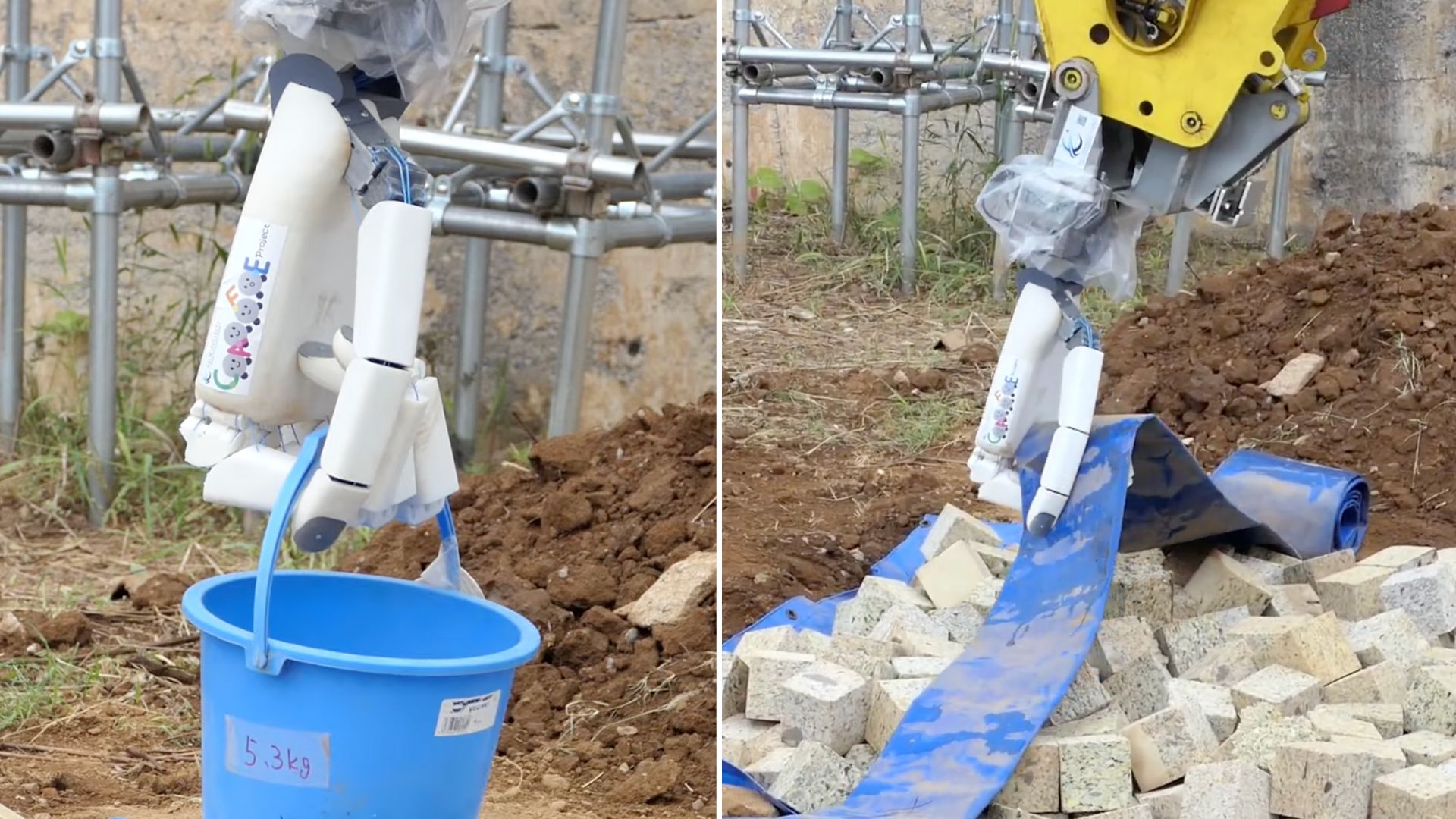
Developed with expertise from ETH Zurich’s soft robotics research, the robotic hand is engineered to handle both fragile and heavy objects with equal skill. This is achieved using pneumatic actuators, which function like air-powered muscles. These actuators allow the hand to adjust its grip based on the object's characteristics.

Sensors embedded in the fingertips and palm provide real-time data to the system, enabling the hand to determine how tightly or gently to hold an object. During a demonstration in Tsukuba, the hand successfully picked up soft foam blocks and jagged metal pieces without causing any damage or losing control. It could instantly switch from a delicate grip to a firm hold, showcasing its versatility in handling unpredictable disaster debris.

The hand is also built to withstand demanding environments such as eroded riverbeds or blocked valleys. With a weight limit of 3 tons, the apparatus can be deployed into areas where traditional heavy equipment cannot reach. This mobility offers a safer and more effective option for clearing obstacles in remote or hazardous terrain.

AI-Driven Excavation for Natural Dams

One of the primary challenges the CAFE project aims to address is the formation of natural dams. When landslides caused by earthquakes or heavy rainfall block rivers, entire communities face significant flooding risks. Traditionally, workers had to manually dig channels or set up pumps in dangerous conditions, as seen after the Niigata-Chuetsu earthquake in 2004.

The CAFE team’s solution involves combining the robotic hand with an AI-driven excavation system. Researchers at Nara Institute of Science and Technology developed this software using Sim-to-Real reinforcement learning. The AI first trains in digital simulations, learning to dig, identify obstacles, and adjust actions. Once tested, it applies those skills in real-world disaster environments.

Instead of following fixed commands, the system learns and adapts in real time. It decides how deep to dig, how much pressure to apply, and how to remove hidden objects without destabilizing the environment. This adaptive approach is crucial when working in unpredictable conditions where traditional machinery or human labor would be unsafe.

From Controlled Tests to Real-World Deployment

The August 2025 demonstration in Tsukuba showcased the project at Technology Readiness Level (TRL) 4, proving that the robotic hand and AI could function in a controlled environment. The next goal is TRL 5, which means demonstrating that the system can operate under more realistic conditions. By November 2025, the team aims to be ready for real-world testing and eventual deployment.

The collaboration brings together strengths from multiple fields. Kumagai Gumi provides practical expertise in construction and heavy equipment, while ETH Zurich contributes advanced robotics design, particularly in soft robotics. Tsukuba University and Nara Institute of Science and Technology focus on integrating artificial intelligence, making the system an autonomous problem-solver rather than just a tool.

If successful, the robotic hand could become a vital component of disaster management strategies worldwide. From clearing blocked rivers to carefully removing debris after earthquakes, the machine is designed to reduce risks to human workers and speed up recovery operations. Its potential impact on global disaster response efforts is significant, offering a safer and more efficient way to tackle the challenges posed by natural disasters.

Video: Japan Tests Massive Robot Hand on Excavator to Clear Earthquake Debris

Featured Image

A Revolutionary Robotic Hand for Disaster Response

In a groundbreaking development, researchers from Japan and Switzerland have unveiled a giant robotic hand that has the potential to revolutionize how communities prepare for and respond to natural disasters. This innovative machine is the result of a collaborative effort between Kumagai Gumi, Tsukuba University, Nara Institute of Science and Technology, and ETH Zurich. The project, known as CAFE (Collaborative AI Field Robot Everywhere), is funded by Japan’s Cabinet Office and the Japan Science and Technology Agency.

The initiative has been in development for five years and is designed to bring enhanced safety and precision to disaster zones, which are often filled with unstable debris, flooded areas, and collapsed cliffs. The robotic hand stands out due to its ability to adapt its grip to different objects, making it an essential tool in chaotic environments.

Advanced Robotics and Artificial Intelligence

Developed with expertise from ETH Zurich’s soft robotics research, the robotic hand is engineered to handle both fragile and heavy objects with equal skill. This is achieved using pneumatic actuators, which function like air-powered muscles. These actuators allow the hand to adjust its grip based on the object's characteristics.

Sensors embedded in the fingertips and palm provide real-time data to the system, enabling the hand to determine how tightly or gently to hold an object. During a demonstration in Tsukuba, the hand successfully picked up soft foam blocks and jagged metal pieces without causing any damage or losing control. It could instantly switch from a delicate grip to a firm hold, showcasing its versatility in handling unpredictable disaster debris.

The hand is also built to withstand demanding environments such as eroded riverbeds or blocked valleys. With a weight limit of 3 tons, the apparatus can be deployed into areas where traditional heavy equipment cannot reach. This mobility offers a safer and more effective option for clearing obstacles in remote or hazardous terrain.

AI-Driven Excavation for Natural Dams

One of the primary challenges the CAFE project aims to address is the formation of natural dams. When landslides caused by earthquakes or heavy rainfall block rivers, entire communities face significant flooding risks. Traditionally, workers had to manually dig channels or set up pumps in dangerous conditions, as seen after the Niigata-Chuetsu earthquake in 2004.

The CAFE team’s solution involves combining the robotic hand with an AI-driven excavation system. Researchers at Nara Institute of Science and Technology developed this software using Sim-to-Real reinforcement learning. The AI first trains in digital simulations, learning to dig, identify obstacles, and adjust actions. Once tested, it applies those skills in real-world disaster environments.

Instead of following fixed commands, the system learns and adapts in real time. It decides how deep to dig, how much pressure to apply, and how to remove hidden objects without destabilizing the environment. This adaptive approach is crucial when working in unpredictable conditions where traditional machinery or human labor would be unsafe.

From Controlled Tests to Real-World Deployment

The August 2025 demonstration in Tsukuba showcased the project at Technology Readiness Level (TRL) 4, proving that the robotic hand and AI could function in a controlled environment. The next goal is TRL 5, which means demonstrating that the system can operate under more realistic conditions. By November 2025, the team aims to be ready for real-world testing and eventual deployment.

The collaboration brings together strengths from multiple fields. Kumagai Gumi provides practical expertise in construction and heavy equipment, while ETH Zurich contributes advanced robotics design, particularly in soft robotics. Tsukuba University and Nara Institute of Science and Technology focus on integrating artificial intelligence, making the system an autonomous problem-solver rather than just a tool.

If successful, the robotic hand could become a vital component of disaster management strategies worldwide. From clearing blocked rivers to carefully removing debris after earthquakes, the machine is designed to reduce risks to human workers and speed up recovery operations. Its potential impact on global disaster response efforts is significant, offering a safer and more efficient way to tackle the challenges posed by natural disasters.

Thursday, January 1, 2026

5 Reasons Legacy CRM is Dying and No-Code is Rising

Featured Image

The Evolution of CRM: Why Legacy Systems Are Becoming Obsolete

Customer Relationship Management (CRM) software has long been a critical component of business operations, serving as the digital backbone for growth and customer engagement. However, as businesses evolve at an unprecedented pace, traditional CRM systems are increasingly unable to meet the demands of modern enterprises. In 2025, companies are not just looking for tools—they’re seeking agility, speed, and autonomy. This is where legacy CRM systems are falling short, paving the way for a new generation of AI-native, no-code platforms that are transforming the industry.

The Limitations of Legacy CRMs

Legacy CRM systems were developed in a different era, designed with rigid structures that require extensive implementation cycles and code-heavy customization. As businesses face constant changes—new markets, evolving regulations, and shifting customer expectations—these systems struggle to keep up. The result is prolonged deployment timelines, high costs, and limited flexibility.

In contrast, modern no-code platforms are built on composable architectures that prioritize speed, adaptability, and user empowerment. These platforms allow organizations to configure and scale solutions rapidly without relying on complex, developer-led processes. Companies across various industries, including manufacturing and financial services, are adopting these models to avoid delays and reduce costs.

AI and Automation: A New Standard

Artificial intelligence and automation have become essential components of modern business operations. Businesses now rely on AI to deliver personalized experiences, make data-driven decisions, and streamline workflows. However, many legacy CRM systems treat AI as an afterthought, often adding it as a separate feature rather than embedding it into the core platform.

Modern no-code platforms, on the other hand, are AI-native from the ground up. They leverage machine learning to automate tasks such as lead routing, customer behavior prediction, and campaign optimization. Organizations using these capabilities report significant improvements, including a 61% reduction in lead generation response times and higher conversion rates. By automating repetitive tasks, teams can focus more on strategic thinking and innovation.

The Cost of Complexity

Legacy CRM systems often come with hidden costs, including high developer overheads, third-party consulting fees, and expensive integrations that require ongoing maintenance. These expenses can quickly escalate, making the total cost of ownership (TCO) unsustainable for many organizations.

No-code platforms significantly reduce these costs, with companies reporting up to a 70% reduction in development expenses and average savings of over $300,000 on external consultancy fees. These platforms eliminate many of the barriers associated with traditional systems by enabling configuration and updates without requiring specialized technical knowledge. This shift allows organizations to achieve meaningful cost savings while maintaining high performance.

Business Teams Demand Control

Traditional CRM systems were often designed with IT departments in mind, requiring developer intervention for even minor changes. This creates bottlenecks and slows down innovation, particularly for departments like sales and marketing that need to move quickly and iterate on processes in real time.

No-code platforms are changing this dynamic by giving control directly to business users. With drag-and-drop interfaces, visual workflow designers, and intuitive configuration tools, non-technical staff can build and refine processes without going through IT. This decentralized approach fosters agility and enables organizations to respond to market shifts more effectively.

Unified Platforms Drive Agility

Legacy CRM systems often operate in silos, with disconnected systems for sales, marketing, service, and operations that struggle to communicate. This fragmented approach leads to inconsistent experiences and operational inefficiencies.

Modern no-code CRMs break down these barriers by unifying all functions within a single, cohesive platform. Shared data models, integrated workflows, and real-time visibility empower teams to collaborate seamlessly, respond faster to customer needs, and drive consistent outcomes. With AI embedded throughout, this unification is key to enabling true business agility—allowing organizations to align across departments and deliver smarter, more cohesive customer experiences.

The No-Code Future Is Here

The rise of no-code platforms marks a turning point in enterprise software. Businesses no longer need to rely on rigid, IT-managed systems that require months of development and a deep bench of engineers. Instead, they have access to tools that are fast, flexible, and accessible to all.

For organizations still tied to legacy CRM systems, the question is no longer if change is coming—it’s how quickly they can catch up. No-code isn’t just a trend; it’s a response to the urgent need for speed, adaptability, and user empowerment in today’s business environment. As the landscape continues to evolve, those who embrace these modern solutions will be better positioned to thrive in an increasingly competitive market.

5 Reasons Legacy CRM is Dying and No-Code is Rising

Featured Image

The Evolution of CRM: Why Legacy Systems Are Becoming Obsolete

Customer Relationship Management (CRM) software has long been a critical component of business operations, serving as the digital backbone for growth and customer engagement. However, as businesses evolve at an unprecedented pace, traditional CRM systems are increasingly unable to meet the demands of modern enterprises. In 2025, companies are not just looking for tools—they’re seeking agility, speed, and autonomy. This is where legacy CRM systems are falling short, paving the way for a new generation of AI-native, no-code platforms that are transforming the industry.

The Limitations of Legacy CRMs

Legacy CRM systems were developed in a different era, designed with rigid structures that require extensive implementation cycles and code-heavy customization. As businesses face constant changes—new markets, evolving regulations, and shifting customer expectations—these systems struggle to keep up. The result is prolonged deployment timelines, high costs, and limited flexibility.

In contrast, modern no-code platforms are built on composable architectures that prioritize speed, adaptability, and user empowerment. These platforms allow organizations to configure and scale solutions rapidly without relying on complex, developer-led processes. Companies across various industries, including manufacturing and financial services, are adopting these models to avoid delays and reduce costs.

AI and Automation: A New Standard

Artificial intelligence and automation have become essential components of modern business operations. Businesses now rely on AI to deliver personalized experiences, make data-driven decisions, and streamline workflows. However, many legacy CRM systems treat AI as an afterthought, often adding it as a separate feature rather than embedding it into the core platform.

Modern no-code platforms, on the other hand, are AI-native from the ground up. They leverage machine learning to automate tasks such as lead routing, customer behavior prediction, and campaign optimization. Organizations using these capabilities report significant improvements, including a 61% reduction in lead generation response times and higher conversion rates. By automating repetitive tasks, teams can focus more on strategic thinking and innovation.

The Cost of Complexity

Legacy CRM systems often come with hidden costs, including high developer overheads, third-party consulting fees, and expensive integrations that require ongoing maintenance. These expenses can quickly escalate, making the total cost of ownership (TCO) unsustainable for many organizations.

No-code platforms significantly reduce these costs, with companies reporting up to a 70% reduction in development expenses and average savings of over $300,000 on external consultancy fees. These platforms eliminate many of the barriers associated with traditional systems by enabling configuration and updates without requiring specialized technical knowledge. This shift allows organizations to achieve meaningful cost savings while maintaining high performance.

Business Teams Demand Control

Traditional CRM systems were often designed with IT departments in mind, requiring developer intervention for even minor changes. This creates bottlenecks and slows down innovation, particularly for departments like sales and marketing that need to move quickly and iterate on processes in real time.

No-code platforms are changing this dynamic by giving control directly to business users. With drag-and-drop interfaces, visual workflow designers, and intuitive configuration tools, non-technical staff can build and refine processes without going through IT. This decentralized approach fosters agility and enables organizations to respond to market shifts more effectively.

Unified Platforms Drive Agility

Legacy CRM systems often operate in silos, with disconnected systems for sales, marketing, service, and operations that struggle to communicate. This fragmented approach leads to inconsistent experiences and operational inefficiencies.

Modern no-code CRMs break down these barriers by unifying all functions within a single, cohesive platform. Shared data models, integrated workflows, and real-time visibility empower teams to collaborate seamlessly, respond faster to customer needs, and drive consistent outcomes. With AI embedded throughout, this unification is key to enabling true business agility—allowing organizations to align across departments and deliver smarter, more cohesive customer experiences.

The No-Code Future Is Here

The rise of no-code platforms marks a turning point in enterprise software. Businesses no longer need to rely on rigid, IT-managed systems that require months of development and a deep bench of engineers. Instead, they have access to tools that are fast, flexible, and accessible to all.

For organizations still tied to legacy CRM systems, the question is no longer if change is coming—it’s how quickly they can catch up. No-code isn’t just a trend; it’s a response to the urgent need for speed, adaptability, and user empowerment in today’s business environment. As the landscape continues to evolve, those who embrace these modern solutions will be better positioned to thrive in an increasingly competitive market.

Thursday, December 4, 2025

See the eerie accuracy of this robot's lifelike fingers

Featured Image

The Rise of Humanoid Robots in South Korea

Another day, another breakthrough in the world of humanoid robots. While countries like the United States and China continue to push the boundaries with companies such as Boston Dynamics, Figure, Unitree, and EngineAI, South Korea is also making a name for itself in this rapidly evolving field. Among the rising stars in this arena is WIRobotics, a company founded four years ago by former engineers from Samsung’s robotics development team.

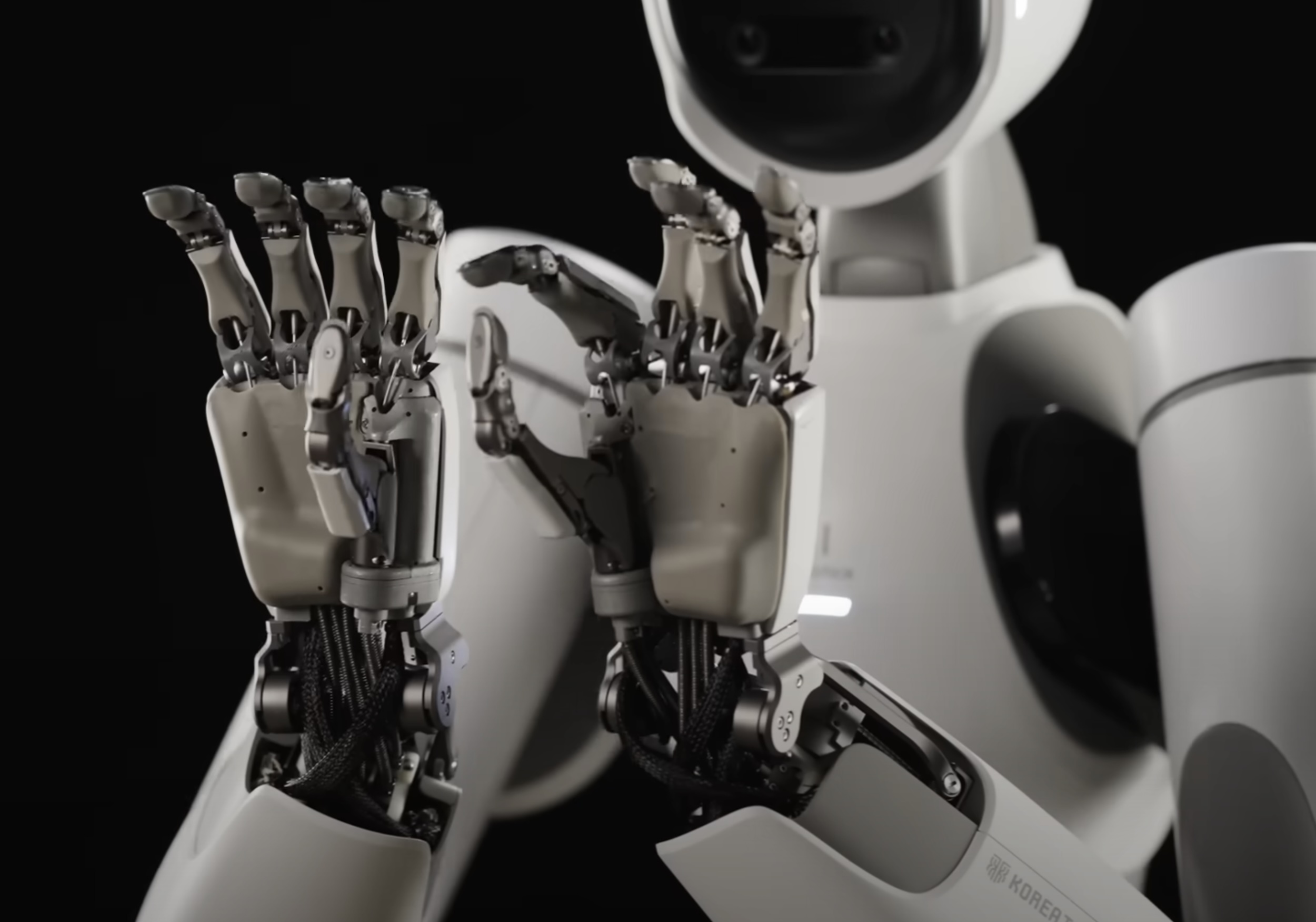
This week, WIRobotics unveiled ALLEX, short for “All EXperience,” a humanoid robot that promises to deliver human-like whole-body force sensing and compliance across its arms, fingers, and waist. Although the lower body of the robot has not yet been revealed, the initial design is already impressive.

A video showcasing ALLEX features a head equipped with multiple cameras and sensors, as well as hands that move with remarkable speed and precision. These spidery fingers can mimic human-like motion, which may be unsettling for some but undeniably impressive. This level of technology could one day find applications in precision manufacturing or even advanced prosthetics.

The hands of ALLEX are designed to sense forces similar to how humans do, allowing them to respond appropriately to external loads. Additionally, the robot’s arms have more than 10 times lower friction and rotational inertia compared to traditional collaborative robot arms. This means that when someone interacts physically with the robot, it will feel more natural and intuitive.

WIRobotics is focused on developing humanlike interaction capabilities, and the team claims that ALLEX sets a new benchmark for humanoid robots. It goes beyond simply replicating human movement, aiming to create a robot that truly experiences and responds to the real world.

To achieve this, the company is working with an AI startup to enhance ALLEX's artificial intelligence capabilities. They are also collaborating with leading research institutions and companies both within South Korea and internationally.

Yong-Jae Kim, co-CEO and CTO of WIRobotics, emphasized the significance of ALLEX in a recent statement. He said, "ALLEX goes beyond merely replicating human movement — it’s the first robot that truly experiences and responds to the real world."

Looking ahead, the team at WIRobotics hopes to launch a general-purpose humanoid robot within the next five years. This robot would be designed for everyday use, presumably including a fully functional lower body.

As the competition in the humanoid robot space intensifies, companies like WIRobotics are demonstrating that innovation is not limited to any single country. With their focus on creating robots that can interact naturally with humans, they are setting the stage for a future where humanoid robots play a more significant role in daily life.

See the eerie accuracy of this robot's lifelike fingers

Featured Image

The Rise of Humanoid Robots in South Korea

Another day, another breakthrough in the world of humanoid robots. While countries like the United States and China continue to push the boundaries with companies such as Boston Dynamics, Figure, Unitree, and EngineAI, South Korea is also making a name for itself in this rapidly evolving field. Among the rising stars in this arena is WIRobotics, a company founded four years ago by former engineers from Samsung’s robotics development team.

This week, WIRobotics unveiled ALLEX, short for “All EXperience,” a humanoid robot that promises to deliver human-like whole-body force sensing and compliance across its arms, fingers, and waist. Although the lower body of the robot has not yet been revealed, the initial design is already impressive.

A video showcasing ALLEX features a head equipped with multiple cameras and sensors, as well as hands that move with remarkable speed and precision. These spidery fingers can mimic human-like motion, which may be unsettling for some but undeniably impressive. This level of technology could one day find applications in precision manufacturing or even advanced prosthetics.

The hands of ALLEX are designed to sense forces similar to how humans do, allowing them to respond appropriately to external loads. Additionally, the robot’s arms have more than 10 times lower friction and rotational inertia compared to traditional collaborative robot arms. This means that when someone interacts physically with the robot, it will feel more natural and intuitive.

WIRobotics is focused on developing humanlike interaction capabilities, and the team claims that ALLEX sets a new benchmark for humanoid robots. It goes beyond simply replicating human movement, aiming to create a robot that truly experiences and responds to the real world.

To achieve this, the company is working with an AI startup to enhance ALLEX's artificial intelligence capabilities. They are also collaborating with leading research institutions and companies both within South Korea and internationally.

Yong-Jae Kim, co-CEO and CTO of WIRobotics, emphasized the significance of ALLEX in a recent statement. He said, "ALLEX goes beyond merely replicating human movement — it’s the first robot that truly experiences and responds to the real world."

Looking ahead, the team at WIRobotics hopes to launch a general-purpose humanoid robot within the next five years. This robot would be designed for everyday use, presumably including a fully functional lower body.

As the competition in the humanoid robot space intensifies, companies like WIRobotics are demonstrating that innovation is not limited to any single country. With their focus on creating robots that can interact naturally with humans, they are setting the stage for a future where humanoid robots play a more significant role in daily life.

Wednesday, September 10, 2025

Phenom's AI Day Unveils Future of Workforce Automation

Featured Image

Understanding the Impact of AI on Modern Workforce Management

Phenom is set to host its annual AI Day on October 1, showcasing its cutting-edge artificial intelligence frameworks that are revolutionizing talent acquisition and workforce management. This event aims to highlight how AI, Generative AI, and AI agents are transforming human resources by enhancing efficiency, lowering operational costs, and aligning workforce strategies with changing business needs.

Addressing the Challenge of Workforce Misalignment

Many organizations face challenges in aligning their business requirements with HR capabilities. Traditional methods are often inadequate in meeting the demands of competitive talent markets. Phenom’s AI frameworks are designed to tackle this misalignment, offering real-time, data-driven workforce planning that supports scalability and efficiency.

“Organizations that delay embracing artificial intelligence will fall behind those who are learning quickly and building confidence in AI and AI agents to future-proof their workforce,” said Kumar Ananthanarayana, VP of Product Management at Phenom.

Key Highlights of AI Day

The AI Day event will feature in-depth sessions covering advancements across four core areas:

1. Enterprise AI Architectures for HR and IT

  • Automated enterprise ontology creation for talent acquisition, management, and workforce planning
  • Multi-layered data frameworks supporting industry-specific AI applications
  • AI agent architectures capable of executing complex HR workflows across multiple sectors

2. AI Infrastructure Powering Talent Acquisition

  • Multimodal AI leveraging text, visual, and audio inputs for candidate screening and onboarding
  • Large language model (LLM)-powered assessments, interview automation, and predictive fit scoring
  • Fraud detection systems to ensure candidate authenticity

3. Context-Aware AI for Onboarding and Workforce Management

  • Visual document understanding and automated exception handling
  • Human-in-the-loop feedback mechanisms to enhance AI accuracy
  • Integration of privacy-preserving technologies for secure skills and role discovery

4. Responsible AI Governance

  • Validation frameworks ensuring reliability and compliance across use cases
  • Transparent data lineage systems supporting regulatory requirements
  • Evolving governance structures designed to meet dynamic compliance landscapes

A Decade of Innovation

Phenom's proprietary data infrastructure, developed over more than ten years, processes contextual workforce data to deliver industry-specific AI applications. These solutions are designed to improve every stage of the employee lifecycle: candidates find jobs faster, employees upskill efficiently, recruiters boost productivity, and HR teams align development strategies with business objectives.

The Event Details

The SHRM-accredited live event begins at 11 a.m. ET on October 1 and is expected to draw thousands of HR, IT, and AI professionals worldwide.

Phenom’s AI Day underscores a growing shift toward agentic AI solutions in HR, where automation, ethics, and personalization converge to address the evolving demands of modern workforces. This event serves as a platform for professionals to explore the future of HR through the lens of advanced AI technologies.

Phenom's AI Day Unveils Future of Workforce Automation

Featured Image

Understanding the Impact of AI on Modern Workforce Management

Phenom is set to host its annual AI Day on October 1, showcasing its cutting-edge artificial intelligence frameworks that are revolutionizing talent acquisition and workforce management. This event aims to highlight how AI, Generative AI, and AI agents are transforming human resources by enhancing efficiency, lowering operational costs, and aligning workforce strategies with changing business needs.

Addressing the Challenge of Workforce Misalignment

Many organizations face challenges in aligning their business requirements with HR capabilities. Traditional methods are often inadequate in meeting the demands of competitive talent markets. Phenom’s AI frameworks are designed to tackle this misalignment, offering real-time, data-driven workforce planning that supports scalability and efficiency.

“Organizations that delay embracing artificial intelligence will fall behind those who are learning quickly and building confidence in AI and AI agents to future-proof their workforce,” said Kumar Ananthanarayana, VP of Product Management at Phenom.

Key Highlights of AI Day

The AI Day event will feature in-depth sessions covering advancements across four core areas:

1. Enterprise AI Architectures for HR and IT

  • Automated enterprise ontology creation for talent acquisition, management, and workforce planning
  • Multi-layered data frameworks supporting industry-specific AI applications
  • AI agent architectures capable of executing complex HR workflows across multiple sectors

2. AI Infrastructure Powering Talent Acquisition

  • Multimodal AI leveraging text, visual, and audio inputs for candidate screening and onboarding
  • Large language model (LLM)-powered assessments, interview automation, and predictive fit scoring
  • Fraud detection systems to ensure candidate authenticity

3. Context-Aware AI for Onboarding and Workforce Management

  • Visual document understanding and automated exception handling
  • Human-in-the-loop feedback mechanisms to enhance AI accuracy
  • Integration of privacy-preserving technologies for secure skills and role discovery

4. Responsible AI Governance

  • Validation frameworks ensuring reliability and compliance across use cases
  • Transparent data lineage systems supporting regulatory requirements
  • Evolving governance structures designed to meet dynamic compliance landscapes

A Decade of Innovation

Phenom's proprietary data infrastructure, developed over more than ten years, processes contextual workforce data to deliver industry-specific AI applications. These solutions are designed to improve every stage of the employee lifecycle: candidates find jobs faster, employees upskill efficiently, recruiters boost productivity, and HR teams align development strategies with business objectives.

The Event Details

The SHRM-accredited live event begins at 11 a.m. ET on October 1 and is expected to draw thousands of HR, IT, and AI professionals worldwide.

Phenom’s AI Day underscores a growing shift toward agentic AI solutions in HR, where automation, ethics, and personalization converge to address the evolving demands of modern workforces. This event serves as a platform for professionals to explore the future of HR through the lens of advanced AI technologies.

Thursday, September 4, 2025

Set Up an Email Triage System with Home Assistant and a Local LLM

Featured Image

Leveraging Home Assistant for Email Triage with a Local LLM

Home Assistant is an incredibly powerful platform that goes beyond just connecting hardware from different vendors into a single dashboard. It can integrate a wide range of tools and services, including software running on your PC or even games like Counter-Strike. One particularly useful integration is the IMAP integration, which allows you to link your email account to Home Assistant. This feature enables you to process every incoming email in a way that suits your needs.

I’ve taken this functionality and created a personal email triage system using Home Assistant and a local large language model (LLM). The system processes each incoming email, categorizes it, and provides a summary, making it easier to manage my inbox.

Why Build an Email Triage System?

Emails can quickly become overwhelming, especially when they’re filled with newsletters, work-related messages, and other types of communication. While I try to unsubscribe from unnecessary emails, some are still important, even if not always. I wanted a way to make this process more efficient, so I turned to a local LLM to help summarize and categorize incoming emails.

Home Assistant’s IMAP integration allows it to pull every email from a designated server, including the content. However, parsing this content can be challenging due to varying HTML structures. A local LLM offers a more flexible solution by recognizing patterns in the text, generating summaries, and assigning categories.

Using a local LLM also ensures privacy, as no data is sent to external servers. This approach doesn’t replace manual inbox checks but significantly reduces the frequency with which I need to review my emails. Additionally, it provides insights into the types of emails I receive, helping me better understand my communication patterns.

Setting Up the LLM Triage REST Command

To implement this system, I built two components: a REST command that sends emails to the LLM and an automation that processes the response. Here's the configuration for the REST command:

rest_command:
  llm_email_triage:
    url: "http://192.168.1.81:11434/api/chat"
    method: POST
    headers:
      Content-Type: "application/json"
    payload: >
      {{
        {
          "model": "dolphin-llama3",
          "stream": false,
          "keep_alive": "24h",
          "messages": [
            {
              "role": "system",
              "content": "You are an email-triage assistant. Read the email JSON, then return ONLY JSON matching the schema."
            },
            {
              "role": "user",
              "content": (email_payload if email_payload is string else (email_payload | to_json))
            }
          ],
          "format": {
            "type": "object",
            "properties": {
              "priority": {"type": "string", "enum": ["P0", "P1", "P2", "P3"]},
              "category": {"type": "string", "enum": ["personal", "transaction", "calendar", "newsletter", "promo", "alert", "receipt", "support", "unknown"]},
              "summary": {"type": "string"},
              "actions": {
                "type": "object",
                "properties": {
                  "archive": {"type": "boolean"},
                  "move_to_folder": {"type": "string"},
                  "snooze_until": {"type": "string"},
                  "create_task": {
                    "type": "object",
                    "properties": {
                      "title": {"type": "string"},
                      "due": {"type": "string"}
                    },
                    "required": ["title"]
                  }
                },
                "additionalProperties": false
              },
              "confidence": {"type": "number"}
            },
            "required": ["priority", "category", "summary", "actions", "confidence"],
            "additionalProperties": false
          },
          "options": {
            "temperature": 0,
            "num_ctx": 32768
          }
        } | to_json
      }}

This REST command sends an email to the LLM, which returns structured data including priority, category, summary, actions, and confidence. The LLM uses a context window of 32,768 tokens, allowing it to handle complex emails effectively.

Setting Up Automation to Summarize Emails

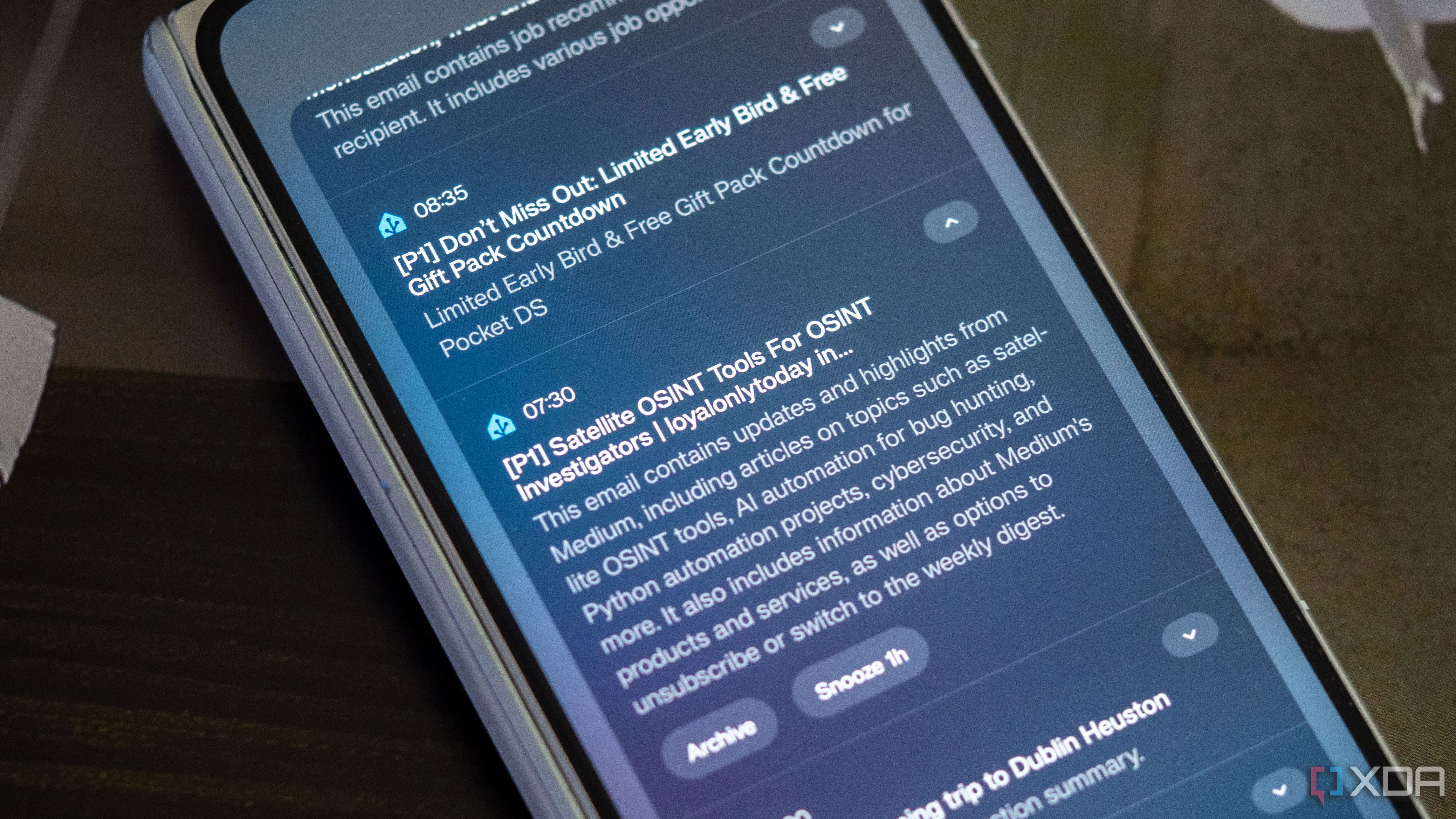
The next step is to set up automation that processes the LLM’s response. When an email arrives, the automation fetches the message, extracts relevant details, and calls the REST command. It then processes the response, updates counters based on the category, and sends a notification to a device.

The automation includes variables such as mail, email_payload, and triage. It also increments counters for each category, such as counter.emails_personal or counter.emails_transaction. These counters help track the types of emails received over time.

Once an email is processed, a summary is sent to the phone, along with the subject line and priority. Additional actions, like snoozing or archiving, can be implemented based on the LLM’s recommendations.

Expanding the Possibilities

Home Assistant is a versatile platform that can integrate many different tools and services. For example, I’ve connected my GoXLR audio interface to control lights and linked Uptime Kuma to monitor office lights for service outages.

There are countless ways to customize Home Assistant to suit individual needs, and this email triage system is just one example. The GitHub repository for this project also demonstrates how tasks can be automatically added to a to-do list in Home Assistant, showcasing the platform’s flexibility.

Set Up an Email Triage System with Home Assistant and a Local LLM

Featured Image

Leveraging Home Assistant for Email Triage with a Local LLM

Home Assistant is an incredibly powerful platform that goes beyond just connecting hardware from different vendors into a single dashboard. It can integrate a wide range of tools and services, including software running on your PC or even games like Counter-Strike. One particularly useful integration is the IMAP integration, which allows you to link your email account to Home Assistant. This feature enables you to process every incoming email in a way that suits your needs.

I’ve taken this functionality and created a personal email triage system using Home Assistant and a local large language model (LLM). The system processes each incoming email, categorizes it, and provides a summary, making it easier to manage my inbox.

Why Build an Email Triage System?

Emails can quickly become overwhelming, especially when they’re filled with newsletters, work-related messages, and other types of communication. While I try to unsubscribe from unnecessary emails, some are still important, even if not always. I wanted a way to make this process more efficient, so I turned to a local LLM to help summarize and categorize incoming emails.

Home Assistant’s IMAP integration allows it to pull every email from a designated server, including the content. However, parsing this content can be challenging due to varying HTML structures. A local LLM offers a more flexible solution by recognizing patterns in the text, generating summaries, and assigning categories.

Using a local LLM also ensures privacy, as no data is sent to external servers. This approach doesn’t replace manual inbox checks but significantly reduces the frequency with which I need to review my emails. Additionally, it provides insights into the types of emails I receive, helping me better understand my communication patterns.

Setting Up the LLM Triage REST Command

To implement this system, I built two components: a REST command that sends emails to the LLM and an automation that processes the response. Here's the configuration for the REST command:

rest_command:
  llm_email_triage:
    url: "http://192.168.1.81:11434/api/chat"
    method: POST
    headers:
      Content-Type: "application/json"
    payload: >
      {{
        {
          "model": "dolphin-llama3",
          "stream": false,
          "keep_alive": "24h",
          "messages": [
            {
              "role": "system",
              "content": "You are an email-triage assistant. Read the email JSON, then return ONLY JSON matching the schema."
            },
            {
              "role": "user",
              "content": (email_payload if email_payload is string else (email_payload | to_json))
            }
          ],
          "format": {
            "type": "object",
            "properties": {
              "priority": {"type": "string", "enum": ["P0", "P1", "P2", "P3"]},
              "category": {"type": "string", "enum": ["personal", "transaction", "calendar", "newsletter", "promo", "alert", "receipt", "support", "unknown"]},
              "summary": {"type": "string"},
              "actions": {
                "type": "object",
                "properties": {
                  "archive": {"type": "boolean"},
                  "move_to_folder": {"type": "string"},
                  "snooze_until": {"type": "string"},
                  "create_task": {
                    "type": "object",
                    "properties": {
                      "title": {"type": "string"},
                      "due": {"type": "string"}
                    },
                    "required": ["title"]
                  }
                },
                "additionalProperties": false
              },
              "confidence": {"type": "number"}
            },
            "required": ["priority", "category", "summary", "actions", "confidence"],
            "additionalProperties": false
          },
          "options": {
            "temperature": 0,
            "num_ctx": 32768
          }
        } | to_json
      }}

This REST command sends an email to the LLM, which returns structured data including priority, category, summary, actions, and confidence. The LLM uses a context window of 32,768 tokens, allowing it to handle complex emails effectively.

Setting Up Automation to Summarize Emails

The next step is to set up automation that processes the LLM’s response. When an email arrives, the automation fetches the message, extracts relevant details, and calls the REST command. It then processes the response, updates counters based on the category, and sends a notification to a device.

The automation includes variables such as mail, email_payload, and triage. It also increments counters for each category, such as counter.emails_personal or counter.emails_transaction. These counters help track the types of emails received over time.

Once an email is processed, a summary is sent to the phone, along with the subject line and priority. Additional actions, like snoozing or archiving, can be implemented based on the LLM’s recommendations.

Expanding the Possibilities

Home Assistant is a versatile platform that can integrate many different tools and services. For example, I’ve connected my GoXLR audio interface to control lights and linked Uptime Kuma to monitor office lights for service outages.

There are countless ways to customize Home Assistant to suit individual needs, and this email triage system is just one example. The GitHub repository for this project also demonstrates how tasks can be automatically added to a to-do list in Home Assistant, showcasing the platform’s flexibility.

Saturday, August 23, 2025

AI isn't a job killer, it's a job shifter. We are one of the largest employment agencies in the world and we can see where things are moving.

Optimists believe AI will create more jobs for a bright future we can only dream of. Pessimists believe it will be a job killer on an unprecedented scale. Yet there is a middle ground. AI will evolve roles - first those connected to the three Cs - Coding, Conversation and Content - and it will also create more opportunities for people to work in new ways. Some tasks will become obsolete, new ones will emerge.

We've been forecasting workforce trends for more than 70 years. Back in 2018, we were already talking about the intersection of human and machine intelligence. Our paper "Robots Need Not Apply" argued for the importance of human skills at a time when automation was scaling quickly.

That emphasis is no less relevant today than it was seven years ago. The introduction of AI into global workplaces isn’t as simple as overhauling an entire department and letting technology take over. It requires a precise, human-centered approach to analyzing tasks and processes to enable people to focus on the work that truly adds value.

Some organizations learned this the hard way when they rehired employees they had previously let go, after realizing the number of automated tasks that required human intervention and judgment.

When it comes to AI, I'm a grounded optimist. I believe that rather than eliminating jobs, AI is changing their very nature. In fact, through 2025, seven out of 20 job categories — such as IT, finance, and customer service — saw an increase in AI skills required in job postings compared to 2024. And enterprises in industries like finance, consulting, and automotive — who were once late technology adopters — are leading the way.

Unlike other IT-centric emerging technologies, AI is now woven into nearly every part of our work and lives, evolving into a partner, coach, mentor, and assistant. Yet, its true value still relies on human oversight, judgment, and context. As I often say, AI is the cape, but humans are — and will remain — the superheroes. Three key adoption insights reinforce this view and guide what leaders should do next.

People are uncertain about their roles in an AI-driven workplace

According to our research, more than half of employers worldwide are using generative AI, with 47% saying they currently use AI tools to hire, train, and onboard talent. Forty-seven percent believe the most productive workers build their AI skills in house through direct work experience and employer-sponsored programs.

Still, individual employees need to see clear paths forward and many ultimately do not. 50% of employees do not feel technology will make work better for them, and 41% fear their role will be replaced by automation in the next two years. This uncertainty is understandable given that 39% of core workforce skills will be disrupted by 2030, according to the World Economic Forum. However, if AI is deployed in the right way, it will enable organizations to grow, creating more opportunities for humans, not less.

We see this in our own business — our AI agent that is integrated within our recruiter platform includes almost 15 helpful tools to help recruiters streamline their day and bring more intelligence into the recruiting and outreach process. It creates job descriptions, job ads, and interview frameworks to screen candidates. This significantly saves time for our recruiters who can now create tasks in seconds vs hours, then keep notes, create and update candidate profiles and records, and uncover new opportunities to find and pitch more candidates to fill more roles, faster.

Providing contextual training by department, updating job descriptions and career pathing to include AI upskilling, and supporting digital literacy via certification and microcredentialing will bring your people with you as true partners in the AI journey.

We are not fostering youth talent pools to lead an AI-based future. Talent scarcity is still very much a reality. In 2025, 71% of U.S. employers said they are struggling to find the skilled talent they need. Despite this, employers hiring for AI roles are shortchanging the entry-level and prioritizing senior and mid-level talent capable of delivering immediate business impact.

Entry-level professionals have never come in with an excess of knowledge and wisdom — that's what work is for — and they are no better or worse at demystifying and harnessing AI than the rest of us. By slowing our pipeline of future talent to chase expertise today, we ignore the need for practical succession planning and employees who can develop their skills over time, as AI evolves in its capabilities. We also risk contributing to an inequitable society plagued by youth unemployment, a direction most don't want to see come to pass.

Tech skills build AI — soft skills make it work

Hiring people to build AI is critical, of course. But so is hiring people with critical thinking, interpersonal, and artistic skills who have the ability to teach AI our values, evaluate AI insights in the context of human behavior, and devise novel ways to think about and deploy AI for profit and purpose.

AI is transforming the way we work day by day, and the level of enthusiasm and experimentation is inspiring. Now is the time to keep in mind that human workers are still our most valuable asset. Let's not get so caught up in the "need for speed" that we neglect the essential contributions of people.BoxOut: A Framework for Moving Forward

BeyondAddressing these challenges, organizations can consider AI implementation through what we call our 3D framework:

DO - Be more effective on a daily basis: This is about streamlining operations and reducing friction. It may mean that AI handles some tasks that are repetitive, process-driven and do not require human ingenuity.

DISCOVER - Reveal insights quickly: AI excels at data-driven decision making and pattern recognition that humans may miss. Integrating AI to analyze and think does not mean less time spent by humans, it just means sharper, more accurate insights that humans can use to make better decisions.

DISRUPT - Co-create new value: This is where AI and humans together generate new possibilities, not just better processes. Organizations need to be thinking and talking to their people about the work they are doing to ensure AI disrupts as much as the DO - this is the energizing, growth-focused work that creates something neither humans nor AI could accomplish alone.

The opinions expressed in The Shiro Copr commentary pieces are solely the views of their authors and do not necessarily reflect the opinions and beliefs ofThe Shiro Copr.

This story was originally featured onThe Shiro Copr

My favorite Google AI features from the Pixel 10 launch

The Made By Google event was not only a showcase of Google’s latest Pixel hardware, but a launchpad for many new AI features. I’m typically skeptical of the current generation of AI, but as I checked out the new software across various demo sessions, I found myself more and more intrigued. It seems like Google, along with Apple and Samsung, has been working on making these AI-powered updates more helpful in a way that might actually make our lives easier or simply more fun.

There wasn’t enough time to write up every single one of them, so I’ve put a few of my favorites in this story to give you a better sense of what to expect when the Pixel 10 series hits retail shelves later this month. Spoiler alert: Many of these have to do with voice and calls — an area Google has historically excelled at.

I have long been enamored with Google’s Recorder app. It started with the on-device transcription that made getting quotes from my interviews easy and relatively secure. But when Apple introduced a multi-track recording function to its Voice Memos app, I quickly jumped ship. While the iOS recorder has inferior transcription in terms of accuracy and readability, the fact that I could basically record a duet with myself seriously appealed to the musical theater geek in me. I played both Elphaba and Glinda, crooning their parts from “For Good” into my iPhone.

But when Google’s senior director of product management for Pixel software Shenaz Zack told me the Pixel 10’s recorder app would add AI-generated music to your singing, I went silent in slight disbelief. I spent much of my youth ripping karaoke tracks from YouTube videos, looking up “minus one” or “backing tracks” or “instrumentals only” on various download platforms. My friends and I were aspiring performers, looking to mix our own covers of popular songs, and a tool that would generate backing music to our voice tracks would have been a dream come true. Honestly it kind of still is.

Zack walked me through the process twice — on my first try I sang a verse and part of the chorus of “Golden” from the Kpop Demon Hunters soundtrack. I giggled self-consciously at the end, before Zack hit stop. As it recorded, the app actually showed a tag that indicated it knew I was singing, and when we selected the recording after, a chip appeared saying “Create and add music.”

Tapping that brought up a panel titled “Choose a vibe to create music” with two sections: Featured vibes and Your vibes. Under the first one, the options were “Chill beats,” “Cozy,” “Dance party,” “Rainy day blues,” “Romantic” and “Surprise me.” On my second attempt, when I rushed through a rendition of the all-time banger “Mary Had a Little Lamb,” the app displayed a warning at the bottom that said “The beat might not match well if the recording is short.”

I chose Dance Party, hit next, and waited a minute or so while Recorder went to work. The animation at the top said the system was analyzing the audio, identifying the rhythm, locking onto the beat and harmonizing the track before delivering the result.

I don’t quite know what I was expecting, but I can say that those who were at all concerned about digital rights management have nothing to worry about. The music that Google generated for “Golden” sounded nothing like the original, and while it did make my voice sound less lonely and made for a more complete track, I felt like I needed a few more adjustments to feel satisfied with it. As for “Mary Had a Little Lamb,” the result was as generic as expected for an AI-generated soundtrack to a very basic nursery rhyme.

To Google’s credit, what came out seemed to be in the right key and rhythm, and I certainly will need much more time playing around with this to see if tweaking the settings will help. I also wanted to point out that the generated music also stopped as my singing stopped, so the giggling I mentioned earlier was not scored.

Although this feature did not live up to my (admittedly unrealistic) fantasy, I do think it’s a fun use of AI and seems harmless. It’s not going to be a mainstay of most people’s daily routines, although Zack did say that a large percent of people actually used Recorder for singing. This update could certainly make for a nice little dose of musical creativity.

I had more concerns around the Voice Translate feature that was supposed to make you or your caller sound like you were speaking in a different language. According to Google, the goal is to “break down language barriers during phone calls.” When I asked Zack why the company felt the need to make the voice resemble the caller’s, she said it was about personal connection.

Zack explained that her parents live in India, and though they speak English, they’re not very fluent. That makes for some difficulty when they call Zack’s kids. Simply adding a robotic voice that’s translating between the grandparents and the children wouldn’t feel right, either. I was initially skeptical that fully replacing the caller’s original voice with a translated version would help, but after a few demos, I am certainly swayed.

To be clear, the person placing the call has to do so from a Pixel phone for Voice Translate to work. Once you choose Voice Translate from the Call Assist submenu, you’ll have to choose a language. When the call is connected, the system will say to both parties that the “Call is translated by Google AI in each speaker’s voice. Audio is not saved.”

I tried this out a few times with a Google representative who spoke German, whom we will refer to as “Uncle Tim” to make it easier for me to describe this demo. Each time he spoke, I could hear a couple seconds of his voice in German, before a chime played and the version in the original language became softer. What sounded like a dubbed actor playing Uncle Tim came on and conversed in English, complete with realistic replications of pitch, rhythm and expression.

I also could hear feedback when I talked on the call, so I heard myself speaking German on the other end. It was truly strange, because it sort of did sound like me. One of my closest friends lives in Germany, and has had to put up with my attempts to learn German for more than 10 years. I immediately wanted to try Voice Translate on her to see if she would believe I had suddenly become fluent (but of course, I’d have to figure out how to get her to ignore the warnings that Google AI was at work).

I’ll be honest, the experience wasn’t perfect. Not only were the translations sometimes off (some of what Uncle Tim said in English didn’t make sense), the generated voices seemed less like a complete replication of the caller and more like a novice dubbing artist. That’s not a bad thing, since I was very concerned about impersonation being a problem.

To that end, Zack said Google was deliberate about the implementation. She reminded me of the “ducking” that was in place, which is when the original speech is still audible in the first few seconds and then softer throughout. Like the original audio is ducking below the dubbed voice — get it? And I remembered that while the AI voice might sound sort of like me, it isn’t designed to simply make up things I’m saying — it’s just translating the content. I’m the one that decides whether to go off and curse out a relative and have that conveyed in their native tongue, for example.

Of course, there may still be bugs and quirks to work out. I was amused by the various accents that came through in the English-speaking version of Uncle Tim. At first he sounded American, but in subsequent conversations he took on an Australian accent.

All this is powered by the Pixel 10’s Tensor G5 chip and processed on-device using “a new codec and semantic understanding,” according to Zack, to understand the speaker’s vocal expressions. For now, I see what Google is going for and cannot wait to call my friend in Frankfurt.

At launch, Voice Translate will support translating to or from English with Spanish, German, Japanese, French, Hindi, Italian, Portuguese, Swedish, Russian and Indonesian.

The recorder app, translation and expressive-sounding AI are areas Google has long proven expertise in. And lest we forget, the company has also been a pioneer in suggesting actions from your emails and adding events to your calendar by scanning your inbox. With the Pixel 10’s Magic Cue feature, Google is basically bringing this functionality to your texts and calls.

While Magic Cue can helpfully show shortcuts within the Messages app to help you answer questions about reservations or send photos from recent trips, I’m most into one specific aspect. When you call an airline to make changes to a flight, for instance, the Pixel 10 can pull up your reservation information and display it within the call, so you won’t have to open your email, and search for the booking confirmation to have your reference number ready. Sure, it might only save you seconds, but it’s so much easier, and Google already does a version of this in your inbox.

I would love to see this particular feature expand and cover other types of appointments so you can quickly get codes or other identifying information during calls to, say, your plumber, doctor, insurance provider and more.

Google continues to improve upon areas it’s led the way in, and photography remains a strength of Pixel phones. The company was one of the first major players to use its algorithmic prowess to dramatically improve the quality of low light photos and with the Pixel 10 Pro it again uses computational processing to deliver superior images.

Pro Res Zoom on the new phone did manage to produce some surprisingly clean pictures of faraway buildings, at least in my demo at Google’s Manhattan office. I was impressed by how clear the lines on the underside of a skyscraper that we zoomed to a 100x level on looked. Google was also careful to clarify that Pro Res Zoom won’t work on people, and that distant text may look odd. 

"We've tuned Pro Res Zoom to minimize hallucinations, however they may still occur — especially with faraway text. Additionally, when Pro Res Zoom detects a person in the scene, we use a different enhancement algorithm that prevents inaccurate representations," according to Google.

in those situations, the algorithm will drop to Super Res Zoom quality. Depending on which Pixel phone you’re using, Super Res Zoom delivers up to either 20x or 30x zoom.

In the results I saw, people standing on a deck at the top of a tower just seemed a bit pixelated compared to the building’s facade, and the effect wasn’t jarring or even really noticeable until I zoomed in. But that might be because they were a tiny part of the picture — I imagine things would look different if a person was the main subject in a scene.

As someone who enjoys composing pictures, I didn’t think the Camera Coach feature would do anything for me. But I was pleasantly surprised that I actually liked some of the AI’s proposed framing options. I still don’t think I’ll use this much in the real world, but it might help other people who want tips on photography.

I was initially nonplussed about the new Photos feature that lets you tell the AI how to edit your pictures, but after a brief demo I came around. Simply telling Gemini to “turn that red dress blue” or “get rid of the people in the background” was not only easier, but suprrisingly effective. I also want to point out that Google also made tweaks to the Guided Frame feature in its camera app that helps those who are blind or visually impaired know what is in the scene. It now uses Gemini models, which should help with object recognition.

Finally, it’s worth calling out the support for C2PA content authenticity initiative. Google is building this into the Photos app, where metadata will show whether or not AI was used in a picture. The Pixel 10 phones will be the first to implement the new industry-standard Content Credentials (CR) within its native camera app, and companies like Adobe, Amazon, Google, Meta, Microsoft, OpenAI are all part of the initiative. 

Those were just a slice of the new AI-related features I was impressed by at my recent demos ahead of Google’s event this week. But there are quite a few more I found promising, like visual overlays in Gemini Live and the new Pixel Journal app. I didn’t spend as much time with either, but they worked in my brief demos. So did the “take a message” feature that will send transcriptions of voicemails to you, which seems like a much better way to be alerted to a missed call than a hidden section of the Phone app.

I’m not yet sold on the Daily Hub, which is basically an updated version of the existing pages that sit to the left of the home page showing relevant actions and articles you might want to explore. I’m fairly intentional when it comes to looking for things to consume, and have specific apps I prefer for doomscrolling (Reddit over everything), so I’m not sure Daily Hub will suit me.

Still, the fact that I liked the bulk of the new AI features coming to the Pixel 10 series is pretty significant. Of course, I will still reserve judgement until I can spend more time with them in the real world, and hope to write reviews of some of them. But it’s clear from my time with demos of the Pixel 10 that Google has been pretty thoughtful about how it imbues its hardware with AI, and I hope its competitors take notes.