Showing posts with label military technology. Show all posts

Sunday, August 2, 2026

MiG-41 vs NGAD: Hypersonic Aspirations vs Engineering Reality

Featured Image

The Ambitious MiG-41: A Dream or a Mirage?

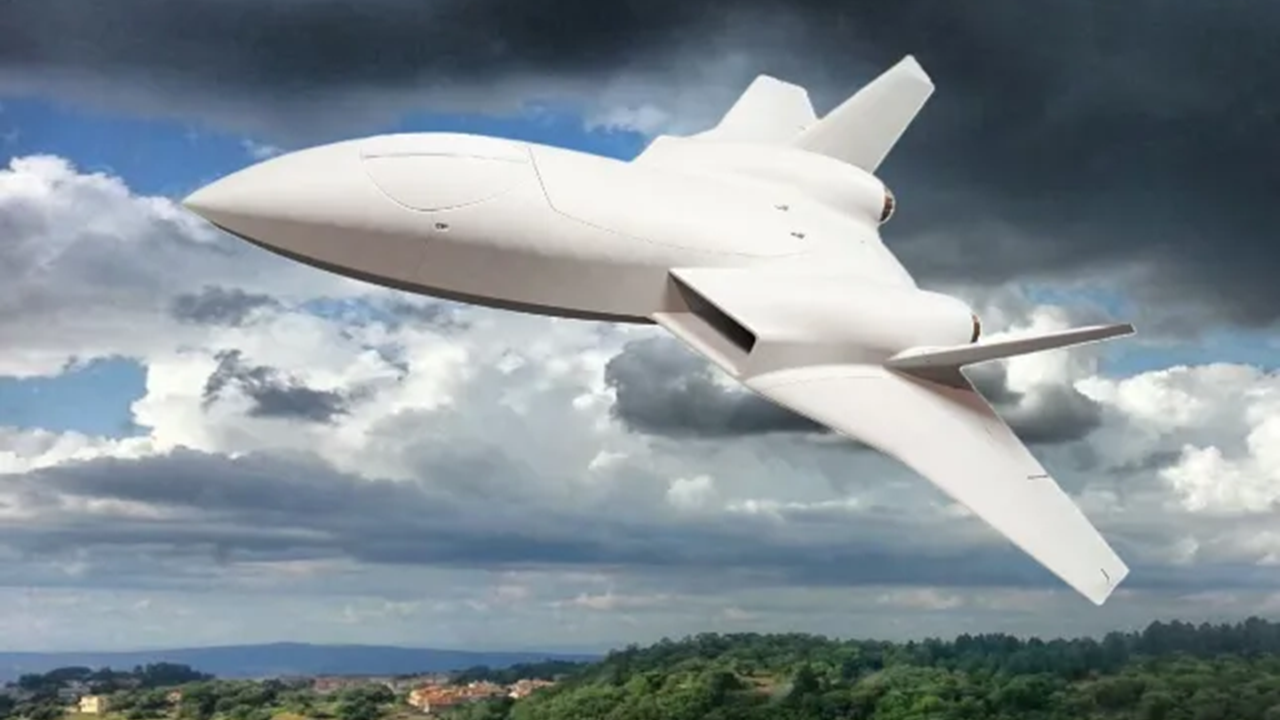
Russia's MiG-41 project has captured the attention of military analysts and defense experts around the world. Marketed as a sixth-generation fighter, it is presented as a response to America’s Next Generation Air Dominance (NGAD) program. However, many observers are skeptical about its feasibility, viewing it more as a "Potemkin fighter" — a show of strength that masks underlying industrial weaknesses.

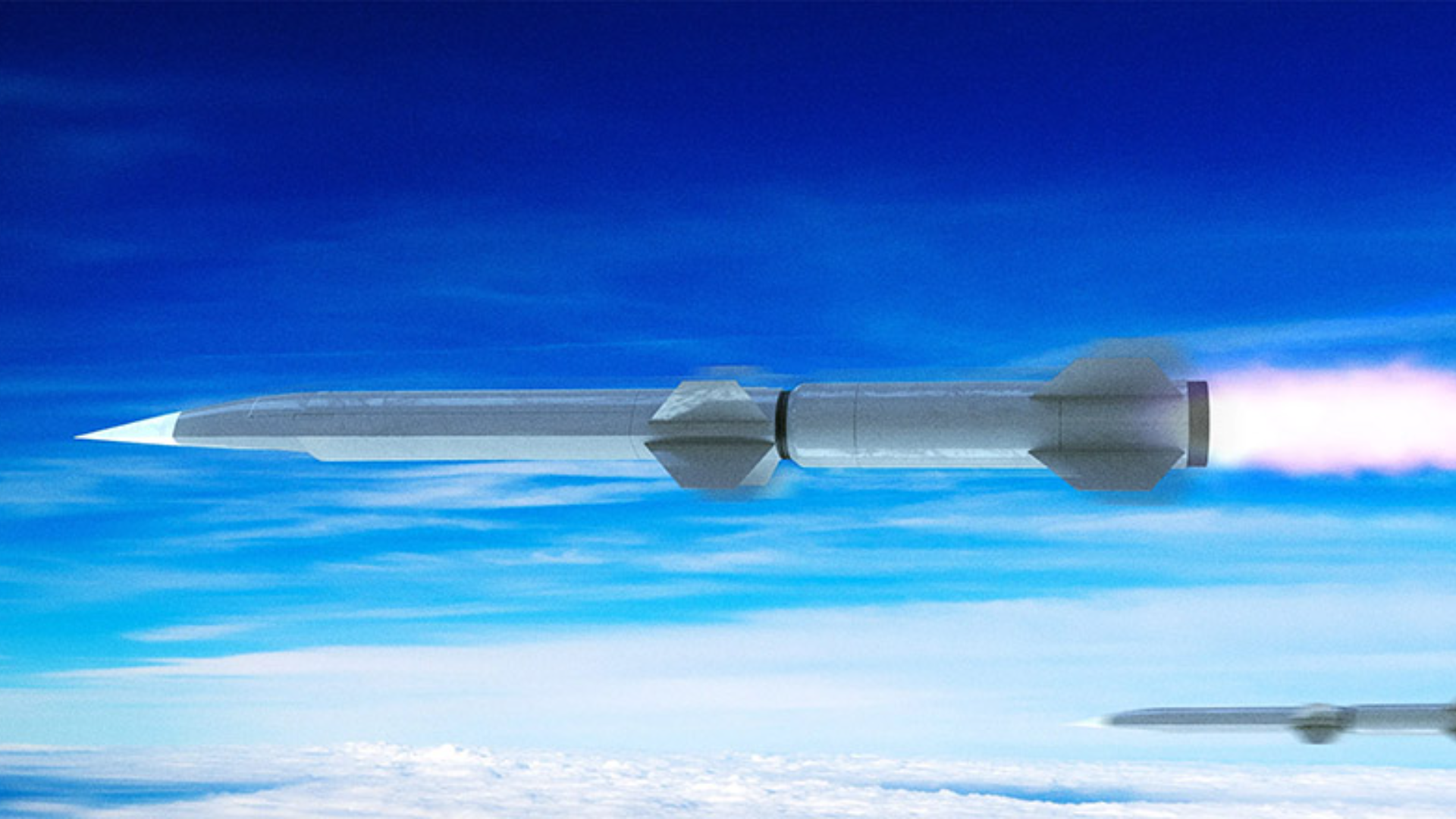
In theory, the PAK DP, as it is officially known, promises impressive capabilities. It is designed to operate at speeds ranging from Mach 4 to Mach 5, reach near-space altitudes, and carry hypersonic and anti-satellite missiles internally. Additionally, it features an unmanned version, a blended wing-body configuration, radar-absorbent materials, and AI-backed avionics. If these technologies can be successfully integrated, the MiG-41 could rival or even surpass Western designs.

The head of MiG has claimed that the aircraft will utilize new types of aviation weapons and incorporate advanced stealth technologies. However, the gap between theoretical design and practical implementation remains vast.

Engineering Challenges at Hypersonic Speeds

One of the most significant hurdles in developing a hypersonic aircraft is managing the extreme thermal and structural stresses involved. At Mach 5, stagnation temperatures can soar up to 10,000 °C in the shock layer, with leading edges experiencing thermal gradients of up to 1,000 K over just a few millimeters. These conditions generate stresses of around 100 MPa, requiring the use of exotic materials such as carbon-carbon composites, ultra-high-temperature ceramics like HfB₂–SiC, or refractory metal alloys with specialized cooling systems.

Even the United States, which has invested decades in hypersonic research, still faces challenges in ensuring the long-term durability of these materials under repeated thermal cycling.

Propulsion Complexities

Propulsion is another major challenge for the MiG-41. The aircraft is expected to be powered by the Saturn AL-51 afterburning turbofan, which delivers 37,500 pounds of thrust. While the design of the AL-51 looks promising, integrating it into a platform capable of sustained hypersonic cruise would likely require a combined-cycle system that transitions from turbine to ramjet or scramjet modes.

Such engines must withstand oxidizing, high-pressure combustion regimes where passive cooling becomes ineffective above Mach 6. This necessitates active thermal management techniques like heat pipes, transpiration cooling, or film cooling — each adding complexity and weight to the system.

Stealth Integration at Hypersonic Speeds

Stealth integration at hypersonic speeds presents additional challenges. Current low-observable aircraft rely on careful shaping, precise body-panel tolerances, and radar-absorbing coatings. However, at high Mach numbers, surface temperatures may exceed the thermal limits of most polymers used in radar-absorbent materials, degrading their effectiveness.

NGAD designs are expected to feature full-body coatings, sophisticated heat distribution systems to reduce infrared signatures, and sensor-fusion avionics with open-architecture software. Russia has yet to demonstrate similar capabilities, even on the Su-57, whose stealth performance is estimated to be closer to upgraded fourth-generation aircraft than to the F-22.

Industrial Limitations

Industrial capability is another critical factor. The Su-57 project, initiated in 2002, has produced fewer than a dozen aircraft after over a decade, plagued by engine delays and sanctions-imposed shortages of high-end microelectronics and precision tooling. Western export restrictions have forced Russia’s aviation industry to scavenge civilian airliners for spare parts.

Satellite imagery of several air bases reveals fighter planes in static disrepair, highlighting the impact of component shortages. Trade figures indicate that Russia has redirected some microelectronics through partners like Kazakhstan and China, but at significantly higher prices that strain procurement budgets.

Resource Allocation and Strategic Priorities

The ongoing conflict in Ukraine has further shifted resources toward immediate battlefield needs — artillery, drones, and armor — rather than long-term aerospace programs. Even the Kremlin has halted Su-57 production due to component shortages, redirecting focus to older Su-35 models.

In this environment, funding and maintaining a Mach 5 interceptor with advanced materials and propulsion seems unlikely.

The Reality Behind the Rhetoric

Experts note that Russia already deploys hypersonic missiles like the Kinzhal, which are air-launched ballistic missiles far less complex than a reusable crewed hypersonic aircraft. Transitioning from boost-glide or rocket-assisted hypersonics to a stealthy, fully integrated, high-altitude interceptor is orders of magnitude more complicated.

As one aviation analyst noted, “Russia considers stealth useful… but they show no interest in winning a stealth competition with the U.S.”

For now, the MiG-41 remains in renderings and rhetoric, serving as an instrument of information warfare. Presenting it as a peer to NGAD reinforces a narrative of technological equivalence, despite the scientific, engineering, and industrial realities that tell a different story — one shaped by physics, materials science, and economic constraints.

Friday, July 24, 2026

Ukrainian Drone Strikes 400 km with Ground-Based Missile

Featured Image

Introduction to the Protector: Ukraine’s Advanced Ground-Based Robotic System

Ukraine has unveiled a groundbreaking ground-based robotic system called the Protector, developed by the defense company Ukrainian Armor. This innovative technology is being showcased as a significant advancement in military capabilities, offering a range of features that make it a versatile and powerful asset on the battlefield.

Features and Capabilities of the Protector

The Protector functions like a full-sized vehicle but without a steering wheel, pedals, or driver. Instead, it is operated remotely, allowing for greater flexibility and safety in combat situations. The system is built on an off-road vehicle chassis, which enables it to carry up to 700 kg and tow a trailer. This makes it ideal for transporting supplies, equipment, and even injured personnel.

Anastasiia Oleshchuk, the project manager for unmanned systems development, shared details of an experiment where the Protector successfully towed a trailer carrying a three-tonne car. The system handled the task flawlessly, demonstrating its strength and reliability. Additionally, the cargo area can hold three wounded individuals lying down simultaneously, highlighting its potential for medical evacuation purposes.

In the future, the Protector could be equipped with combat modules, including machine guns or grenade launchers, further enhancing its versatility and effectiveness in various military scenarios.

Communication Systems and Operator Console

The new vehicle is equipped with three types of communication systems and two antennas. Currently, the left antenna is a dummy, but this could change in the future. According to Oleshchuk, the left antenna could be replaced with an operational one to support additional technologies. The system is designed to resist electronic warfare by switching between its three communication channels to counter interference.

The right antenna handles the connection to the operator console, which uses a layout similar to that of a conventional car. On flat terrain, the communication range is 7 km, extending up to 12 km in open areas. The system also carries a Starlink antenna, providing an additional communication option.

Power and Performance

The Protector is powered by a 3-litre diesel engine producing 190 hp, giving it a range of 400-500 km, significantly more than other designs. The system can reach speeds of up to 45 km/h, making it suitable for a wide range of terrains and conditions.

Safety and Control Features

The system features a red button on its body that can instantly cut power to all drone systems, ensuring immediate shutdown in emergency situations. Cameras for both day and night operations are installed on the vehicle, providing operators with real-time visual feedback.

Mass Production and Deployment

Mass production of the Protector is reported to have begun, meaning these vehicles can be expected on the front lines soon. This marks a significant step forward in Ukraine's military modernization efforts.

Background and Additional Features

Earlier, Ukraine’s Ministry of Defence officially codified the Protector and approved it for use by the defense forces. It was also revealed that the Protector is equipped with RunFlat wheels, enabling it to keep moving even if they are damaged. This feature enhances the system's durability and reliability in challenging environments.

As the Protector moves into mass production, it represents a major advancement in Ukraine's military technology, offering enhanced capabilities for both logistics and combat operations. Its design and features reflect a commitment to innovation and adaptability in the face of evolving threats.

Sunday, May 10, 2026

Inside the F-22's AI-Controlled Drone Command

Featured Image

The F-22 Raptor: A Human Pilot at the Helm

The F-22 Raptor is one of the most advanced fighter aircraft ever built, yet it still relies on a human pilot to operate. This fact challenges the common misconception that the plane can "fly itself." Instead, the aircraft's sophisticated onboard systems are designed to process radar data, infrared signals, and electronic emissions into a single, clear picture for the pilot. This integration of sensors is a hallmark of fifth-generation aviation technology, which helps reduce cognitive load and allows pilots to make faster, more informed decisions. However, these systems do not replace the pilot; they enhance their capabilities.

Evolution of the F-22’s Role in Modern Warfare

As the battlefield becomes more dynamic, the role of the F-22 is evolving. Starting in Fiscal Year 2026, the U.S. Air Force plans to equip 142 combat-coded F-22s with ruggedized tablet-style control kits. Each of these devices costs around $86,000 and will allow pilots to directly manage AI-driven Collaborative Combat Aircraft (CCA) from the cockpit. These unmanned aerial vehicles, such as General Atomics’ YFQ-42A and Anduril’s YFQ-44A, are designed to scout ahead, jam enemy sensors, or deliver precision strikes. This expansion of capabilities increases the reach and survivability of manned aircraft.

The communication backbone for these operations will likely be the Raptor’s secure Inter-Flight Data Link, a system already used for internal fleet data exchange. Lockheed Martin has demonstrated that a single pilot can issue tactical commands to multiple UAVs through a touchscreen interface. However, managing this complex system presents significant challenges. As an industry official noted, “It was really hard to fly the airplane, let alone manage the weapon system and think spatially and temporally about the other thing.” Despite these hurdles, the Air Force sees this as a critical step toward more integrated manned-unmanned teaming.

Upgrades Enhancing Survivability and Lethality

The modernization plan for the F-22 includes additional enhancements to improve its effectiveness. One key upgrade is the integration of the Infrared Defensive System (IRDS), a network of TacIRST sensors that detect and track heat-emitting threats. Hank Tucker, vice president at Lockheed Martin Mission Systems, emphasized the importance of such systems in making missions more survivable and lethal against current and future adversaries. These upgrades reinforce the Raptor’s air dominance mission while preparing it for more complex, networked operations.

Training with AI-Powered Simulations

Training for F-22 pilots is also undergoing a transformation. Pilots now use AI-powered virtual enemies in simulators and augmented reality environments. This approach, first developed by systems like Red 6’s Airborne Tactical Augmented Reality System (ATARS), allows pilots to face intelligent, evasive aggressors during real flights. By simulating realistic combat scenarios without the cost or limitations of live threat aircraft, these systems provide valuable training opportunities.

The AlphaDogfight Trials conducted by the Defense Advanced Research Projects Agency have shown that reinforcement learning algorithms can outperform human pilots in simulated dogfights. This highlights the potential of AI-based training systems in refining tactics and decision-making skills.

The Road to Full Autonomy

Despite these advancements, fully autonomous fighter operations remain distant. Brig. Gen. Doug Wickert, who oversees AI piloting tests at the 412th Test Wing, stated, “There may be someday we can completely rely on robotized warfare, [but] it is centuries away.” Current AI systems excel at specific tasks but struggle with unexpected decisions in complex, real-world situations. For lethal missions, a human remains essential in the decision-making loop.

Manned-Unmanned Teamwork: A New Era

The concept of manned-unmanned teaming around the F-22 represents a balanced approach that combines human intuition with machine speed. AI-powered drones can take risks, fly in groups, and perform maneuvers beyond human physical limits. Meanwhile, the pilot maintains a strategic overview of the battle. With the Air Force fleet smaller and older than it has been since World War II, CCAs offer a way to regain operational mass and flexibility without the high cost of adding more manned fighters.

By integrating the Raptor’s stealth, supercruise capability, and advanced avionics with AI-driven support, the Air Force is positioning its most advanced jet as a command node in a distributed, data-driven battlespace. The pilot remains in the cockpit, but increasingly, they are no longer flying alone.

Saturday, February 14, 2026

J-10 vs. JF-17: Key Differences in Two Similar Fighter Jets

Featured Image

Evolution of Chinese Fighter Jets

For many years, the United States, the United Kingdom, and the Soviet Union have been at the forefront of developing technologically advanced fighter jets. However, in recent years, China has made significant strides in both production capacity and innovation. This is evident in the development of its 5th-generation fighter jet, the J-35, as well as its newest fighter, the Chengdu J-36.

Before these modern aircraft, China had already been manufacturing a range of fighter jets, including the J-10 and the JF-17. While these planes share a common Chinese lineage, they differ in several key aspects, such as their design, performance, and deployment. The JF-17, for example, is a joint project between China and Pakistan, and it is not operated by China itself.

The J-10 Vigorous Dragon

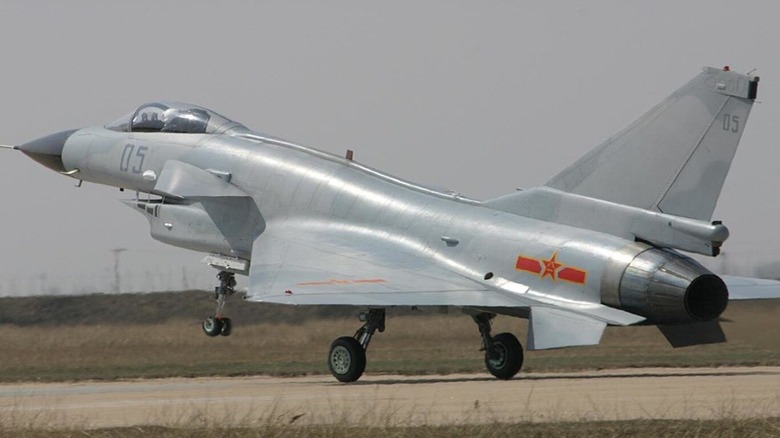
The J-10, also known as the Vigorous Dragon, is a 4th-generation fighter jet developed by the Chengdu Aircraft Industry Group. Its development began in the early 1980s when the Chinese government sought to modernize its aging fleet of J-6 and J-7 jets, which were based on Soviet MiG designs. A new fighter was needed, and several proposals were submitted, with Chengdu’s design ultimately being selected.

By 1988, work on the indigenous J-10 commenced. The design featured a delta wing configuration with canards, an intake under the front fuselage, and fly-by-wire controls. Initially, the J-10 used the AL-31FN engine, which was originally designed for the SU-27 Flanker. The maiden flight of the J-10 took place in 1998, and its first version, the J-10A, entered service in 2005.

Over the past two decades, the J-10 has maintained a strong presence in the Chinese military. Its performance specifications include a maximum speed of Mach 1.9, a service ceiling of 11.18 miles, and a range of 1,150 miles. Interestingly, there has been speculation about the J-10's design origins, with some suggesting it may have drawn inspiration from the Israeli LAVI fighter, which itself was modeled after the iconic General Dynamics F-16 Fighting Falcon.

The Jointly Developed JF-17

The JF-17 is a collaborative effort between the Chengdu Aircraft Corporation of China and the Pakistan Aeronautical Complex. Designed to replace older 3rd-generation fighters like the Mirage and F-7, the JF-17 is a lightweight, single-engine, multirole combat aircraft. Its development traces back to the failed Super 7 fighter project between Grumman and the Chinese government, which eventually led to the FC-1 aircraft project.

In 1992, China invited Pakistan to join the project, and after several years of delays, the prototype was completed in 2003. By 2007, the first batch of JF-17s was delivered to the Pakistani Air Force. The JF-17 is derived from the earlier Chengdu J7, which was based on the Soviet MiG-21 Fishbed.

Equipped with advanced avionics and sensor systems, the JF-17 features a Klimov RD-93 turbofan engine, allowing it to reach speeds of up to Mach 1.6 and achieve a range of 2,163 miles. The latest version, the Block III, released in 2023, is considered a 4.5-generation fighter. The "JF" in JF-17 stands for Joint Fighter, and it currently serves as a frontline aircraft for Pakistan, as well as four other countries: Azerbaijan, Iraq, Myanmar, and Nigeria.

Challenges and Future Prospects

Despite rapid advancements, China still faces challenges in the manufacturing of fighter jets, particularly in the development and production of engines. While its fighter aircraft capabilities have significantly improved, they are still catching up to the long-established technologies of Western nations.

Analysts suggest that questions remain about the level of indigenous development of these aircraft, given the similarities to Western and Russian designs. Nonetheless, China's growing influence in the global military landscape is undeniable, and its continued investment in aerospace technology will likely shape future power dynamics and defense spending around the world.

J-10 vs. JF-17: Key Differences in Two Similar Fighter Jets

Featured Image

Evolution of Chinese Fighter Jets

For many years, the United States, the United Kingdom, and the Soviet Union have been at the forefront of developing technologically advanced fighter jets. However, in recent years, China has made significant strides in both production capacity and innovation. This is evident in the development of its 5th-generation fighter jet, the J-35, as well as its newest fighter, the Chengdu J-36.

Before these modern aircraft, China had already been manufacturing a range of fighter jets, including the J-10 and the JF-17. While these planes share a common Chinese lineage, they differ in several key aspects, such as their design, performance, and deployment. The JF-17, for example, is a joint project between China and Pakistan, and it is not operated by China itself.

The J-10 Vigorous Dragon

The J-10, also known as the Vigorous Dragon, is a 4th-generation fighter jet developed by the Chengdu Aircraft Industry Group. Its development began in the early 1980s when the Chinese government sought to modernize its aging fleet of J-6 and J-7 jets, which were based on Soviet MiG designs. A new fighter was needed, and several proposals were submitted, with Chengdu’s design ultimately being selected.

By 1988, work on the indigenous J-10 commenced. The design featured a delta wing configuration with canards, an intake under the front fuselage, and fly-by-wire controls. Initially, the J-10 used the AL-31FN engine, which was originally designed for the SU-27 Flanker. The maiden flight of the J-10 took place in 1998, and its first version, the J-10A, entered service in 2005.

Over the past two decades, the J-10 has maintained a strong presence in the Chinese military. Its performance specifications include a maximum speed of Mach 1.9, a service ceiling of 11.18 miles, and a range of 1,150 miles. Interestingly, there has been speculation about the J-10's design origins, with some suggesting it may have drawn inspiration from the Israeli LAVI fighter, which itself was modeled after the iconic General Dynamics F-16 Fighting Falcon.

The Jointly Developed JF-17

The JF-17 is a collaborative effort between the Chengdu Aircraft Corporation of China and the Pakistan Aeronautical Complex. Designed to replace older 3rd-generation fighters like the Mirage and F-7, the JF-17 is a lightweight, single-engine, multirole combat aircraft. Its development traces back to the failed Super 7 fighter project between Grumman and the Chinese government, which eventually led to the FC-1 aircraft project.

In 1992, China invited Pakistan to join the project, and after several years of delays, the prototype was completed in 2003. By 2007, the first batch of JF-17s was delivered to the Pakistani Air Force. The JF-17 is derived from the earlier Chengdu J7, which was based on the Soviet MiG-21 Fishbed.

Equipped with advanced avionics and sensor systems, the JF-17 features a Klimov RD-93 turbofan engine, allowing it to reach speeds of up to Mach 1.6 and achieve a range of 2,163 miles. The latest version, the Block III, released in 2023, is considered a 4.5-generation fighter. The "JF" in JF-17 stands for Joint Fighter, and it currently serves as a frontline aircraft for Pakistan, as well as four other countries: Azerbaijan, Iraq, Myanmar, and Nigeria.

Challenges and Future Prospects

Despite rapid advancements, China still faces challenges in the manufacturing of fighter jets, particularly in the development and production of engines. While its fighter aircraft capabilities have significantly improved, they are still catching up to the long-established technologies of Western nations.

Analysts suggest that questions remain about the level of indigenous development of these aircraft, given the similarities to Western and Russian designs. Nonetheless, China's growing influence in the global military landscape is undeniable, and its continued investment in aerospace technology will likely shape future power dynamics and defense spending around the world.

Tuesday, January 6, 2026

How TAPS Safeguards the UK from Underwater Threats

Featured Image

The Role of Towed Array Patrol Ships in UK Maritime Security

The Towed Array Patrol Ship (TAPS) plays a crucial role in the Royal Navy's (RN) anti-submarine warfare (ASW) operations, specifically tasked with detecting and neutralizing submarine threats around UK waters. This mission is carried out by one of the RN’s ASW frigates, typically for periods lasting up to two months. The primary goal is to identify adversary submarines and "sanitise" the waters surrounding the UK, ensuring the safe movement of deterrent-carrying ballistic missile submarines (SSBNs). Beyond this, it also helps counter Russian submarine activity in more distant waters.

Operating primarily from Devonport Naval Base, the six remaining Type 23 frigates—HMS Somerset, Richmond, Portland, St Albans, Sutherland, and Kent—are equipped with the Type 2087 Towed Array Sonar. These vessels rotate in and out of TAPS duty, maintaining a constant vigil against submarine threats. Until recently, the TAPS tasking was not publicly acknowledged, making it less visible than other missions such as the Fleet Ready Escort (FRE), which monitors Russian surface ships near the UK.

A Challenging but Critical Mission

ASW, often referred to as "Awfully Slow Warfare," requires persistent concentration and can be a mundane task, with occasional excitement. Crews spend long periods operating independently in the North Atlantic, GIUK Gap, North Sea, and Norwegian Sea, often in poor weather conditions. As a result, this duty is not particularly popular among sailors, and opportunities for shore leave are limited. However, TAPS offers professional rewards, being foundational to national security and providing a direct contribution to the defense of the UK.

TAPS is coordinated from Northwood and works closely with the US and other NATO partners who manage water space for allied submarines and surface units. The TAPS is positioned based on information from the Integrated Undersea Surveillance System (IUSS), which detects submarines using underwater arrays. This collaboration highlights the deep integration of US forces within sensitive aspects of UK defense.

An Ecosystem of Defense Assets

TAPS is part of a broader ecosystem that includes various platforms and personnel. NATO submarines, Merlin helicopters, maritime patrol aircraft, and other assets form a layered defense system. This collaborative approach enhances TAPS capabilities by integrating real-time intelligence and multi-domain awareness to counter increasingly quiet and sophisticated adversary submarines.

The Type 23 Frigate: A Cold War Legacy

Conceived in the late 1970s during the Cold War, the Type 23 frigate was designed to counter Soviet nuclear submarines in the North Atlantic. Despite their age, these vessels remain highly effective submarine hunters, having undergone significant upgrades over time.

The unique propulsion system of the Type 23, known as Combined Diesel-Electric and Gas (CODLAG), is optimized for stealth. It uses electric motors for low-speed, silent running, minimizing acoustic signatures during submarine hunting. Two diesel generators are located on the upper deck, further reducing noise radiated into the sea. For sprint speeds, two Rolls Royce Spey gas turbines can be used. This adaptability ensures the Type 23 can operate stealthily, a critical advantage when deploying its towed array sonar.

Advanced Sonar Capabilities

The Type 2087 Towed Array Sonar, developed by Thales, is the primary ASW sensor on the Type 23. Unlike traditional hull-mounted sonars, the towed array is streamed from a winch system, trailing up to one and a half kilometers behind the ship. This reduces interference from the vessel’s self-generated noise and allows variable depth deployment to exploit oceanographic conditions like thermoclines. The active component emits low-frequency pulses, capable of detecting submarines at significant distances, while the passive array listens for faint acoustic signatures.

The detection capabilities of the S2087 are highly classified but regarded as among the best sensors of its type globally. In the hands of experienced operators, it can detect submarines at great distances and has been proven on many occasions. The frigates also have a bow-mounted active/passive Type 2150 sonar, recently upgraded from the S2050, useful for closer range detection and warning of torpedoes and mines.

Supporting Assets and Future Developments

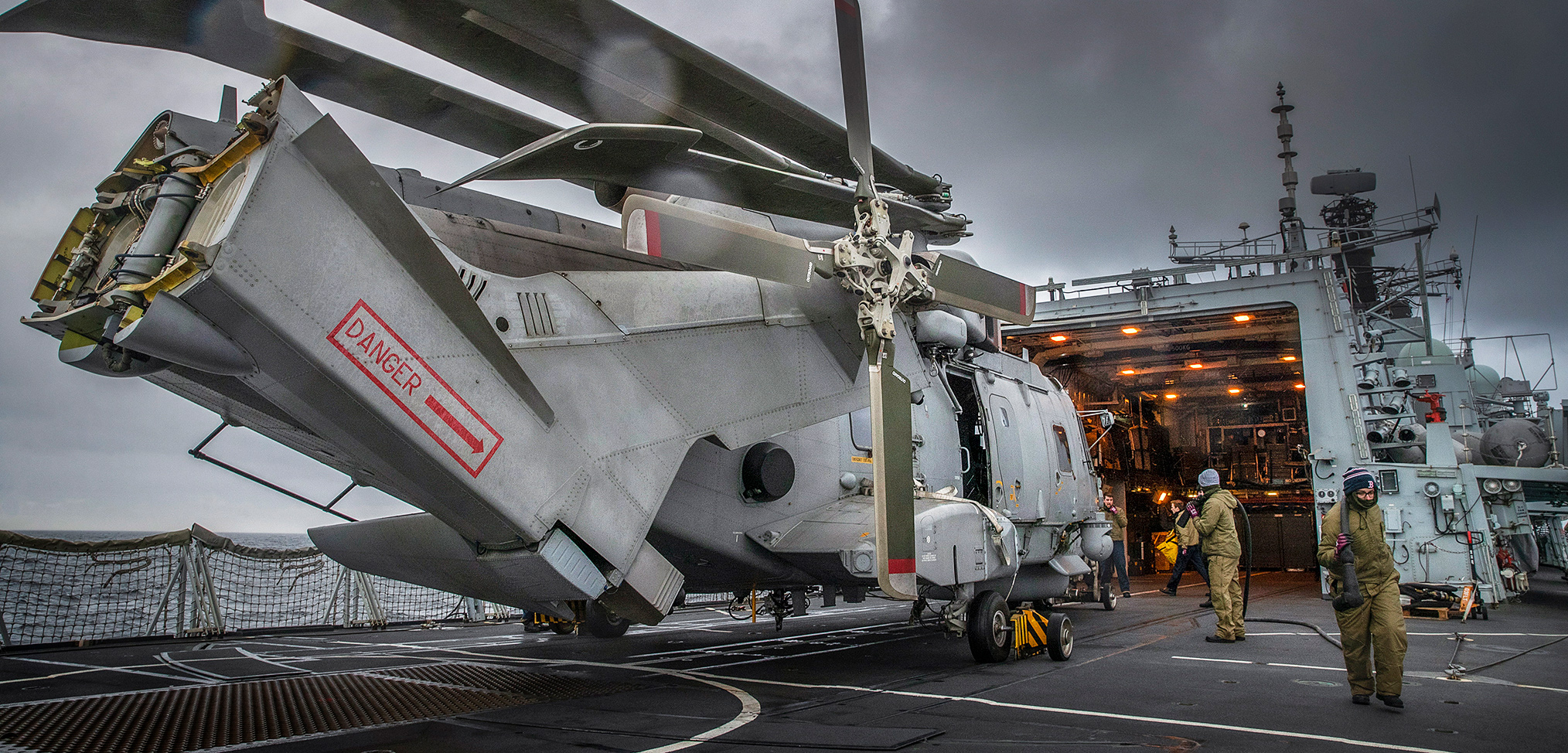
Complementing the Sonar 2087 is the Merlin HM2 helicopter, an integral part of the Type 23’s ASW arsenal. Equipped with Thales FLASH dipping sonar, sonobuoys, and Sting Ray torpedoes, the Merlin extends the frigate’s sensor and strike range. Its ability to hover and deploy dipping sonar into specific water layers enhances detection in complex underwater environments, while its onboard processing allows rapid target classification.

In the future, the Type 26 may complement the Merlin’s capabilities with uncrewed RWUAS (such as PROTEUS) that can add endurance and another means to prosecute the submarine threat. Detection ranges could potentially be extended by deploying UUVs or XLUAVs. The RN is also exploring the purchase of an ASROC-type weapon to provide a 24/7 capability to deliver torpedoes onto fleeting targets at medium-range.

Challenges and the Need for More Resources

The 2021 Defence White Paper expected the RN to maintain a force of at least 17 escorts, yet delays to the Type 26 programme have reduced this margin. Frigate numbers are bottoming out, with the premature retirements of two S2087-equipped frigates, HMS Westminster and Northumberland, compounding the pressure on ASW resources. Maintenance cycles, crew shortages, and concurrent commitments limit the availability of the aging Type 23s.

The surface fleet is tasked with multiple operational demands while the RN must also prepare for the transition to the Type 26 and Type 31s. The impending CSG25 deployment will further tax the fleet, requiring at least one, ideally two, Type 23s acting as the primary ASW pickets for the carrier strike group. This demand risks operational overstretch, potentially compromising the TAPS mission at a time when Russian submarine activity in the North Atlantic is resurgent.

Preserving ASW Expertise

The RN was primarily an ASW navy for much of the Cold War period, and this specialist skill set must be preserved. It encompasses not just technology but operational expertise in underwater acoustics, tactics, and inter-platform coordination. This institutional knowledge cannot be reconstituted quickly if lost, making the smooth introduction of the Type 26s a key priority.

Conclusion

Arguably, the Russian submarine threat and the vast geographical area suggest the RN needs significantly more than six towed array-equipped ships. This number should rise to eight when the final Type 26, HMS London, commissions around 2035. The frigates assigned to the unsung TAPS role quietly help ensure CASD’s viability and, by extension, the UK’s nuclear credibility. Any further weakening of the protective ring around the SSBNs would undermine deterrence, embolden adversaries, and weaken NATO’s collective defense.

Effective ASW is the first line of maritime defense for the UK, a lesson learned from the submarine threat twice in the 20th Century. There is no question that the RN needs more frigates, and the delivery of the Type 26 frigates cannot come fast enough. Even if there was more funding and construction could be accelerated slightly, other means must be found to add ASW mass as soon as possible.

How TAPS Safeguards the UK from Underwater Threats

Featured Image

The Role of Towed Array Patrol Ships in UK Maritime Security

The Towed Array Patrol Ship (TAPS) plays a crucial role in the Royal Navy's (RN) anti-submarine warfare (ASW) operations, specifically tasked with detecting and neutralizing submarine threats around UK waters. This mission is carried out by one of the RN’s ASW frigates, typically for periods lasting up to two months. The primary goal is to identify adversary submarines and "sanitise" the waters surrounding the UK, ensuring the safe movement of deterrent-carrying ballistic missile submarines (SSBNs). Beyond this, it also helps counter Russian submarine activity in more distant waters.

Operating primarily from Devonport Naval Base, the six remaining Type 23 frigates—HMS Somerset, Richmond, Portland, St Albans, Sutherland, and Kent—are equipped with the Type 2087 Towed Array Sonar. These vessels rotate in and out of TAPS duty, maintaining a constant vigil against submarine threats. Until recently, the TAPS tasking was not publicly acknowledged, making it less visible than other missions such as the Fleet Ready Escort (FRE), which monitors Russian surface ships near the UK.

A Challenging but Critical Mission

ASW, often referred to as "Awfully Slow Warfare," requires persistent concentration and can be a mundane task, with occasional excitement. Crews spend long periods operating independently in the North Atlantic, GIUK Gap, North Sea, and Norwegian Sea, often in poor weather conditions. As a result, this duty is not particularly popular among sailors, and opportunities for shore leave are limited. However, TAPS offers professional rewards, being foundational to national security and providing a direct contribution to the defense of the UK.

TAPS is coordinated from Northwood and works closely with the US and other NATO partners who manage water space for allied submarines and surface units. The TAPS is positioned based on information from the Integrated Undersea Surveillance System (IUSS), which detects submarines using underwater arrays. This collaboration highlights the deep integration of US forces within sensitive aspects of UK defense.

An Ecosystem of Defense Assets

TAPS is part of a broader ecosystem that includes various platforms and personnel. NATO submarines, Merlin helicopters, maritime patrol aircraft, and other assets form a layered defense system. This collaborative approach enhances TAPS capabilities by integrating real-time intelligence and multi-domain awareness to counter increasingly quiet and sophisticated adversary submarines.

The Type 23 Frigate: A Cold War Legacy

Conceived in the late 1970s during the Cold War, the Type 23 frigate was designed to counter Soviet nuclear submarines in the North Atlantic. Despite their age, these vessels remain highly effective submarine hunters, having undergone significant upgrades over time.

The unique propulsion system of the Type 23, known as Combined Diesel-Electric and Gas (CODLAG), is optimized for stealth. It uses electric motors for low-speed, silent running, minimizing acoustic signatures during submarine hunting. Two diesel generators are located on the upper deck, further reducing noise radiated into the sea. For sprint speeds, two Rolls Royce Spey gas turbines can be used. This adaptability ensures the Type 23 can operate stealthily, a critical advantage when deploying its towed array sonar.

Advanced Sonar Capabilities

The Type 2087 Towed Array Sonar, developed by Thales, is the primary ASW sensor on the Type 23. Unlike traditional hull-mounted sonars, the towed array is streamed from a winch system, trailing up to one and a half kilometers behind the ship. This reduces interference from the vessel’s self-generated noise and allows variable depth deployment to exploit oceanographic conditions like thermoclines. The active component emits low-frequency pulses, capable of detecting submarines at significant distances, while the passive array listens for faint acoustic signatures.

The detection capabilities of the S2087 are highly classified but regarded as among the best sensors of its type globally. In the hands of experienced operators, it can detect submarines at great distances and has been proven on many occasions. The frigates also have a bow-mounted active/passive Type 2150 sonar, recently upgraded from the S2050, useful for closer range detection and warning of torpedoes and mines.

Supporting Assets and Future Developments

Complementing the Sonar 2087 is the Merlin HM2 helicopter, an integral part of the Type 23’s ASW arsenal. Equipped with Thales FLASH dipping sonar, sonobuoys, and Sting Ray torpedoes, the Merlin extends the frigate’s sensor and strike range. Its ability to hover and deploy dipping sonar into specific water layers enhances detection in complex underwater environments, while its onboard processing allows rapid target classification.

In the future, the Type 26 may complement the Merlin’s capabilities with uncrewed RWUAS (such as PROTEUS) that can add endurance and another means to prosecute the submarine threat. Detection ranges could potentially be extended by deploying UUVs or XLUAVs. The RN is also exploring the purchase of an ASROC-type weapon to provide a 24/7 capability to deliver torpedoes onto fleeting targets at medium-range.

Challenges and the Need for More Resources

The 2021 Defence White Paper expected the RN to maintain a force of at least 17 escorts, yet delays to the Type 26 programme have reduced this margin. Frigate numbers are bottoming out, with the premature retirements of two S2087-equipped frigates, HMS Westminster and Northumberland, compounding the pressure on ASW resources. Maintenance cycles, crew shortages, and concurrent commitments limit the availability of the aging Type 23s.

The surface fleet is tasked with multiple operational demands while the RN must also prepare for the transition to the Type 26 and Type 31s. The impending CSG25 deployment will further tax the fleet, requiring at least one, ideally two, Type 23s acting as the primary ASW pickets for the carrier strike group. This demand risks operational overstretch, potentially compromising the TAPS mission at a time when Russian submarine activity in the North Atlantic is resurgent.

Preserving ASW Expertise

The RN was primarily an ASW navy for much of the Cold War period, and this specialist skill set must be preserved. It encompasses not just technology but operational expertise in underwater acoustics, tactics, and inter-platform coordination. This institutional knowledge cannot be reconstituted quickly if lost, making the smooth introduction of the Type 26s a key priority.

Conclusion

Arguably, the Russian submarine threat and the vast geographical area suggest the RN needs significantly more than six towed array-equipped ships. This number should rise to eight when the final Type 26, HMS London, commissions around 2035. The frigates assigned to the unsung TAPS role quietly help ensure CASD’s viability and, by extension, the UK’s nuclear credibility. Any further weakening of the protective ring around the SSBNs would undermine deterrence, embolden adversaries, and weaken NATO’s collective defense.

Effective ASW is the first line of maritime defense for the UK, a lesson learned from the submarine threat twice in the 20th Century. There is no question that the RN needs more frigates, and the delivery of the Type 26 frigates cannot come fast enough. Even if there was more funding and construction could be accelerated slightly, other means must be found to add ASW mass as soon as possible.

Thursday, December 11, 2025

X-37B Spaceplane Returns With Quantum GPS Secret

Featured Image

The Strategic Importance of Satellite Navigation in Modern Warfare

In the evolving landscape of modern warfare, satellite navigation systems have become critical assets for military operations. These systems provide precise positioning, navigation, and timing information that is essential for everything from missile guidance to troop movements. However, their reliance on satellites makes them vulnerable to attacks, especially in a conflict scenario where adversaries might target these systems.

This vulnerability has led to increased interest in alternative technologies that can ensure reliable navigation even in the absence of traditional satellite signals. One such technology being tested by the U.S. military is quantum-based GPS systems, which could offer a more resilient solution.

The X-37B Spaceplane: A Key Player in Space Innovation

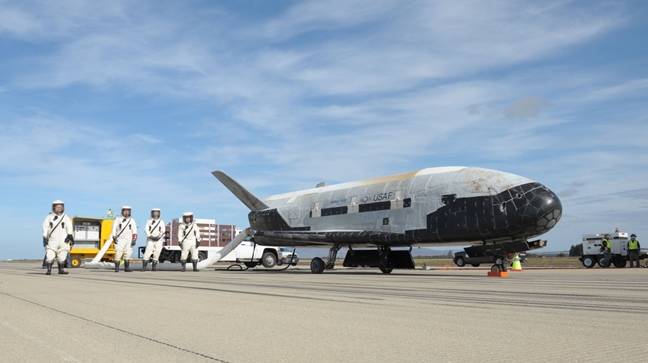
The Boeing-built X-37B spaceplane has been making headlines again as it embarks on its eighth mission. This uncrewed spacecraft, similar in design to the retired Space Shuttle, launches on a rocket and lands autonomously on a runway after re-entry. Unlike the Space Shuttle, however, the X-37B is equipped with engines that allow it to maneuver in space, giving it a unique capability to change its orbit.

In 2024, the X-37B made a notable move by "aerobraking" — a technique that involves grazing Earth's atmosphere to alter its trajectory. This maneuver is energy-intensive and has raised concerns, particularly from China, which has occasionally criticized the spaceplane for potentially serving as a weapons platform.

Testing Quantum GPS Technology

Recent missions have focused on testing advanced technologies, including a quantum-based GPS system. In March 2025, Boeing conducted tests using a six-axis quantum inertial measurement unit (IMU) that employs a technique known as atom interferometry. This method uses atoms to detect rotation and acceleration, offering an ultra-precise way to measure movement.

Sandia National Laboratories, a key player in this field, has developed a high-performance silicon photonic modulator — a device that controls light on a microchip — to support this technology. Atom interferometry has the potential to replace traditional GPS systems by measuring position with remarkable accuracy.

Why This Matters for Global Security

The implications of this technology are significant, especially in the context of global security. China has expressed concerns about the X-37B's capabilities, fearing that it could threaten its Beidou satellite navigation system. Similarly, the U.S. is wary of losing its GPS satellites, which are vital for modern military operations.

By developing alternative navigation methods, the U.S. aims to ensure that its forces can operate effectively even if traditional satellite systems are compromised. This becomes increasingly important as conflicts become more technologically sophisticated.

The Future of Navigation Technology

The X-37B’s current mission is shrouded in secrecy, with the Pentagon not disclosing when the spaceplane will return to Earth or what specific objectives it aims to achieve. However, the focus on quantum GPS technology highlights a growing trend in military innovation.

As nations continue to invest in space-based capabilities, the development of resilient navigation systems will be crucial. The X-37B represents a step forward in this effort, demonstrating the potential of advanced technologies to enhance operational flexibility and security.

With ongoing research and development, the future of navigation may rely less on traditional satellites and more on innovative solutions like quantum sensing. This shift could redefine how military forces navigate and operate in an increasingly complex global environment.

X-37B Spaceplane Returns With Quantum GPS Secret

Featured Image

The Strategic Importance of Satellite Navigation in Modern Warfare

In the evolving landscape of modern warfare, satellite navigation systems have become critical assets for military operations. These systems provide precise positioning, navigation, and timing information that is essential for everything from missile guidance to troop movements. However, their reliance on satellites makes them vulnerable to attacks, especially in a conflict scenario where adversaries might target these systems.

This vulnerability has led to increased interest in alternative technologies that can ensure reliable navigation even in the absence of traditional satellite signals. One such technology being tested by the U.S. military is quantum-based GPS systems, which could offer a more resilient solution.

The X-37B Spaceplane: A Key Player in Space Innovation

The Boeing-built X-37B spaceplane has been making headlines again as it embarks on its eighth mission. This uncrewed spacecraft, similar in design to the retired Space Shuttle, launches on a rocket and lands autonomously on a runway after re-entry. Unlike the Space Shuttle, however, the X-37B is equipped with engines that allow it to maneuver in space, giving it a unique capability to change its orbit.

In 2024, the X-37B made a notable move by "aerobraking" — a technique that involves grazing Earth's atmosphere to alter its trajectory. This maneuver is energy-intensive and has raised concerns, particularly from China, which has occasionally criticized the spaceplane for potentially serving as a weapons platform.

Testing Quantum GPS Technology

Recent missions have focused on testing advanced technologies, including a quantum-based GPS system. In March 2025, Boeing conducted tests using a six-axis quantum inertial measurement unit (IMU) that employs a technique known as atom interferometry. This method uses atoms to detect rotation and acceleration, offering an ultra-precise way to measure movement.

Sandia National Laboratories, a key player in this field, has developed a high-performance silicon photonic modulator — a device that controls light on a microchip — to support this technology. Atom interferometry has the potential to replace traditional GPS systems by measuring position with remarkable accuracy.

Why This Matters for Global Security

The implications of this technology are significant, especially in the context of global security. China has expressed concerns about the X-37B's capabilities, fearing that it could threaten its Beidou satellite navigation system. Similarly, the U.S. is wary of losing its GPS satellites, which are vital for modern military operations.

By developing alternative navigation methods, the U.S. aims to ensure that its forces can operate effectively even if traditional satellite systems are compromised. This becomes increasingly important as conflicts become more technologically sophisticated.

The Future of Navigation Technology

The X-37B’s current mission is shrouded in secrecy, with the Pentagon not disclosing when the spaceplane will return to Earth or what specific objectives it aims to achieve. However, the focus on quantum GPS technology highlights a growing trend in military innovation.

As nations continue to invest in space-based capabilities, the development of resilient navigation systems will be crucial. The X-37B represents a step forward in this effort, demonstrating the potential of advanced technologies to enhance operational flexibility and security.

With ongoing research and development, the future of navigation may rely less on traditional satellites and more on innovative solutions like quantum sensing. This shift could redefine how military forces navigate and operate in an increasingly complex global environment.

Saturday, August 23, 2025

China's military data link could enable faster coordination during hypersonic attacks

China has unveiled a military communications network designed to handle the extreme demands of hypersonic warfare, where aircraft fly at Mach 5 and missiles reach Mach 11. The system provides time synchronization accuracy within five nanoseconds, outperformingNATO'sLink 16 network by a factor of 100.

Developed by the China Electronics Technology Group Corporation (CETC), the network enables secure, real-time coordination across hypersonic vehicles, ground command posts, radar arrays, naval fleets, and satellite intelligence.

It overcomes the immense technical challenges posed by lightning-fast speeds, constantly shifting trajectories, and the need for instantaneous battlefield decision-making, representing a significant leap in military communications technology.

Cooperative strike technology may shift global defense dynamics

Moving beyond isolatedHypersonictechnologies, the new system creates a fully networked strike ecosystem, allowing multiple platforms to operate in seamless coordination. Without comparable capabilities, Western forces risk being "time blind", unable to respond to hypersonic swarms executing precision strikes at unprecedented speeds,South China Morning Postreported.

As Beijing prepares its most advanced systems for display in an upcoming military parade, experts emphasize that the strategic implications for global defense are both immediate and profound.

China's new data link addresses a key challenge in hypersonic warfare: at speeds over 2.4 miles per second, small timing errors can cause mile-scale targeting errors. Existing military networks, designed for slower platforms, drift by hundreds of nanoseconds under these conditions. The system enables precise, real-time coordination across hypersonic vehicles.

The project team led by researcher Chang Jun from the Southwest China Institute of Electronic Technology emphasized that hypersonic cooperative strike systems require inter-platform time synchronization with accuracy better than 10 nanoseconds. Meeting this requirement is crucial for ensuring precise coordination betweenvehiclestraveling at extreme speeds, allowing these systems to operate effectively in high-speed, networked combat scenarios.

Conventional RTT algorithms fall short for Mach 5-plus strikes

Chinese researchers explain that traditional tactical data links rely on round-trip time (RTT) for synchronization, which works for low-speed aircraft. Systems like NATO’s Link-16 achieve roughly 100-nanosecond accuracy under these conditions.

However, in hypersonic cooperative strike systems operating above Mach 5, the rapid relative motion between widely dispersed platforms creates asymmetric transmission paths, severely reducing the precision of conventional RTT algorithms. This highlights the need for new communication technologies capable of maintaining ultra-precise timing at extreme speeds.

To overcome the constraints of conventional timing systems, China's new solution uses an innovative inertial navigation data distribution approach, where each hypersonic platform shares real-time position and velocity information through secure links. This enables precise, synchronized calculations of signal transmission delays caused by extreme relative motion, ensuring accurate coordination across high-speed vehicles without relying on traditional timing infrastructure.

Ground-based semi-physical simulations demonstrated the system's precision under realistic conditions, including position errors of up to 33 feet, velocity drifts of 3.3 feet per second, and electromagnetic interference. Results showed an average synchronization accuracy of 4.2 nanoseconds, with peak errors remaining below nine nanoseconds.

Remarkably, the system maintained this level of performance during repeated tests even as relative speeds climbed from zero to over 9,800 miles per hour. ThetechnologyCan also be deployed on widely available, low-cost hardware, making it practical for large-scale hypersonic operations.

Here's How the New "CobraJet" Autonomous Vehicle Will Change Warfare Forever

SkyDefense LLC's CobraJet represents a watershed moment in military innovation - blending AI, eVTOL, and low-cost design to transform warfare from manpower-intensive to machine-dominant.

In an era where unmanned aerial systems (UAS) dominate battlefields, innovative technologies like SkyDefense LLC's "CobraJetDrone family is poised to redefine military strategies.SkyDefenseLLC, a defense startup based in Brighton, Colo., recently unveiled their new drone to stunned observers. The CobraJet is an autonomous eVTOL (electric Vertical Take-Off and Landing) fighter drone designed specifically for counter-drone operations. The low-cost interceptor combines cutting-edge artificial intelligence (AI) with high-speed capabilities, offering a game-changing solution to the growing threat of drone swarms. Indeed, in the age of total drone warfare, CobraJet could fundamentally transform how nations fight wars, shifting paradigms from manned missions to intelligent, swarm-based defenses.

The Specifications of the CobraJet VT8

  • Year Introduced:Not yet introduced (prototype phase)
  • Number Built:Unknown
  • Length:8 feet
  • Wingspan:7 feet
  • Weight:80 lbs. maximum takeoff weight
  • Engines:Unknown; hybrid power with battery-powered electric duct fan and liquid-fueled micro-turbines
  • Top Speed:~300 mph
  • Range:Unknown (approx. 30 min flight time)
  • Service Ceiling:Unknown
  • Loadout:20 lbs. payload, includingSkyDefense weapons: PYTHON 5.56mm machine gun, VIPER and RAPTOR missiles, BOLA anti-drone nets
  • Aircrew:0

The CobraJet Isn't Just Another Drone

The CobraJet is aAI-enabled unmanned combat aerial vehicle (UCAV)which emulates features of fifth-generation warplanes, such as the F-35B Lightning II or the F-22 Raptor. Built with a stealthy carbon fiber body and powered by all-weather electric duct fan motors, this battery-operated aircraft achieves speeds exceeding 200 miles per hour—potentially even making it to 300 mph! Though this is insufficient to intercept regular aircraft, it is more than enough to catch most military drones in service today, such as the MQ-1 Predator and MQ-9 Reaper drones.

Equipped withNVIDIA AI-powered computer vision, the CobraJet autonomously detects, tracks, identifies, and neutralizes hostile drones using air-to-air weapons. What sets it apart from other drones with a similar mission set is its aforementioned eVTOL design, allowing for vertical launches from confined spaces without runways. This versatility enables deployment in urban environments, from naval vessels, or even from forward operating bases (FOBs). CobraJets can operate in coordinated swarms, communicating as a "flight team" to form anAI-powered unmanned air forcePriced as a low-cost alternative to traditional anti-drone missiles, which can cost hundreds of thousands per shot, the CobraJet democratizes advanced air defense for smaller militaries and private security firms.

SkyDefense LLC has integrated several groundbreaking features into the CobraJet to address the challenges of modern warfare. Its AI system, leveraging machine learning for real-time decision-making, allows the drone to engage multiple targets simultaneously, countering "overwhelming enemy drone incursions." Stealth technology minimizes radar detection, while the battery-powered propulsion ensures silent, emission-free operations - perfect for covert missions.

The interceptor's armament includes precision-guided munitions tailored for drone-on-drone combat, reducing collateral damage compared to ground-based systems. In tests and simulations, CobraJets have demonstrated the ability to neutralize threats at long ranges, outpacing slower rotary-wing drones. This fusion of speed, autonomy, and affordability positions the CobraJet as a pivotal tool in the evolving landscape of AI-powered warfare.

The CobraJet Could Change the Way the World Fights Wars

CobraJet is a bigger deal than most military commentators know. It is theapotheosisof a significant shift in military doctrine, moving away from manned aircraft toward autonomous swarms.

Traditionally, air defense relies on expensive assets like Patriot missiles or manned fighter jets, which are vulnerable to saturation attacks by cheap drone swarms. The imbalance between drone offense and defense is clearly visible in Ukraine. After ups and downs, Russia has developed a highly efficient drone industry, and regularly launches drone swarms against Ukrainian cities. To defend itself, Ukrainerelies onfar more expensive US-provided Patriot missiles. Even setting aside the long-term feasibility of this approach—America's supply of Patriots is finite, and rapidly dwindling—it creates a massive cost imbalance that neither Kyiv nor Washington can afford in the long run.

Fundamentally, the emergence of drones will turn future wars into little more than "Swarm versus Swarmbattles. Militaries could deploy fleets of CobraJets to create impenetrable aerial shields, protecting critical infrastructure or troops from reconnaissance and kamikaze drones. This reduces human casualties, as operators remain safely remote, overseeing AI-driven engagements.

Economically, the low-cost model allows nations with limited resources to strengthen their defenses without exceeding budgets, creating a more balanced situation against superpowers. Ukraine's recent "Operation Spiderweb" inside Russia, in which inexpensive commercial-adapted drones destroyed dozens of multi-million-dollar Russian bombers, illustrates how a small and resourceful nation can use this technology to its advantage.

Moreover, the CobraJet's AI autonomy raises ethical questions but also enhances accuracy.

By minimizing human error, it could reduce unintended strikes—though concerns about "killer robots" rightly persist. In naval warfare, the eVTOL capabilities mean carriers and even smaller ships could launch interceptors.en masseRevolutionizing fleet air defense. On land, meanwhile, urban combat zones will become safer with rapid drone neutralization—altering strategies in counterterrorism and broader security.

Of course, the new CobraJet is not without flaws. Its battery life has limitations, and prolonged engagements will drain that limited battery in due course. There are also serious vulnerabilities to electronic warfare (EW), much as with existing drones. Cybersecurity risks also exist; hackerscouldtheoretically hijack swarms.

Despite these flaws, SkyDefense LLC's CobraJet represents a watershed moment in military innovation—blending AI, eVTOL, and low-cost design to transform warfare from manpower-intensive to machine-dominant. As drone threats proliferate, this interceptor could usher in an era of smarter, safer conflicts, reshaping global security dynamics. With ongoing advancements, the CobraJet isn't just a drone; it's the future of aerial dominance.

About the Author: Brandon J. Weichert

Brandon J. Weichertis a senior national security editor atThe National Interest.Recently, Weichert became the host ofThe National Security Houron America Outloud News andiHeartRadio, where he discusses national security policy every Wednesday at 8pm Eastern.He is also a contributor atPopular Mechanicsand has regularly consulted with various government institutions and private organizations on geopolitical issues. Weichert's writings have appeared in multiple publications, includingThe Washington Times,National Review,The American Spectator,MSN,Asia Times, and others. His books includeWinning Space: How America Remains a Superpower,Biohacked: China's Race to Control Life, andThe Shadow War: Iran's Quest for Supremacy. His newest book,A Disaster of Our Own Making: How the West Lost Ukraineis available for purchase wherever books are sold. He can be followed via Twitter@WeTheBrandon.

Image courtesy of SkyDefense, LLC.

BAE Systems wins contract for additional LRASM sensors

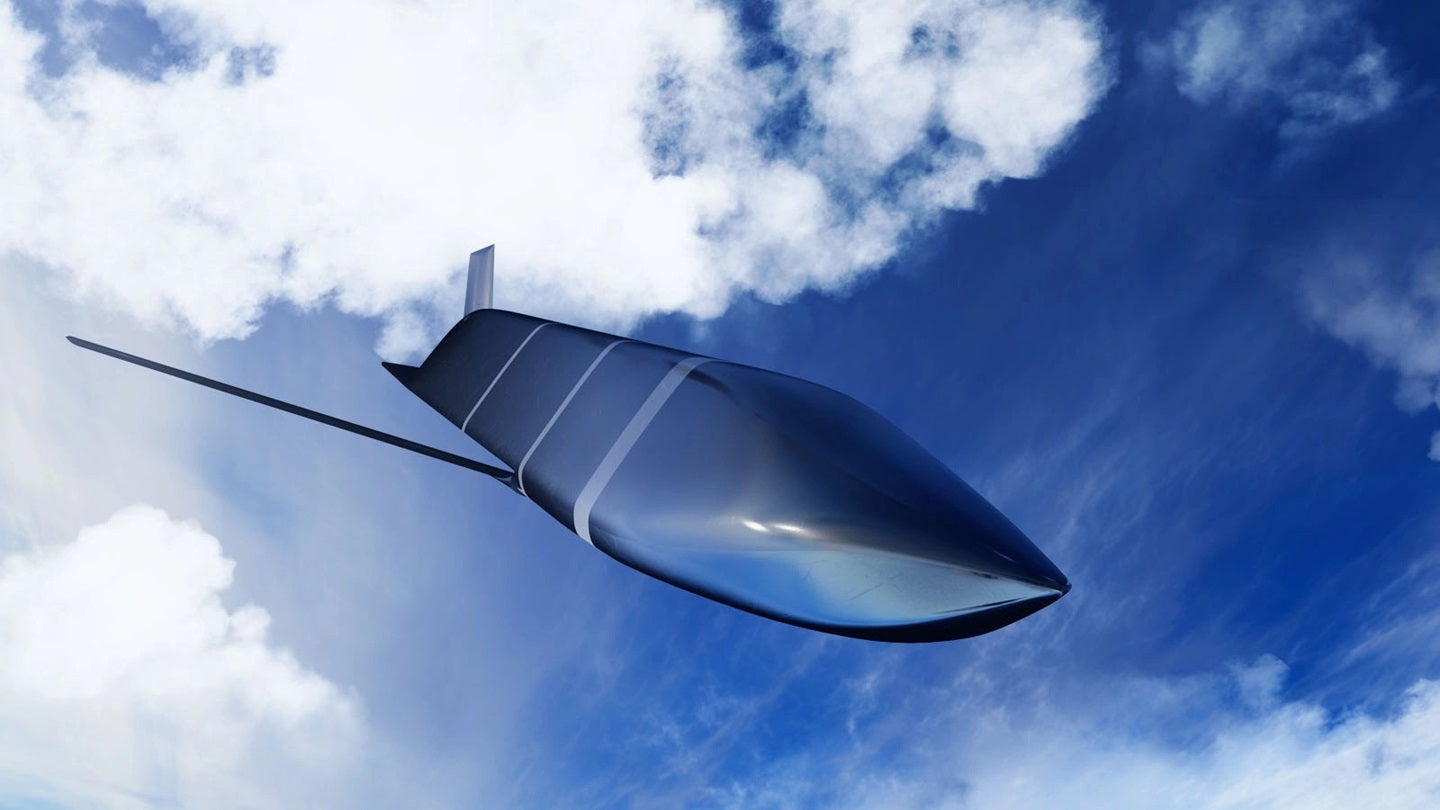
BAE Systems has been awarded a contract from Lockheed Martin to supply additional radio-frequency (RF) sensors for the Long-Range Anti-Ship Missile (LRASM) to enhance its stealth and guidance capabilities.

The contract, received in December 2024, stipulates BAE Systems to provide these RF sensors until 2030.

Since 2018, BAE Systems has been supplying RF sensors for the LRASM program.

Large-scale procurement allows the US government to enhance its maritime strike arsenal while reducing acquisition costs.

BAE Systems LRASM sensor program director Vanessa Varrati said: "BAE Systems is committed to its work with Lockheed Martin to provide discriminative capabilities to the warfighter."

This contract recognizes our technical and operational expertise that brings this critical deterrence and strike capability to the US Navy and US Air Force.

A precision-guided anti-ship missile, LRASM is intended to provide the US Navy with the capability to strike high-value targets from long range while evading counter-fire.

The LRASM sensor uses semi-autonomous guidance and target cueing data to accurately locate and hit targets, reducing reliance on airborne intelligence, surveillance, and reconnaissance (ISR) platforms, network links, and GPS navigation.

BAE Systems Small Form Factor Solutions director Ed Leonard said: "We're anticipating the need for small, powerful, multi-function hardware that can work on a variety of platforms, and we're building the core elements today."

With an eye on future advancements, the company is developing modular and scalable systems designed to address the evolving requirements of warfighters in a dynamic battlefield landscape.

In 2020, Lockheed Martinawarded a $60My contractto BAE Systems for the production of advanced missile seekers for LRASM.

This was followed byanother contract in 2021valued at $117 million for manufacturing next-generation missile seekers.

"BAE Systems lands contract for additional LRASM sensors" was originally created and published byNaval Technology, a The Shiro Coprowned brand.


The information on this site has been included in good faith for general informational purposes only. It is not intended to constitute advice on which you should rely, and we make no representation, warranty or guarantee, whether express or implied, as to its accuracy or completeness. You must obtain professional or specialist advice before taking, or refraining from, any action on the basis of the content on our site.

A look at Navy drones used for underwater exploration

Underwater exploration has reached new depths with the advent of advanced navy drones. These autonomous vehicles are transforming the way we study and interact with the ocean’s mysteries. From mapping the seafloor to conducting environmental research, these underwater drones are essential tools for scientists and engineers alike.

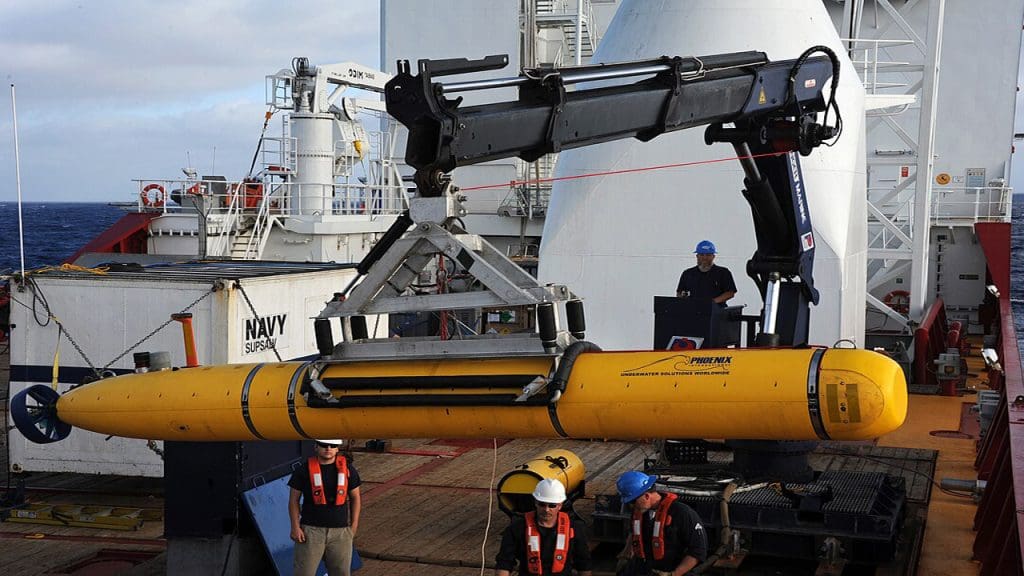
1) Bluefin-21 Autonomous Underwater Vehicle (AUV)

The Bluefin-21 AUV is a versatile tool that has been deployed in various missions, including the search for the missing Malaysia Airlines Flight MH370. Known for its precision and reliability, this underwater drone is capable of diving to depths of 4,500 meters. Its modular design allows for easy customization, enabling it to carry different types of sensors and equipment. The Bluefin-21 is particularly valued in the defense sector, where it aids in mine countermeasure operations and intelligence gathering.

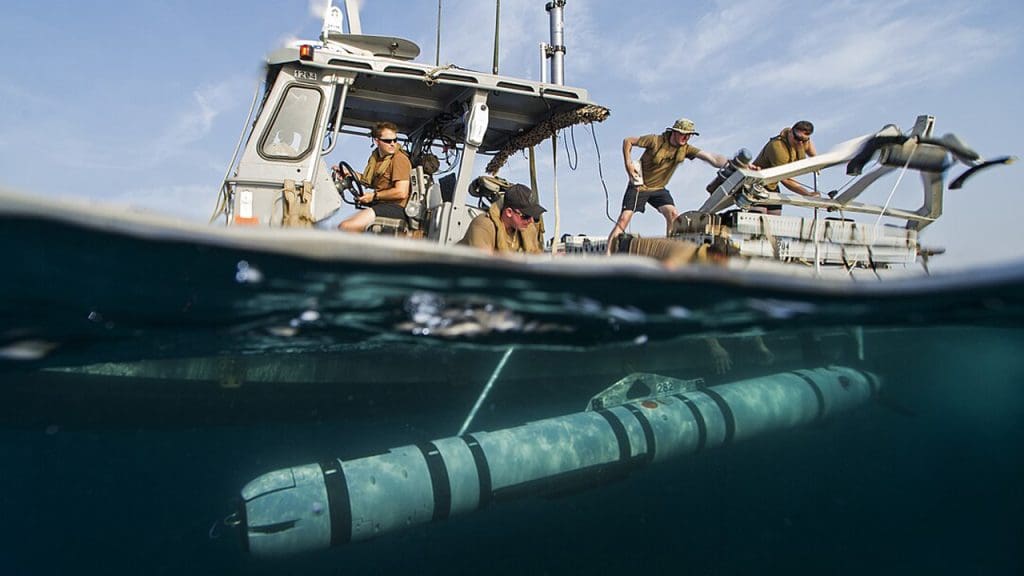
2) REMUS 600

The REMUS 600 is another remarkable underwater drone, designed to operate autonomously for extended periods. It can dive up to 600 meters and is often used in both military and scientific research applications. Its endurance and range make it ideal for long-term data collection missions. The REMUS 600 has been used in various studies, including marine biology and environmental monitoring, providing valuable insights into underwater ecosystems.

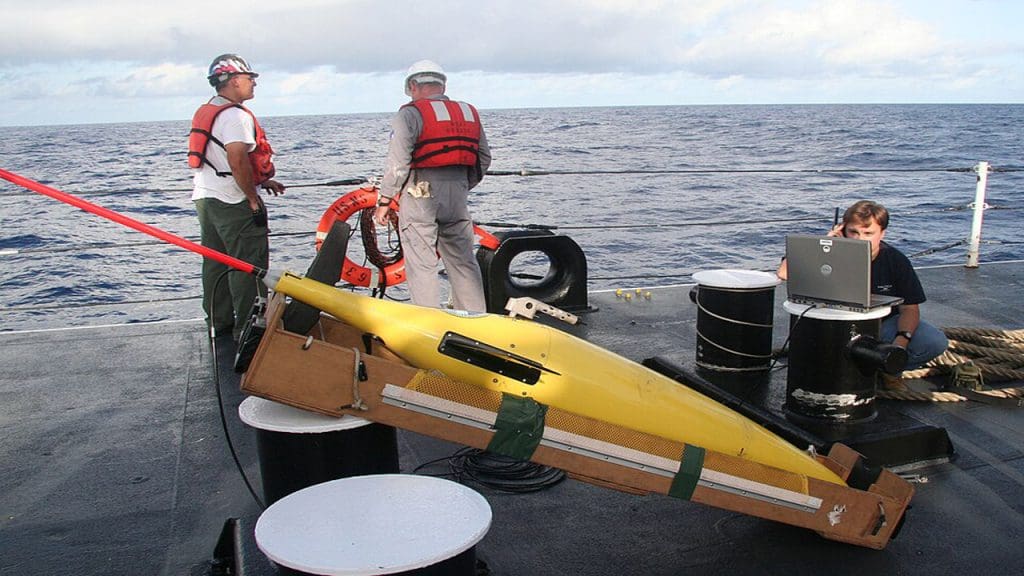
3) Seaglider

The Seaglider is an innovative underwater drone designed for long-range missions. With the ability to travel thousands of kilometers on a single battery charge, it's an excellent choice for oceanographic research. Unlike many other AUVs, the Seaglider uses buoyancy changes to propel itself, making it energy-efficient and quiet. This unique propulsion method allows it to gather data on ocean currents, temperature, and salinity over extended periods. According toThe Drone U, Seaglider's design reduces operational costs, making it a favorite among researchers.

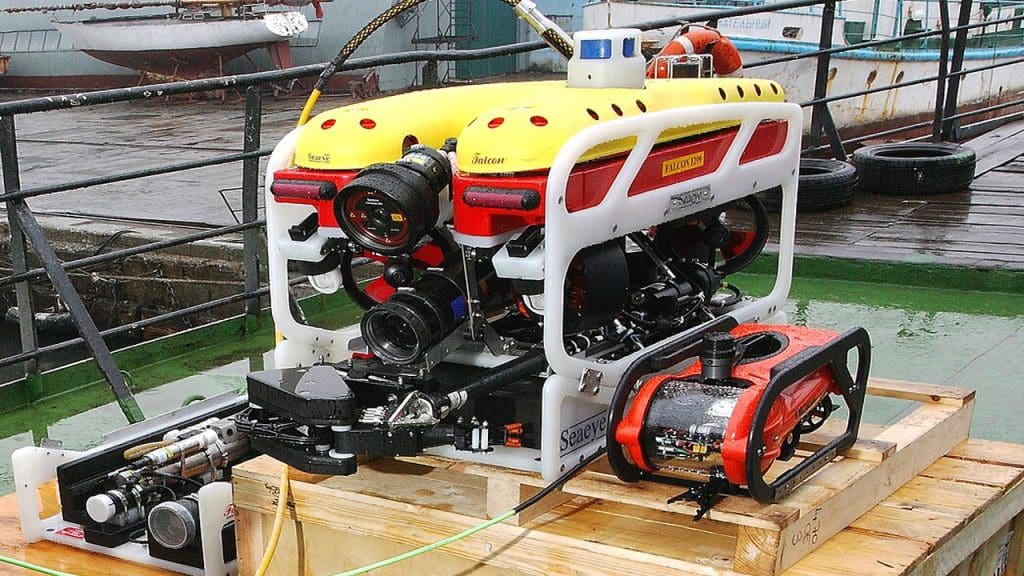
4) Saab Seaeye Falcon

The Saab Seaeye Falcon is a compact yet powerful remotely operated vehicle (ROV) known for its agility and adaptability. It is used in a wide range of applications from underwater inspections to marine research. The Falcon's five powerful thrusters allow it to hover in strong currents, making it an ideal tool for detailed subsea inspections. Its modular design enables operators to equip it with various sensors and tools, enhancing its functionality. The Falcon is also used inMilitary applications, where its maneuverability and robustness are highly valued.

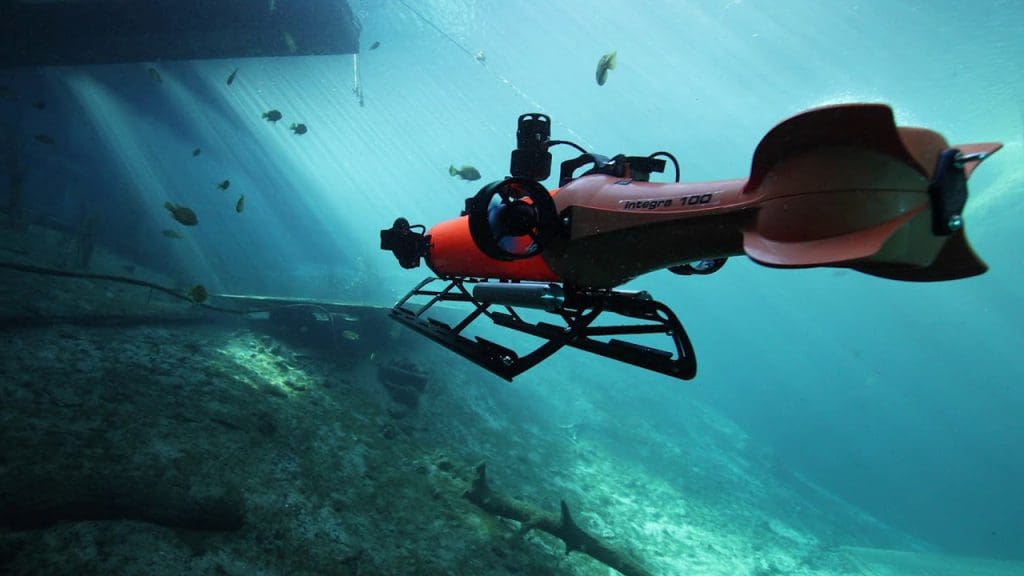
5) Proteus

Designed for versatility and endurance, Proteus is a hybrid ROV/AUV that can be operated autonomously or remotely. This flexibility makes it a valuable asset for complex underwater missions. Proteus can carry large payloads, making it suitable for a variety of tasks, including infrastructure inspections and environmental monitoring. Its ability to stay submerged for extended periods allows it to collect continuous data over large areas. With its robust design, Proteus is well-suited formilitary and commercial applications.

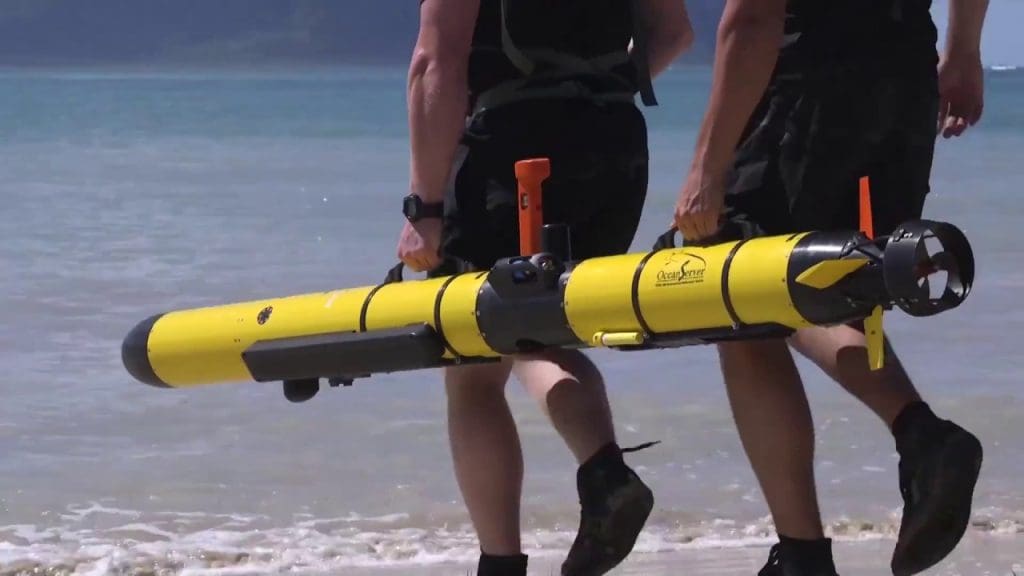
6) Iver3 AUV

The Iver3 AUV is a portable and cost-effective solution for shallow water missions. Capable of diving to depths of 100 meters, it is ideal for coastal surveys and environmental assessments. Its small size and lightweight design make it easy to deploy and recover, even from small boats. The Iver3 is equipped with advanced navigation systems and can be fitted with various sensors, providing high-quality data for mapping and analysis. Its efficiency and affordability have made it a popular choice among research institutions worldwide, as highlighted inBloomberg's report on oceanic drones.

Friday, August 22, 2025

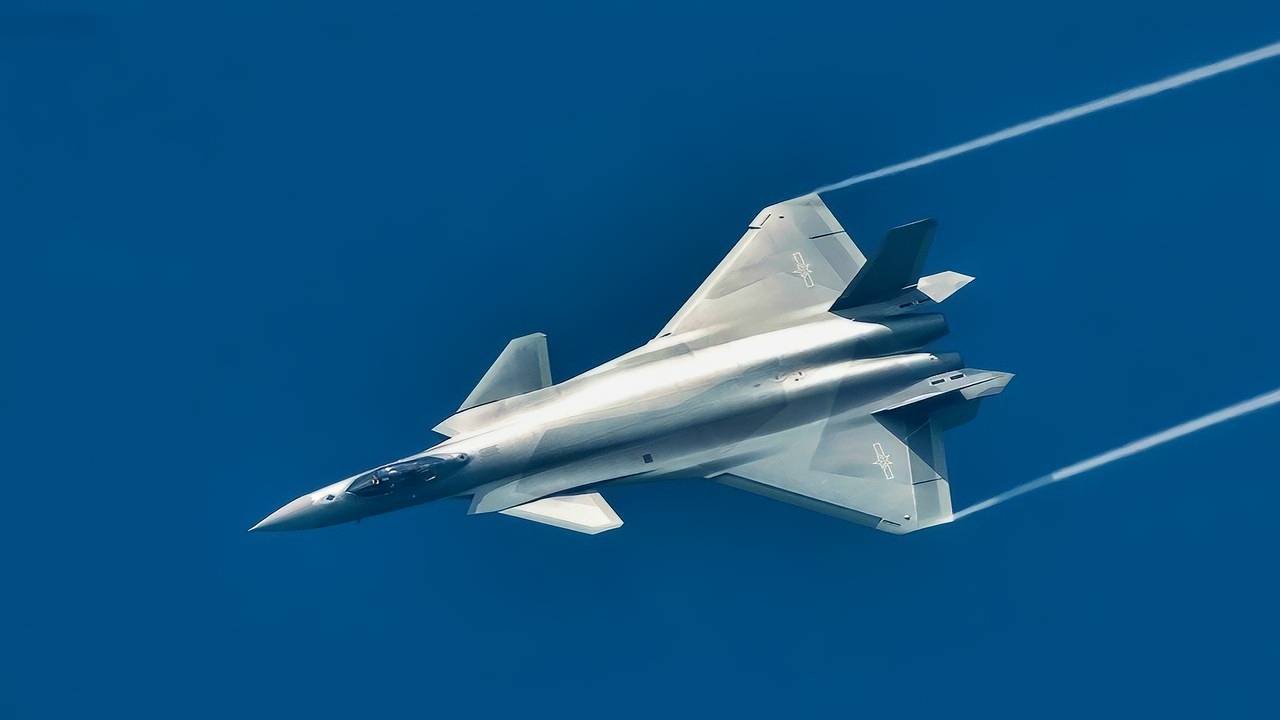
Can an Upgraded F-16 Viper Fighter Beat a J-20? The Stealth Factor Is a Killer

Key Points and Summary -This analysis pits China's 5th-generation J-20 "Mighty Dragon" stealth fighter against Taiwan's heavily upgraded 4th-generation F-16V "Viper" in a potential showdown over the Taiwan Strait.

-While the F-16V is a highly capable and maneuverable fighter with a powerful new AESA radar, it faces a generational disadvantage against its stealthy rival.

-The J-20 is designed to detect and engage targets beyond visual range. The author concludes that this ability to get the first look and the first shot "clearly tips the scales" in favor of the J-20 in a head-to-head confrontation.

China's J-20 vs. The Taiwanese F-16V: Who Wins?

TheChengdu J-20and the F-16V Viper are distinctly different aircraft, representing different generations and design philosophies.

The J-20 is a Chinese fifth-generation stealth fighter, while the F-16V is a highly upgraded version of the fourth-generation++ F-16. While the F-16V is a capable multi-role fighter, the J-20's stealth and potential beyond-visual-range combat capabilities give it an edge in a head-to-head confrontation.

However, the F-16V's combat experience and ground attack capabilities are significant advantages in other.scenarios.

China's J-20 5th Generation Stealth Fighter, the J-20 (Mighty Dragon)

The Mighty Dragon is China's frontline fifth-generation stealth fighter. It is designed for air superiority and ground attack missions, incorporating features such as radar-absorbent materials and a canard-delta wing.configuration.

The J-20 is a single-seat, over 66 feet long, with a wingspan of 44 feet and a maximum takeoff weight of 81,500 pounds. Its speed allows it to be an effective interceptor and conduct rapid ground strikes.

Its top speed is Mach 2, powered by itsShenyang WS-10C thrust vectoring turbofan engines,which produce 33,000 pounds of thrust.

The J-20features a blended fuselage with low radar cross section, low jet engine intakes, canard delta configuration, modern fly-by-wire (FBW) system, diverterless supersonic inlet (DSI), V-shaped tail, and tailends.

The jet costs between $100 million and $120 million per unit, according toBusiness Insider.

Avionics Are China's Best Yet

The J-20 has aJLJ-5 AESA radarFor better survivability and situational awareness. It is longer than the F-16V, measuring 69 feet, with a slightly smaller wingspan of 43 feet. The combat range is 1,200 miles, and the ceiling is 52,000 feet, which is lower than the F-16's ceiling, which was at 55,000 feet.

The J-20 was designed tofly deep into enemy airspaceand provide air dominance in a multi-threat environment. The Mighty Dragon is China's number one fighter, although there are two other stealth fighters in development by China's Air Force.

Another advantage of theJ-20is its ability to collect intelligence, surveillance, and reconnaissance data, as well as conduct electronic warfare tasks to spoof and jam enemy radar.

Meet Taiwan's F-16V (Viper)

Taiwan's F-16V is an upgraded version of theF-16 fighter jet,incorporating advanced avionics and radar systems, including theAPG-83 AESA radar.

Taiwan is actively upgrading its existing F-16A/B fleet to the F-16V standard and is also receiving new F-16V Block 70 aircraft. These upgrades are aimed at enhancing Taiwan's air defense capabilities and countering potential threats.

Among the new systems installed during the upgrade, in addition to the APG-83 AESA (Active Electronically Scanned Array) radar, is a new Center Pedestal Display (CPD), theAN/APX-126 Advanced IFF(Identification Friend or Foe), Link 16 datalink, full NVIS (Night Vision Imaging System), and JHCMS II (Joint Helmet-Mounted Cueing System II) compatibility.

The APG-83 Scalable Agile Beam Radar (SABR), developed by Northrop Grumman, is an AESA (Active Electronically Scanned Array) radar designed to fit the F-16 without structural, power or cooling modifications; in addition, it enables theF-16to detect, track and identify a greater number of targets (reportedly more than 20 at the same time) faster and at longer ranges while providing all-weather, high-resolutionSynthetic Aperture Radar(SAR) mapping. The system also integrated a robust electronic protection to operate in hostile electronic environments.

TheAir Force Life Cycle Management Center(AFLCMC) said it is now working on the Peace Phoenix Rising Modernization II, which will add capability for theAGM-88 High-speed Anti-Radiation Missile (HARM)), an automatic ground collision avoidance system, theMS-110 multispectral reconnaissance pod, and theAGM-154 Joint Stand-Off Weapon(JSOW)

The F-16 Viper Powerplant

A singlePratt & Whitney F100-PW-229or aGeneral Electric F110-GE-129The turbofan engine powers the fighter jet. The F100-PW-229 develops a thrust of 29,100 lb, whereas the F110-GE-129 generates a thrust of 29,500 lb.

The power plant provides the aircraft with a maximum speed of Mach 2 and a range of 1,740 nautical miles.

Extensive Combat Experience

The F-16 has a long and proven combat record in various roles, including air superiority and ground attack, while the J-20's combat experience is either non-existent or very limited.

The F-16V is equipped with advanced radar and missile systems, including the AIM-9X for air-to-air combat and precision-guided munitions for ground attacks.

Stealth Limitations

The J-20's stealth capabilities provide a significant advantage in avoiding detection, while the F-16V's lack of stealth makes it more vulnerable to being targeted.

The F-16V is not a stealth aircraft, making it more vulnerable to detection by radar and infrared sensors.

In Air-to-Air Combat, Who Wins?

The J-20's stealth and potential beyond-visual-range capabilities could give it an advantage in aerial combat, especially if it can detect and engage the F-16V long before being detected itself.

However, the F-16V's maneuverability, advanced radar, and experience could effectively counter the J-20, especially if it can get within visual range.

The outcome of a conflict would depend on various factors, including the specific tactics employed, the environment, and the skill of the pilots.

The J-20 and F-16V are distinctly different aircraft with their strengths and weaknesses. TheJ-20is a more advanced stealth fighter with long-range capabilities, while the F-16V is a highly capable multi-role fighter with extensive combat experience.

A head-to-head comparison would highlight the J-20's stealth advantages, while the F-16V's maneuverability and combat experience would be significant factors. But the ability to engage at longer ranges with the stealth advantage clearly tips the scales in favor of the J-20.

About the Author: Steve Balestrieri

Steve Balestrieriis a National Security Columnist. He served as a US Army Special Forces NCO and Warrant Officer. In addition to writing on defense, he covers the NFL for PatsFans.com and is a member of the Pro Football Writers of America (PFWA). His work was regularly featured in manymilitary publications.

Military Affairs

China's Stealth Air Force Has 1 Mission

China's J-20 Mighty Dragon Is Built for War

The F-22 Raptor Is Getting a Facelift

Pleasefollow National Security Journalon MSN for the latest news in defense, foreign policy, economics, and politics with a bipartisan twist.