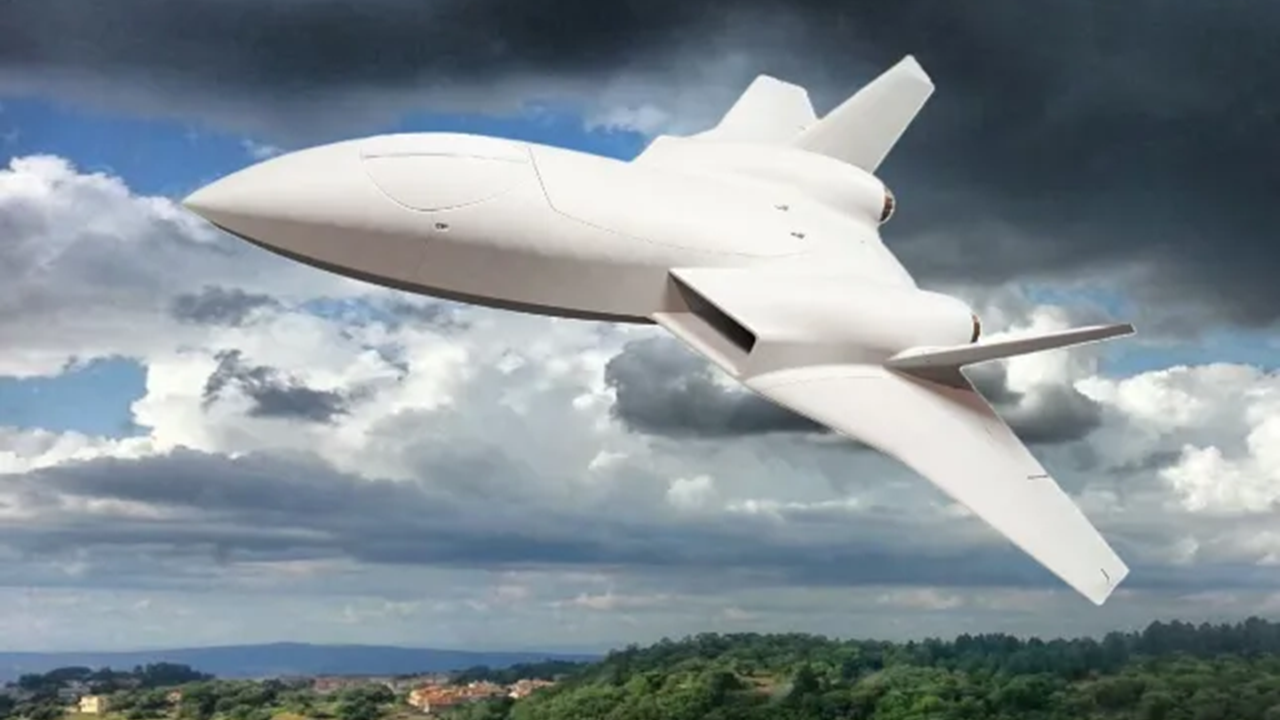
SkyDefense LLC's CobraJet represents a watershed moment in military innovation - blending AI, eVTOL, and low-cost design to transform warfare from manpower-intensive to machine-dominant.
In an era where unmanned aerial systems (UAS) dominate battlefields, innovative technologies like SkyDefense LLC's "CobraJetDrone family is poised to redefine military strategies.SkyDefenseLLC, a defense startup based in Brighton, Colo., recently unveiled their new drone to stunned observers. The CobraJet is an autonomous eVTOL (electric Vertical Take-Off and Landing) fighter drone designed specifically for counter-drone operations. The low-cost interceptor combines cutting-edge artificial intelligence (AI) with high-speed capabilities, offering a game-changing solution to the growing threat of drone swarms. Indeed, in the age of total drone warfare, CobraJet could fundamentally transform how nations fight wars, shifting paradigms from manned missions to intelligent, swarm-based defenses.
The Specifications of the CobraJet VT8
- Year Introduced:Not yet introduced (prototype phase)
- Number Built:Unknown
- Length:8 feet
- Wingspan:7 feet
- Weight:80 lbs. maximum takeoff weight
- Engines:Unknown; hybrid power with battery-powered electric duct fan and liquid-fueled micro-turbines
- Top Speed:~300 mph
- Range:Unknown (approx. 30 min flight time)
- Service Ceiling:Unknown
- Loadout:20 lbs. payload, includingSkyDefense weapons: PYTHON 5.56mm machine gun, VIPER and RAPTOR missiles, BOLA anti-drone nets
- Aircrew:0
The CobraJet Isn't Just Another Drone
The CobraJet is aAI-enabled unmanned combat aerial vehicle (UCAV)which emulates features of fifth-generation warplanes, such as the F-35B Lightning II or the F-22 Raptor. Built with a stealthy carbon fiber body and powered by all-weather electric duct fan motors, this battery-operated aircraft achieves speeds exceeding 200 miles per hour—potentially even making it to 300 mph! Though this is insufficient to intercept regular aircraft, it is more than enough to catch most military drones in service today, such as the MQ-1 Predator and MQ-9 Reaper drones.
Equipped withNVIDIA AI-powered computer vision, the CobraJet autonomously detects, tracks, identifies, and neutralizes hostile drones using air-to-air weapons. What sets it apart from other drones with a similar mission set is its aforementioned eVTOL design, allowing for vertical launches from confined spaces without runways. This versatility enables deployment in urban environments, from naval vessels, or even from forward operating bases (FOBs). CobraJets can operate in coordinated swarms, communicating as a "flight team" to form anAI-powered unmanned air forcePriced as a low-cost alternative to traditional anti-drone missiles, which can cost hundreds of thousands per shot, the CobraJet democratizes advanced air defense for smaller militaries and private security firms.
SkyDefense LLC has integrated several groundbreaking features into the CobraJet to address the challenges of modern warfare. Its AI system, leveraging machine learning for real-time decision-making, allows the drone to engage multiple targets simultaneously, countering "overwhelming enemy drone incursions." Stealth technology minimizes radar detection, while the battery-powered propulsion ensures silent, emission-free operations - perfect for covert missions.
The interceptor's armament includes precision-guided munitions tailored for drone-on-drone combat, reducing collateral damage compared to ground-based systems. In tests and simulations, CobraJets have demonstrated the ability to neutralize threats at long ranges, outpacing slower rotary-wing drones. This fusion of speed, autonomy, and affordability positions the CobraJet as a pivotal tool in the evolving landscape of AI-powered warfare.
The CobraJet Could Change the Way the World Fights Wars
CobraJet is a bigger deal than most military commentators know. It is theapotheosisof a significant shift in military doctrine, moving away from manned aircraft toward autonomous swarms.
Traditionally, air defense relies on expensive assets like Patriot missiles or manned fighter jets, which are vulnerable to saturation attacks by cheap drone swarms. The imbalance between drone offense and defense is clearly visible in Ukraine. After ups and downs, Russia has developed a highly efficient drone industry, and regularly launches drone swarms against Ukrainian cities. To defend itself, Ukrainerelies onfar more expensive US-provided Patriot missiles. Even setting aside the long-term feasibility of this approach—America's supply of Patriots is finite, and rapidly dwindling—it creates a massive cost imbalance that neither Kyiv nor Washington can afford in the long run.
Fundamentally, the emergence of drones will turn future wars into little more than "Swarm versus Swarmbattles. Militaries could deploy fleets of CobraJets to create impenetrable aerial shields, protecting critical infrastructure or troops from reconnaissance and kamikaze drones. This reduces human casualties, as operators remain safely remote, overseeing AI-driven engagements.
Economically, the low-cost model allows nations with limited resources to strengthen their defenses without exceeding budgets, creating a more balanced situation against superpowers. Ukraine's recent "Operation Spiderweb" inside Russia, in which inexpensive commercial-adapted drones destroyed dozens of multi-million-dollar Russian bombers, illustrates how a small and resourceful nation can use this technology to its advantage.
Moreover, the CobraJet's AI autonomy raises ethical questions but also enhances accuracy.
By minimizing human error, it could reduce unintended strikes—though concerns about "killer robots" rightly persist. In naval warfare, the eVTOL capabilities mean carriers and even smaller ships could launch interceptors.en masseRevolutionizing fleet air defense. On land, meanwhile, urban combat zones will become safer with rapid drone neutralization—altering strategies in counterterrorism and broader security.
Of course, the new CobraJet is not without flaws. Its battery life has limitations, and prolonged engagements will drain that limited battery in due course. There are also serious vulnerabilities to electronic warfare (EW), much as with existing drones. Cybersecurity risks also exist; hackerscouldtheoretically hijack swarms.
Despite these flaws, SkyDefense LLC's CobraJet represents a watershed moment in military innovation—blending AI, eVTOL, and low-cost design to transform warfare from manpower-intensive to machine-dominant. As drone threats proliferate, this interceptor could usher in an era of smarter, safer conflicts, reshaping global security dynamics. With ongoing advancements, the CobraJet isn't just a drone; it's the future of aerial dominance.
About the Author: Brandon J. Weichert
Brandon J. Weichertis a senior national security editor atThe National Interest.Recently, Weichert became the host ofThe National Security Houron America Outloud News andiHeartRadio, where he discusses national security policy every Wednesday at 8pm Eastern.He is also a contributor atPopular Mechanicsand has regularly consulted with various government institutions and private organizations on geopolitical issues. Weichert's writings have appeared in multiple publications, includingThe Washington Times,National Review,The American Spectator,MSN,Asia Times, and others. His books includeWinning Space: How America Remains a Superpower,Biohacked: China's Race to Control Life, andThe Shadow War: Iran's Quest for Supremacy. His newest book,A Disaster of Our Own Making: How the West Lost Ukraineis available for purchase wherever books are sold. He can be followed via Twitter@WeTheBrandon.
Image courtesy of SkyDefense, LLC.