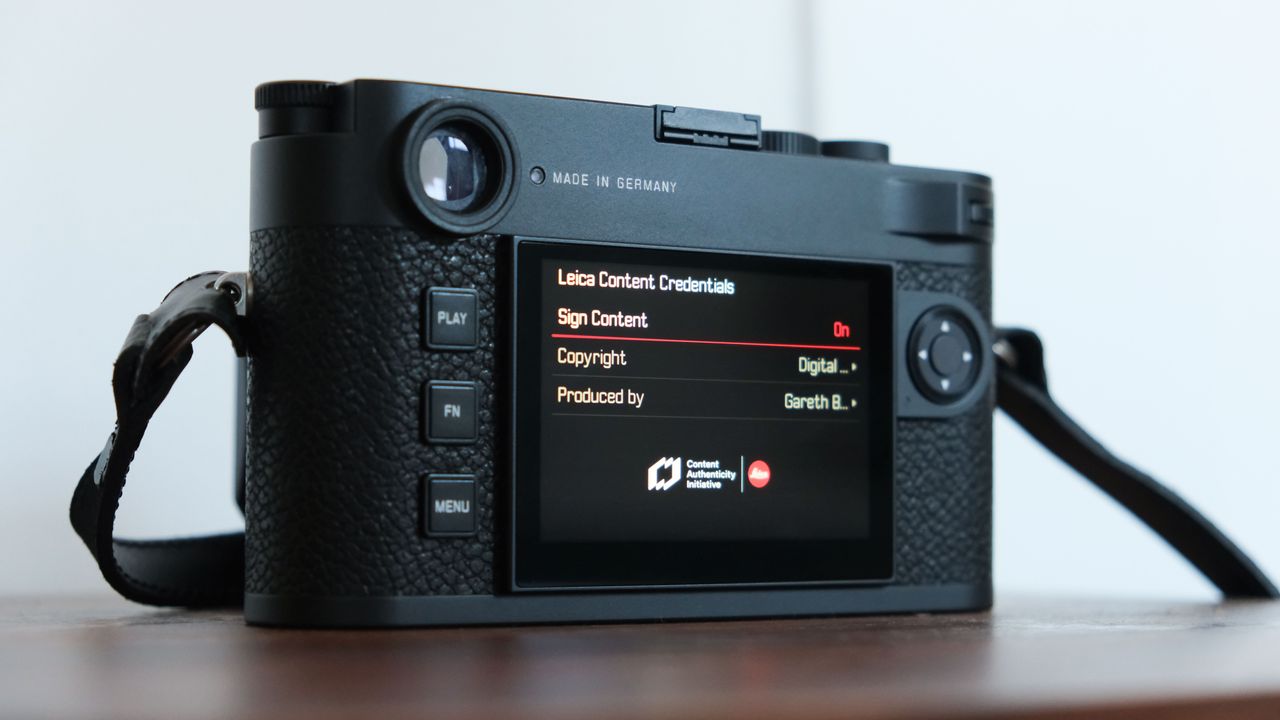
The Evolution of the Leica M11: A New Era for Rangefinder Cameras
The Leica M11 has long been celebrated as one of the few digital cameras that truly embodies the traditional rangefinder design. Known for its classic viewfinder and split image manual focusing, the M11 stands out in a market dominated by mirrorless and DSLR systems. However, recent rumors suggest that Leica may be considering a significant change to the most iconic feature of the M11 series—the rangefinder itself. Instead of maintaining the optical viewfinder, there are whispers that the upcoming model, the M11-V, could feature an electronic viewfinder (EVF).
These rumors have been circulating for months, but a recent unverified leak has provided a glimpse into what the M11-V might offer. While Leica has not officially confirmed the existence of this camera or any of its specifications, the proposed features have sparked considerable debate among enthusiasts.
One of the most controversial aspects of the rumored M11-V is the switch from a traditional rangefinder to an electronic viewfinder. According to the leaked information, the EVF would be a half-inch screen equipped with focusing aids and a diopter adjustment. This shift could potentially alter the experience of using a Leica M camera, which many users consider essential to its charm and functionality.
Despite this change, the rest of the M11-V’s features are expected to align closely with those of other M-11 series models. These include a full-frame 60MP sensor, which has become a hallmark of the Leica M line. If the M11-V is indeed real, it is likely to serve as an alternative rather than a replacement for existing models. This new variant could appeal to photographers who prefer the convenience of an EVF while still enjoying the high-resolution capabilities of the M11 series.
The Leica M11 series remains one of the few modern rangefinder cameras that truly adhere to the historical definition of the category. A genuine rangefinder uses a viewfinder that lines up two images to achieve focus. When these images overlap correctly, the subject is in focus. This method has been a staple of film photography and continues to be a key feature of the M11.
Many digital cameras attempt to mimic the rangefinder look, but they often lack the functional elements that make a true rangefinder unique. For example, the Sony A7C II appears compact and resembles a rangefinder, but it does not use the same focusing mechanism. Similarly, the Fujifilm X100VI employs a hybrid viewfinder that combines traditional split image focusing with more modern modes.
The rangefinder design is what sets the Leica M11 apart from other full-frame digital cameras. As Leica explains, “The iconic Leica M-Camera uses state-of-the-art technology, focusing only on the features essential for photography.” The M11 is essentially a camera that blends advanced technology with a minimalist approach, aiming to return to the roots of photography while delivering high-resolution digital images.
The classic rangefinder system speeds up manual focusing by quickly indicating when an image is in focus using split images that overlap. However, the optical viewfinder uses hatch marks to show what the lens sees at different focal lengths, which can be challenging when working with longer lenses. Some photographers argue that electronic viewfinders, which often support a wider range of manual focus aids, can be easier to use, especially for those with visual impairments.
Currently, the M11 can gain some of these advantages by using the Visoflex 2, a viewfinder accessory that connects via the camera’s hot shoe slot. However, this accessory adds to the camera’s size and occupies the hot shoe, which may not be ideal for all users.
While the rangefinder design is a defining characteristic of the Leica M series, not all M cameras are true rangefinders. The film-era Leica MD series, introduced in 1963, did not even have viewfinders. Leica’s modern interpretation, the M11-D, lacks a playback screen but retains the viewfinder.
With the M11-V still in the realm of speculation, several questions remain unanswered. One of the most pressing is the price. Leica notes that “the mechanical rangefinder in every M-Camera is made by hand at the Leica factory in Germany using over 100 parts.” Installing an electronic viewfinder may seem simpler, but it raises questions about cost. Would an M11 with an EVF be less expensive? Or, given that it eliminates the need for the $955 / £650 / AU$1,370 Visoflex 2 accessory, could Leica justify a higher price point?
As the debate over the M11-V continues, one thing is clear: the Leica M series remains a symbol of craftsmanship and tradition in the world of photography. Whether the M11-V becomes a reality or remains a rumor, it highlights the ongoing evolution of camera design and the enduring appeal of the rangefinder.

0 comments:
Ikutan Komentar