China Advances Deep-Sea Exploration with New ROV
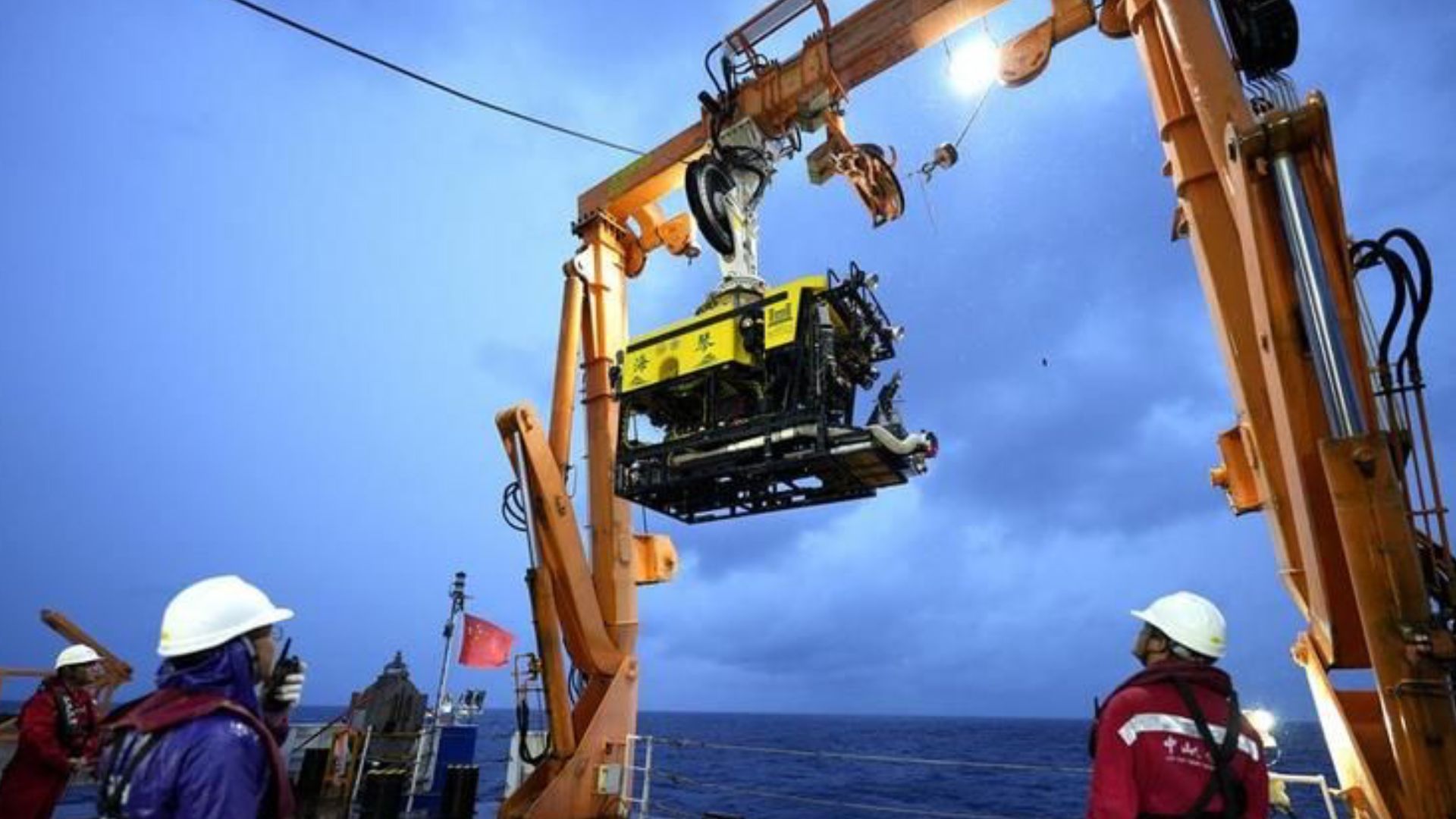
China has made significant progress in deep-sea exploration with the successful first trial of its newly developed remotely operated vehicle (ROV) called Haiqin. The test, conducted in the South China Sea on August 23, confirmed that the system is capable of supporting future missions at depths of up to 6,000 meters (19,685 feet). This achievement highlights China’s growing focus on marine technology as researchers prepare to use the vehicle for long-term scientific projects and discoveries beneath the ocean surface.
A Major Milestone in Deep-Sea Trials
During the initial sea trial, the Haiqin ROV completed multiple dives, with the deepest reaching 4,140 meters (13,582 feet). These dives were designed to test the vehicle's performance in real ocean conditions, including technical parameters, stability, and reliability. The ROV was equipped with high-definition cameras, robotic arms, sonar systems, and sensors, which allowed it to demonstrate strong results in navigation and positioning. It also showcased automatic heading control and precise hovering abilities—critical features for operating in the complex and unpredictable deep-sea environment.
Cui Yunlu, mission leader and chief engineer of detection technology at the Center of Ocean Expedition of Sun Yat-sen University, explained that before the trial, the ROV passed a 6,000-meter pressure test in a land-based testing environment. The sea trial served as a verification process. According to international protocols, once a 6,000-meter ROV passes a 4,000-meter sea trial, it is generally considered capable of meeting full depth requirements.
Designed for Scientific Exploration
The Haiqin system was deployed from the Zhong Shan Da Xue research and training vessel during the mission. Weighing 3.6 tons, it was built for a wide range of scientific applications. The vehicle is capable of locating and observing targets on the seabed while also collecting samples such as biological specimens and sediments. Its functions extend beyond short-term exploration, as it is designed to carry out long-term deep-sea tasks such as biodiversity surveys, studying marine ecosystems, discovering new species, and obtaining genetic material from organisms living in extreme conditions.
The expedition began on August 13 when the vessel set sail from Zhuhai City in Guangdong Province. Planned as a 25-day mission, the project is led by researchers from Sun Yat-sen University and aims to deepen scientific understanding of the South China Sea. During this voyage, Haiqin collected biological samples and sediment from the seabed, which were transferred to the supporting research vessel for further study. This highlights the practical applications of the system in marine science.
A Dual Mission with Haidou-1
One of the most notable developments during this expedition is the joint operation of Haiqin with another advanced vehicle, the Haidou-1. Haidou-1 is a full-ocean-depth autonomous and remotely operated vehicle (ARV) capable of working at the deepest parts of the ocean. This marked the first time two distinct unmanned submersibles were deployed from a single Chinese research vessel. According to the research team, the collaboration allowed for more efficient and wide-ranging data collection.
Haidou-1 will be responsible for multi-disciplinary seafloor sampling and supporting other deep-sea scientific objectives. These include unmanned aerial observation of ocean weather systems, geological process detection, studies of deep-sea biological ecology, and advanced coring tasks that reach as deep as 30 meters (98 feet) into the seabed. Haiqin and Haidou-1 will remain active in the South China Sea as part of China’s growing investment in ocean science and technology. Their missions are expected to support long-term research contributing to global knowledge of deep-sea environments, biodiversity, and marine geology.

0 comments:
Ikutan Komentar