Addressing the Challenge of Student Distraction in Modern Classrooms
As students across the state return to school, educators are increasingly focused on a critical challenge: maintaining student attention in an environment filled with distractions. With the constant presence of smartphones and other digital devices, it’s more important than ever for schools to find effective strategies to keep students engaged and focused.
One district that has taken a proactive approach is Cheshire Public Schools. Administrators there have implemented policies aimed at reducing the impact of technology on learning and social interaction. Kristin Pelz, Assistant Principal at Cheshire High School, highlighted the importance of community involvement and parental support in this effort.
“Our approach has been about bringing in the community, getting parental support, and getting students on board. So, everybody has expectations that we’re going to put parameters in place,” Pelz explained.
The initiative began a few years ago when school leaders noticed how disruptive phones had become in classrooms. Taryn DiSorbo, a math teacher at Cheshire Public Schools, recalled the shift in student behavior.
“I missed the connections that students were making. They stopped interacting with each other. I would give them a break, or we’d be transitioning, and it would be silent,” she said.
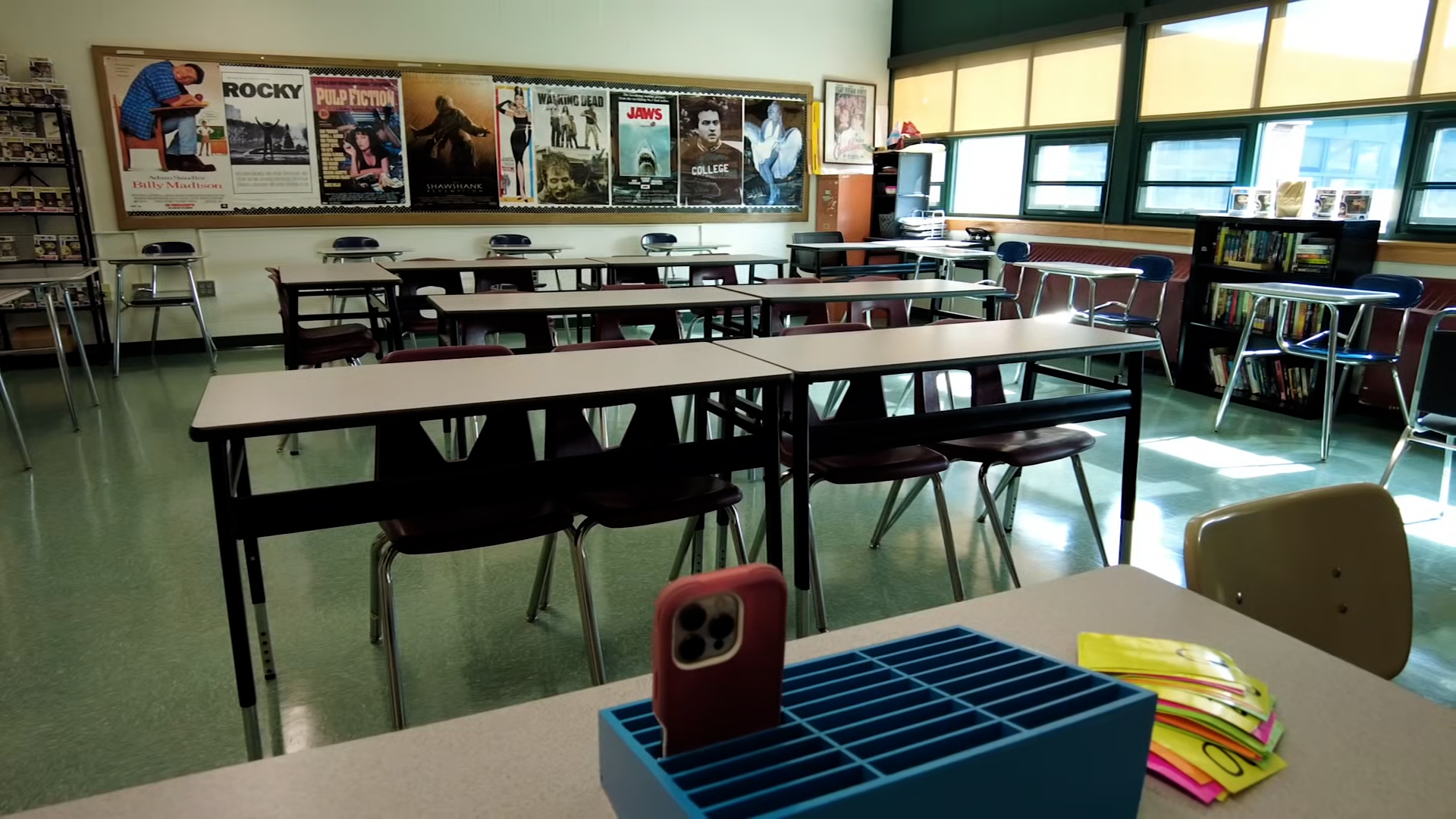
To address this issue, teachers now collect students’ phones at the start of class and store them in pouches, buckets, or bins at the front of the classroom. Susan Chasen, a chemistry teacher at Cheshire High School, shared her experience with the policy.
“I felt like it really made a big difference. Not only in their engagement when I was trying to present material or they were working on things, but in little moments of downtime, they were actually interacting with each other and talking to each other,” she said.
In addition to physical phone storage, teachers are also adapting their lesson plans to better suit modern student attention spans. Holly Skrzyniarz, a history teacher at Cheshire High School, noted the changes over the years.
“Students’ attention span has definitely shifted. It’s much shorter than when I started teaching. So, you kind of have to develop your hour, you know, as mini lessons,” she said.
This shift has led to more dynamic and varied teaching methods, ensuring that students remain engaged throughout the class period.
Parents are also playing a key role in this effort. The district has encouraged families to read books about anxiety and smartphone dependence during the summer months. Afterward, book talks were held where many parents discussed ways to reduce their children’s reliance on technology.
“I think when you see the parents of the young children, they’re just getting ahead of it. Because, you know, their kids are growing up with these phones and they want to get ahead of (it), before it becomes a problem. So, they’re talking about alternatives,” Pelz said.
Some parents are even considering delaying the introduction of smartphones and social media until high school. Pelz believes this decision could help students develop healthier habits early on.
“So, I think they’re going to grow into adults that have good boundaries. I’m really hopeful that they’re learning these life skills now, going through school, having some boundaries,” she said. “We’re helping teach them a lifelong skill. It’s about developing habits. And so, if they can develop a healthy relation and a healthy habits about if they could develop healthy habits about their phone use, they’re going to be better off as adults.”

0 comments:
Ikutan Komentar