Showing posts with label battery life. Show all posts

Saturday, August 15, 2026

Pixel 10 Battery Degrades After 200 Cycles, Unavoidable Feature Impact

Featured Image

Understanding the Battery Health Assistance Feature in Pixel 10

Google has introduced a new feature called Battery Health Assistance in its latest Pixel 10 lineup, and it is enabled by default. This means that users cannot disable the feature, which could be a point of concern for some. The feature is designed to slow down battery wear by adjusting charging speed and voltage, aiming to maintain consistent performance as the battery ages.

How It Works

Battery Health Assistance starts to take effect after 200 charge cycles. At this point, the device begins to lower the battery voltage in stages, continuing until it reaches 1,000 cycles. This gradual adjustment is intended to help the battery age more evenly and maintain stable performance over time. However, this process can lead to slower charging and a reduction in usable battery capacity as the device accumulates more charge cycles.

Impact on User Experience

The lowering of voltage affects the battery's usable capacity, resulting in shorter battery life and longer charging times. Google has not provided specific details on how much capacity is lost after 200 charge cycles. While the company claims that Pixel batteries should maintain 80% of their original capacity after 1,000 charge cycles, the always-on Battery Health Assistance feature adds an additional layer of capacity loss. This means that every Pixel 10 will experience a gradual decrease in usable battery beyond normal aging.

Comparison with Other Brands

In comparison to other smartphone manufacturers, Google's approach seems more restrictive. For instance, Samsung’s flagship phones are rated to keep 80% battery capacity after around 2,000 charge cycles, which is significantly higher than Google's 1,000 cycles. This difference in cycle ratings highlights the varying approaches taken by different companies to manage battery health.

Possible Reasons Behind the Decision

Google's decision to make Battery Health Assistance mandatory may be a precautionary measure, especially considering past issues such as the overheating problems experienced with the Pixel 6a. By setting the feature to kick in at 200 cycles, Google aims to avoid similar issues and protect the brand's reputation. However, this approach may feel restrictive to users who prefer having more control over their device's settings.

User Control and Preferences

Unlike Google, many other phone manufacturers allow users to manage battery settings themselves. This flexibility enables users to choose between optimal performance and extended battery life based on their preferences. The lack of user control in the Pixel 10 lineup could be a drawback for those who value customization and personalization.

Conclusion

While Battery Health Assistance is designed to prolong the lifespan of the Pixel 10's battery, it comes with trade-offs that affect user experience. The feature's mandatory nature and the impact on charging speed and battery capacity are significant considerations for potential buyers. As the smartphone market continues to evolve, it remains to be seen how Google's approach will be received by consumers and whether it will influence future design choices in the industry.

Wednesday, June 10, 2026

Fast Charging Myths Exposed: Hidden Battery Dangers Revealed

Featured Image

The Truth About Fast Charging and Battery Health

Fast charging has long been associated with battery degradation, but the reality is more nuanced. While it's true that fast chargers can generate more heat and stress on a phone's battery, they don't necessarily cause significant damage if used properly. The real threat to battery health comes from poor charging habits rather than the speed at which you charge your device.

How Fast Charging Works

Fast chargers work by delivering a higher current (e.g., 5A instead of 1–2A) to the battery, allowing it to reach a full charge in a fraction of the time. However, this process isn’t as simple as just pouring in more energy. Instead, fast chargers gradually increase the charging speed and slow down as the battery fills up. This ensures that the battery doesn’t overheat or suffer mechanical stress.

Modern phones use advanced technologies like silicon-carbon anodes, which allow for higher density and faster charging without compromising battery life. Some devices, such as the OnePlus 13, can achieve 80W fast charging, while others like the Realme GT3 and Realme GT Neo 5 240W support even faster charging speeds.

The Real Culprits Behind Battery Degradation

While fast charging may contribute to some wear, it’s not the main cause of battery degradation. The real issues stem from poor charging habits, such as leaving your phone plugged in overnight or letting it drain completely before recharging. These practices can significantly reduce battery life over time.

Studies on electric vehicle batteries have shown that frequent deep discharges and overcharging accelerate degradation. A similar principle applies to smartphones. Keeping your battery below 20% or above 80% can cause irreversible damage. To protect your battery, it’s best to charge it before it drops below 20% and unplug it around 70–80%.

Temperature and Battery Health

Temperature also plays a crucial role in battery longevity. Lithium-ion batteries perform best within a specific temperature range—typically between 50°F and 110°F. Extreme temperatures, whether too hot or too cold, can damage the battery and reduce its lifespan. Avoid leaving your phone in direct sunlight, near heaters, or in a hot car glovebox.

Other Factors That Affect Battery Life

In addition to charging habits, how you use your phone can impact battery health. Two major factors are the display and the SoC (system-on-chip). OLED screens, which are common in modern smartphones, consume less power when displaying dark content, making dark mode a useful tool for preserving battery life. Reducing screen brightness and using automatic brightness settings can also help.

The SoC, responsible for processing tasks, can drain the battery quickly during demanding activities like gaming, 4K video editing, or conference calls. While these tasks are necessary for many users, it’s important to be aware of their impact on battery life.

Built-In Features to Protect Your Battery

Smartphone manufacturers have implemented various features to help protect battery health. One example is the battery percentage indicator, which is designed to be slightly inaccurate to prevent deep discharge or overcharging. Many phones also include adaptive charging, which learns your charging patterns and adjusts accordingly. For instance, if you usually charge your phone before bed, the phone will keep it at around 80% until it's nearly time to wake up.

Some devices also use aggressive background power management to conserve energy. This means that Wi-Fi or app updates might pause automatically when the phone detects that you’re not actively using it.

Conclusion

Fast charging won’t ruin your battery, especially when compared to the damage caused by regular charging cycles or poor habits. While it’s true that fast charging can generate more heat, modern smartphones are equipped with safety mechanisms to prevent overheating and damage. The convenience of fast charging is often worth the trade-off, as it eliminates battery anxiety and allows for more flexible usage. With proper care and awareness, you can enjoy the benefits of fast charging without worrying about long-term battery degradation.

Tuesday, April 21, 2026

Vivo Y500 Launches in China with 8200mAh Battery

Featured Image

New Addition to the Y Series: Vivo Y500

Vivo is set to introduce a new device in its Y series lineup in China. The company has officially announced that the Vivo Y500 will be launched on September 1. One of the most notable features of this new model is its impressive 8200mAh battery, which represents a significant upgrade from the previous year’s Y300, which had a 6500mAh battery. This makes the Y500 the phone with the longest-lasting battery in Vivo's history.

Beyond just the battery, the Y500 also emphasizes durability. It comes with IP69+, IP69, and IP68 ratings for water and dust resistance, marking it as one of the toughest devices in Vivo’s lineup. The phone has also earned SGS Gold Label five-star certification for drop and impact resistance, along with passing military-standard environmental testing. These features indicate that the Y500 is built to withstand more challenges than its predecessors.

A teaser image has already been released by Vivo, offering a glimpse of the design. The phone features a punch-hole display on the front, a dual rear camera setup with a ring-shaped LED flash, and three color options: Black, Blue, and Violet.

In terms of performance, reliable tipster Digital Chat Station has shared some expected specifications. The Y500 is rumored to be powered by MediaTek’s Dimensity 7300 processor, replacing the Dimensity 6300 found in the Y300. It will also maintain an FHD+ OLED screen with a 120Hz refresh rate. The rear cameras are expected to include a 50MP main sensor paired with a secondary lens, while the front camera will have an 8MP selfie lens.

With the launch just days away, Vivo is clearly emphasizing the Y500’s strengths in long battery life and durability. Additional details such as pricing and availability outside of China are expected to be revealed once the phone is officially launched.

For those interested in staying updated with the latest tech news, there are several ways to keep informed. Regular updates can be found in the News Section, and readers can join the Telegram community or sign up for a daily newsletter to receive top stories directly.

As the release date approaches, the Vivo Y500 is poised to make a strong impression in the market, especially for consumers looking for a device that combines power and resilience. Whether it’s for everyday use or more demanding scenarios, the Y500 seems ready to deliver.

Wednesday, March 4, 2026

Realme Unveils Phone with 15,000mAh Powerhouse Battery

Featured Image

Realme Unveils a New Smartphone with an Extraordinary 15,000mAh Battery

In recent days, Realme has made waves in the smartphone market by launching the Realme P4 Pro, which features a powerful 7,000mAh battery. Now, the brand is set to take things even further by introducing a new device that promises an even more impressive battery capacity. The company recently teased the upcoming phone, hinting at a power cell larger than 10,000mAh. Now, Realme has officially confirmed that the new handset will be equipped with a massive 15,000mAh battery, along with a design that looks promising.

A Battery That Can Last for Days

According to the latest teaser from Realme Global on X (formerly Twitter), the new phone is expected to have a battery capacity of 15,000mAh. Although the initial post mentioned the battery as “1x000mAh,” a closer look at the image reveals the actual figure of 15,000mAh. This is a significant leap in terms of battery size and could potentially change how users think about smartphone longevity.

Realme claims that this massive battery can support up to 50 hours of continuous video streaming. While this number might seem high, it’s not entirely unrealistic given the sheer size of the battery. In addition, the company also stated that the phone could offer up to 18.75 hours of nonstop video recording on a single charge, making it ideal for content creators and heavy users.

A Powerful Battery in a Slim Design

One of the most intriguing aspects of this new device is its design. Unlike many rugged phones that come with oversized batteries and bulky frames, Realme’s new smartphone appears to maintain a slim profile. Based on the leaked images, the phone seems to have a similar thickness to the Realme GT 10,000mAh concept model, which was introduced earlier this year with an 8.5mm frame.

This suggests that Realme is focusing on balancing performance with portability. The company may also be using advanced battery technology, such as an ultra-high silicon-content anode, to ensure that the 15,000mAh battery doesn’t add unnecessary weight or thickness to the device.

What to Expect Next

While the details are still emerging, there are indications that this new smartphone could be another concept model, much like the Realme GT 10,000mAh. However, the company has hinted that more information will be revealed during the Realme Fan Festival event on August 27. This event is expected to provide a clearer picture of what to expect from the new device, including its features, performance, and overall user experience.

As consumers continue to demand longer battery life without compromising on design, Realme’s latest announcement could signal a shift in the smartphone industry. With a 15,000mAh battery, the company is pushing the boundaries of what’s possible, and it will be interesting to see how this device performs in real-world conditions.

Saturday, August 23, 2025

Garmin Enduro 3 watch review: A beast when it comes to battery life

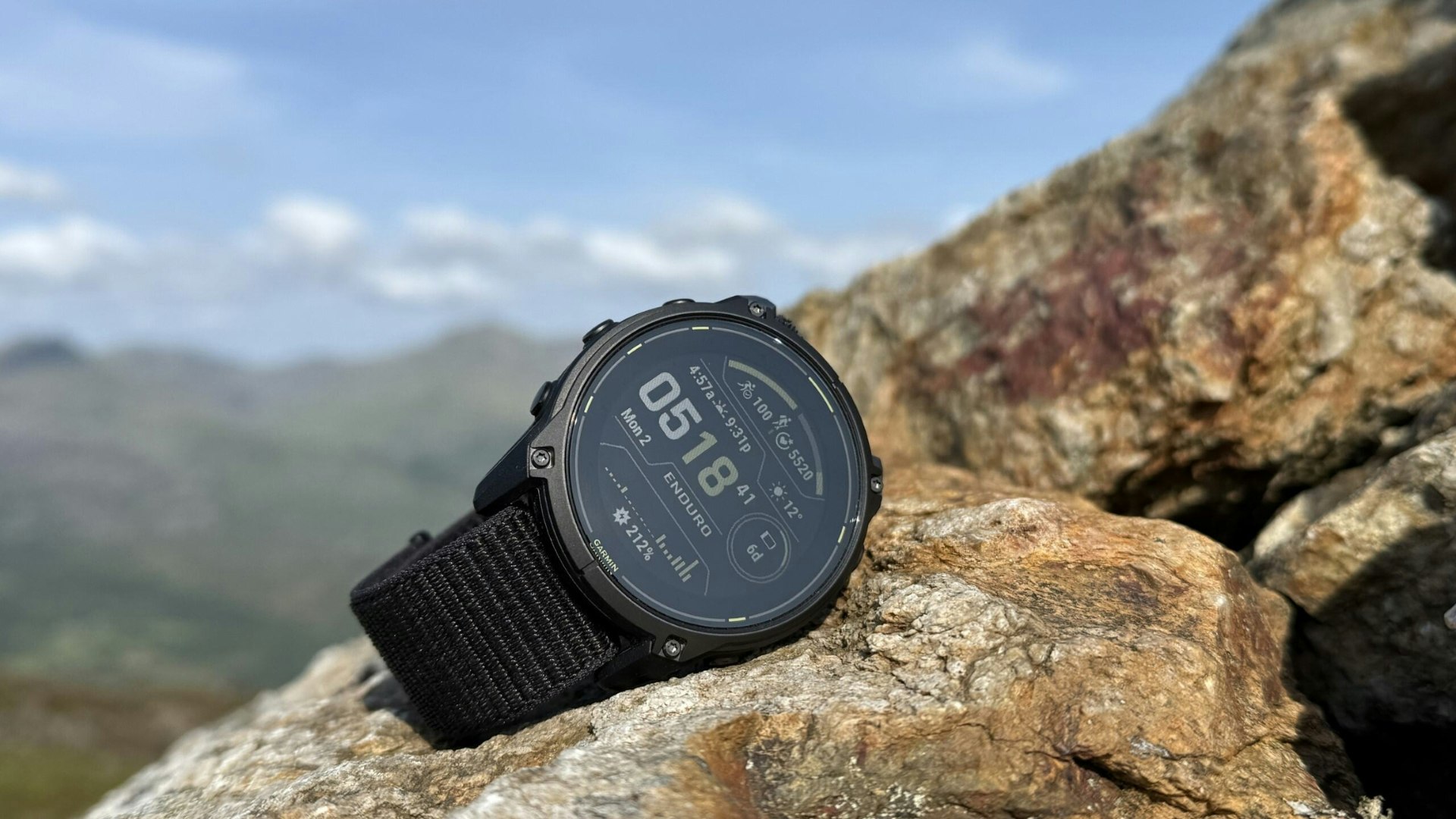
As its name suggests, the Garmin Enduro 3 is built with ultimate endurance in mind. That means a tough, rugged build, but also impressive battery life with solar charging.

Indeed, the main USP of the Enduro 3 over other watches in the Garmin range is that it boasts the best battery life in the entire Garmin range and one of the best in ours.Outdoor watches group test.

The stats are impressive. Equipped with solar charging, even with all satellite systems running including multi-band GPS, it will last between 60 and 90 hours (depending on sunlight conditions). Meanwhile, you get 36 days in standard smartwatch mode.

It's loaded with features, boasting as much functionality asGarmin's top-end Fenix 8. This means plenty of data at your fingertips, but also seemingly endless menus and sub-menus to scroll through.

The five-button interface and scrolling touchscreen will be familiar to those who already have a Garmin watch, but otherwise takes a little while to learn. If you like getting granular with your training, health and performance metrics, though, you’ll love what it has to offer. If you prefer things sleek and simple, not so much.

Having said that, the watch display is highly customizable. Navigation is robust, featuring full-color topographic maps, easy route following, and multi-band GNSS support, ensuring accurate tracking even in challenging environments.

It also works well with numerous third-party apps, from Komoot to Strava to Spotify. You can also set up contactless payment if you want smartwatch-style functionality for everyday use.

Disadvantages? Compared to the latest AMOLED watches, the MiP (Memory-in-Pixel) display is underwhelming, though it's still better than LCD screens. And this loss in terms of overall brightness and clarity is part of what ensures such impressive battery life.

For extended off-grid adventures, it's a sacrifice worth making. There's no voice assistant, as with the latest Fenix model, but I didn't miss that feature. It's expensive though.

Design and display
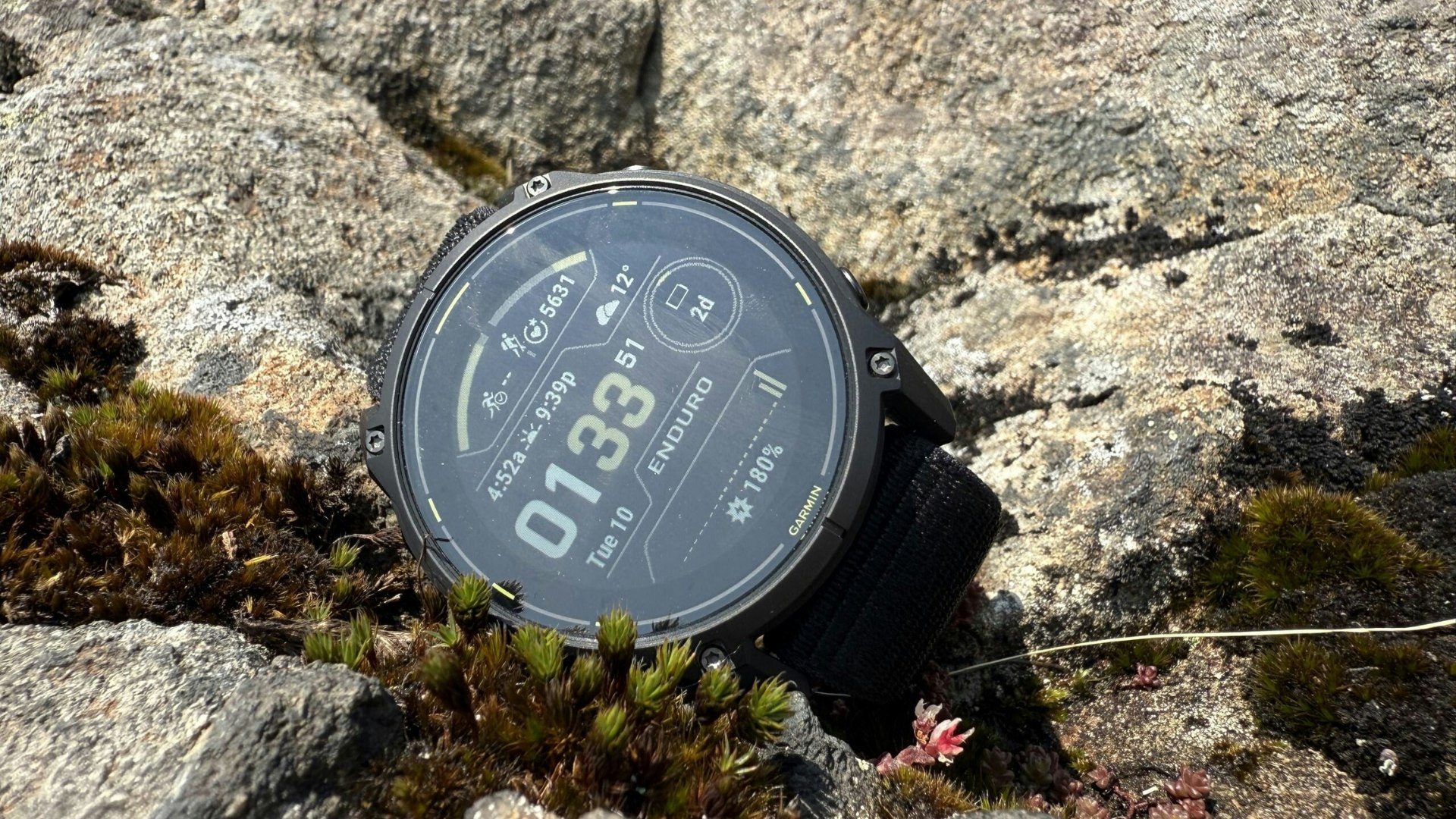
The Enduro 3 is unlike many of the watches in Garmin's other ranges, like theFenixand the Forerunner. Those models come in a bewildering range of different color options and finishes, with multiple strap options (some of which increase the price significantly).

In contrast, the Enduro 3 keeps things simple. It's available in one case size (51mm), one color (no nonsense black) and with just one strap option (a simple but comfortable nylon-velcro band).

The titanium bezel is bolted to a fibre-reinforced polymer case, with a sapphire crystal that is far more scratch-resistant than mineral glass. It's not a particularly heavy watch, at 63g including the band, but it is undeniably chunky.

The case diameter is 51mm and overall thickness is 15.7mm. If you have slim wrists, it may feel bulky and top-heavy, which some will find off-putting.

But the larger proportions allow for a large screen size of 1.4" (35.56 mm) in diameter – and that doesn't include the solar charging ring surrounding the display. In turn, this means you can immediately view plenty of information straight from the home screen (although of course, it's possible to download multiple watch faces, both free and paid, from the Garmin Connect IQ app if you want to customize the watch face).

Visually, the Enduro 3 exudes a rugged and robust quality that will appeal to those who like the G-Shock aesthetic. This is augmented by the addition of an external LED flashlight at 12 o'clock.

It's also a feature on some of Garmin's other watches, such as the Fenix 8,Fenix 7andInstinct 3, and although it seems like a gimmick, it's surprisingly useful – especially if you're wild camping, as it's much more convenient than fumbling around in a dim tent for aheadlamp.

The Enduro 3 has a 280 x 280px 'Memory-in-Pixel' (MiP) display. This is a well-established technology that is widely used across the wearables sector. It's more energy-efficient and thinner than traditional LCD, with low power consumption to boost overall battery life.

It works pretty well outdoors, even in bright sunlight. However, it has a limited color palette and is nowhere near as crisp or vivid as watches with the latest AMOLED displays.

Comfort
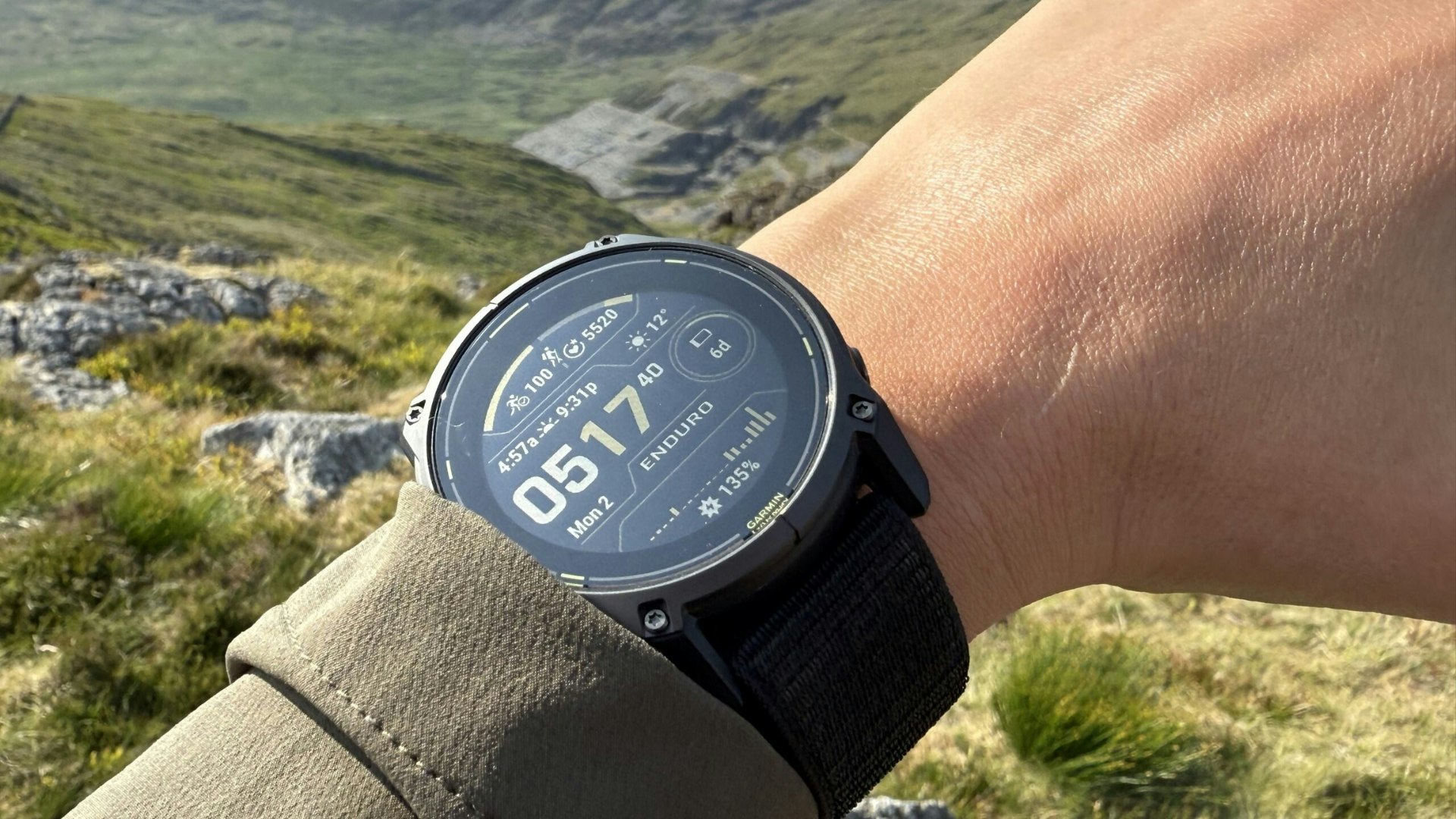
As I've already noted, the Enduro 3 is a big watch, with a diameter of 51mm and a thickness of 15.7mm. On the wrist, it looks and feels a lot like a G-Shock, so if you're used to wearing that type of watch, it probably won't be too bulky.

But others will definitely find it overly bulky, and for fast-paced activities such as trail running – especially if you have a fairly dynamic arm swing – the Enduro 3's extra heft is noticeable, particularly compared to a more streamlined running watch such as the Suunto Race S or the Garmin Forerunner series.

On the other hand, the big case means big buttons and a big screen, which is a plus for overall user-friendliness. And in terms of weight, the Enduro 3 isn't especially heavy thanks to its polymer case and lightweight titanium bezel. By way of comparison, it's lighter than competitors like thePolar Grit X2 Proor theSuunto Vertical Titanium Solar.

The supplied nylon-velcro strap is also soft and comfortable, with infinite adjustment for a great fit. It's also surprisingly quick-drying, as I've found after going for a wild swim in a mountain lake. Overall, I much prefer it to Garmin's silicone straps.

Battery life

The stats for the Enduro 3 are truly impressive. If you're looking for a GPS watch with phenomenal battery life, this is one of the strongest contenders on the market.

In standard smartwatch mode, it will last up to 36 days, which can be boosted to a maximum of 90 days under optimal solar charging conditions (Garmin's figures are based on all-day wear with three hours per day spent outside in 50,000 lux conditions, which would be a sunny summer day here in Britain).

For ultimate battery life, you can put the Enduro 3 in battery saver mode, which restricts functionality and tracking, but then gives you up to 92 days of battery life, or potentially unlimited life if the watch is consistently getting enough solar charging exposure.

Meanwhile, with all satellite systems active and music playing, you can expect up to 22 hours of battery life. Without music but with multi-band GNSS enabled, Garmin claims up to 60 hours of life, or up to 90 hours in optimal solar conditions.

In max battery GPS mode, the brand claims up to 210 hours of battery life, and in expedition GPS mode (which typically records a position update only once an hour), up to 77 days (or again, potentially unlimited days with sufficient solar exposure).

Mapping
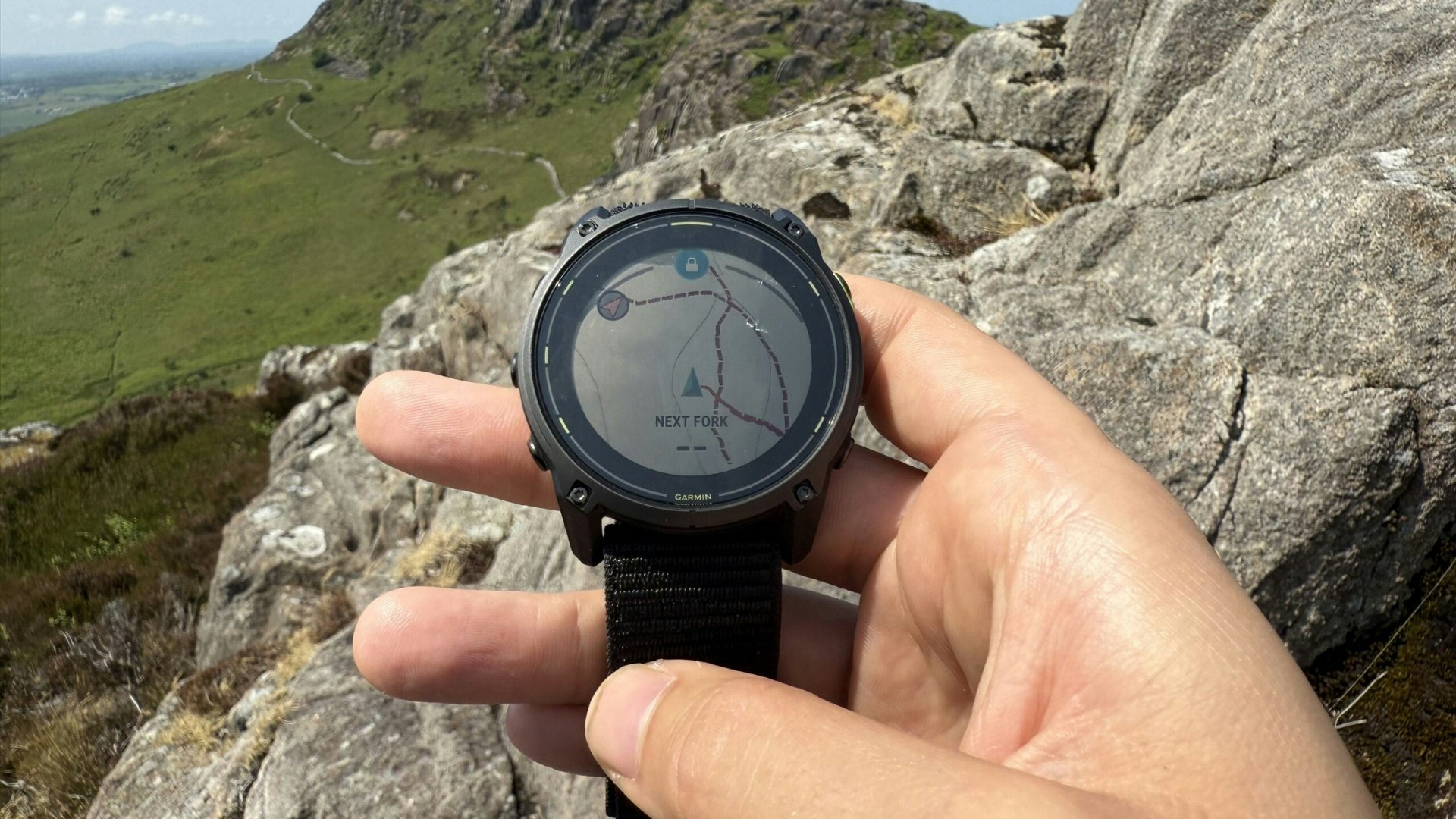
In my opinion, Garmin's mapping is the best free smartwatch mapping on the market. On the Enduro 3, the mapping is pre-loaded. Contour lines and other topographical features are clearly displayed, with landscape features such as villages, rivers and roads labeled.

You can easily zoom in and out via the up/down buttons on the left side of the case, while the touchscreen allows you to pan around the map just like you would if navigating on a smartphone or modern GPS unit.

Of course, navigating on the fly is never easy with a small device like a watch, and most users will import GPX tracks to follow. Garmin's ecosystem is now quite extensive, which means there are several ways you can do this.

If you're a Komoot user, you can do it directly in the Komoot app on the watch, downloadable from the Garmin Connect IQ store. Alternatively, you can import GPX tracks and courses via the Garmin Explore or Connect apps on your smartphone, then sync with your device to upload them to the watch.

You can toggle between map and other data screens, enabling you to monitor hiking or running stats (speed or pace, distance, time, etc.) while following the mapped route. The GPX track shows a lined trace of your progress, as well as the plotted route ahead.

You get turn-by-turn navigation, and if you veer off course the watch will beep and show you how to get back on course. The only downside is that the MiP screen has limited resolution, so on occasion, maps can be a bit dull and difficult to make out.

Accuracy

The Enduro 3 has multi-band capability, connecting to all the major global navigation satellite systems (GNSS): the United States' Global Positioning System (GPS), Russia's Global Navigation Satellite System (GLONASS), China's BeiDou Navigation Satellite System (BDS) and the European Union's Galileo, as well as Japan's QZSS.

In addition, Garmin's own SatIQ technology "dynamically adjusts satellite mode (like multiband GNSS or low-power GPS) based on your environment to optimize battery life without sacrificing accuracy". Basically, it automatically selects the best GPS mode for your situation, whether you're in a dense urban area, a forest, or an open field.

The watch accurately and precisely tracked all my activities, quickly locking onto the GPS signal before starting a hike or trail run. The GPS plots are smooth and continuous.

Interface

The Enduro 3 uses Garmin's standard five-button layout and also has touchscreen capability. If you already own a Garmin watch, the functions will probably feel fairly familiar – if it's all new to you, expect to spend a few hours as you learn your way around the menus.

For example, various short and long presses are needed to access different options and settings, such as the handy widgets menu (long press the top left button). I have to say that, to me, it doesn’t feel as intuitive as some rival brands' interfaces, though that's partly because of the sheer breadth of data and customization that the Enduro 3 offers. Looks-wise it's certainly more dated though.

Fortunately, recording an activity is easy and straightforward, so if you're primarily using this as a multisport watch to log hikes, rides and runs, you can get out and get active pretty quickly.

App
Garmin's ecosystem is extensive, but for us it has also become unnecessarily complex. For one thing, there are now multiple apps available for download to your Apple or Android device.

For outdoor users, the most useful are Garmin Connect, Garmin Explore and Garmin Connect IQ (yes, three separate apps to clog up your phone – sorry). The first is crucial for syncing your watch and monitoring your activities and health/performance stats, as well as setting up training plans.

The second is useful for creating and saving routes, while the third allows you to download third party apps (such as Spotify or Komoot) to your watch, as well as adding custom watch faces (which cost up to £4.99 each).

Garmin recently faced criticism for also introducing Connect+, a paid subscription service that places additional 'premium' features behind a paywall. It is currently £70 per year or £6.99 per month.

Given that the Enduro 3 is a top-tier Garmin watch that retails at £770 in the UK, it's not unreasonable to expect that buying one should really give you access to everything that Garmin offers, without having to pay extra money year-on-year.

What you actually get for this fee varies by device, but essentially the headlines seem to be: personalized, AI-driven insights into your health and activities, a performance dashboard, live activity data fed straight to your smartphone, and Garmin's livetrack functionality (most useful for big challenges, events, and races).

The majority of this will only be of interest to serious/elite athletes, so at the moment I'd advise you to save your money.

Other features

Still, there's a host of other functionality. You can expect excellent sleep tracking (with Garmin's handy morning reports giving you a summary of how you slept and your training readiness for the day ahead), plus heart rate and blood oxygen levels, and multiple health/wellness indicators such as step tracking, floors climbed, intensity minutes, and Garmin's overall stress and 'body battery' metrics.

In terms of outdoor-specific tools, you get dual grid coordinates plus an in-built compass, barometer and altimeter, as well as a thermometer, weather forecast, tide times, storm alerts, and safety tracking (including incident detection, livetrack and live event sharing).

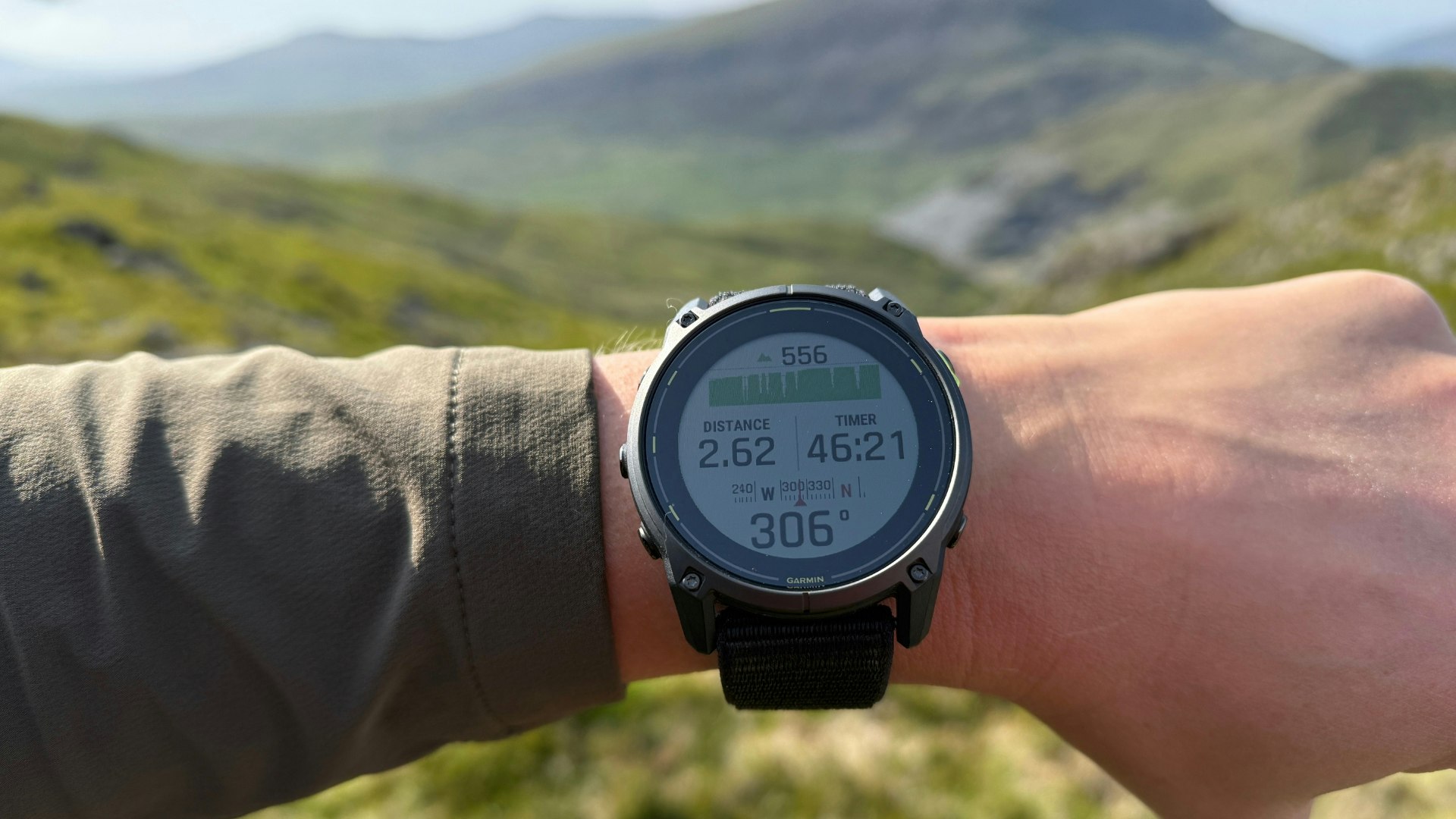
In the mountains, the watch can also give you access to data such as total ascent/descent, vertical speed, route elevation profiles and distance to your destination.

As a multi-sport watch, it's also one of the best on the market. Garmin's running, golfing, cycling and swimming features are some of the most advanced and comprehensive available. So are its training, planning and analysis tools.

In terms of smartwatch-style features, you can also set up contactless payments with Garmin Pay and download Spotify playlists for off-grid listening. I enjoyed heading out for long trail runs without having to take a phone, with the motivating accompaniment of my favorite running playlist (Indie Rock Bangers, since you didn't ask) blasting out throughShokz Openrunheadphones. It works really well (and proved much easier to set up than on the Forerunner 965).

Price and competition
The Enduro 3 is one of the most expensive watches that Garmin offers. Only the premium Marq collection and the specialist dive, aviation, boating and military/tactical models, plus the new Fenix 8 range, are more expensive.

It currently has an RRP of £770 ($899.99), which admittedly saves you a bit of money compared to the 51mm Fenix 8 Solar (£950 ($1,099.99). The Enduro 3 beats it for battery life, but the Fenix 8 has added customisation options, extra smartwatch-style features and a more premium feel overall (though it’s a bit heavier as a result).

Still, the Enduro 3 offers you plenty of features and functionality for your money. In that sense, I think it's better value than the Fenix 8 Solar (if you're considering a Fenix 8, go for the AMOLED version instead).

Away from Garmin, if you like the Enduro 3 you should also be looking at thePolar Grit X2 Pro(£649) and theSuunto Vertical Titanium Solar£625. The Polar has a much shorter battery life and lacks solar charging, but adds a super-vivid AMOLED screen and, for me, offers a more intuitive user experience.

Meanwhile, the Suunto has a long battery life, though still inferior to the Enduro 3, but I think it looks better and may be more user-friendly as it is a little more stripped back.

Verdict

The Garmin Enduro 3 excels in terms of overall durability, battery life and navigation capabilities, as well as multi-sport features and functionality. Solar charging capability also makes this a top choice for users who spend a lot of time off-grid.

The downside? The pixel-based display lacks the color and clarity of AMOLED rivals. And some users find the case too bulky, the display too cluttered and the menus too complicated.

If you're after a slimmer, lighter watch for tracking activities, you may be interested in our list of theBest running watches.

About the author

Matt Jonesis a freelance journalist based in the heart of Snowdonia National Park, he's a highly experienced gear tester and self-confessed outdoor gear geek. Matt has been one of our main gear testers for the last few years and is the first person we call with any complicated kit queries that require in-depth and forensic analysis.
EV batteries could offer longer lifespan, increased safety with new Swedish technology

The lifespan of EV batteries has remained a challenging factor for their users. After continuous usage over years, the lifespan of these batteries decreases. But a new experiment offers hope for a longer lifespan of EV batteries.

An AI model developed at Uppsala University could reportedly offer improved safety and longer life for EV batteries. The model provides a much more accurate picture of battery aging.

Batteries in electric vehicles wear out too quickly

Being able to learn more about the life and ageing of batteries will benefit future control systems in electric vehicles. It also shows how important it is to understand what happens inside thebatteries," said Professor Daniel Brandell, who led the study and is in charge of the Angström Advanced Battery Centre atUppsala University.

If we stop looking at them as black boxes that are simply expected to provide power, and instead acquire a detailed picture of the processes, we can manage them so that they stay in good conditionlonger.”

Batteries in electric vehicles wear out too quickly and this is slowing down the electrification of the transport sector.

AI tool extends lifespan

This is a major waste of resources today and is holding back the transformation of the transport sector. To address this issue, the automotive industry is developing software, often based on AI, to optimize battery management and control. The latest tool by Canadian researchers is one of them.

Researchers also revealed that several years of battery testing were behind the study, carried out in collaboration with Aalborg University in Denmark. A database was built by collecting data from numerous very short charging segments. This was then combined with a detailed model of all the different chemical processes taking place inside the battery.

"Altogether, this gives us a very precise picture of the various chemical reactions that result in the battery generating power, but also of how it ages during use," says Wendi Guo, who conducted the study.

ML framework built on digital twin model

Researchers revealed that their work proposes the machine learning (ML) framework built on a digital twin model that links key design parameters to real-world behaviors of graphite/nickel–manganese–cobalt–oxide LiBs under a diverse range of fast charging protocols, depths of discharge, and dynamic discharge profiles representative of applications in Nordic climates.

Published in the Energy and Environmental Science journal, theresearchfocuses on a new framework that infers six key design parameters directly from short charging segments, enabling rapid health prediction within seconds.

Model improves the robustness of health, lifetime predictions

Notably, this approach improves the robustness of health and lifetime predictions by up to 65% and 69%, respectively, compared to baseline multi-layer perceptron and linear regression models, while also outperforming the baseline random forest model, with a training time of 1 second, according to researchers.

The research team also pointed out that the strong physical correlation between capacity variability and three design parameters—solid-state diffusion coefficient, particle radius, and electrode thickness—during fast charging highlights their vital role in determining the degradation pathways.

"The framework can be easily integrated into upstream workflows and battery management systems, enabling end users to customize usage patterns and guiding developers toward improved design strategies," said researchers in the study.

How fast is the charging speed of the Google Pixel 10 Pro Fold?

How fast is the charging speed of the Google Pixel 10 Pro Fold?

Best answer:The Google Pixel 10 Pro Fold supports up to 39W wired charging and up to 15W Qi2 wireless charging. It can charge up to 50% in 30 minutes when using a 30W or higher PPS charger.

Everything to know about the Google Pixel 10 Pro Fold's battery and charging specs

The Google Pixel 10 Pro Fold finally made its debut at theMade by Google eventOn August 20, 2025. The Pixel 10 Pro Fold not only packs a brand-new TSMC-made Tensor G5 chipset, but the company has also improved the charging speeds and battery capacity of its latest book-style foldable.

The Pixel 10 Pro Fold comes with a 5,015 mAh battery, which is an increase of 365 mAh compared to its predecessor, thePixel 9 Pro Fold. Regarding charging speed, the Pixel 10 Pro Fold supports up to 39W fast wired charging with a USB-C cable. This is a significant increase compared to the 21W charging speed seen in Google's previous-generation foldable phone.

According to Google, thePixel 10 Pro FoldIt can charge up to 50% in about 30 minutes when using a 30W USB-C charger. The charging time will be further reduced if you use a 45W USB-C charger recommended by Google.

This is a significant jump not only because Google has almost doubled charging speeds in one generation, but also because the Pixel 10 Pro Fold offers more than 50% faster charging than its direct competitor, theSamsung Galaxy Z Fold 7. The foldable from Samsung still only offers 25W wired charging.

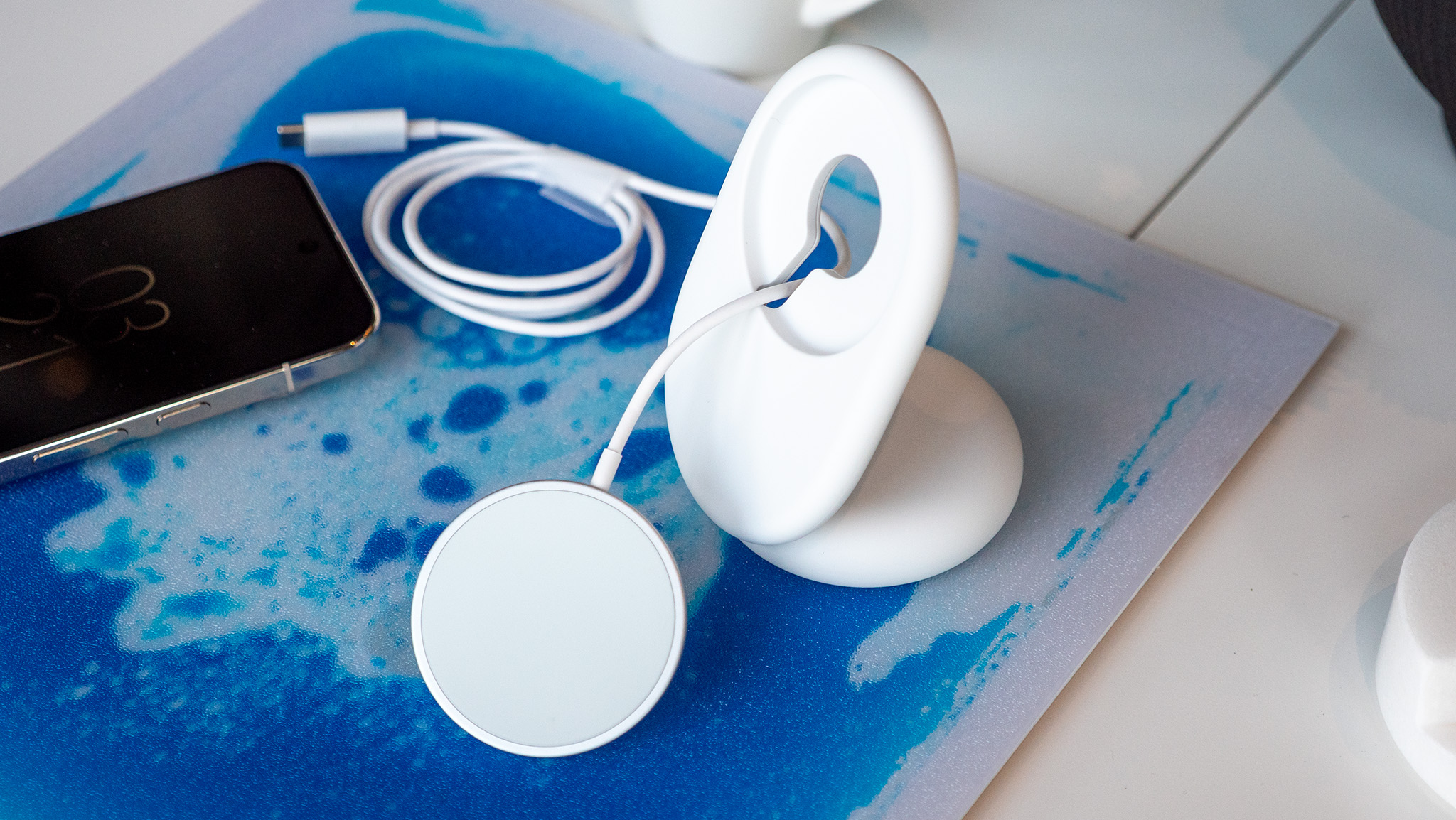
And that's not all, Google has also packed major upgrades into the wireless charging technology. Similar to all Pixel 10 models, the Pixel 10 Pro Foldsupports Qi2 magnetic wireless charging, meaning you no longer need a third-party case or sticker to charge your Pixel using a magnetic charger. Instead, you can stick your Pixel 10 Pro Fold, similar to an iPhone, on a MagSafe charger.

Moreover, thanks to Qi2 support, the Pixel 10 Pro Fold also delivers up to 15W wireless charging, double the 7.5W of the Pixel 9 Pro Fold. This means wireless charging times should be significantly shorter. Google will also be offering a number of official Qi2 charging accessories as part of its newPixelsnap lineup.

Like this article? For more stories like this, follow us on MSN by clicking the +Follow button at the top of this page.

Friday, August 22, 2025

Watching Your Wallet: What to Check Before Buying Refurbished Tech

(WFSB) - If you need a new laptop, one way to save is to buy one that is used. However, there are some things experts say you should check before buying anything refurbished.

Dashia Milden is a consumer insights editor at CNET. She says the most important thing to do is to check the device's battery.

"In order to check the battery, usually you can ask the seller exactly to maybe show you a screenshot of the battery status, which can be found usually in the system settings of your computer, or if you're fortunate enough to actually have that device in person, you can actually scroll right on over to the system settings and check that for yourself by simply just typing in or checking battery. Sometimes this is called battery health, the battery settings, things of that sort," said Milden.

Once you've checked the battery, Milden says the next thing to do is make sure the computer has enough RAM storage for your needs. Milden recommends at least 16 GB.

"The memory that's on your computer, oftentimes you can't upgrade that, or you can't make that addition later on, so it's going to be really important when you buy your computer to get that right the first time," said Milden.

Milden says to look for signs of damage as well and inspect all parts of the laptop closely.

Looking at that keypad to see if everything is in good shape here?" said Milden. "Is there anything coming undone? Look at the camera. Take a look at the screen. Are there any cracks there? Are there any scratches that you need to know about? Even taking a look at just the side or even the touchpad. Has the touch pad been touched down far too many times, so where maybe it's not working as well anymore?

Milden says to also know the details of any return policies or warranties before making a purchase.