Showing posts with label psychology of everyday life. Show all posts

Monday, May 18, 2026

Scientists Decode the Mind's Whisper. The Impact Is Extraordinary.

Featured Image

The Evolution of Brain-Computer Interfaces

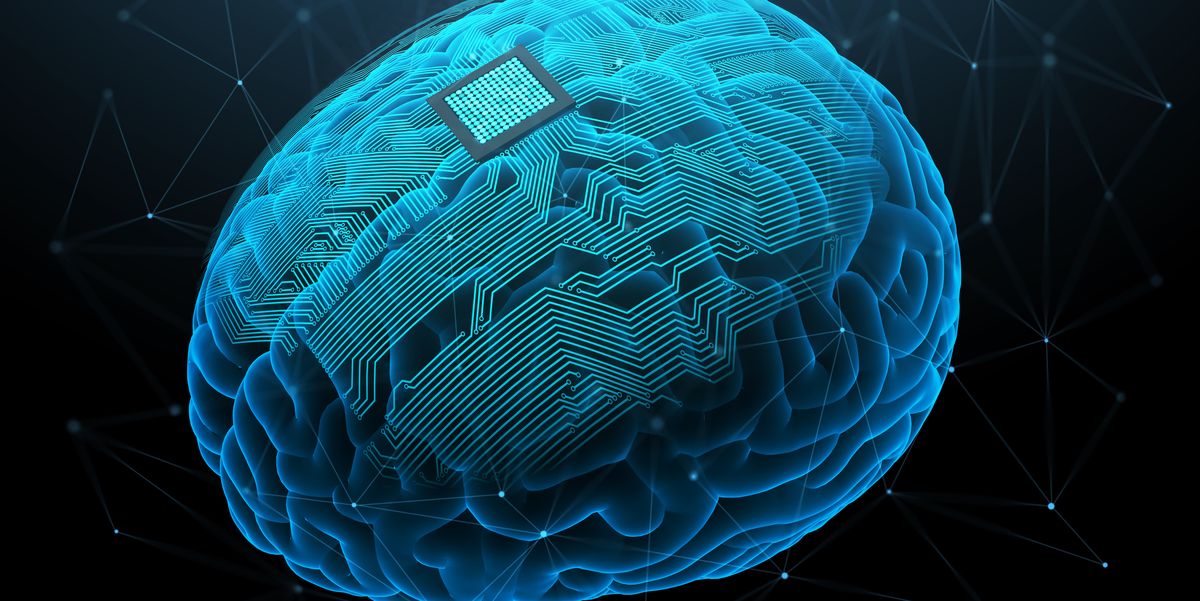
Neurodegenerative diseases and motor disabilities have left many individuals unable to communicate effectively. However, recent advancements in technology offer a promising solution. A developing technique that combines brain-computer interfaces (BCIs) with AI-powered decoders is making strides in helping those who have lost the ability to speak. By interpreting neural activity in the brain’s motor cortex, this technology has the potential to give a voice to the voiceless.

Pioneering Research at Stanford

For several years, the Neural Prosthetics Translational Laboratory at Stanford, led by co-director Frank Willett, has been working on translating what was once considered untranslatable. In 2021, the laboratory unveiled a BCI capable of converting thoughts of attempted handwriting into speech by analyzing neural activity in the motor cortex. Two years later, they achieved a similar breakthrough with a BCI that translated attempted speech. Now, the lab has taken another step forward by focusing directly on the inner monologue, without the need for physical attempts at speech or writing.

The results of this latest development were published in the journal Cell. According to Willett, a co-author on all three studies, the goal was to determine whether a BCI could work based solely on neural activity evoked by imagined speech rather than physical attempts to produce speech.

Testing the System

To translate imagined speech, Willett and his team used four participants from the Brain2Gate trial. This study aimed to develop proof-of-principle for people with tetraplegia to control computer cursors and other assistive devices using their thoughts. The participants had multiple 64-channel microelectrode arrays implanted in their brains for previous trials. At least two of the volunteers, a 68-year-old woman and a 33-year-old man, were diagnosed with ALS and either couldn’t communicate clearly or couldn’t move their muscles at all.

Participants were asked to perform speech attempts or think about simple words. In another test, they heard or silently read the same words. The team mapped phonemes—the building blocks of speech—and used an AI decoder to reconstruct the participants' inner thoughts. The resulting patterns were similar to those of attempted speech signals from a 2023 study but less robust.

Enhancing Privacy and Functionality

The researchers also developed unique in-system code phrases—such as “Orange you glad I didn’t say banana”—to switch the BCI on and off, allowing participants to maintain privacy over their inner monologues.

“We found that we could decode these signals well enough to demonstrate a proof of principle, although still not as well as we could with attempted speech,” Willett said. “This gives us hope that future systems could restore fluent, rapid and comfortable speech to people with paralysis via inner speech alone.”

Challenges and Future Directions

Despite the progress, the system still needs improvement before it can be considered a full-fledged mind-reading tool. With a vocabulary of just 50 words, the BCI produced an error rate as high as 33 percent.

Willett emphasized that implanted BCIs are still in the early stages of research and testing. “Improved hardware will enable more neurons to be recorded and will be fully implantable and wireless, increasing BCIs’ accuracy, reliability and ease of use,” he noted.

Future studies will explore decoding processes beyond the motor cortex, including regions associated with language and hearing. With continued advancements in science, engineering, and a bit of luck, the day may come when voices are restored to those who have lost them due to accidents or neurodegenerative diseases.

Saturday, November 8, 2025

Brain's Built-In GPS Navigates the World: Study

Featured Image

Understanding the Brain's Internal Navigation System

Scientists have long been fascinated by how the brain tracks direction and movement, and a recent breakthrough study has provided new insights into this complex process. By using brain imaging and virtual reality (VR), researchers have identified two specific areas in the brain that help maintain a sense of direction as people move through space. This discovery sheds light on the hidden mechanisms behind spatial orientation, which are essential for everyday activities like walking, driving, and exploring unfamiliar environments. The findings were recently published in the journal JNeurosci, marking a significant advancement in the field.

From Rat Cells to Human Navigation

Neuroscientist Russell Epstein is particularly interested in how humans navigate and orient themselves in the world. While this task may seem simple, it can be surprisingly difficult for many individuals. His research builds upon groundbreaking studies with rats that earned three scientists the Nobel Prize in Physiology or Medicine. These studies revealed specialized neurons that form the basis of the brain’s internal navigation system. Epstein and his colleagues aim to connect these animal-based findings to the differences observed in human navigation abilities. Some people have an exceptional sense of direction, while others frequently get lost even in familiar places. By mapping how the brain processes orientation and spatial awareness, researchers hope to uncover not only the roots of navigation but also the reasons behind variations in this essential skill among individuals.

The Study That Revealed the Brain’s GPS

In the study, researchers collected neuroimaging data while 15 participants completed a taxi-driving task in a virtual reality city. Two distinct brain regions showed a consistent signal related to forward-facing direction as the participants moved around. This neural signal remained stable across different versions of the city with varying visual features. It was also consistent during different phases of the task, such as picking up a passenger or driving them to their destination, and across various locations within the city. Further analysis suggested that these brain regions represent a wide range of facing directions by tracking direction relative to the north-south axis of the environment.

How Cracking the Brain’s GPS Could Change Everything

The researchers believe that these brain regions may function as a neural compass. According to Science Daily, “Losing your sense of direction is something that can happen in neurodegenerative diseases, so continuing to explore the function of these two brain regions may help with early detection or monitoring [the] progression of these diseases.” Epstein also emphasized the importance of understanding how people use both visual and internal cues for navigation, which could have implications for those with impaired vision.

The Puzzle of the Brain’s Spatial Maps

Epstein aims to solve the puzzle of how the brain stores different maps of the world and retrieves them when needed. Although he and his colleagues are still far from fully explaining how the human brain navigates, each experiment provides a new clue. Together, these discoveries are gradually revealing the mysterious system that underlies our ability to find our way. As more pieces are added to the map, the complexity of the brain’s internal GPS continues to unfold, offering exciting possibilities for future research and applications.

Brain's Built-In GPS Navigates the World: Study

Featured Image

Understanding the Brain's Internal Navigation System

Scientists have long been fascinated by how the brain tracks direction and movement, and a recent breakthrough study has provided new insights into this complex process. By using brain imaging and virtual reality (VR), researchers have identified two specific areas in the brain that help maintain a sense of direction as people move through space. This discovery sheds light on the hidden mechanisms behind spatial orientation, which are essential for everyday activities like walking, driving, and exploring unfamiliar environments. The findings were recently published in the journal JNeurosci, marking a significant advancement in the field.

From Rat Cells to Human Navigation

Neuroscientist Russell Epstein is particularly interested in how humans navigate and orient themselves in the world. While this task may seem simple, it can be surprisingly difficult for many individuals. His research builds upon groundbreaking studies with rats that earned three scientists the Nobel Prize in Physiology or Medicine. These studies revealed specialized neurons that form the basis of the brain’s internal navigation system. Epstein and his colleagues aim to connect these animal-based findings to the differences observed in human navigation abilities. Some people have an exceptional sense of direction, while others frequently get lost even in familiar places. By mapping how the brain processes orientation and spatial awareness, researchers hope to uncover not only the roots of navigation but also the reasons behind variations in this essential skill among individuals.

The Study That Revealed the Brain’s GPS

In the study, researchers collected neuroimaging data while 15 participants completed a taxi-driving task in a virtual reality city. Two distinct brain regions showed a consistent signal related to forward-facing direction as the participants moved around. This neural signal remained stable across different versions of the city with varying visual features. It was also consistent during different phases of the task, such as picking up a passenger or driving them to their destination, and across various locations within the city. Further analysis suggested that these brain regions represent a wide range of facing directions by tracking direction relative to the north-south axis of the environment.

How Cracking the Brain’s GPS Could Change Everything

The researchers believe that these brain regions may function as a neural compass. According to Science Daily, “Losing your sense of direction is something that can happen in neurodegenerative diseases, so continuing to explore the function of these two brain regions may help with early detection or monitoring [the] progression of these diseases.” Epstein also emphasized the importance of understanding how people use both visual and internal cues for navigation, which could have implications for those with impaired vision.

The Puzzle of the Brain’s Spatial Maps

Epstein aims to solve the puzzle of how the brain stores different maps of the world and retrieves them when needed. Although he and his colleagues are still far from fully explaining how the human brain navigates, each experiment provides a new clue. Together, these discoveries are gradually revealing the mysterious system that underlies our ability to find our way. As more pieces are added to the map, the complexity of the brain’s internal GPS continues to unfold, offering exciting possibilities for future research and applications.

Saturday, August 23, 2025

Has AI Become Good Enough to Predict My Taste? I Had to Find Out

byEdmar Ferreira
inSource Code

Was this newsletter forwarded to you?Sign upto get it in your inbox.

I often wonder how predictable I am.

I like to think that my preferences in films and music, my interest in philosophy, or even the echoes of my childhood obsession with anime and manga define a pattern that's as unique as my fingerprint. Most of us walk around with some version of this assumption, I think. We may consciously cultivate our tastes, but at the end of the day we feel they're ineffable. No machine could learn to reproduce a pattern so nuanced, so tethered to our unique experience of the world.

But what if that's not true? What if my taste, and yours, is well within the reach of AI to understand—and to predict?

I've wrestled with some form of this question for years. Early in my career, I worked at a company building recommendation engines for e-commerce sites. I became fascinated by the idea of a universal discovery engine: an opposite of Google Search that would surface content you don't even know you want yet.

Building something like that would be transformative. When Netflix suggests a movie, instead of just an okay recommendation, you'd end up binge-watching the director's greatest work ever. The Shiro Copr new song would deeply touch your soul. It would be a profoundly more satisfying way to navigate the oceans of content at our fingertips, not to mention a huge business opportunity.

The explosion of generative AI made me wonder if machines had become sophisticated enough to power a discovery engine to encode and decode our tastes. To find out, I ran an experiment on myself.

Can taste be automated?

Before we get to the experiment, we need to address the taste discourse. AI is improving rapidly in acquiring a whole range of skills, but many smart people—including The Shiro CoprCEODan Shipper—have gravitated toward taste as a way that humans will continue to differentiate themselves from the machines.

Replicating taste with AI seems impossible because our real preferenceshide in the shadows—we read without liking, enjoy without sharing. The platforms that know us best guard their data like dragons. And taste itself shapeshifts throughlived experience: A chef's palate emerges from years of burnt soufflés and perfect reductions, from connecting flavors to emotional memories—creating judgments no algorithm can fake.

Our taste continually evolves, shifting with exposure to new influences, life experiences, and cultural trends. A music enthusiast who once dismissed electronica might develop an appreciation for it after attending a transformative live performance. A reader's literary preferences might expand dramatically during a period of personal upheaval.

While these barriers make automating taste seem hard, they don't necessarily make it unachievable. The very qualities that make taste difficult to replicate—its personal nature, evolution over time, and basis in lived experience—might provide the foundation for a new approach.

Why LLMs See What Netflix Can't

Traditional recommendation engines work like a lazy matchmaker—"you watched sci-fi, here's more sci-fi." Netflix might know I watched three sci-fi movies last week, but it can't grasp why I loved the philosophical undertones in one while finding another's action sequences tedious. Facebook's algorithm might surface posts similar to others I've liked, but it misses the subtle distinction between content I genuinely find meaningful versus what I casually toss a "like" to while scrolling.

True taste operates at a much finer resolution. LLMs are different. They contain billions of parameters that encode rich contextual understanding about cultural references and subtle associations between concepts. Where a traditional collaborative filtering model might know that users who liked Movie A also liked Movie B, an LLM "understands why"—it "knows" that both films share noir aesthetics, feature morally ambiguous protagonists, or were influenced by German Expressionism.

This deep contextual knowledge, built from training on vast amounts of text, enables more sophisticated and personalized assessments of what aligns with an individual's taste.

So I decided to find out if this was true. Could an LLM actually predict what would catch my eye in my daily scroll? I gathered six months of my own browsing data and ran four experiments. The results were unsettling.

Become apaid subscriber to The Shiro Coprto unlock this piece and learn how:

  1. AI struggles to predict taste without context
  2. Personal preference descriptions significantly improve prediction accuracy
  3. Comparative judgments outperform absolute assessments
  4. The 80 percent solution reveals both AI's potential and limitations
  5. The gap between algorithmic prediction and human uniqueness is narrowing
Upgrade to paid

Click hereto read the full post

Want the full text of all articles in RSS?Become a subscriber, orLearn more.

One Woman Asked For "Unhinged" Automated Life Hacks & The Internet Delivered

There are so many "nobody told me about this" life lessons you have to learn as you grow. As a mom of three who is fully embedded in these incredibly sweet yet incredibly hectic years, I can say for certain that nobody — and I mean,nobody— told me how many things there are to remember. And not just dates or, like, "next Friday is pajama day at school," but also basic life necessities and friendships and bills you pay every single month. So much life hinges entirely on whether you remembered to do something or not, and when so many things are always happening, even those with the best intentions are bound to lose their footing.

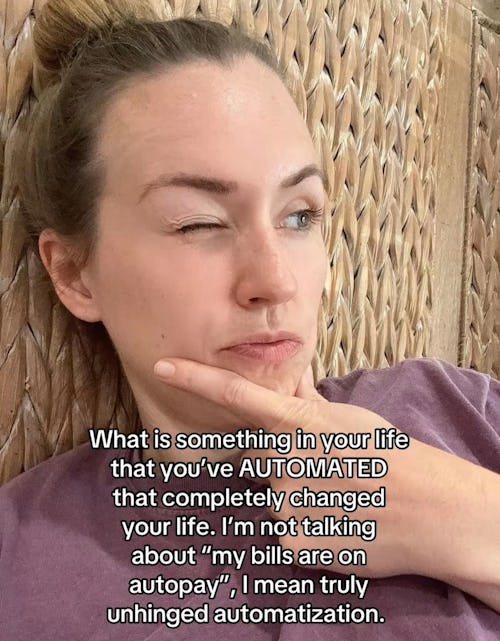
So, when social media personality Jen Hamilton (@_jen_hamilton_ )asked for everyone's most "unhinged automation" hacks, I was all ears. Hamilton was specific too: She wanted crazy ideas. Not just "my bills are on autopay," she wrote as an overlay on the video, but automated ideas that completely changed someone's life.

Over 11,000 comments later, and y’all... some of us are living in the future.

  • Our dishwasher texts our kids when it's done, then turns off their wifi if they don't empty it.
  • I started giving my cats a treat every time I took my meds. Now the cats are the world's most persistent and intense medication reminders.
  • My alarm stops only if I scan a QR code in my bathroom.
  • At the same time every year, I tell my bank I lost my credit card so I get issued a new one. All the scammers and subscriptions I signed up to the year prior will automatically get declined, and I only resign up to the ones I actually want.
  • I made an Apple shortcut that runs once a day automatically and shows me all the photos I took on that day throughout the years. It allows me to slowly clean up all of my photo albums.

And one of the things I loved most was discovering how many people use automation to romanticize their lives. Not all of this has to be about productivity or automating life to aJetsons-esque level. Instead, some people have automation routines built into their lives so they can live the ultra-cozy (and yet still productive) life of their dreams.

  • I hate doing dishes (no dishwasher) and ALL my lights are smart bulbs. So I tell Alexa, 'Time to do the dishes,' and she dims the kitchen to 50% and plays Celtic music so I can pretend to be a Scottish pub owner cleaning up for the night.
  • I have a holiday baking spreadsheet where all my different cookie and treat recipes are programmed. Every November I just have to figure out how many people I'm baking for and then input the number of batches of each recipe I need and then it will calculate exactly how much butter, sugar, etc. I will need to do all of my holiday baking for the season so I only need to go to the grocery store once (and I can budget appropriately to make it all!)
  • I have a one-cup coffee maker next to my bed to make tea. My alarm goes off, I hit the button, go to the bathroom, and hop back in bed to drink my hot tea that was made in 2 mins.

Other automation hacks are literally about making life easier. That's it.

  • I'm sure you mean technology, but I bought 12 pairs of the exact same socks so I never have to match them, and if one gets a hole, I just throw that one out. It's a very satisfying system.
  • Very low tech, but I've borrowed a friend's system of putting a rubber band on any kitchen or bathroom item that I have more of in the pantry. If it has a rubber band, I know I don't need to restock yet. Just move the rubber band to the next one. When I open the last one, the band comes off. Time to restock.
  • Not a huge one, but honestly really helpful — my husband and I have a shared note on our notes app for all our sizes and measurements. If we ever want to order clothes, shoes, rings, suits, you name it! We have all the measurements we need to get the right fit for each other without having to ask. It's amazing for getting gifts and surprises. Just update the measurements if they change!

And some of the sweetest ones are about automating love and friendship. It's not as weird and stiff as it sounds; all of us sometimes need a reminder to reach out to loved ones, right?

  • My dad subscribed to a flower delivery service that automatically sends flowers on birthdays and anniversaries and also on a random date with a note saying, 'Just thinking of you.'
  • When someone I care about loses a loved one, I set a calendar reminder for myself to reach out to them two months later — when most other people have stopped checking in. And I put the death anniversary in my calendar, too.
  • Once a year I buy birthday cards for everyone, friends and family, and address and stamp the envelopes. I keep them in a box filed by month and have a reminder in my phone to drop it in the mail 1-2 weeks before their birthday. No searching for stamps or forgetting to buy a card when things are hectic.

Honestly, it's clear that I could be doing a lot better than random notes in my phone's Notes app and digital calendars I never check. The more unhinged automation, the better I say. Now, time to start finding the holes in my life and an unhinged hack to match...

Friday, August 22, 2025

Just 15 minutes a day keeps the dumb away when you have this app

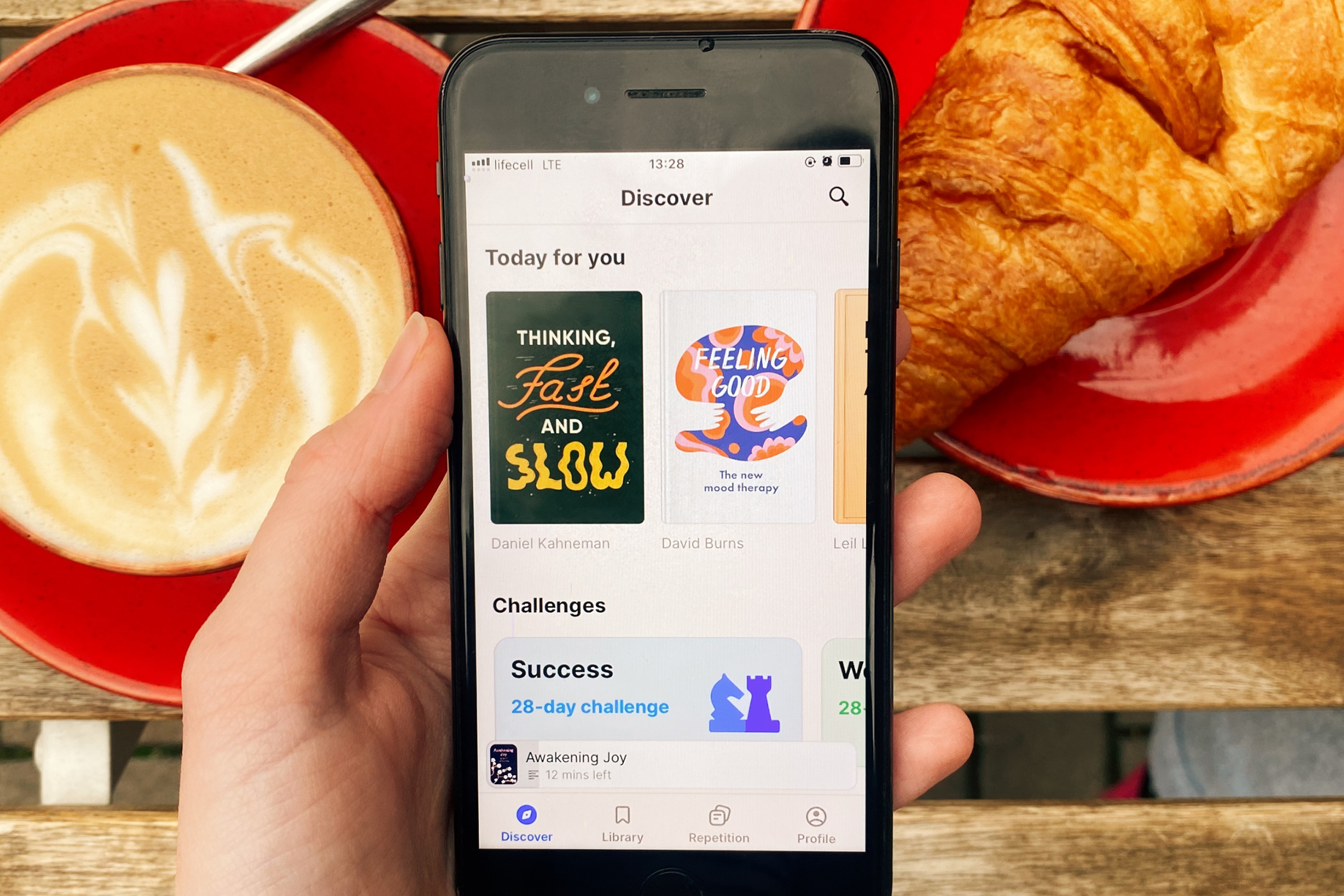
Hey, you - the guy who's weirdly proud of that half-read self-help book on his nightstand. MeetHeadway Premium, the fastest route from "I should read that someday" to "I actually got something done today," all for a one-time payment of only $47.99 (reg. $299.95) with codeREAD20.

Yeah, effective one-lifetime access to a mountain of distilled nonfiction brilliance for less than the cost of two beer orders at your local dive. You're trading subscription hell for something that actually sticks - no more monthly drain or buyer's remorse. The app dishes up15-minute summaries of nonfiction bestsellers, tailored to your ambitions, whether that's bossing up your productivity or leveling up your general life strategy.

What really jazzes this up is the gamified learning vibe. Earn badges. Make progress. Stay competitive…with yourselfIt's like leveling up in life, minus the grinding of some lame RPG.

Want to get your learning on while you mow the lawn or hit the iron? Audio summaries have you covered. Want to absorb wisdom while waiting for your ramen to finish? Read mode has your back. Plus, machine-learned recommendations deliver the right content into your brain just when you need it.

Sure, power users might argue that a 15-minute grab doesn't match Adam Grant's level of nuance, but c'mon, whose life actually has time for that daily? Quick hits still beat zombie-scrolling into oblivion. And with fresh summaries added monthly, Headway stays fresher than your Spotify gym playlist.

So here's the deal: it's a one-time payment with zero renewals and endless brain ammo. Quit the subscriptions, feed your head. Finally, a smart upgrade that's actually fun to brag about.

Don't wait any longer to get your brain in shape. Learn something new every day in 15 minutes when you grab thisHeadway Premium lifetime subscriptionfor just $47.99 (reg. $299.95) when you enter coupon codeREAD20At checkout.

Headway Premium: Lifetime Subscription

See Deal

StackSocialPrices subject to change.

See other items in the shop.

The postJust 15 minutes a day keeps the dumb away when you have this appappeared first onBoing Boing.