Showing posts with label photography. Show all posts

Tuesday, March 10, 2026

Most Stunning Lomography Lens Creations

Featured Image

A Journey with the Lomography Joseph Petzval 80.5mm f1.9

Back in 2014, I had the opportunity to be one of the first reviewers of the Lomography Petzval lenses. They were unique and full of character, as the brand often likes to describe them. While I found some of their quirks annoying, I couldn’t deny the charm they brought. The lens was crafted from brass, had smooth-feeling knobs, and delivered image quality that still stands out today. Some of my best portraits from that time were taken using this lens. I even had to pause myself for a moment while writing this paragraph just to say, “God, Olivia was so beautiful.” When combined with the output the lens produced, I could spend hours looking at the images we created together in Brooklyn’s Park Slope.

Fast forward to 2025, and the Lomography Joseph Petzval 80.5mm f1.9 has arrived in my office as a loaner, with the 35mm f2 model on its way after a purchase. Let me tell you something: this is by far Lomography's most impressive creation yet.

I won't approach this article like a typical review because this isn't a standard lens from Japanese, Chinese, or Korean manufacturers. It's a character lens, and I'm not entirely sure where it's made or manufactured. However, the Lomography Joseph Petzval 80.5mm f1.9 delivers almost everything I desired years ago and brings along some new surprises.

You can still control the shape of the bokeh, and it still features the swirly Petzval look. This time, however, the effect is more controllable, and it remains a manual focus lens. This version is also notably sharp wide open. According to Lomography, the lens is "focus-coupled," which I believe is a bit misleading. To me, that implies it would work alongside the camera's focusing algorithms, similar to many manual focus Zeiss lenses. Instead, Lomography explains that "focus-coupled technology eliminates focus shifts when adjusting bokeh levels."

What I think it should be called is "focus confirmation," which is unfortunately absent in this lens.

The lens is still not weather-resistant, despite its substantial metal construction. In most cases, it feels like an absolute dream to hold, use, and enjoy. Honestly, I don't think I'd ever want to "control" the bokeh. At setting #7, you get all the swirl, and at #1, the swirl is subdued but still present. Changing the aperture affects how the look appears. From my experience, the swirly effect can nearly disappear at around f4. At f2.8, the lens is sharp enough that you shouldn't bother stopping it down if you want to balance the swirl and sharpness.

The only downside is the new process of changing the aperture shape. You have to unscrew a small part at the back of the lens, insert the shaper, and then screw it back in. The problem is that when you reassemble it, the aperture disk tends to spin. More importantly, achieving nice heart-shaped bokeh is challenging.

I also wish Lomography had provided hard-stopped apertures instead of de-clicked ones for video use.

Regarding image quality, in the words of poet Rudy Francisco, "Cupid is irresponsible, and I’m tired of him using me for target practice. If you’re confused by that, then know that I’m in love." Even images where the subject is slightly out of focus look really nice. I won’t lie—getting the focus perfectly sharp is a challenge, similar to using the Zeiss Milvux 85mm f1.4 lens in 2015. When you finally get something in focus, there's a sense of excitement and appreciation for the beauty of the image.

Before I continue, let me recap a bit. I'm legally blind, and manual focus is harder for me, even with focus peaking. Even when using contact lenses that allow me to see 20/18, I still struggled to manually focus this lens and get my subject perfectly in focus. This is common with longer, shallower focal lengths that lack focus confirmation.

The Canon EOS R I tested this lens on had film profiles loaded. Man, I didn't want to edit most of these photos if I got them right in-camera. This lens is that good, making me feel like there was love surrounding me—something I don't typically feel as a journalist. It's been a long time since I've shot with something like this. I usually only experience this feeling with Leica and early 2010s Zeiss lenses.

⭐⭐⭐⭐
Rating: 4 out of 5.

I give the Lomography Joseph Petzval 80.5mm f1.9 lens 4 out of 5 stars. The only things holding it back are the lack of weather resistance and difficulty for people with low vision to focus the lens. As someone who values inclusivity, these aspects are extremely important to me. With global warming becoming a more significant part of daily life, weather resistance is crucial.

Wednesday, December 24, 2025

Top 4 Canon Cameras Before 2015 and the One to Skip

Featured Image

A Look Back at Canon Cameras from Before 2015

Canon has long been a leader in the world of photography, offering a wide range of cameras that cater to both professionals and enthusiasts. While the industry is shifting toward mirrorless technology, there are still some older models from before 2015 that continue to impress today. These cameras have stood the test of time, combining performance, design, and affordability in ways that remain relevant. Whether you're a collector or simply looking for a reliable camera, these models might be worth considering.

Canon G11: A Retro Compact Camera with Strong Performance

The Canon G11 is a compact camera that stands out for its retro design and solid features. It comes equipped with a 10MP CCD sensor, which delivers vibrant colors and good image quality. The camera also includes a DIGIC 4 image processor, a 5x optical zoom lens (28–140mm equivalent, f/2.8–4.5), and a 2.8-inch LCD screen with 461k dots. It supports SD/SDHC memory cards, making it easy to store your photos. The G11 is known for its excellent autofocus, especially when capturing moving subjects. Its on-camera flash performs well, and the overall design makes it a great choice for those who appreciate a classic look.

Canon 5D Mark III: A Cult Classic Among Full-Frame DSLRs

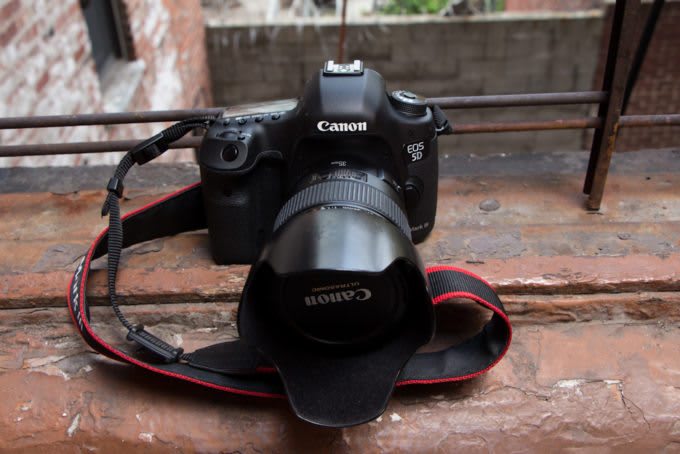
Part of Canon’s popular 5D series, the 5D Mark III is often considered a cult classic. This full-frame DSLR features a 22MP CMOS sensor, 61 autofocus points, and a 10,400-dot LCD screen. It offers an ISO range up to 102,400 and a burst rate of 6 frames per second. The camera is praised for its ergonomics, quieter shutter, and improved autofocus system compared to earlier models. The image quality is exceptional, though some users recommend creating custom color profiles rather than relying on the default settings. With its durable build and versatile performance, the 5D Mark III remains a favorite among many photographers.

Canon G1X Mark II: A Powerful Point-and-Shoot Option

The Canon G1X Mark II is another standout point-and-shoot camera that offers impressive performance for its size. It features a 1.5-inch 12MP CMOS sensor, a DIGIC 6 processor, and a 24–120mm f/2–3.9 lens. The camera also supports HD video recording at 30fps, a 5.2fps burst rate, and 14-bit RAW files. Despite its compact form factor, the G1X Mark II delivers sharp images, good controls, and strong high ISO performance. Many users have praised its portability and image quality, calling it a sign that Canon may be returning to innovation after years of stagnation.

Canon 7D Mark II: A High-Performance APS-C DSLR

The Canon 7D Mark II is a powerful APS-C DSLR that caters to advanced photographers. It features a 20MP sensor, 65 autofocus points, and an ISO range up to 51,200. The camera also includes a dual DIGIC 6 imaging processor, a 10fps burst rate, and a 1.04M dot LCD screen. It offers excellent autofocus tracking, a fast burst rate, and weather sealing, making it ideal for action and outdoor photography. The 7D Mark II is known for its robust build and versatility, making it a top choice for professionals and serious amateurs.

Canon 70D: A Versatile APS-C Camera

The Canon 70D is another strong offering from Canon’s APS-C lineup. It features a 20MP sensor, 19 autofocus points, and a 1.04 million dot LCD screen. The camera supports ISO up to 25,600, AF sensitivity down to -3 EV, and full HD video recording at 30fps. It also offers a 7fps burst rate, making it suitable for capturing fast-moving subjects. While the sensor may not be the latest, the 70D excels in live view autofocus, build quality, and low-light performance. It’s a well-rounded camera that delivers excellent results for a wide range of photography styles.

One to Skip: Canon G7X

While the Canon G7X is a compact camera with a 1-inch 20MP sensor and a 4.2x optical zoom lens, it falls short in some key areas. The camera lacks sufficient control dials and doesn’t feel like a traditional G-series device. Its sensor is also less capable compared to other models in the lineup. While it may appeal to casual users, more serious photographers may find it lacking in terms of ergonomics and image quality. For those seeking a more capable point-and-shoot, alternatives like the G1X Mark II would be a better choice.

Top 4 Canon Cameras Before 2015 and the One to Skip

Featured Image

A Look Back at Canon Cameras from Before 2015

Canon has long been a leader in the world of photography, offering a wide range of cameras that cater to both professionals and enthusiasts. While the industry is shifting toward mirrorless technology, there are still some older models from before 2015 that continue to impress today. These cameras have stood the test of time, combining performance, design, and affordability in ways that remain relevant. Whether you're a collector or simply looking for a reliable camera, these models might be worth considering.

Canon G11: A Retro Compact Camera with Strong Performance

The Canon G11 is a compact camera that stands out for its retro design and solid features. It comes equipped with a 10MP CCD sensor, which delivers vibrant colors and good image quality. The camera also includes a DIGIC 4 image processor, a 5x optical zoom lens (28–140mm equivalent, f/2.8–4.5), and a 2.8-inch LCD screen with 461k dots. It supports SD/SDHC memory cards, making it easy to store your photos. The G11 is known for its excellent autofocus, especially when capturing moving subjects. Its on-camera flash performs well, and the overall design makes it a great choice for those who appreciate a classic look.

Canon 5D Mark III: A Cult Classic Among Full-Frame DSLRs

Part of Canon’s popular 5D series, the 5D Mark III is often considered a cult classic. This full-frame DSLR features a 22MP CMOS sensor, 61 autofocus points, and a 10,400-dot LCD screen. It offers an ISO range up to 102,400 and a burst rate of 6 frames per second. The camera is praised for its ergonomics, quieter shutter, and improved autofocus system compared to earlier models. The image quality is exceptional, though some users recommend creating custom color profiles rather than relying on the default settings. With its durable build and versatile performance, the 5D Mark III remains a favorite among many photographers.

Canon G1X Mark II: A Powerful Point-and-Shoot Option

The Canon G1X Mark II is another standout point-and-shoot camera that offers impressive performance for its size. It features a 1.5-inch 12MP CMOS sensor, a DIGIC 6 processor, and a 24–120mm f/2–3.9 lens. The camera also supports HD video recording at 30fps, a 5.2fps burst rate, and 14-bit RAW files. Despite its compact form factor, the G1X Mark II delivers sharp images, good controls, and strong high ISO performance. Many users have praised its portability and image quality, calling it a sign that Canon may be returning to innovation after years of stagnation.

Canon 7D Mark II: A High-Performance APS-C DSLR

The Canon 7D Mark II is a powerful APS-C DSLR that caters to advanced photographers. It features a 20MP sensor, 65 autofocus points, and an ISO range up to 51,200. The camera also includes a dual DIGIC 6 imaging processor, a 10fps burst rate, and a 1.04M dot LCD screen. It offers excellent autofocus tracking, a fast burst rate, and weather sealing, making it ideal for action and outdoor photography. The 7D Mark II is known for its robust build and versatility, making it a top choice for professionals and serious amateurs.

Canon 70D: A Versatile APS-C Camera

The Canon 70D is another strong offering from Canon’s APS-C lineup. It features a 20MP sensor, 19 autofocus points, and a 1.04 million dot LCD screen. The camera supports ISO up to 25,600, AF sensitivity down to -3 EV, and full HD video recording at 30fps. It also offers a 7fps burst rate, making it suitable for capturing fast-moving subjects. While the sensor may not be the latest, the 70D excels in live view autofocus, build quality, and low-light performance. It’s a well-rounded camera that delivers excellent results for a wide range of photography styles.

One to Skip: Canon G7X

While the Canon G7X is a compact camera with a 1-inch 20MP sensor and a 4.2x optical zoom lens, it falls short in some key areas. The camera lacks sufficient control dials and doesn’t feel like a traditional G-series device. Its sensor is also less capable compared to other models in the lineup. While it may appeal to casual users, more serious photographers may find it lacking in terms of ergonomics and image quality. For those seeking a more capable point-and-shoot, alternatives like the G1X Mark II would be a better choice.

Saturday, August 30, 2025

The Beauty of Classic, Pre-Smartphone Photography

Featured Image

The Evolution of Photography: From Analog to Smartphones

In an age where smartphones have become an integral part of daily life, it's easy to overlook the positive changes they've brought to our world. One area where their impact has been particularly notable is in the realm of photography, especially when it comes to capturing holiday memories. The digital era has transformed how we document our lives, making high-quality images more accessible than ever before.

While there are certainly downsides to this technological advancement—such as the overcrowding of popular spots due to the desire for the perfect shot and the occasional mishaps caused by overzealous photographers—there’s no denying that smartphones have revolutionized the way we take and share photos. Today, anyone with a smartphone can capture professional-grade images, thanks to continuous improvements in camera technology and artificial intelligence. For instance, Google's latest AI-powered camera phone features a "camera coach" that guides users on how to compose their shots, ensuring better results even for those without formal training.

The concept of progress often involves refining and enhancing existing technologies. This principle is evident in the evolution of photography itself. Looking back at the past, we can see how far we’ve come. Consider my grandfather’s old photograph album, which contains a visual chronicle of his life from 1909. These images, though valuable, are far from perfect. The class photo of his primary school shows a blurred teacher’s face, and the wedding picture features a group of around 50 people, many of whom are out of focus. Even the most cherished moments, like a gull flying behind my mother’s shoulders in a holiday snap, would be edited to highlight the child and remove the background figures if captured today.

Despite these imperfections, some people argue that the charm of pre-smartphone photographs lies in their authenticity. In his book The Family Silver, Michael Collins, a former picture editor of the Telegraph Magazine, highlights the appeal of amateur color slides, noting that their unassuming nature makes them compelling. Similarly, Dutch designer Erik Kessels, who collects found photographs, believes that flaws and imperfections add to the beauty of these images, suggesting that there is something uniquely human in the imperfection of analog photos.

My own collection of photographs spans both the analog and digital eras. While the latter offers vastly superior quality, I find myself less engaged with them, overwhelmed by the sheer volume of images. However, there are two black-and-white photographs on my bookcase that hold special significance: my grandfather’s school photo and a picture of my son taken by his godmother. Both are flawed, yet they carry a certain beauty that resonates with me.

As we continue to embrace the advancements in photography, it's worth reflecting on what we might be losing in the pursuit of perfection. While smartphones have undoubtedly made capturing memories easier and more accessible, there is still a place for the imperfect, the raw, and the authentic. After all, it's these qualities that often make the most meaningful connections.

The Beauty of Classic, Pre-Smartphone Photography

Featured Image

The Evolution of Photography: From Analog to Smartphones

In an age where smartphones have become an integral part of daily life, it's easy to overlook the positive changes they've brought to our world. One area where their impact has been particularly notable is in the realm of photography, especially when it comes to capturing holiday memories. The digital era has transformed how we document our lives, making high-quality images more accessible than ever before.

While there are certainly downsides to this technological advancement—such as the overcrowding of popular spots due to the desire for the perfect shot and the occasional mishaps caused by overzealous photographers—there’s no denying that smartphones have revolutionized the way we take and share photos. Today, anyone with a smartphone can capture professional-grade images, thanks to continuous improvements in camera technology and artificial intelligence. For instance, Google's latest AI-powered camera phone features a "camera coach" that guides users on how to compose their shots, ensuring better results even for those without formal training.

The concept of progress often involves refining and enhancing existing technologies. This principle is evident in the evolution of photography itself. Looking back at the past, we can see how far we’ve come. Consider my grandfather’s old photograph album, which contains a visual chronicle of his life from 1909. These images, though valuable, are far from perfect. The class photo of his primary school shows a blurred teacher’s face, and the wedding picture features a group of around 50 people, many of whom are out of focus. Even the most cherished moments, like a gull flying behind my mother’s shoulders in a holiday snap, would be edited to highlight the child and remove the background figures if captured today.

Despite these imperfections, some people argue that the charm of pre-smartphone photographs lies in their authenticity. In his book The Family Silver, Michael Collins, a former picture editor of the Telegraph Magazine, highlights the appeal of amateur color slides, noting that their unassuming nature makes them compelling. Similarly, Dutch designer Erik Kessels, who collects found photographs, believes that flaws and imperfections add to the beauty of these images, suggesting that there is something uniquely human in the imperfection of analog photos.

My own collection of photographs spans both the analog and digital eras. While the latter offers vastly superior quality, I find myself less engaged with them, overwhelmed by the sheer volume of images. However, there are two black-and-white photographs on my bookcase that hold special significance: my grandfather’s school photo and a picture of my son taken by his godmother. Both are flawed, yet they carry a certain beauty that resonates with me.

As we continue to embrace the advancements in photography, it's worth reflecting on what we might be losing in the pursuit of perfection. While smartphones have undoubtedly made capturing memories easier and more accessible, there is still a place for the imperfect, the raw, and the authentic. After all, it's these qualities that often make the most meaningful connections.

Wednesday, August 27, 2025

The Beauty of Classic, Pre-Smartphone Photography

Featured Image

The Evolution of Photography: From Analog to Smartphones

In an age where smartphones have become an integral part of daily life, it's easy to overlook the positive changes they've brought to our world. One area where their impact has been particularly notable is in the realm of photography, especially when it comes to capturing holiday memories. The digital era has transformed how we document our lives, making high-quality images more accessible than ever before.

While there are certainly downsides to this technological advancement—such as the overcrowding of popular spots due to the desire for the perfect shot and the occasional mishaps caused by overzealous photographers—there’s no denying that smartphones have revolutionized the way we take and share photos. Today, anyone with a smartphone can capture professional-grade images, thanks to continuous improvements in camera technology and artificial intelligence. For instance, Google's latest AI-powered camera phone features a "camera coach" that guides users on how to compose their shots, ensuring better results even for those without formal training.

The concept of progress often involves refining and enhancing existing technologies. This principle is evident in the evolution of photography itself. Looking back at the past, we can see how far we’ve come. Consider my grandfather’s old photograph album, which contains a visual chronicle of his life from 1909. These images, though valuable, are far from perfect. The class photo of his primary school shows a blurred teacher’s face, and the wedding picture features a group of around 50 people, many of whom are out of focus. Even the most cherished moments, like a gull flying behind my mother’s shoulders in a holiday snap, would be edited to highlight the child and remove the background figures if captured today.

Despite these imperfections, some people argue that the charm of pre-smartphone photographs lies in their authenticity. In his book The Family Silver, Michael Collins, a former picture editor of the Telegraph Magazine, highlights the appeal of amateur color slides, noting that their unassuming nature makes them compelling. Similarly, Dutch designer Erik Kessels, who collects found photographs, believes that flaws and imperfections add to the beauty of these images, suggesting that there is something uniquely human in the imperfection of analog photos.

My own collection of photographs spans both the analog and digital eras. While the latter offers vastly superior quality, I find myself less engaged with them, overwhelmed by the sheer volume of images. However, there are two black-and-white photographs on my bookcase that hold special significance: my grandfather’s school photo and a picture of my son taken by his godmother. Both are flawed, yet they carry a certain beauty that resonates with me.

As we continue to embrace the advancements in photography, it's worth reflecting on what we might be losing in the pursuit of perfection. While smartphones have undoubtedly made capturing memories easier and more accessible, there is still a place for the imperfect, the raw, and the authentic. After all, it's these qualities that often make the most meaningful connections.

Saturday, August 23, 2025

Film Friday: Step inside the history of Hollywood's movie cameras in this museum tour

This Film Friday, we're taking a look at film in the cinema world. The Tested Team YouTube channel has produced two videos touring the American Society of Cinematographers museum. Emmy Award-winning cinematographer, director and producer Steve Gainer is the curator of the museum, and takes the host of the show through the museum, discussing some of the cameras that are on display.

Gainer has an incredible wealth of information about the cameras, sharing in-depth information on how the cameras work, how and when they were used and more. He starts the first video, above, with a 1890 Lumière camera, which was essentially an all-in-one camera system that Gainer says still works today.

The video also tells stories about the problems with the original wooden cinema cameras and how bugs loved the glue used to hold them together. Gainer says that cinematographers would wake up a day after arriving at a shoot in the jungle to discover their camera in pieces because the bugs ate all the glue. The Bell Howell 2709 camera was a big step forward since it had a metal body. The model that the museum has on display was purchased in 1918 by Harry Warner and was used to shoot Warner Bros.' first motion picture.

If the above video isn't enough fun information for you, there's also a second episode looking at even more cameras, this time large-format ones.

The museum has the large-format Todd-AO cinema camera that was used to shoot The Sound of Music and Cleopatra. Gainer walks through how it works and why large-format film came about. He explains that it was an answer to people staying home to watch TV since they were only seeing small, square pictures. The wide format provided something new that viewers couldn't get at home.

Both episodes are absolutely fascinating, with an incredible amount of information and history shared. It's clear how knowledgeable and passionate Gainer is, and the museum has quite the collection of items from cinema history. If you're interested in old cameras, history or cinema (and especially all three), they are well worth a watch.

Nikon's amazing new Z 24-70mm f/2.8 S II has FIVE times faster autofocus!

Nikon has announced a successor to itsZ 24-70mm f/2.8 SPro-level standard zoom lens, and the headline specs sound incredible. The Nikon Z 24-70mm f/2.8 S II boasts an astonishing 5x faster autofocus, compared to the previous version of the lens – which was no slouch itself. Other tricks up its sleeve include a fully internal zoom for the first time in a professional 24-70mm full-frame lens, an 11-bladed aperture for ultra-smooth bokeh, and a declickable control ring. It’s also the lightest lens in its class, weighing in at just 675g.

The lens has been completely redesigned, with a new S-line optical path that uses fewer elements to greater effect, including dual-sided aspherical lens elements and ED glass that not only lightens the overall weight but also enables a fully internal zoom mechanism. This, in turn, means that as the lens barrel no longer extends or retracts through the zoom range, the center of balance remains consistent for easier handheld shooting and no need to rebalance the lens if using a gimbal. The internal zoom also exposes fewer moving parts, and along with robust weather sealing, keeps dust, dirt, and moisture at bay.

Focus breathing is minimized for more natural transitions, and the closest focus distance has been reduced to 0.24m at 24mm and 0.33m at 70mm. Maximum magnification is 0.21x at 24mm and 0.32x at 70mm. There's also a focus-limit switch to limit the focus distance to 0.33m across the zoom range for a consistent working distance at all focal lengths. Meso Amorphous Coat is said to offer the best anti-reflection performance in Nikon history, while ARNEO Coat effectively suppresses ghosting and flare, resulting in crystal-clear images.

It is the first zoom lens to feature a multi-focusing system based on Nikon’s Silky Swift Voice Coil Motor (SSVCM), which enables faster, quieter, and more accurate autofocus performance across the zoom range. The result is 5x faster and 50% quieter autofocus, plus focus tracking that is 60% quicker when zooming.

Nikon Z 24-70mm f/2.8 S II sample images

A rounded 11-blade aperture that produces more well-defined, rounder, and smoothly graded circular bokeh when the aperture is stopped down. The control ring is now de-clickable; setting it to click on provides tactile feedback, which is useful when shooting stills, while turning it off gives smooth, silent, stepless operation, which is a must for video.

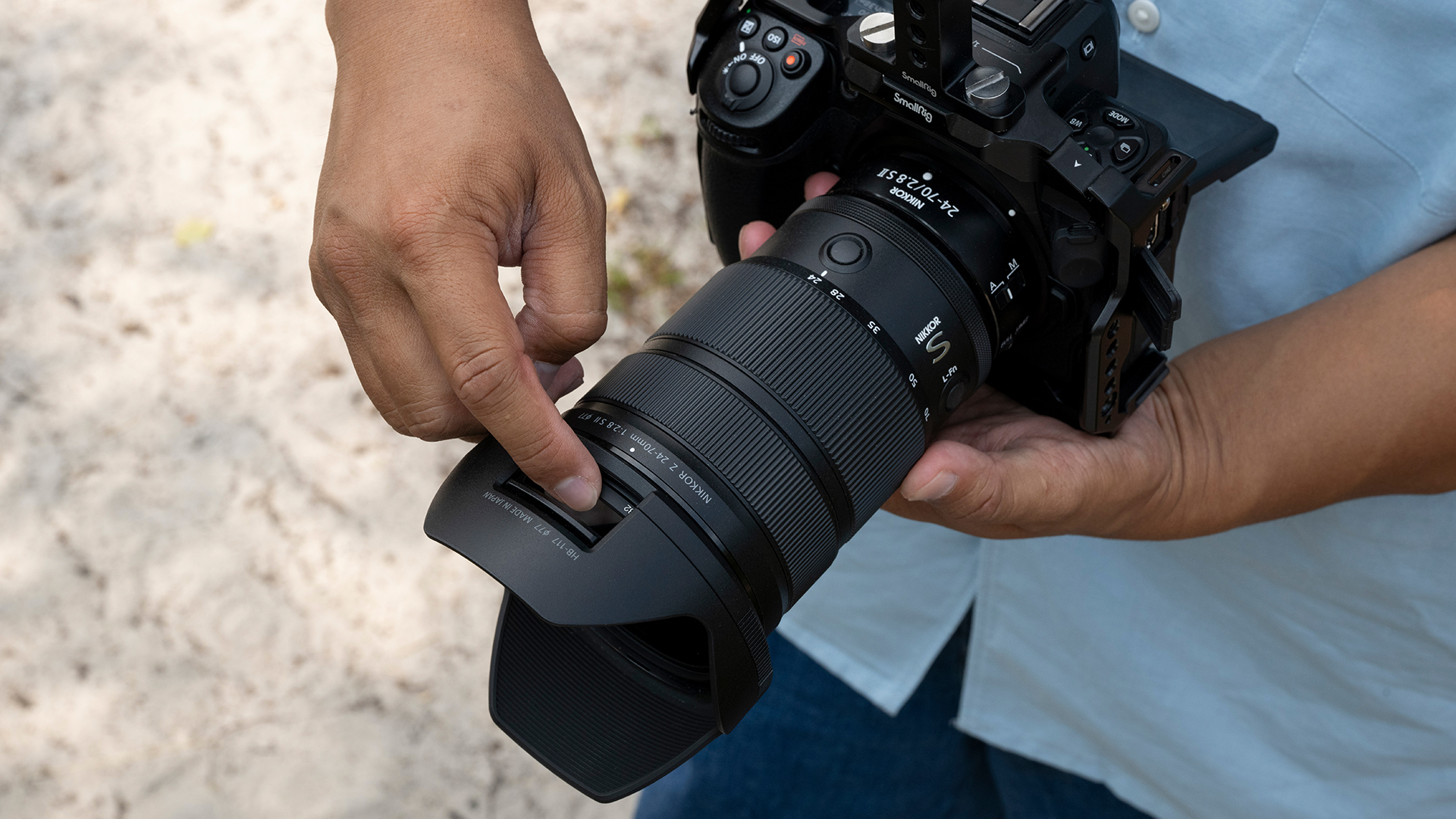
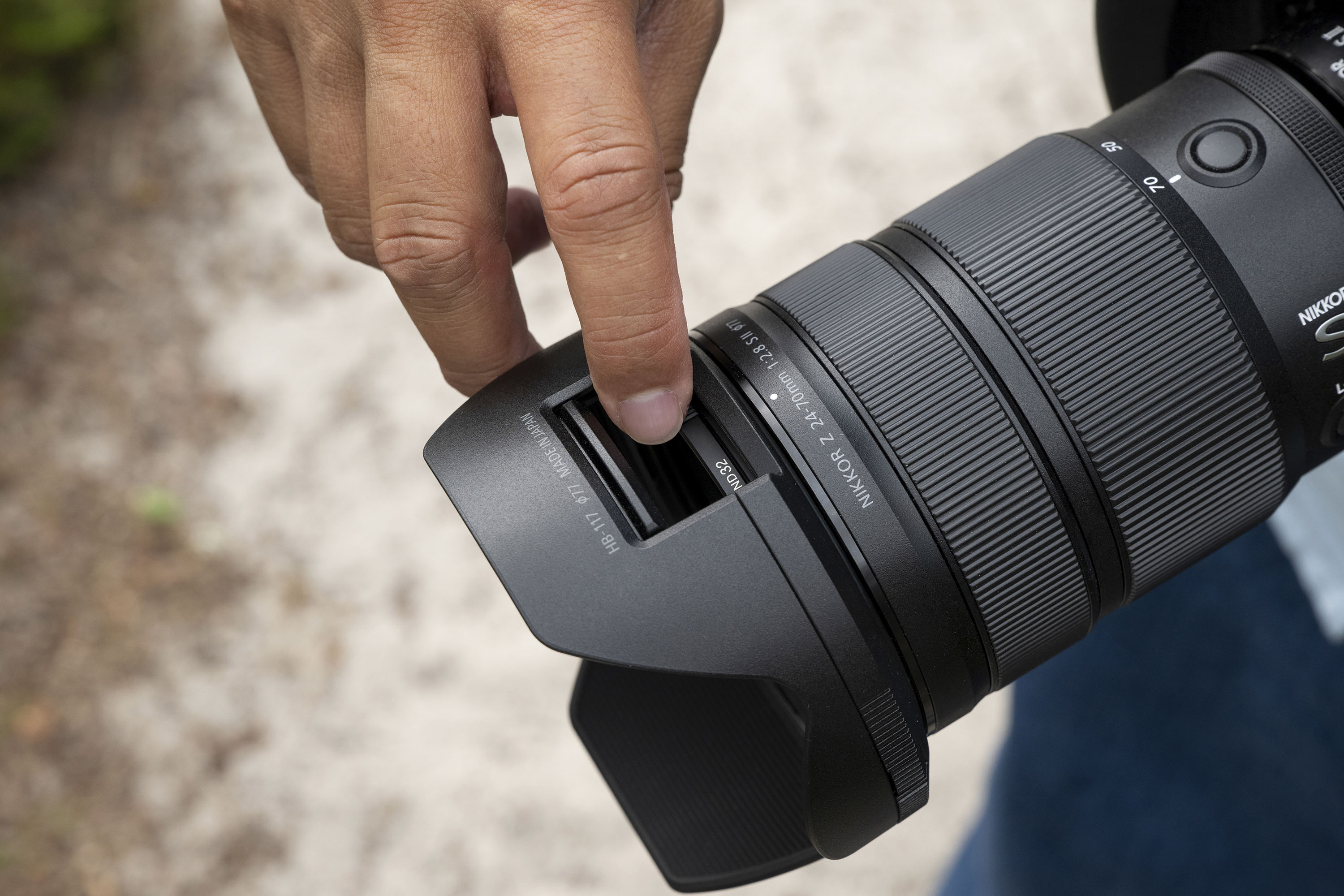
It also comes with a new lens hood, HB-117, which has a filter adjustment window, so there's no need to remove the hood when using rotating filters, which is convenient when using variable ND filters for video or polarizers for stills. The filter thread is 77mm.

As you might expect, all these high-end features don't come cheap. Priced at $2,799.95 / £2,599 / AU$4,599.95, the Nikon Z 24-70mm f/2.8 S II is purely for deep-pocketed professional photographers. It will be available from mid-September.

It sounds like a truly groundbreaking lens that redefines the standards of a standard zoom, but we will reserve judgment until we get it into our labs for testing. It also raises the question of whether we'll see second-generation versions of Nikon's other 'holy trinity' zooms, theNikon Z 70-200mm f/2.8 VR Stelephoto zoom and theNikon Z 14-24mm f/2.8 Sultra-wide. Stay tuned!

The Nikon Z 24-70mm f/2.8 S II is available for pre-order from these retailers:

🇺🇸 Nikon Z 24-70mm f/2.8 S II at B&H (US)

🇬🇧 Nikon Z 24-70mm f/2.8 S II at Wex (UK)

🇦🇺Nikon Z 24-70mm f/2.8 S II at Ted's Cameras (Aus)

Meanwhile, the original Z 24-70mm f/2.8 S remains an excellent, top-quality professional lens, and is sure to drop in price as retailers prepare for its successor, so see if you can pick it up at a bargain price!

Check out our guides to thebest Nikon Z-mount lenses, andbest lenses for the Nikon Z8 and Z9

Like this article? For more stories like this, follow us on MSN by clicking the +Follow button at the top of this page.

I've relied on the Nikon 24-70mm f/2.8 pro lens for years – now the new mark II version surpasses it in every way and I have to upgrade.

  • Nikon's 24-70mm f/2.8 S II lens is the lightest of its kind.
  • The second-gen model costs $2,799.95 / £2,599 / AU$4,599.95
  • It is available from mid-September

Years back, when I upgraded from aNikon DSLR camera to a mirrorless model, theZ6 II, I also paid for the24-70mm f/2.8 S Pro lens. I had it in mind to buy additional lenses when I could afford them, like an 85mm prime, but the versatile zoom is so good that it ended up being my only Z-mount lens for years.

During that time, I completed countless paid gigs with the 24-70mm. It beggars belief, therefore, that Nikon's new mark II version of the lens – its first second-gen Z-mount lens – betters the original model in virtually every regard.

The Nikon Z 24-70mm f/2.8 S II features a redesigned lens construction, 11-blade aperture and new autofocus motor, all of which combine for a lighter, faster and supposedly optically sharper package, complete with unique features in this class.

Naturally, the latest lens is more expensive than the original model – it costs $2,799.95 / £2,599 / AU$4,599.95 and will be available from mid-September. The mark I version on sale can be had for around 30% less, and I expect its current price to drop further.

However, the improvements in the new model have convinced me that I need to upgrade. Let's take a look at how it improves my current 24-70mm f/2.8.

  • 🇺🇸Buy the Nikon Z 24-70mm f/2.8 S II atB&H Photo for $2,796.95
  • 🇬🇧In the UK, it's£2,599 at WEX
  • 🇦🇺Meanwhile in Australia,Ted Cameras is selling the lens for AU$4,599.95

Why I'm going to upgrade to the Nikon Z 24-70mm f/2.8 S II

Nikon says the new Z 24-70mm f/2.8 S II is the lightest in its class, weighing just 23.8oz / 675g (compared to 28.4oz / 805g for the original model). I haven't held it yet, but I'm sure it will feel better balanced with my Z6 II, especially over long shoot days.

It's also the only such lens to feature an internal zoom – meaning that the lens barrel remains fixed as you zoom in and out (the lens barrel of the original model and other 24-70mm f/2.8 zooms extend and retract as you move through the zoom range).

An internal zoom means the balance of the lens remains unchanged as you zoom, plus it reduces exposure to moving parts. Together with weather sealing, I expect dust and dirt to stay out – this looks like a particularly robust lens.

The Mark II version is also said to be 50% quieter and 5x faster in autofocus compared to the original, thanks to a new and exotically named Silky Swift Voice Coil Motor. Not that my 24-70mm is slow – far from it – but any improvement in autofocus speed is welcome.

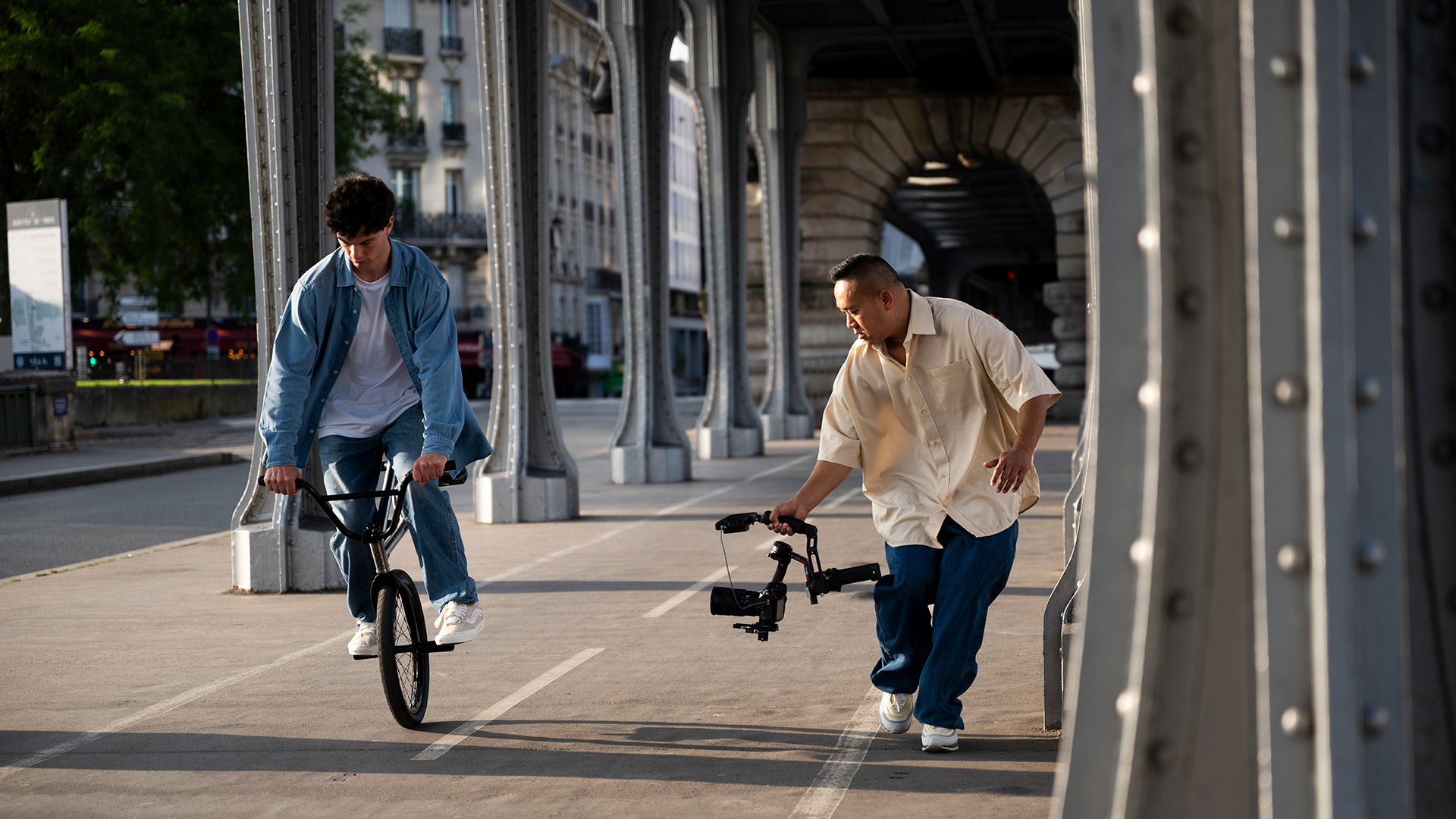
Suppressed focus breathing and a de-clickable control ring – which can be used for aperture – are also featured, making the 24-70mm f/2.8 S II a more suitable lens for video.

And Nikon says the new lens is optically sharper than the original version. Again, my lens is extremely sharp, but the new version sounds like prime lens quality at any setting of its zoom and aperture range.

A neat addition is the supplied lens hood with its filter window - you can slide the window open for easy access to lens filters without needing to remove the hood. That's a handy feature when using variable ND filters, which I often use for video.

All in all, the upgrades are comprehensive. And given that the original 24-70mm works so well for me already, I'm looking at upgrading to the new version rather than buying a new, different one.

I hope to get my hands on the new 24-70mm f/2.8 soon to see just how good it is in practice.

You might also like

  • Best Nikon Z Lenses 2025: the finest glass for your Nikon Z-series camera
  • I took this Nikon super-telephoto lens on a dream safari trip - and learned a big lesson about pro primes
  • Nikon's first f/1.4 lens for Z-mount is the classic that street photographers have been waiting for, and it's surprisingly affordable

Like this article? For more stories like this, follow us on MSN by clicking the +Follow button at the top of this page.

Friday, August 22, 2025

One of the Greatest Digital Cameras Nikon Made

One of the Greatest Digital Cameras Nikon Made

In 2010, I was still in my first year of starting the Phoblographer. And with a background in photojournalism and weddings, I tried to review high-end camera gear. At the time, the camera world was very split between three major DSLR options. The first was the Canon 5D Mk II and its higher end options — which so many photographers loved for the extra capabilities it offered with video and everything else. Then there was the Sony a900, which offered more megapixels and the chance to keep using your older Minolta lenses. But perhaps the king of the time would have been the Nikon D3s. With a 12MP sensor and a world where we didn't need a lot of detail because the web hadn't embraced it yet, this camera was incredible in many different ways. The autofocus worked, the dynamic range improved, the high ISO output was designed to reach ranges that no others dared, etc. And above all, it's still being used by photographers today.

I can tell you while looking back now atmy reviewthat I didn't like this camera, but I respected it. Today, it can be obtained for aGood price. There are several factors for this. For starters, I needed and wanted more megapixels for cropping. I, like many other photographers, fell victim to the idea that we have endlessly post-process our photos to make them better. While on the other hand, the D3s embraced the idea of getting it right in-camera more than anything else.

Additionally, back then the Phoblographer didn’t have the best relationship with Nikon. This has always affected our reviews as often it can make us think that the company is trying to hide something. And for me and the site’s other reviewers, this always seems really odd.

And indeed, it did have issues for the time. This camera only shot 720p video, for example. But the 5D Mk II shot 1080p. During this time, video was the bigger thing that brands and publications were starting to ask for more and more. Today, they often ask for video. But they also know and acknowledge how really solid photography can be a great replacement.

If 12MP is all you need, then this is still one of the single best cameras that you can get on the market. Nothing really like it came around until Sony launched theSony a9in 2017.

And this is why it's worth talking about: since the beginning of digital photography, the brands have pretty much always been playing catch-up with each other. For another example, Sony launched theSony a7r IVIn 2017, but the only other company to use a full-frame sensor with that many megapixels is Leica. And at this point, we're nearly a decade away from the launch.

In the end, if you happen to be holding onto a very good older digital camera, know that it's most likely going to last you around a decade or so. You really don't need to upgrade unless it's truly necessary.