Showing posts with label photographers. Show all posts

Tuesday, March 10, 2026

Most Stunning Lomography Lens Creations

Featured Image

A Journey with the Lomography Joseph Petzval 80.5mm f1.9

Back in 2014, I had the opportunity to be one of the first reviewers of the Lomography Petzval lenses. They were unique and full of character, as the brand often likes to describe them. While I found some of their quirks annoying, I couldn’t deny the charm they brought. The lens was crafted from brass, had smooth-feeling knobs, and delivered image quality that still stands out today. Some of my best portraits from that time were taken using this lens. I even had to pause myself for a moment while writing this paragraph just to say, “God, Olivia was so beautiful.” When combined with the output the lens produced, I could spend hours looking at the images we created together in Brooklyn’s Park Slope.

Fast forward to 2025, and the Lomography Joseph Petzval 80.5mm f1.9 has arrived in my office as a loaner, with the 35mm f2 model on its way after a purchase. Let me tell you something: this is by far Lomography's most impressive creation yet.

I won't approach this article like a typical review because this isn't a standard lens from Japanese, Chinese, or Korean manufacturers. It's a character lens, and I'm not entirely sure where it's made or manufactured. However, the Lomography Joseph Petzval 80.5mm f1.9 delivers almost everything I desired years ago and brings along some new surprises.

You can still control the shape of the bokeh, and it still features the swirly Petzval look. This time, however, the effect is more controllable, and it remains a manual focus lens. This version is also notably sharp wide open. According to Lomography, the lens is "focus-coupled," which I believe is a bit misleading. To me, that implies it would work alongside the camera's focusing algorithms, similar to many manual focus Zeiss lenses. Instead, Lomography explains that "focus-coupled technology eliminates focus shifts when adjusting bokeh levels."

What I think it should be called is "focus confirmation," which is unfortunately absent in this lens.

The lens is still not weather-resistant, despite its substantial metal construction. In most cases, it feels like an absolute dream to hold, use, and enjoy. Honestly, I don't think I'd ever want to "control" the bokeh. At setting #7, you get all the swirl, and at #1, the swirl is subdued but still present. Changing the aperture affects how the look appears. From my experience, the swirly effect can nearly disappear at around f4. At f2.8, the lens is sharp enough that you shouldn't bother stopping it down if you want to balance the swirl and sharpness.

The only downside is the new process of changing the aperture shape. You have to unscrew a small part at the back of the lens, insert the shaper, and then screw it back in. The problem is that when you reassemble it, the aperture disk tends to spin. More importantly, achieving nice heart-shaped bokeh is challenging.

I also wish Lomography had provided hard-stopped apertures instead of de-clicked ones for video use.

Regarding image quality, in the words of poet Rudy Francisco, "Cupid is irresponsible, and I’m tired of him using me for target practice. If you’re confused by that, then know that I’m in love." Even images where the subject is slightly out of focus look really nice. I won’t lie—getting the focus perfectly sharp is a challenge, similar to using the Zeiss Milvux 85mm f1.4 lens in 2015. When you finally get something in focus, there's a sense of excitement and appreciation for the beauty of the image.

Before I continue, let me recap a bit. I'm legally blind, and manual focus is harder for me, even with focus peaking. Even when using contact lenses that allow me to see 20/18, I still struggled to manually focus this lens and get my subject perfectly in focus. This is common with longer, shallower focal lengths that lack focus confirmation.

The Canon EOS R I tested this lens on had film profiles loaded. Man, I didn't want to edit most of these photos if I got them right in-camera. This lens is that good, making me feel like there was love surrounding me—something I don't typically feel as a journalist. It's been a long time since I've shot with something like this. I usually only experience this feeling with Leica and early 2010s Zeiss lenses.

⭐⭐⭐⭐
Rating: 4 out of 5.

I give the Lomography Joseph Petzval 80.5mm f1.9 lens 4 out of 5 stars. The only things holding it back are the lack of weather resistance and difficulty for people with low vision to focus the lens. As someone who values inclusivity, these aspects are extremely important to me. With global warming becoming a more significant part of daily life, weather resistance is crucial.


Saturday, August 30, 2025

The Beauty of Classic, Pre-Smartphone Photography

Featured Image

The Evolution of Photography: From Analog to Smartphones

In an age where smartphones have become an integral part of daily life, it's easy to overlook the positive changes they've brought to our world. One area where their impact has been particularly notable is in the realm of photography, especially when it comes to capturing holiday memories. The digital era has transformed how we document our lives, making high-quality images more accessible than ever before.

While there are certainly downsides to this technological advancement—such as the overcrowding of popular spots due to the desire for the perfect shot and the occasional mishaps caused by overzealous photographers—there’s no denying that smartphones have revolutionized the way we take and share photos. Today, anyone with a smartphone can capture professional-grade images, thanks to continuous improvements in camera technology and artificial intelligence. For instance, Google's latest AI-powered camera phone features a "camera coach" that guides users on how to compose their shots, ensuring better results even for those without formal training.

The concept of progress often involves refining and enhancing existing technologies. This principle is evident in the evolution of photography itself. Looking back at the past, we can see how far we’ve come. Consider my grandfather’s old photograph album, which contains a visual chronicle of his life from 1909. These images, though valuable, are far from perfect. The class photo of his primary school shows a blurred teacher’s face, and the wedding picture features a group of around 50 people, many of whom are out of focus. Even the most cherished moments, like a gull flying behind my mother’s shoulders in a holiday snap, would be edited to highlight the child and remove the background figures if captured today.

Despite these imperfections, some people argue that the charm of pre-smartphone photographs lies in their authenticity. In his book The Family Silver, Michael Collins, a former picture editor of the Telegraph Magazine, highlights the appeal of amateur color slides, noting that their unassuming nature makes them compelling. Similarly, Dutch designer Erik Kessels, who collects found photographs, believes that flaws and imperfections add to the beauty of these images, suggesting that there is something uniquely human in the imperfection of analog photos.

My own collection of photographs spans both the analog and digital eras. While the latter offers vastly superior quality, I find myself less engaged with them, overwhelmed by the sheer volume of images. However, there are two black-and-white photographs on my bookcase that hold special significance: my grandfather’s school photo and a picture of my son taken by his godmother. Both are flawed, yet they carry a certain beauty that resonates with me.

As we continue to embrace the advancements in photography, it's worth reflecting on what we might be losing in the pursuit of perfection. While smartphones have undoubtedly made capturing memories easier and more accessible, there is still a place for the imperfect, the raw, and the authentic. After all, it's these qualities that often make the most meaningful connections.

The Beauty of Classic, Pre-Smartphone Photography

Featured Image

The Evolution of Photography: From Analog to Smartphones

In an age where smartphones have become an integral part of daily life, it's easy to overlook the positive changes they've brought to our world. One area where their impact has been particularly notable is in the realm of photography, especially when it comes to capturing holiday memories. The digital era has transformed how we document our lives, making high-quality images more accessible than ever before.

While there are certainly downsides to this technological advancement—such as the overcrowding of popular spots due to the desire for the perfect shot and the occasional mishaps caused by overzealous photographers—there’s no denying that smartphones have revolutionized the way we take and share photos. Today, anyone with a smartphone can capture professional-grade images, thanks to continuous improvements in camera technology and artificial intelligence. For instance, Google's latest AI-powered camera phone features a "camera coach" that guides users on how to compose their shots, ensuring better results even for those without formal training.

The concept of progress often involves refining and enhancing existing technologies. This principle is evident in the evolution of photography itself. Looking back at the past, we can see how far we’ve come. Consider my grandfather’s old photograph album, which contains a visual chronicle of his life from 1909. These images, though valuable, are far from perfect. The class photo of his primary school shows a blurred teacher’s face, and the wedding picture features a group of around 50 people, many of whom are out of focus. Even the most cherished moments, like a gull flying behind my mother’s shoulders in a holiday snap, would be edited to highlight the child and remove the background figures if captured today.

Despite these imperfections, some people argue that the charm of pre-smartphone photographs lies in their authenticity. In his book The Family Silver, Michael Collins, a former picture editor of the Telegraph Magazine, highlights the appeal of amateur color slides, noting that their unassuming nature makes them compelling. Similarly, Dutch designer Erik Kessels, who collects found photographs, believes that flaws and imperfections add to the beauty of these images, suggesting that there is something uniquely human in the imperfection of analog photos.

My own collection of photographs spans both the analog and digital eras. While the latter offers vastly superior quality, I find myself less engaged with them, overwhelmed by the sheer volume of images. However, there are two black-and-white photographs on my bookcase that hold special significance: my grandfather’s school photo and a picture of my son taken by his godmother. Both are flawed, yet they carry a certain beauty that resonates with me.

As we continue to embrace the advancements in photography, it's worth reflecting on what we might be losing in the pursuit of perfection. While smartphones have undoubtedly made capturing memories easier and more accessible, there is still a place for the imperfect, the raw, and the authentic. After all, it's these qualities that often make the most meaningful connections.

Wednesday, August 27, 2025

The Beauty of Classic, Pre-Smartphone Photography

Featured Image

The Evolution of Photography: From Analog to Smartphones

In an age where smartphones have become an integral part of daily life, it's easy to overlook the positive changes they've brought to our world. One area where their impact has been particularly notable is in the realm of photography, especially when it comes to capturing holiday memories. The digital era has transformed how we document our lives, making high-quality images more accessible than ever before.

While there are certainly downsides to this technological advancement—such as the overcrowding of popular spots due to the desire for the perfect shot and the occasional mishaps caused by overzealous photographers—there’s no denying that smartphones have revolutionized the way we take and share photos. Today, anyone with a smartphone can capture professional-grade images, thanks to continuous improvements in camera technology and artificial intelligence. For instance, Google's latest AI-powered camera phone features a "camera coach" that guides users on how to compose their shots, ensuring better results even for those without formal training.

The concept of progress often involves refining and enhancing existing technologies. This principle is evident in the evolution of photography itself. Looking back at the past, we can see how far we’ve come. Consider my grandfather’s old photograph album, which contains a visual chronicle of his life from 1909. These images, though valuable, are far from perfect. The class photo of his primary school shows a blurred teacher’s face, and the wedding picture features a group of around 50 people, many of whom are out of focus. Even the most cherished moments, like a gull flying behind my mother’s shoulders in a holiday snap, would be edited to highlight the child and remove the background figures if captured today.

Despite these imperfections, some people argue that the charm of pre-smartphone photographs lies in their authenticity. In his book The Family Silver, Michael Collins, a former picture editor of the Telegraph Magazine, highlights the appeal of amateur color slides, noting that their unassuming nature makes them compelling. Similarly, Dutch designer Erik Kessels, who collects found photographs, believes that flaws and imperfections add to the beauty of these images, suggesting that there is something uniquely human in the imperfection of analog photos.

My own collection of photographs spans both the analog and digital eras. While the latter offers vastly superior quality, I find myself less engaged with them, overwhelmed by the sheer volume of images. However, there are two black-and-white photographs on my bookcase that hold special significance: my grandfather’s school photo and a picture of my son taken by his godmother. Both are flawed, yet they carry a certain beauty that resonates with me.

As we continue to embrace the advancements in photography, it's worth reflecting on what we might be losing in the pursuit of perfection. While smartphones have undoubtedly made capturing memories easier and more accessible, there is still a place for the imperfect, the raw, and the authentic. After all, it's these qualities that often make the most meaningful connections.

Saturday, August 23, 2025

I've relied on the Nikon 24-70mm f/2.8 pro lens for years – now the new mark II version surpasses it in every way and I have to upgrade.

  • Nikon's 24-70mm f/2.8 S II lens is the lightest of its kind.
  • The second-gen model costs $2,799.95 / £2,599 / AU$4,599.95
  • It is available from mid-September

Years back, when I upgraded from aNikon DSLR camera to a mirrorless model, theZ6 II, I also paid for the24-70mm f/2.8 S Pro lens. I had it in mind to buy additional lenses when I could afford them, like an 85mm prime, but the versatile zoom is so good that it ended up being my only Z-mount lens for years.

During that time, I completed countless paid gigs with the 24-70mm. It beggars belief, therefore, that Nikon's new mark II version of the lens – its first second-gen Z-mount lens – betters the original model in virtually every regard.

The Nikon Z 24-70mm f/2.8 S II features a redesigned lens construction, 11-blade aperture and new autofocus motor, all of which combine for a lighter, faster and supposedly optically sharper package, complete with unique features in this class.

Naturally, the latest lens is more expensive than the original model – it costs $2,799.95 / £2,599 / AU$4,599.95 and will be available from mid-September. The mark I version on sale can be had for around 30% less, and I expect its current price to drop further.

However, the improvements in the new model have convinced me that I need to upgrade. Let's take a look at how it improves my current 24-70mm f/2.8.

  • 🇺🇸Buy the Nikon Z 24-70mm f/2.8 S II atB&H Photo for $2,796.95
  • 🇬🇧In the UK, it's£2,599 at WEX
  • 🇦🇺Meanwhile in Australia,Ted Cameras is selling the lens for AU$4,599.95

Why I'm going to upgrade to the Nikon Z 24-70mm f/2.8 S II

Nikon says the new Z 24-70mm f/2.8 S II is the lightest in its class, weighing just 23.8oz / 675g (compared to 28.4oz / 805g for the original model). I haven't held it yet, but I'm sure it will feel better balanced with my Z6 II, especially over long shoot days.

It's also the only such lens to feature an internal zoom – meaning that the lens barrel remains fixed as you zoom in and out (the lens barrel of the original model and other 24-70mm f/2.8 zooms extend and retract as you move through the zoom range).

An internal zoom means the balance of the lens remains unchanged as you zoom, plus it reduces exposure to moving parts. Together with weather sealing, I expect dust and dirt to stay out – this looks like a particularly robust lens.

The Mark II version is also said to be 50% quieter and 5x faster in autofocus compared to the original, thanks to a new and exotically named Silky Swift Voice Coil Motor. Not that my 24-70mm is slow – far from it – but any improvement in autofocus speed is welcome.

Suppressed focus breathing and a de-clickable control ring – which can be used for aperture – are also featured, making the 24-70mm f/2.8 S II a more suitable lens for video.

And Nikon says the new lens is optically sharper than the original version. Again, my lens is extremely sharp, but the new version sounds like prime lens quality at any setting of its zoom and aperture range.

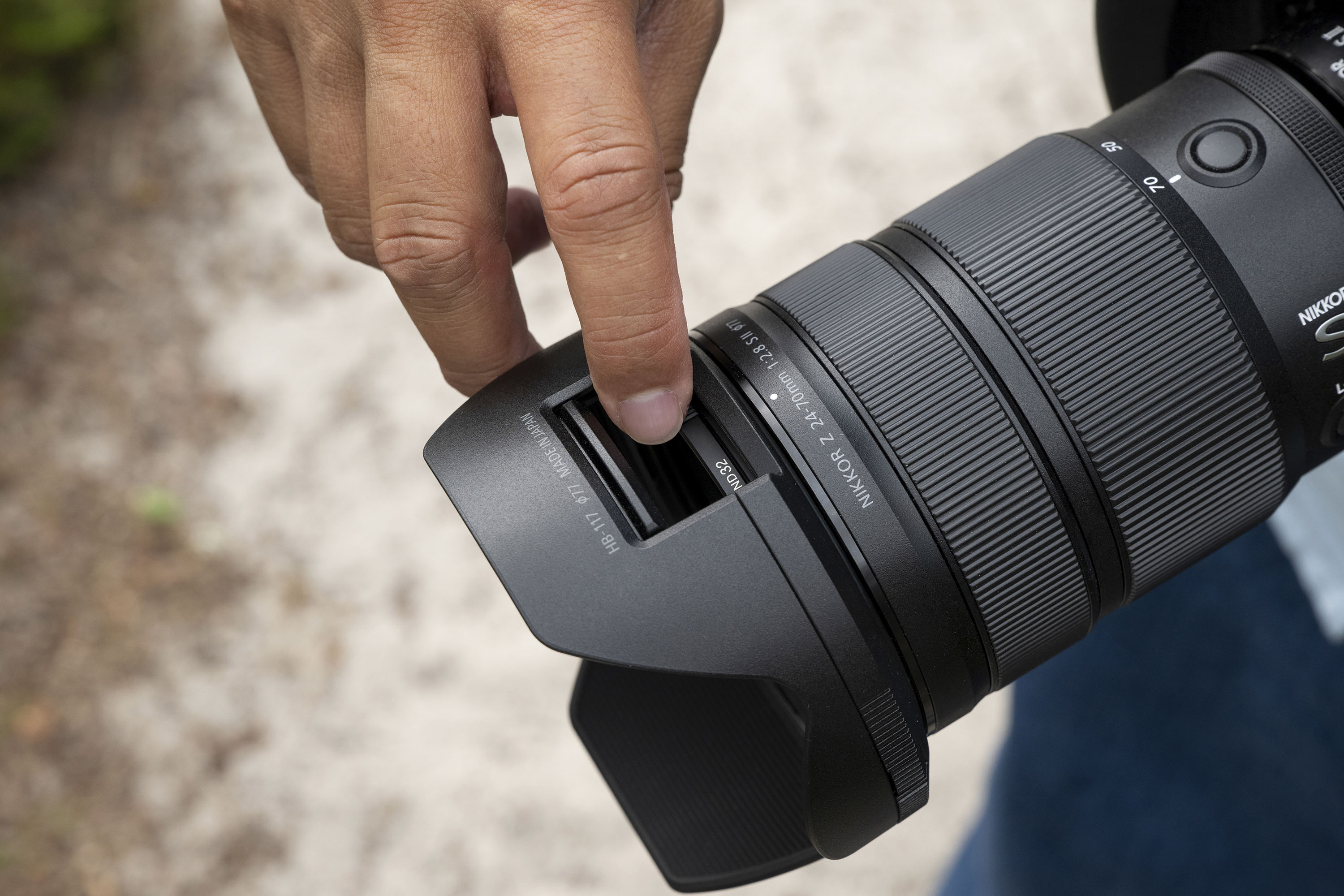
A neat addition is the supplied lens hood with its filter window - you can slide the window open for easy access to lens filters without needing to remove the hood. That's a handy feature when using variable ND filters, which I often use for video.

All in all, the upgrades are comprehensive. And given that the original 24-70mm works so well for me already, I'm looking at upgrading to the new version rather than buying a new, different one.

I hope to get my hands on the new 24-70mm f/2.8 soon to see just how good it is in practice.

You might also like

  • Best Nikon Z Lenses 2025: the finest glass for your Nikon Z-series camera
  • I took this Nikon super-telephoto lens on a dream safari trip - and learned a big lesson about pro primes
  • Nikon's first f/1.4 lens for Z-mount is the classic that street photographers have been waiting for, and it's surprisingly affordable

Like this article? For more stories like this, follow us on MSN by clicking the +Follow button at the top of this page.

The 4 Best Zoom Lenses From 2021, and The One to Skip

Zoom lenses are important for many types of users. Whether you are into architecture, portraiture, weddings, events, or wildlife photography, a zoom lens can allow you to get closer to a scene and capture the details you need. Today, we decided to look at some of the best options launched in 2021, which may seem old, but aren't that far away. They will cost less, and they certainly are of the best quality. Here's a quick look at your favorites.

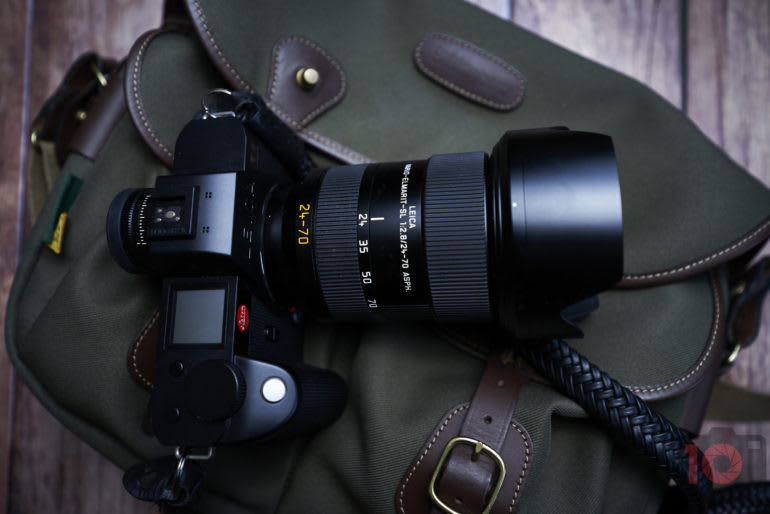
Leica 24-70mm f2.8 SL

TheLeica 24-70mmis designed for the SL series cameras. The lens features19 elements in 15 groups, including3 aspherical elementss and 11 aperture blades. The optics feature IP-rated water resistance, have an 88mm diameter, weigh 906g, and have a minimum focusing distance of 18cm. Some of the things it is good at are lightweight, fast focusing, good colors, and versatility. As we said in our review, "So why would you buy the Leica 24-70mm f2.8 SL? You're getting the best of many worlds. The autofocus is very reliable and usable for photojournalistic situations."

Buy now

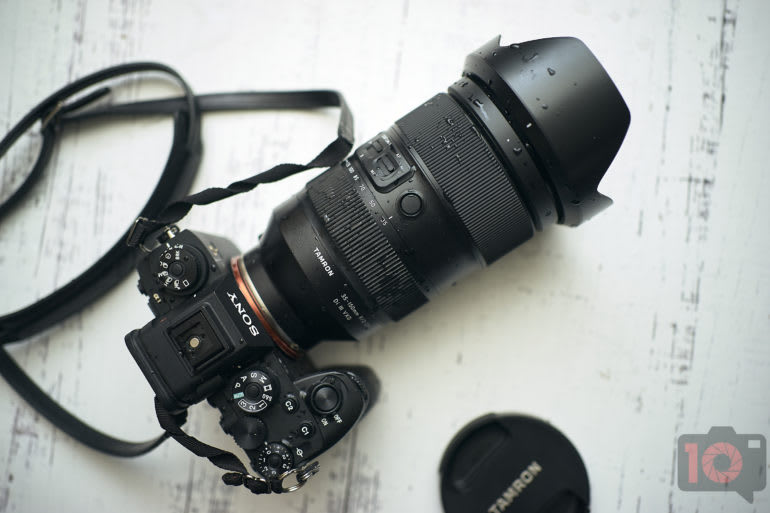
Tamron 35-150mm f2-2.8 Di III VXD

TheTamron 35-150mm f2-2.8is perfect for Sony users. It has a 9-rounded aperture, 21 elements in 15 groups, including 3 aspherical elements and 4 Low Dispersion elements, and an 82-mm filter thread. Other features include a magnification ratio of 1:5.7 on the 35mm and 1:5.9 on the 150mm, as well as a minimum object diameter of 13 inches wide and 33.5 inches on the telephoto side. This is also the world’s first lens with a USB port built into the lens directly. The pros include beautiful image quality, the autofocus works perfectly with Sony cameras, the weather sealing is great, and it is built very well. This lens is perfect for portraits, events, landscapes,Photojournalism, and more.

Buy Now

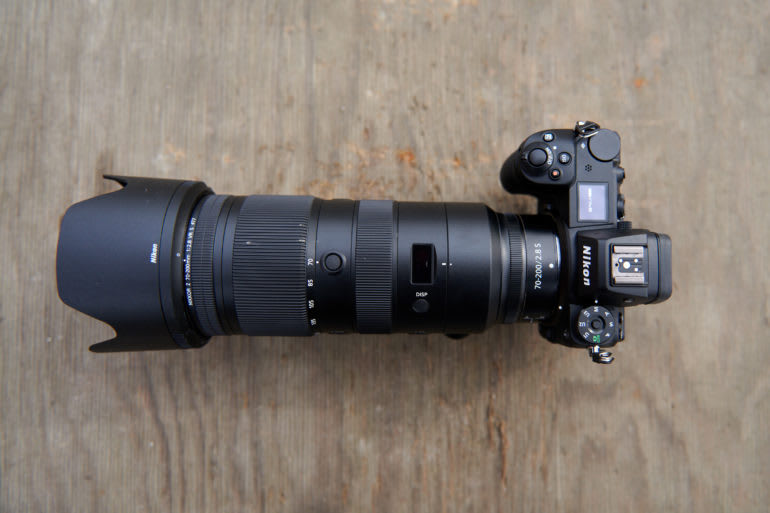
Nikon 70-200mm F2.8 VR S

The NIkon 70-200mm f2.8 VR Sis one of the zoom lenses that features 21 elements in 18 groups, a 9-bladed diaphragm, and a 0.2x reproduction ratio. It also has 6 ED glass elements, an STM stepping motor, and a minimum focusing distance of 1.64ft at the wide angle and 3.28ft at the telephoto end. The lens offers excellent bokeh, color, sharpness, and character. It has great controls, a good info panel, great autofocus, is weather sealed, and has great stabilisation. As we said in our review, “I wouldn’t hesitate to use this lens for portraits, weddings (excluding a dark dance floor, which the Z bodies don’t yet do well), or not-so-distant wildlife. I don’t yet recommend the Z bodies for sports, but this lens will still grab some good keepers with fast action.”

Buy now

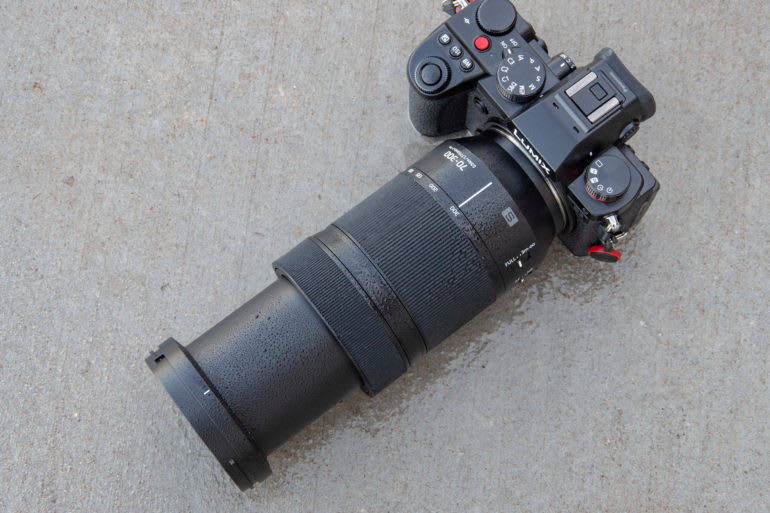
Panasonic 70-300mm Lumix S f4.5-5.6 Macro OIS

ThePanasonic zoom lensis designed for full-frame cameras and uses 17 elements in 11 groups, including 2 ED, 1 UED, and 1 UHR element. It also has 0.5x magnification at 300mm, 5.5 stops of image stabilization, and an 11-bladed aperture design. The lens is lightweight, easy to use, has sharpness and offers great colors, autofocus, and has a fun ‘macro’ mode. As we said in the review, “The Panasonic 70-300mm f4.5-5.6 is a solid option for L mount users who want or need a capable telephoto lens for wildlife, birding, landscapes, outdoor sports, and more.”

Buy Now

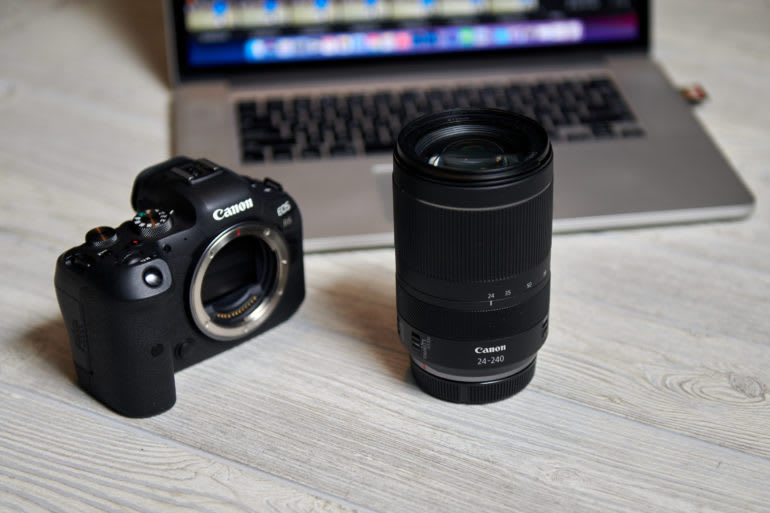
The One to Avoid: Canon RF 24-240mm

TheCanon RFis a 5x zoom lens and features a minimum focusing distance of 1.64ft at the wide angle and 2.56ft at the telephoto end. There are 21 elements in 15 groups, including 1 aspherical lens, 2 UD lenses, and 7 aperture blades, along with 5 stops of image stabilization. While there is versatility and ease of use, the lens certainly has serious barrel distortion, aberration, and vignetting. In addition, you get soft edges, a slower autofocus, and a lack of weather sealing. As we said in our review, "If image quality is paramount and you are working with a pro-level RF body, save some more cash and opt for something like the Canon RF 70-200mm f4 IS USM L instead."