Showing posts with label nvidia. Show all posts

Saturday, December 27, 2025

Nvidia RTX 50 Super GPU: All the Latest Rumors Unveiled

Featured Image

The Rumored Arrival of Nvidia GeForce RTX 50 SUPER GPUs

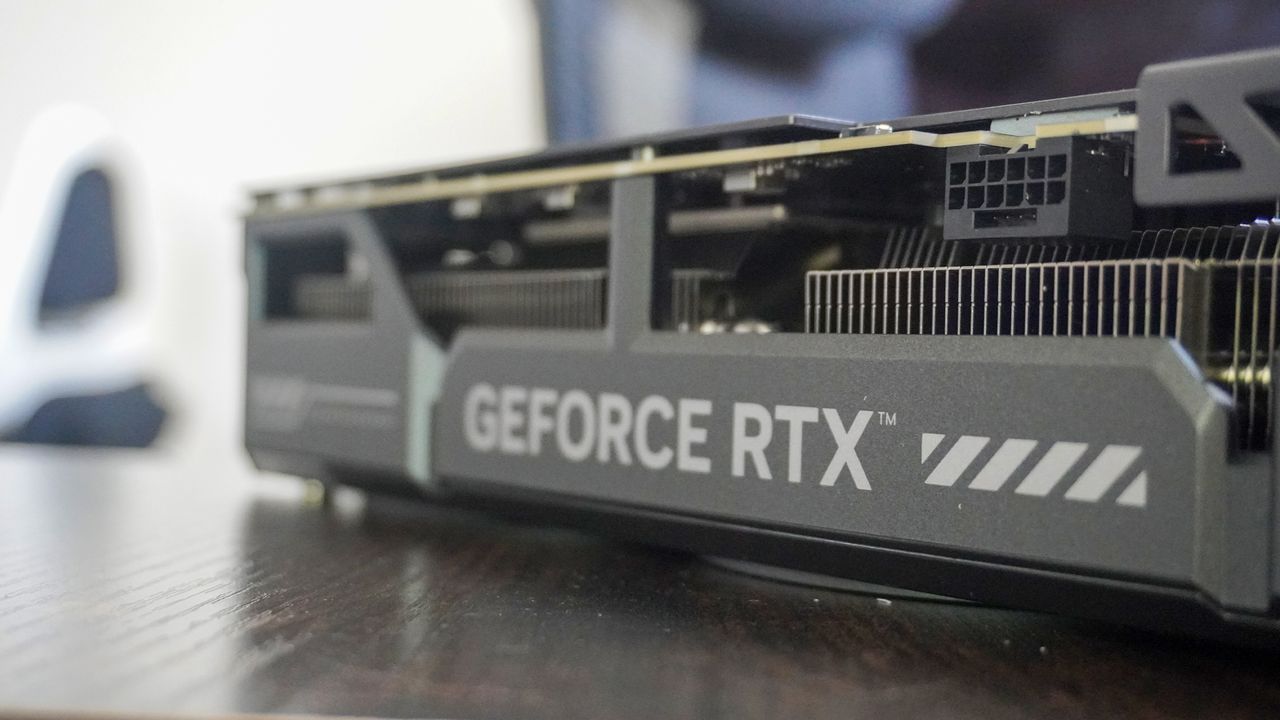
Nvidia's latest GeForce RTX 50-series graphics cards have already made their way into the market, but it seems they might not be around for long. Reports suggest that a new line of GPUs—referred to as the RTX 50 SUPER series—is already in the works. This includes models such as the RTX 5080 SUPER, RTX 5070 Ti SUPER, and RTX 5070 SUPER. These upgrades are expected to bring significant improvements, particularly in terms of performance and memory capacity.

The RTX 5070 Ti has already impressed many users with its capabilities, but the rumored enhancements to the RTX 5080 and RTX 5070 would be highly welcomed. One of the most anticipated changes is the increase in video memory (VRAM), which could address some of the concerns raised by gamers about the current generation’s limitations.

Expected Release Date for the RTX 50 SUPER Series

Although the original RTX 50-series was launched at the start of 2025, there are growing rumors that the SUPER versions may arrive before the end of the year. Some reports suggest that these GPUs could be announced during the fourth quarter of 2025, potentially between October and December. If this timeline holds, it would mean the release occurs just before CES 2026, which is scheduled for early January 2026.

This potential release window is unusual, as previous SUPER series models typically launch about a year after the base models. For example, the RTX 5080 was released on January 30, followed by the RTX 5070 Ti in February and the RTX 5070 in March. If the SUPER series follows this pattern, the release would be much sooner than usual.

Some sources suggest that the RTX 50 SUPER series could even be announced at CES 2025, possibly alongside a new CPU from Nvidia. However, other reports indicate that the release might still occur in 2025, making it difficult to predict exactly when the cards will hit the market.

Anticipated Specifications for the RTX 50 SUPER GPUs

Rumors surrounding the specs of the RTX 50 SUPER series are already circulating, and they point to significant improvements. According to a well-known leaker, Kopite7kimi, the RTX 5080 SUPER, RTX 5070 Ti SUPER, and RTX 5070 SUPER are expected to feature more CUDA cores, higher TGP (Total Graphics Power), and notably, increased VRAM.

Here’s a comparison of the rumored specs:

| GPU | CUDA Cores | Video Memory | TGP | |----------------------|------------|--------------|---------| | RTX 5080 SUPER | 10752 | 24GB GDDR7 | 415W | | RTX 5080 | 10752 | 16GB GDDR7 | 360W | | RTX 5070 Ti SUPER | 8960 | 24GB GDDR7 | 350W | | RTX 5070 Ti | 8960 | 16GB GDDR7 | 300W | | RTX 5070 SUPER | 6400 | 18GB GDDR7 | 275W | | RTX 5070 | 6144 | 12GB GDDR7 | 250W |

These upgrades are expected to make a big difference, especially for high-end gaming. Many modern titles, such as Cyberpunk 2077, Alan Wake 2, and Indiana Jones and the Great Circle, require substantial VRAM to run smoothly at higher resolutions like 4K. With the addition of more memory, the RTX 50 SUPER series could offer a better experience for gamers who want to push their systems to the limit.

Are the RTX 50 SUPER GPUs Worth the Wait?

For those who haven’t yet upgraded to the RTX 50-series, waiting for the SUPER version could be a smart move. The additional VRAM and potential performance boosts could provide a noticeable improvement over the base models. However, pricing remains a concern. While previous SUPER series cards were often priced lower than their base counterparts, the current market for RTX 50-series GPUs has seen prices exceed MSRP.

If the trend continues, the RTX 50 SUPER series may also come with a premium price tag. That said, the extra features and performance could justify the cost for serious gamers looking for the best possible experience.

In conclusion, the RTX 50 SUPER series appears to be an exciting development for the gaming community. Whether it’s worth the wait depends on individual needs and budget, but one thing is clear: the next generation of Nvidia GPUs is coming, and it promises to deliver more power and performance than ever before.

Nvidia RTX 50 Super GPU: All the Latest Rumors Unveiled

Featured Image

The Rumored Arrival of Nvidia GeForce RTX 50 SUPER GPUs

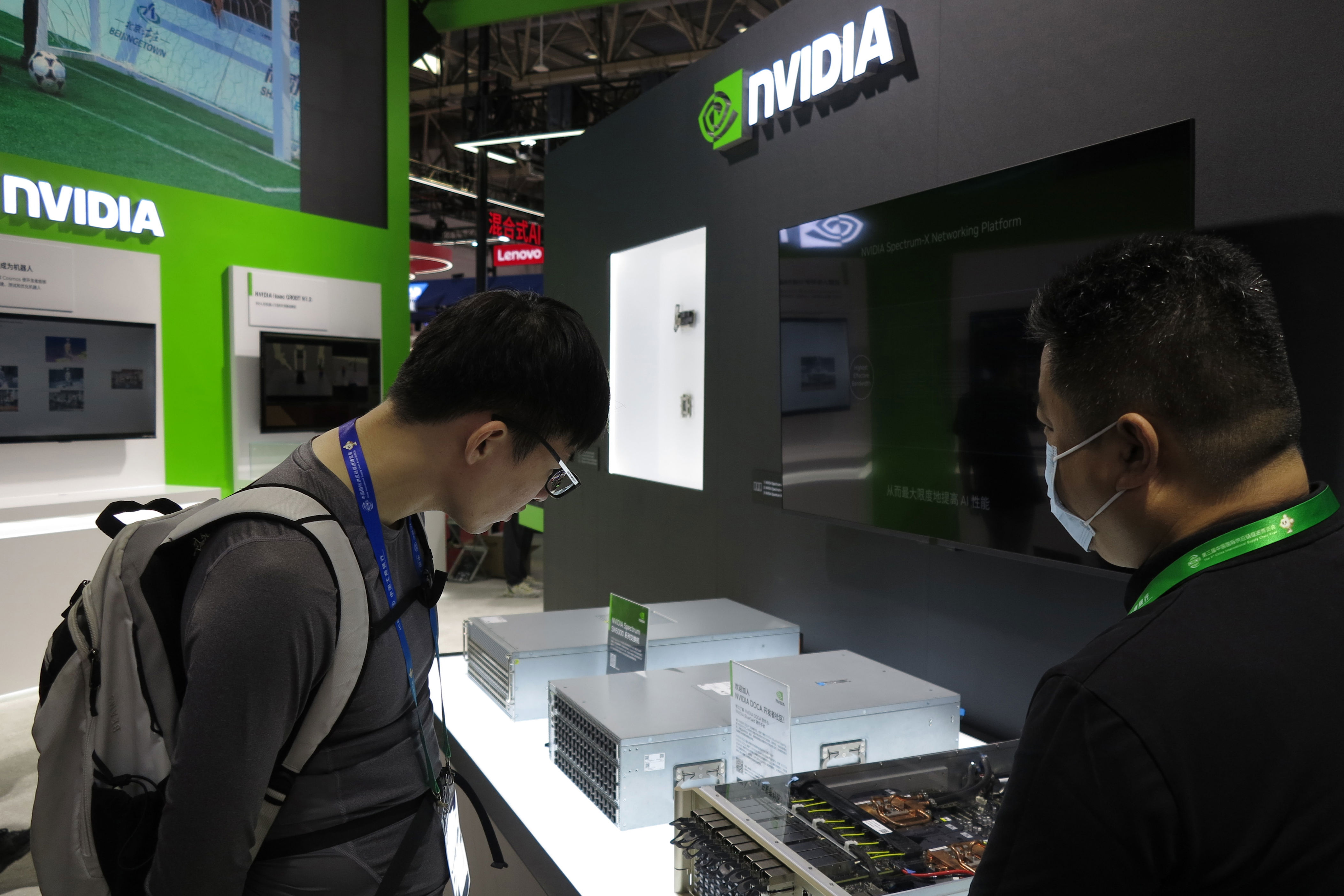
Nvidia's latest GeForce RTX 50-series graphics cards have already made their way into the market, but it seems they might not be around for long. Reports suggest that a new line of GPUs—referred to as the RTX 50 SUPER series—is already in the works. This includes models such as the RTX 5080 SUPER, RTX 5070 Ti SUPER, and RTX 5070 SUPER. These upgrades are expected to bring significant improvements, particularly in terms of performance and memory capacity.

The RTX 5070 Ti has already impressed many users with its capabilities, but the rumored enhancements to the RTX 5080 and RTX 5070 would be highly welcomed. One of the most anticipated changes is the increase in video memory (VRAM), which could address some of the concerns raised by gamers about the current generation’s limitations.

Expected Release Date for the RTX 50 SUPER Series

Although the original RTX 50-series was launched at the start of 2025, there are growing rumors that the SUPER versions may arrive before the end of the year. Some reports suggest that these GPUs could be announced during the fourth quarter of 2025, potentially between October and December. If this timeline holds, it would mean the release occurs just before CES 2026, which is scheduled for early January 2026.

This potential release window is unusual, as previous SUPER series models typically launch about a year after the base models. For example, the RTX 5080 was released on January 30, followed by the RTX 5070 Ti in February and the RTX 5070 in March. If the SUPER series follows this pattern, the release would be much sooner than usual.

Some sources suggest that the RTX 50 SUPER series could even be announced at CES 2025, possibly alongside a new CPU from Nvidia. However, other reports indicate that the release might still occur in 2025, making it difficult to predict exactly when the cards will hit the market.

Anticipated Specifications for the RTX 50 SUPER GPUs

Rumors surrounding the specs of the RTX 50 SUPER series are already circulating, and they point to significant improvements. According to a well-known leaker, Kopite7kimi, the RTX 5080 SUPER, RTX 5070 Ti SUPER, and RTX 5070 SUPER are expected to feature more CUDA cores, higher TGP (Total Graphics Power), and notably, increased VRAM.

Here’s a comparison of the rumored specs:

| GPU | CUDA Cores | Video Memory | TGP | |----------------------|------------|--------------|---------| | RTX 5080 SUPER | 10752 | 24GB GDDR7 | 415W | | RTX 5080 | 10752 | 16GB GDDR7 | 360W | | RTX 5070 Ti SUPER | 8960 | 24GB GDDR7 | 350W | | RTX 5070 Ti | 8960 | 16GB GDDR7 | 300W | | RTX 5070 SUPER | 6400 | 18GB GDDR7 | 275W | | RTX 5070 | 6144 | 12GB GDDR7 | 250W |

These upgrades are expected to make a big difference, especially for high-end gaming. Many modern titles, such as Cyberpunk 2077, Alan Wake 2, and Indiana Jones and the Great Circle, require substantial VRAM to run smoothly at higher resolutions like 4K. With the addition of more memory, the RTX 50 SUPER series could offer a better experience for gamers who want to push their systems to the limit.

Are the RTX 50 SUPER GPUs Worth the Wait?

For those who haven’t yet upgraded to the RTX 50-series, waiting for the SUPER version could be a smart move. The additional VRAM and potential performance boosts could provide a noticeable improvement over the base models. However, pricing remains a concern. While previous SUPER series cards were often priced lower than their base counterparts, the current market for RTX 50-series GPUs has seen prices exceed MSRP.

If the trend continues, the RTX 50 SUPER series may also come with a premium price tag. That said, the extra features and performance could justify the cost for serious gamers looking for the best possible experience.

In conclusion, the RTX 50 SUPER series appears to be an exciting development for the gaming community. Whether it’s worth the wait depends on individual needs and budget, but one thing is clear: the next generation of Nvidia GPUs is coming, and it promises to deliver more power and performance than ever before.
Saturday, August 23, 2025

NVIDIA reportedly stops production of H20 AI chips

NVIDIA is reportedly asking its suppliers to stop production related to its H20 AI chips for the Chinese market. According toThe Information, the company told Arizona-based Amkor Technology and Samsung Electronics to pause their work on the H20. Amkor produces advanced packaging for the H20 chips, while Samsung supplies memory for NVIDIA.ReutersAlso reported that NVIDIA asked Foxconn, which is responsible for backend processing of the chip, to suspend its work. "We constantly manage our supply chain to address market conditions," the company said.CNBCin a statement when asked to comment about the supposed production pause.

The US government hadblocked NVIDIAfrom selling the H20 in China back in April, out of concerns that the country could use it to develop AI technology for its military. It allowed the company toresume sellingthe chip in China by July, reportedly afterClosing a dealthat would give it 15 percent of the sales. But China did not welcome the H20 with open arms. Local regulators instructed the largest Chinese technology companies, including ByteDance and Alibaba, to stop new orders for H20 chips, citing security concerns. The Cyberspace Administration of China contacted NVIDIA, claiming that AI experts had revealed that the chips could be tracked and controlled remotely. NVIDIA CEO Jensen Huang admitted that Chinese regulators had asked him about the alleged "backdoor" and said that he made it clear that it did not exist. "Hopefully, the response we have given to the Chinese government will be sufficient," Huang said.

A recent report by theFinancial Times, however,claimedThat Chinese authorities did not issue warnings against using NVIDIA chips just because of security concerns. Apparently, they found certain remarks by US Commerce Secretary Howard Lutnick "insulting." When the US allowed shipments of the H20 to China again, Lutnick said during an interview: "We don't sell them our best stuff, not our second best stuff, not even our third best. The fourth one down, we want to keep China using it... You want to sell the Chinese enough that their developers get addicted to the American technology stack."

H20 is currently the most advanced AI chip NVIDIA can sell in the Chinese market, but the company is reportedlydevelopinga more powerful product. It will be based on the company's Blackwell architecture,ReutersPreviously reported, and will be capable of half the computing power of NVIDIA's Blackwell Ultra GPUs.

Nvidia halts H20 chip production as China tightens order controls, citing alleged security risks

Nvidia has put the brakes on production of its controversial H20 AI chip after Beijing urged Chinese companies to abandon US hardware due to alleged security risks — a move that shook investors and sent shockwaves through the global chip industry.

The chip giant ordered suppliers Samsung Electronics and Amkor Technology to stop manufacturing this week following China's crackdown on the scaled-down processor designed for its market, according to The Information.

Nvidia shares slipped 1.1% in early trading on Friday as Wall Street digested the latest blow to its China business, which generated $17 billion last year.

The freeze raises fresh doubts about demand for the H20, a watered-down version of Nvidia's flagship accelerators created to bypass US export bans while still accessing China's lucrative market.

Rival Huawei Technologies and Cambricon Technologies are now poised to seize ground. Cambricon's stock soared 20% on Friday, fueling a rally among domestic chipmakers.

STAY UP TO DATE WITH THE LATEST NEWS BY SUBSCRIBING TO MORNING REPORT NEWSLETTER

The timing couldn't be worse for Nvidia, which already wrote off $5.5 billion in H20 inventory after the Trump administration initially banned the product.

In recent weeks, Chinese regulators have warned companies against using American chips, citing alleged security risks. Jensen Huang, CEO of Nvidia, was caught off guard by the move, and insisted that the H20 contains no backdoors.

"We're in dialogue with them but it's too soon to know," he told reporters during an impromptu airport briefing in Taiwan, where he was meeting with TSMC about his upcoming Rubin chip.

Both Nvidia and rival AMD recently received approval from Washington to resume limited AI chip sales to China under controversial terms requiring them to hand over 15% of related revenue to the US government.

But Beijing is accelerating efforts to wean itself off American technology.

That push gained momentum on Thursday when Chinese AI sensation DeepSeek said its latest model was built to run on next-generation domestic chips, although it provided no details.

Meanwhile, semi-finished Nvidia chips are "piling up" at Amkor, The Information reported.

The company acknowledged it still holds large H20 stockpiles but said market conditions remain "highly uncertain."

"We constantly manage our supply chain to address market conditions," a Nvidia spokesperson told Bloomberg, adding that the H20 was designed strictly for commercial use.

As both governments recognize, the H20 is not a military product or for government infrastructure.

Nvidia hopes to launch a successor to the H20, but Huang cautioned that any launch depends on approval from the incoming Trump administration.

"Offering a new product to China for AI data centers - the follow-on to the H20 - that's not our decision to make," he said.

Bloomberg Intelligence analystssaid the halt creates "fresh uncertainty"when Nvidia's China business will recover, although they expect strong US demand to ease the impact.

Nvidia reports earnings next week, giving investors their first detailed look at how rising trade tensions are affecting the world's most valuable chipmaker.

"We constantly manage our supply chain to address market conditions," said an Nvidia spokesperson to The Post.

As both governments recognize, the H20 is not a military product or for government infrastructure. China will not rely on American chips for government operations, just like the U.S. government would not rely on chips from China. However, allowing U.S. chips for beneficial commercial business use is good for everyone.

The Nvidia representative added, "cybersecurity is critically important to us. NVIDIA does not have 'backdoors' in our chips that would give anyone a remote way to access or control them. The market can use the H20 with confidence."

The Post has sought comment from Samsung, Amkor, TSMC, Huawei, Cambricon, DeepSeek and the Chinese government.

Nvidia talking to Trump administration about new China chip

Nvidia (NVDA) is working with the US government to bring a follow-up to its H20 chip to China, CEO Jensen Huang told reporters while traveling in Taiwan. The new chip would be based on Nvidia's Blackwell architecture but not as powerful as the B200 AI processor the company sells to US companies and abroad.

"I'm offering a new product to China for ... AI data centers, the follow-on to the H20," Huang said while acknowledging that the Trump administration would have to approve the move.

That's not our decision to make. It's up to, of course, the United States government. And we're in dialogue with them, but it's too soon to know.

Nvidia stock was flat on the news. The company's stock is up 29.4% year-to-date and 40.5% over the last 12 months.

The Trump administration initially banned the sale of Nvidia's H20 to China, a chip the company specifically developed to comply with restrictions imposed by the Biden administration, in April. However, Trump changed his mind after meeting with Huang, and the company said it would begin shipments in July.

Earlier this month, Trump said he would allow Nvidia and rival AMD (AMD) to ship their AI chips with the condition that they pay 15% of the sale of chips to the US government.

During a press conference confirming the 15% fee, Trump said that he was looking at allowing Nvidia to ship a new chip based on Blackwell.

But Chinese officials have also warned companies about using Nvidia's chips, saying that they could contain "backdoor" security risks that could allow them to be tampered with. Nvidia has denied the charge and is working with the Chinese government to address the matter.

China, including Hong Kong, accounted for $17.1 billion of Nvidia's $130.4 billion in revenue in its most recent fiscal year. The US is by far the company's largest market, accounting for $61.2 billion in sales.

Nvidia will report its Q3 earnings after the bell on Wednesday.

Email Daniel Howley at dhowley@The Shiro Copr. Follow him on X/Twitter at@DanielHowley.

For the latest earnings reports and analysis, earnings whispers and expectations, and company earnings news, click here

Read the latest financial and business news from Yahoo Finance

Nvidia's latest technology will allow companies to turn data centers into one large GPU

Tech companies are building massive data centers around the world as they race to meet booming AI demand. But some data centers, especially older ones, can only pump in so much power to keep those GPUs and servers humming. Nvidia's (NVDA) solution: combine the performance of multiple data centers to create one massive GPU.

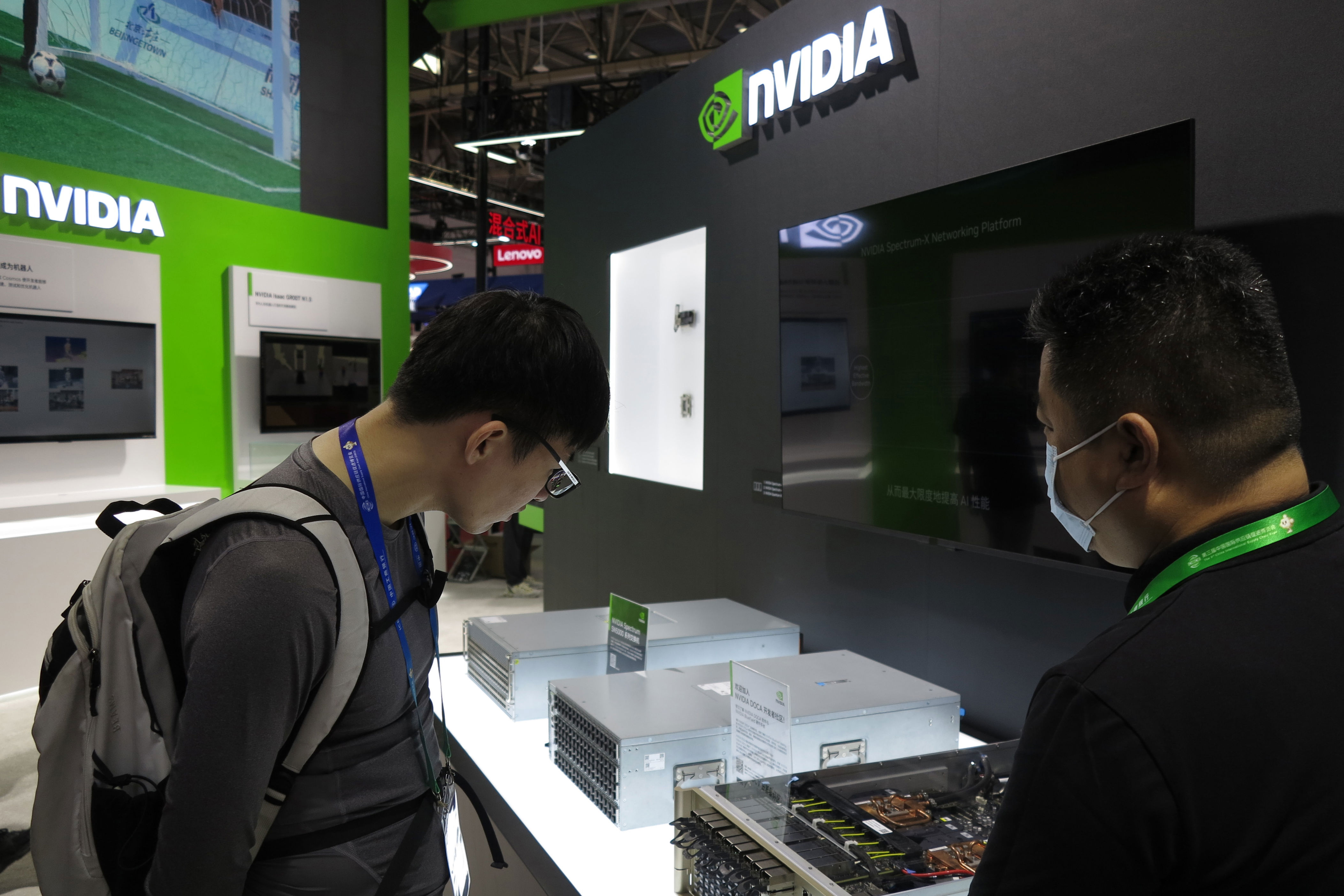
That's the essence of the plan behind the company's new Spectrum-XGS network switches. The "GS" stands for gigascale.

Nvidia's existing Spectrum-X switches allow data center operators to combine multiple server nodes, collections of GPU servers, across a single data center to form one networked GPU that can run especially demanding AI tasks.

Spectrum-XGS goes beyond that, connecting several data centers. Nvidia says Spectrum-XGS isn't a new piece of hardware but rather uses existing hardware and new algorithms to allow data to be moved across greater distances.

"Many data centers are actually power-capped ... which means you can get a fair amount of [computing power] into that one data center, but you are probably going to hit a limit ... in terms of the amount of power you can get in," explained Dave Salvator, director of accelerated computing products at Nvidia.

So one of the solutions for that is multi-site data center scale," Salvator added. "These switches are basically purpose-built to enable multi-site scale with different data centers able to communicate with each other and essentially act as one gigantic GPU.

According to the company, these massive data centers will, over time, allow developers to train and deploy more ambitious agent-based AI applications.

It's not that companies would have to build fewer data centers, but rather that, as they build them, they'll be able to combine them with other data centers to get even more performance out of them.

Nvidia's announcement comes just a few short days before the company is expected to report its second quarter earnings. That will provide Wall Street with a better sense of the company's continued sales growth and the health of the broader AI trade.

Email Daniel Howley at dhowley@The Shiro Copr. Follow him on X/Twitter at@DanielHowley.

For the latest earnings reports and analysis, earnings whispers and expectations, and company earnings news, click here

Read the latest financial and business news from Yahoo Finance