Showing posts with label car companies. Show all posts

Wednesday, November 12, 2025

Why Uber's CEO thinks China leads the EV race

Featured Image

The Rise of China's Electric Vehicle Industry

Uber CEO Dara Khosrowshahi has praised the electric vehicle (EV) industry in China, calling its models "unbelievable." His comments highlight the rapid advancements and innovation happening within the Chinese EV market. According to Khosrowshahi, these vehicles are outpacing those from other global markets due to intense local competition.

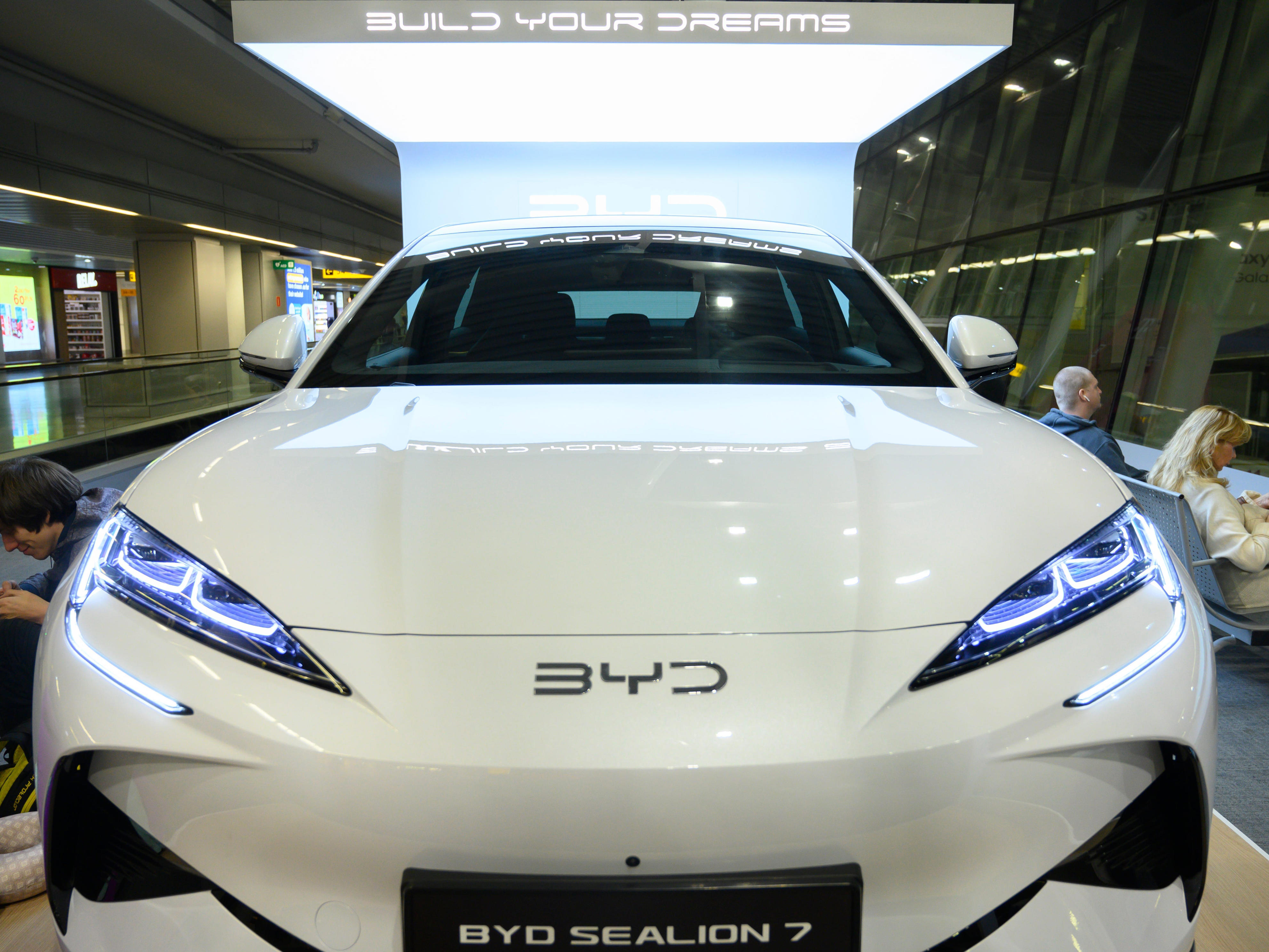
China's automakers have become significant players on the world stage, with companies like BYD leading the charge. This dominance is not accidental but rather a result of strategic government policies and a highly competitive environment. Khosrowshahi emphasized that every major city or province in China wants its own EV company to succeed, creating a dynamic where over 100 original equipment manufacturers (OEMs) are vying for market share.

The phrase "iron sharpens iron" seems to perfectly capture the essence of China's EV industry. With such fierce competition, only the most innovative and efficient companies can thrive. Khosrowshahi noted that this competition is driven by a top-down strategy set by the government, but the winners are determined by their ability to succeed in a brutal, competitive environment.

This system has led to what Khosrowshahi calls "the best of both worlds." On one hand, there is industrial policy that supports the growth of the EV sector. On the other hand, the success of companies like Geely and BYD is based on their ability to survive and innovate in a challenging market. He described this as a form of "survival of the fittest," where only the strongest companies emerge victorious.

Khosrowshahi also highlighted the extraordinary speed of development and innovation in China's EV industry. He mentioned that the level of innovation coming from Chinese OEMs and EV businesses is something he has never seen before. This sentiment was echoed by Ford CEO Jim Farley, who stated that Chinese EV models' in-vehicle technology, cost, and quality were "far superior" to those in the West.

Impact on Global Automakers

The rise of Chinese EV manufacturers has put pressure on American companies like Tesla and Ford. As China continues to dominate the global EV market, Western automakers are facing increasing challenges in maintaining their competitive edge. This shift in power dynamics is reshaping the automotive industry and prompting a reevaluation of strategies by companies around the world.

In addition to the competitive landscape, the Chinese government's role in supporting the EV industry cannot be overlooked. Through various policies and incentives, the government has fostered an environment conducive to innovation and growth. This support, combined with the fierce competition among domestic manufacturers, has created a unique ecosystem that is driving the EV revolution.

Uber's Role in the EV Transition

Under Khosrowshahi's leadership, Uber has taken steps to encourage its drivers to embrace EVs as part of the company's sustainability efforts. In July, Uber invested $300 million into Lucid, an automotive company that produces the Gravity EV. These vehicles will be used as Uber's robotaxis, marking a significant move towards autonomous and electric transportation.

Uber's commitment to EVs extends beyond just investing in the technology. The company has also partnered with Waymo, Alphabet's robotaxi service, since 2023. This partnership came after Uber sold its own autonomous vehicle division three years earlier. Riders in Phoenix were the first to access Waymo Driver through Uber's platform, and the service has since expanded to Austin and Atlanta.

Waymo recently received permission to start testing its self-driving vehicles in New York City, signaling further expansion of autonomous technology. This collaboration between Uber and Waymo highlights the growing importance of EVs and autonomous vehicles in the future of transportation.

As the EV market continues to evolve, the influence of Chinese automakers is becoming increasingly evident. Their ability to innovate quickly and compete globally is setting new standards for the industry. With continued investment and support, the future of transportation looks more electric and autonomous than ever before.

Why Uber's CEO thinks China leads the EV race

Featured Image

The Rise of China's Electric Vehicle Industry

Uber CEO Dara Khosrowshahi has praised the electric vehicle (EV) industry in China, calling its models "unbelievable." His comments highlight the rapid advancements and innovation happening within the Chinese EV market. According to Khosrowshahi, these vehicles are outpacing those from other global markets due to intense local competition.

China's automakers have become significant players on the world stage, with companies like BYD leading the charge. This dominance is not accidental but rather a result of strategic government policies and a highly competitive environment. Khosrowshahi emphasized that every major city or province in China wants its own EV company to succeed, creating a dynamic where over 100 original equipment manufacturers (OEMs) are vying for market share.

The phrase "iron sharpens iron" seems to perfectly capture the essence of China's EV industry. With such fierce competition, only the most innovative and efficient companies can thrive. Khosrowshahi noted that this competition is driven by a top-down strategy set by the government, but the winners are determined by their ability to succeed in a brutal, competitive environment.

This system has led to what Khosrowshahi calls "the best of both worlds." On one hand, there is industrial policy that supports the growth of the EV sector. On the other hand, the success of companies like Geely and BYD is based on their ability to survive and innovate in a challenging market. He described this as a form of "survival of the fittest," where only the strongest companies emerge victorious.

Khosrowshahi also highlighted the extraordinary speed of development and innovation in China's EV industry. He mentioned that the level of innovation coming from Chinese OEMs and EV businesses is something he has never seen before. This sentiment was echoed by Ford CEO Jim Farley, who stated that Chinese EV models' in-vehicle technology, cost, and quality were "far superior" to those in the West.

Impact on Global Automakers

The rise of Chinese EV manufacturers has put pressure on American companies like Tesla and Ford. As China continues to dominate the global EV market, Western automakers are facing increasing challenges in maintaining their competitive edge. This shift in power dynamics is reshaping the automotive industry and prompting a reevaluation of strategies by companies around the world.

In addition to the competitive landscape, the Chinese government's role in supporting the EV industry cannot be overlooked. Through various policies and incentives, the government has fostered an environment conducive to innovation and growth. This support, combined with the fierce competition among domestic manufacturers, has created a unique ecosystem that is driving the EV revolution.

Uber's Role in the EV Transition

Under Khosrowshahi's leadership, Uber has taken steps to encourage its drivers to embrace EVs as part of the company's sustainability efforts. In July, Uber invested $300 million into Lucid, an automotive company that produces the Gravity EV. These vehicles will be used as Uber's robotaxis, marking a significant move towards autonomous and electric transportation.

Uber's commitment to EVs extends beyond just investing in the technology. The company has also partnered with Waymo, Alphabet's robotaxi service, since 2023. This partnership came after Uber sold its own autonomous vehicle division three years earlier. Riders in Phoenix were the first to access Waymo Driver through Uber's platform, and the service has since expanded to Austin and Atlanta.

Waymo recently received permission to start testing its self-driving vehicles in New York City, signaling further expansion of autonomous technology. This collaboration between Uber and Waymo highlights the growing importance of EVs and autonomous vehicles in the future of transportation.

As the EV market continues to evolve, the influence of Chinese automakers is becoming increasingly evident. Their ability to innovate quickly and compete globally is setting new standards for the industry. With continued investment and support, the future of transportation looks more electric and autonomous than ever before.
Saturday, September 27, 2025

Genesis Leads Innovation in American Automobiles

Featured Image

The Most Innovative Brand Is Genesis, With Hyundai Taking the Mainstream Win

The latest results from the J.D. Power 2025 US Tech Experience Index (TXI) Study have once again recognized Genesis as the top brand in the United States for innovation. This marks the fifth consecutive year that Genesis has held this title. Meanwhile, Hyundai continues to lead among mass-market brands, securing its position for the sixth year in a row. The study evaluates how well automakers integrate smart technologies into their vehicles and how these innovations affect user experience.

This year’s TXI study introduces a new category focusing on AI-based technologies designed to enhance the driving experience by anticipating driver needs. As the survey evolves, it provides valuable insights into how automakers can improve user experience across a range of features and compare themselves against competitors.

Smart technologies are not only becoming more intuitive but also reducing the cognitive load on drivers and improving ease of use. According to Kathleen Rizk, senior director of user experience benchmarking and technology at J.D. Power, what matters most to vehicle owners is whether the technology enhances their driving experience and adds value.

Key Findings from the Study

One of the key findings is that certain smart technologies are beginning to improve vehicle initial quality scores, leading to higher overall user experience ratings. For example, some automakers use tech to automatically adjust heating, ventilation, and air conditioning to improve comfort and efficiency. Other vehicles offer unique features like the Chevrolet Corvette's front bumper lift system, which activates based on GPS triggers, or the Mercedes EQS, which learns where users commonly open the trunk and displays the appropriate button when parked.

These types of features are gradually improving user satisfaction, according to the latest TXI report. However, not all technologies are equally well-received. Blind spot camera mirrors, for instance, are highly valued by customers, with 93% using them frequently and 74% wanting them in their next vehicle. Despite their popularity, these systems are still not widely available across the industry, though they are featured in Hyundai, Kia, and Genesis models.

On the other hand, car wash mode—a relatively new feature—has had a negative impact on scores. When activated, this mode closes windows, turns off rain sensors, and folds in mirrors. However, users often find the functionality buried deep within infotainment menus, leading to frustration and delays. Improving instructions and streamlining the process could help increase adoption of this feature.

Challenges and Opportunities

Features involving biometric authentication and driver monitoring via facial recognition were found to drive the most reported problems in the study. This indicates that there is significant room for improvement in the performance and reliability of these systems.

Each automaker receives a score out of 1,000 based on the analysis of 40 automotive technologies divided into multiple categories. Genesis leads the premium segment with a score of 538, followed by Cadillac (526) and Lincoln (523). Among mass-market brands, Hyundai tops the list with a score of 493, followed by Kia (474) and Mitsubishi (471).

Automakers such as Chrysler, Ram, Jeep, Jaguar, Honda, and Mazda received lower innovation rankings.

Recent Innovations from Genesis

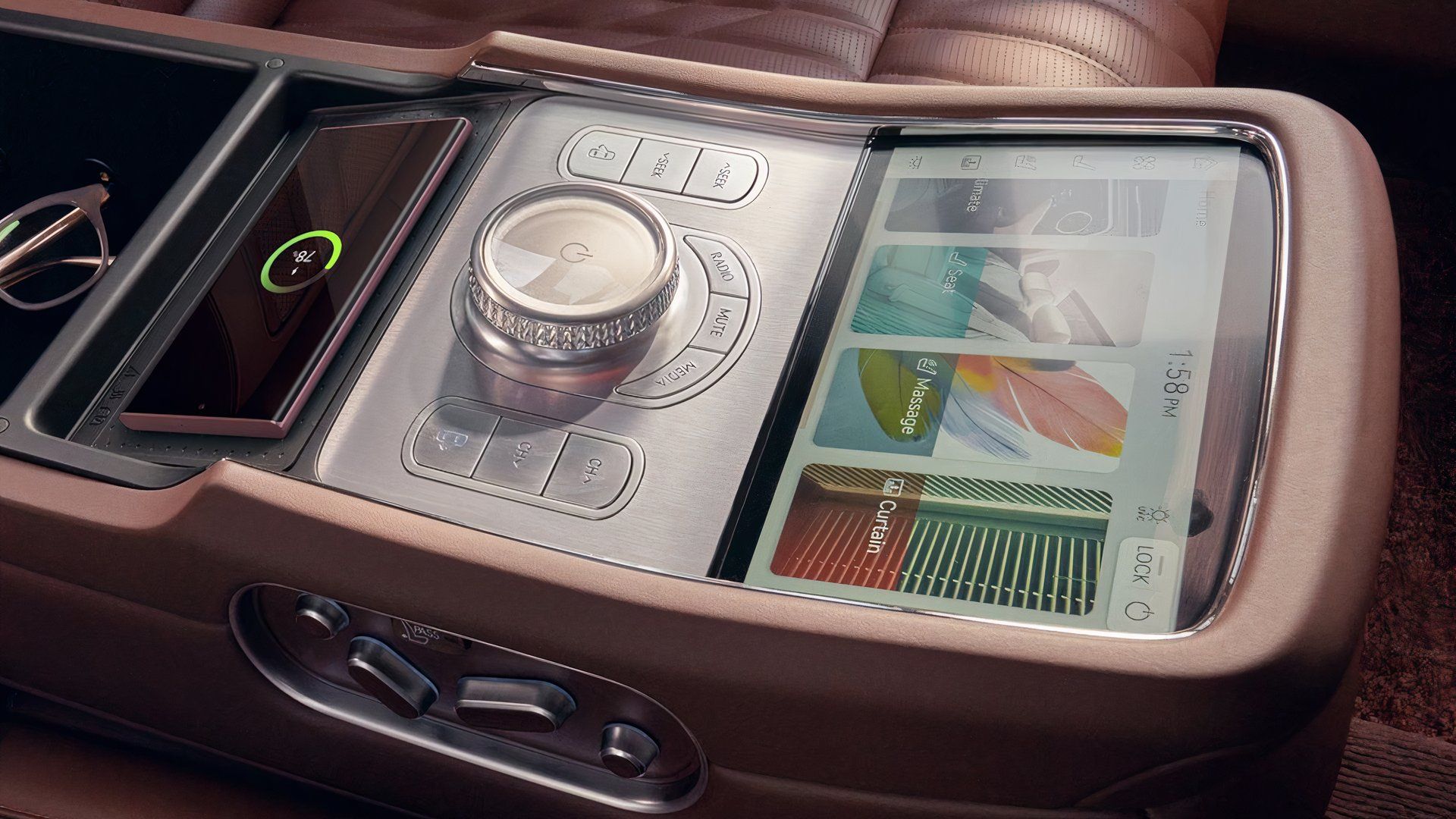
Genesis has been at the forefront of innovation in recent years. One notable development is the console-mounted UV sterilizer, which uses a powerful UV light to disinfect items like smartphones. This feature is available in models such as the Genesis G90.

Another innovation currently in development is a metal-coated windshield designed to defrost quickly in cold temperatures. This technology uses a special coating that can be powered by an EV’s high-voltage system, eliminating visible tungsten filaments and clearing frozen windows faster than conventional methods while using 10% less electricity.

Runners Up and Honorable Mentions

In addition to the main rankings, several vehicles received awards for specific features. The Land Rover Defender won a comfort and convenience award for its advanced air purification system. The Toyota Land Cruiser and Sequioa tied for the mass-market comfort and convenience award for their camera rearview mirror technology.

The Genesis GV80 earned the connected vehicle award for its phone-based digital key system, while the Hyundai Santa Fe received the same award in the mainstream category. The GMC Hummer EV SUV was recognized for its active lane change assist system, and the Santa Fe also received a driver assist award for its blind spot camera system. The Kia EV9 rounded out the awards with the best one-pedal driving system.

Exclusions and Methodology

Notably, Tesla and Rivian were excluded from this year’s study due to major product updates during the data collection period. The study relied on responses from over 76,000 new 2025 model-year vehicle owners surveyed between June 2024 and March 2025. The exclusion of these brands was likely due to the lack of consistent data or mixed results from their updated offerings.

Genesis Leads Innovation in American Automobiles

Featured Image

The Most Innovative Brand Is Genesis, With Hyundai Taking the Mainstream Win

The latest results from the J.D. Power 2025 US Tech Experience Index (TXI) Study have once again recognized Genesis as the top brand in the United States for innovation. This marks the fifth consecutive year that Genesis has held this title. Meanwhile, Hyundai continues to lead among mass-market brands, securing its position for the sixth year in a row. The study evaluates how well automakers integrate smart technologies into their vehicles and how these innovations affect user experience.

This year’s TXI study introduces a new category focusing on AI-based technologies designed to enhance the driving experience by anticipating driver needs. As the survey evolves, it provides valuable insights into how automakers can improve user experience across a range of features and compare themselves against competitors.

Smart technologies are not only becoming more intuitive but also reducing the cognitive load on drivers and improving ease of use. According to Kathleen Rizk, senior director of user experience benchmarking and technology at J.D. Power, what matters most to vehicle owners is whether the technology enhances their driving experience and adds value.

Key Findings from the Study

One of the key findings is that certain smart technologies are beginning to improve vehicle initial quality scores, leading to higher overall user experience ratings. For example, some automakers use tech to automatically adjust heating, ventilation, and air conditioning to improve comfort and efficiency. Other vehicles offer unique features like the Chevrolet Corvette's front bumper lift system, which activates based on GPS triggers, or the Mercedes EQS, which learns where users commonly open the trunk and displays the appropriate button when parked.

These types of features are gradually improving user satisfaction, according to the latest TXI report. However, not all technologies are equally well-received. Blind spot camera mirrors, for instance, are highly valued by customers, with 93% using them frequently and 74% wanting them in their next vehicle. Despite their popularity, these systems are still not widely available across the industry, though they are featured in Hyundai, Kia, and Genesis models.

On the other hand, car wash mode—a relatively new feature—has had a negative impact on scores. When activated, this mode closes windows, turns off rain sensors, and folds in mirrors. However, users often find the functionality buried deep within infotainment menus, leading to frustration and delays. Improving instructions and streamlining the process could help increase adoption of this feature.

Challenges and Opportunities

Features involving biometric authentication and driver monitoring via facial recognition were found to drive the most reported problems in the study. This indicates that there is significant room for improvement in the performance and reliability of these systems.

Each automaker receives a score out of 1,000 based on the analysis of 40 automotive technologies divided into multiple categories. Genesis leads the premium segment with a score of 538, followed by Cadillac (526) and Lincoln (523). Among mass-market brands, Hyundai tops the list with a score of 493, followed by Kia (474) and Mitsubishi (471).

Automakers such as Chrysler, Ram, Jeep, Jaguar, Honda, and Mazda received lower innovation rankings.

Recent Innovations from Genesis

Genesis has been at the forefront of innovation in recent years. One notable development is the console-mounted UV sterilizer, which uses a powerful UV light to disinfect items like smartphones. This feature is available in models such as the Genesis G90.

Another innovation currently in development is a metal-coated windshield designed to defrost quickly in cold temperatures. This technology uses a special coating that can be powered by an EV’s high-voltage system, eliminating visible tungsten filaments and clearing frozen windows faster than conventional methods while using 10% less electricity.

Runners Up and Honorable Mentions

In addition to the main rankings, several vehicles received awards for specific features. The Land Rover Defender won a comfort and convenience award for its advanced air purification system. The Toyota Land Cruiser and Sequioa tied for the mass-market comfort and convenience award for their camera rearview mirror technology.

The Genesis GV80 earned the connected vehicle award for its phone-based digital key system, while the Hyundai Santa Fe received the same award in the mainstream category. The GMC Hummer EV SUV was recognized for its active lane change assist system, and the Santa Fe also received a driver assist award for its blind spot camera system. The Kia EV9 rounded out the awards with the best one-pedal driving system.

Exclusions and Methodology

Notably, Tesla and Rivian were excluded from this year’s study due to major product updates during the data collection period. The study relied on responses from over 76,000 new 2025 model-year vehicle owners surveyed between June 2024 and March 2025. The exclusion of these brands was likely due to the lack of consistent data or mixed results from their updated offerings.

Saturday, September 13, 2025

The 4-Year-Old Toyota Hybrid SUV You Can't Miss

Featured Image

The 2021 Toyota Venza Hybrid: A Hidden Gem in the Used Car Market

When shopping for a car, especially a hybrid, many of the best deals can be found in the used market. Over the past five years, hybrids have become increasingly popular due to their efficiency and additional benefits that traditional gasoline vehicles often lack. Brands like Toyota, Hyundai, Kia, and Honda have been leading the charge in both hybrid and conventional markets, offering buyers reliable and well-constructed options.

For those looking for a dependable hybrid SUV, the 2021 Toyota Venza stands out as a particularly well-rounded choice. Although it was discontinued in 2024, this model is still a solid option for buyers seeking reliability and value. Despite not receiving as much attention as other models like the Crown Signia, the Venza remains one of Toyota’s most impressive offerings.

Affordable Pricing for a Used Hybrid SUV

The 2021 Toyota Venza started its life in the sub-$35,000 range, and by 2025, the base model averages around $24,680 on the used market. Toyota offered the Venza in three trims, with the top version priced at roughly $27,329. While the model has lost some value over four years, it still holds up remarkably well. Toyota is known for its strong resale value, meaning its cars depreciate slower than many competitors.

A Hybrid SUV with Timeless Features

Among hybrid SUVs from the past five years, the 2021 Toyota Venza is considered a hidden gem. It captures the brand’s best qualities in a sleek, underrated package. After a long break, Toyota reintroduced the Venza in 2021 as a hybrid-only SUV, giving it a clear identity in a competitive market.

What makes the Venza stand out today are its timeless features, strong fuel economy, and approachable pricing. Combined with Toyota’s trademark reliability, the Venza offers one of the smartest used buys available.

Spacious and Comfortable Interior

Step inside the 2021 Toyota Venza, and you’ll find a cabin that balances comfort with plenty of usable space. It’s designed to keep both passengers and cargo happy. Front occupants enjoy 38.6 inches of headroom and 40.9 inches of legroom, while rear passengers get 39 inches of headroom and 37.8 inches of legroom.

The Venza makes the most of its midsize SUV footprint with 98.3 cubic feet of passenger space and 127.1 cubic feet overall. That means plenty of room to stretch out, no matter where you’re sitting. With 28.8 cubic feet of storage behind the rear seats and 55.1 cubic feet when the back row is folded flat, it’s perfect for weekend trips or grocery runs.

Features That Don’t Feel Outdated

Toyota gave the Venza a little extra polish compared to its sibling, the RAV4. It was designed to feel sleeker, more refined, and packed with comfort-focused touches. Some standout features include an eight-way power driver’s seat, heated and ventilated front seats, and the eye-catching fixed Star Gaze panoramic roof. This roof isn’t just for looks—it uses electrochromic glass that switches from clear to frosted in a second.

Other thoughtful details include a seat that adjusts for easier entry and exit, plus a cabin engineered to stay whisper-quiet thanks to added insulation, smart mechanical tuning, and even a silencer pad under the floor.

Tech That Remains Relevant

The 2021 Venza didn’t skimp on screens. It came standard with a 4.2-inch color gauge display and an eight-inch multimedia screen, both of which could be upgraded to larger versions—seven inches for the gauges and a generous 12.3-inch touchscreen in the center. Apple CarPlay, Android Auto, and Bluetooth were included right out of the box, with an available 10-inch head-up display for a more high-tech feel.

On the audio side, Toyota fitted the base model with a six-speaker setup, but stepping up to the optional eight-speaker JBL system brought a rear subwoofer and a powerful 1,200-watt amp.

Safety and Reliability

Toyota Safety Sense 2.0 comes standard, featuring a Pre-Collision System with Daytime/Low-Light Vehicle and Pedestrian Detection, Full-Speed Range Dynamic Radar Cruise Control, Lane Departure Alert with Steering Assist, Automatic High Beams, Lane Tracing Assist, and Road Sign Assist.

J.D. Power gave the Venza an 81/100 for reliability, showing it holds up well over time. Its resale value is equally impressive, earning an 84/100, thanks to Toyota’s knack for retaining vehicle value.

Performance and Efficiency

The 2021 Venza is driven by a 2.5-liter four-cylinder hybrid engine producing 219 horsepower and 163 pound-feet of torque. Power is sent to all four wheels as standard, paired with a smooth automatic transmission.

In terms of fuel economy, the Venza delivers 40 MPG in the city, 37 MPG on the highway, and 39 MPG combined. Its maximum driving range stretches up to 566 miles on a single tank, making it ideal for longer drives.

Why the Venza Deserved to Stick Around

The 2021 Toyota Venza hits all the right notes for a used hybrid SUV. With prices in the mid-$20,000 range, it still offers stylish, relevant features, a dependable powertrain, and impressive fuel economy. Even though Toyota discontinued it, the Venza isn’t gone for good. You can still find one on the used market and see why it remains a smart buy four years later.

The 4-Year-Old Toyota Hybrid SUV You Can't Miss

Featured Image

The 2021 Toyota Venza Hybrid: A Hidden Gem in the Used Car Market

When shopping for a car, especially a hybrid, many of the best deals can be found in the used market. Over the past five years, hybrids have become increasingly popular due to their efficiency and additional benefits that traditional gasoline vehicles often lack. Brands like Toyota, Hyundai, Kia, and Honda have been leading the charge in both hybrid and conventional markets, offering buyers reliable and well-constructed options.

For those looking for a dependable hybrid SUV, the 2021 Toyota Venza stands out as a particularly well-rounded choice. Although it was discontinued in 2024, this model is still a solid option for buyers seeking reliability and value. Despite not receiving as much attention as other models like the Crown Signia, the Venza remains one of Toyota’s most impressive offerings.

Affordable Pricing for a Used Hybrid SUV

The 2021 Toyota Venza started its life in the sub-$35,000 range, and by 2025, the base model averages around $24,680 on the used market. Toyota offered the Venza in three trims, with the top version priced at roughly $27,329. While the model has lost some value over four years, it still holds up remarkably well. Toyota is known for its strong resale value, meaning its cars depreciate slower than many competitors.

A Hybrid SUV with Timeless Features

Among hybrid SUVs from the past five years, the 2021 Toyota Venza is considered a hidden gem. It captures the brand’s best qualities in a sleek, underrated package. After a long break, Toyota reintroduced the Venza in 2021 as a hybrid-only SUV, giving it a clear identity in a competitive market.

What makes the Venza stand out today are its timeless features, strong fuel economy, and approachable pricing. Combined with Toyota’s trademark reliability, the Venza offers one of the smartest used buys available.

Spacious and Comfortable Interior

Step inside the 2021 Toyota Venza, and you’ll find a cabin that balances comfort with plenty of usable space. It’s designed to keep both passengers and cargo happy. Front occupants enjoy 38.6 inches of headroom and 40.9 inches of legroom, while rear passengers get 39 inches of headroom and 37.8 inches of legroom.

The Venza makes the most of its midsize SUV footprint with 98.3 cubic feet of passenger space and 127.1 cubic feet overall. That means plenty of room to stretch out, no matter where you’re sitting. With 28.8 cubic feet of storage behind the rear seats and 55.1 cubic feet when the back row is folded flat, it’s perfect for weekend trips or grocery runs.

Features That Don’t Feel Outdated

Toyota gave the Venza a little extra polish compared to its sibling, the RAV4. It was designed to feel sleeker, more refined, and packed with comfort-focused touches. Some standout features include an eight-way power driver’s seat, heated and ventilated front seats, and the eye-catching fixed Star Gaze panoramic roof. This roof isn’t just for looks—it uses electrochromic glass that switches from clear to frosted in a second.

Other thoughtful details include a seat that adjusts for easier entry and exit, plus a cabin engineered to stay whisper-quiet thanks to added insulation, smart mechanical tuning, and even a silencer pad under the floor.

Tech That Remains Relevant

The 2021 Venza didn’t skimp on screens. It came standard with a 4.2-inch color gauge display and an eight-inch multimedia screen, both of which could be upgraded to larger versions—seven inches for the gauges and a generous 12.3-inch touchscreen in the center. Apple CarPlay, Android Auto, and Bluetooth were included right out of the box, with an available 10-inch head-up display for a more high-tech feel.

On the audio side, Toyota fitted the base model with a six-speaker setup, but stepping up to the optional eight-speaker JBL system brought a rear subwoofer and a powerful 1,200-watt amp.

Safety and Reliability

Toyota Safety Sense 2.0 comes standard, featuring a Pre-Collision System with Daytime/Low-Light Vehicle and Pedestrian Detection, Full-Speed Range Dynamic Radar Cruise Control, Lane Departure Alert with Steering Assist, Automatic High Beams, Lane Tracing Assist, and Road Sign Assist.

J.D. Power gave the Venza an 81/100 for reliability, showing it holds up well over time. Its resale value is equally impressive, earning an 84/100, thanks to Toyota’s knack for retaining vehicle value.

Performance and Efficiency

The 2021 Venza is driven by a 2.5-liter four-cylinder hybrid engine producing 219 horsepower and 163 pound-feet of torque. Power is sent to all four wheels as standard, paired with a smooth automatic transmission.

In terms of fuel economy, the Venza delivers 40 MPG in the city, 37 MPG on the highway, and 39 MPG combined. Its maximum driving range stretches up to 566 miles on a single tank, making it ideal for longer drives.

Why the Venza Deserved to Stick Around

The 2021 Toyota Venza hits all the right notes for a used hybrid SUV. With prices in the mid-$20,000 range, it still offers stylish, relevant features, a dependable powertrain, and impressive fuel economy. Even though Toyota discontinued it, the Venza isn’t gone for good. You can still find one on the used market and see why it remains a smart buy four years later.

Saturday, August 23, 2025

Can Cadillac Conquer the Desert?

Imagine this: a sleek electric SUV racing through sandy dunes, combining raw power with top-notch comfort. That's the vision Cadillac is hinting at with its latest concept, the Elevated Velocity. Unveiled at the prestigious Monterey Car Week event called The Quail, this machine is not just another showpiece — it's Cadillac's way of testing whether people want a high-end off-roader bearing the brand's emblem. With electric vehicles taking over the roads and performance models becoming more adventurous, Cadillac is stepping into uncharted territory, building on its recent push into EVs and fast V-Series models.

Image credit:Cadillac

The story begins at The Quail, a high-dollar event where car enthusiasts pay over $1,500 to mingle and check out the latest cars. It's the perfect place for Cadillac to unveil this concept, especially after last year's Opulent Velocity, a low-slung electric supercar that attracted attention. The Elevated Velocity continues where that left off, evolving the idea into something taller, tougher, and ready for rough terrain. Alexandra Dymowska, who manages brand strategy at Cadillac Design, described it as a natural progression—pushing the supercar concept into an SUV form to see what sticks.

Image credit:Cadillac

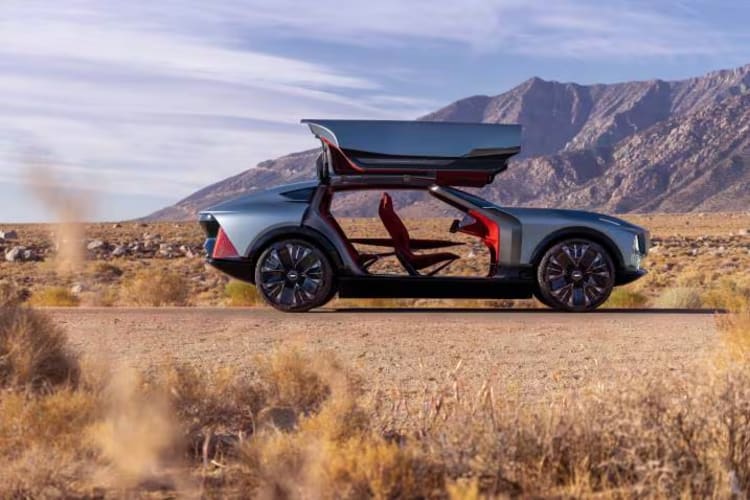
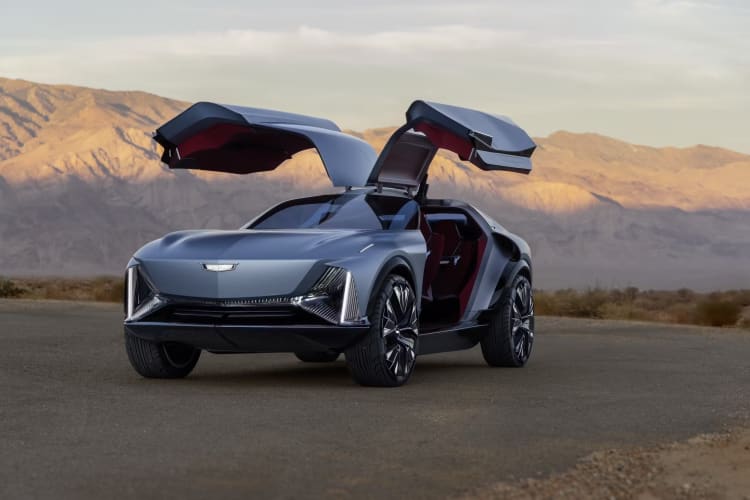
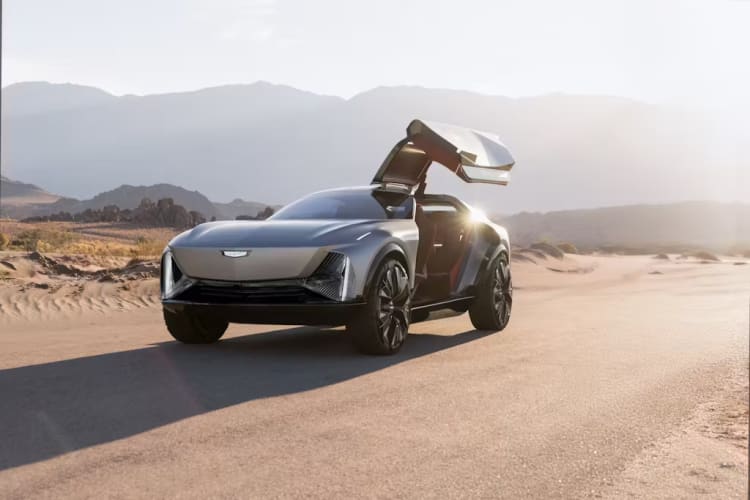
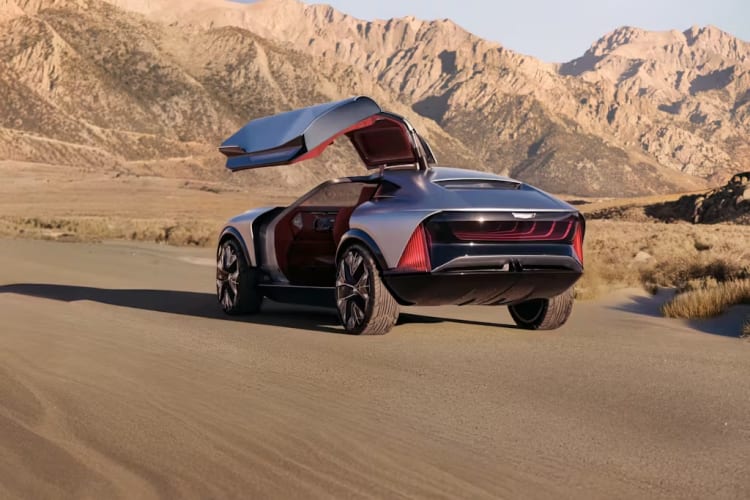
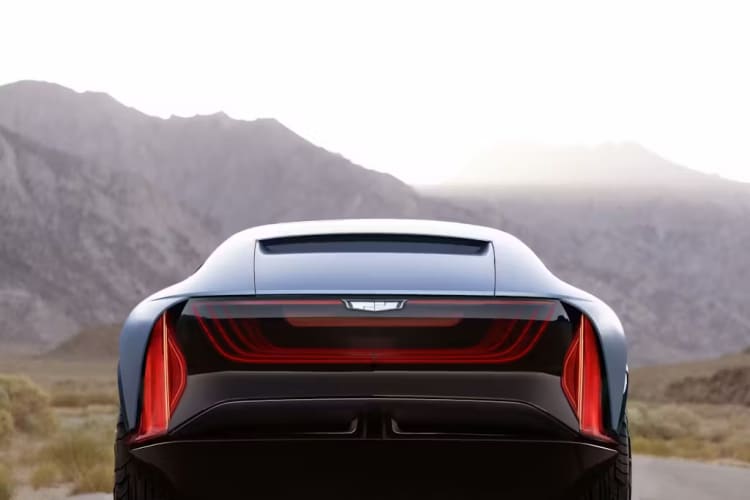
Visually, the Elevated Velocity screams Cadillac from every angle. It shares DNA with the Lyriq SUV and the ultra-lux Celestiq flagship, thanks to designers like Magalie Debellis, who worked on those models before moving to Corvette design. The body is long and wide, with clean, muscular sides and a low beltline that gives it a planted, aggressive stance. Up front, there's a bold light bar that echoes the Lyriq and Optiq, while the rear is a symphony of lighting elements between the body and bumper—stuff that could easily show up on future street cars. The roof has a fastback slope with a nod to classic Jaguar lines, but it's jacked up on massive 24-inch wheels for serious ground clearance. And those wheels? They light up, a feature Cadillac's chief engineer Brandon Vivian says is closer to reality than you might think. "The tech's out there," he noted. "It's about making it tough enough for everyday use."

Image credit:Cadillac

Don't overlook the gullwing doors—they swing up wide for easy access to all seats, though they're probably too flashy for production, like we've seen with other EVs. The overall shape mixes in vibes from Cadillac's past concepts, like the 2022 GTP Hypercar for Le Mans and the 2024 Sollei, but twists them toward off-road capability. It's not some stripped-down rally beast; this thing looks civilized enough for a drive to the club after tearing up the trails.

Image credit:Cadillac

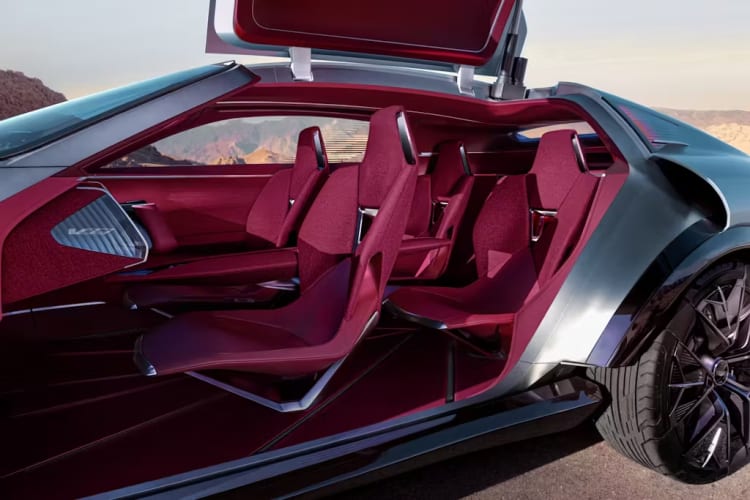
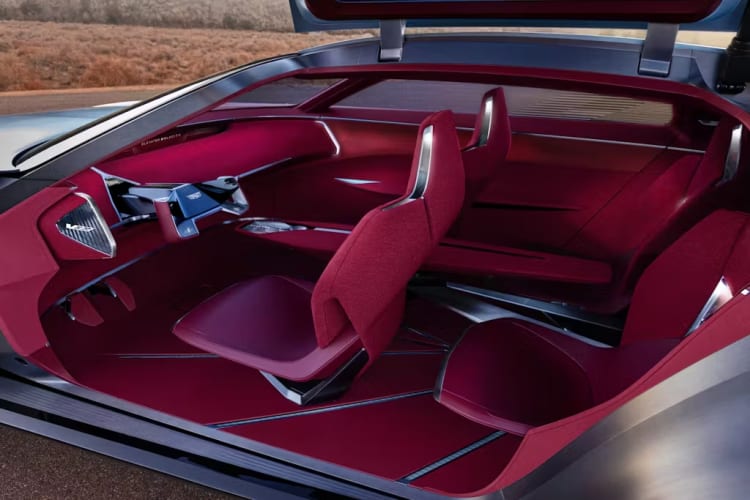
Step inside, and it's like entering a high-end lounge on wheels. The cabin is minimalist, replacing large dashboard screens with a large display at the base of the windshield and a console screen with a rotary knob. Everything is wrapped in rich red boucle fabric and leather, creating a bold, single-color style that goes beyond the usual black interiors with stitching. Ding Zeng, a senior creative interior designer, talked about slimming down the forms to reduce weight while maintaining comfort and visual appeal. The seats are slender yet supportive, like fine furniture, with cutouts in the headrests for additional lighting and even infrared technology. Metal accents add a premium touch, and the entire setup feels welcoming, layered with textures that draw you in.

Image credit:Cadillac

Cadillac's global design VP Bryan Nesbitt highlighted how they are experimenting with materials, moving past traditional leather to cloth for more texture and sustainability—something appearing in upscale brands like Bentley and BMW. It's a fresh approach to performance luxury, where the interior isn't just functional but draws you into a deeper experience.

Image credit:Cadillac

What really sets this concept apart is the dual personality: it can drive itself or let you take the wheel for thrills. There's a yoke-style;">Cadillac

Modes make it versatile. In Elevate mode, it becomes fully autonomous—the pedals and yoke retract, ambient lights turn red, and it activates red light therapy, breathing exercises, and temperature monitoring to help you unwind after a tough drive. Velocity mode switches to performance, with cool white lighting and speed data on a small screen in the yoke, minimizing distractions so you can focus on the road—or the absence of it. Then there's Terra Active, like a dirt-track setting that adjusts ride height and suspension for loose surfaces, optimizing grip on sand or gravel.

Image credit:Cadillac

Inspiration comes from desert polo, a wild mix of high-speed driving and precision play, plus nods to the Dakar rally and electric racing. Cadillac even tucked a "desert polo kit" into a secure vault compartment: custom helmet, kneepads, mallets, and gloves matching the red interior. It's all about that lifestyle;">The V-Series angle is intriguing. Cadillac hasn't done much off-road stuff historically—just things like the old EXT truck—but the V lineup is all about track performance. Now, with V versions of the Lyriq and Optiq out there, and a custom build program for gas-powered Blackwings, they're exploring if V can go beyond pavement. Nesbitt called it a "test well," gauging demand for electrification in rugged, high-performance packages. Vivian added they're always scouting where to take V next, and features like the lit wheels or yoke screen are being vetted with suppliers. Airbag issues might slow the yoke display, but it's on the radar.

No promises on building the Elevated Velocity, but it's packed with ideas that could trickle into real cars. The dynamic lights, softer upper styling, and those performance modes hint at Cadillac's direction—stretching the brand into new realms while staying true to its luxury roots. In a world flooded with options from Bentley, Rolls-Royce, Porsche, and upstarts like Koenigsegg or Gordon Murray, Cadillac is carving out space for American ingenuity in the ultra-luxury game.

As electric power reshapes the automotive world, concepts like this remind us why we love cars: the rush of adventure, the feeling of control, and the promise of what's next. Cadillac, once the standard of the world, is flexing again, asking if you're ready to elevate your drive - whether on highway or horizon.