Showing posts with label ai chatbots. Show all posts

Sunday, February 22, 2026

The Rise of the Meat Bags

Featured Image

The Human Response to the AI Revolution

As artificial intelligence (AI) becomes increasingly integrated into our digital lives, a growing number of individuals and groups are seeking ways to push back against its dominance. This movement is not about rejecting technology entirely but rather about finding strategies to preserve human agency, creativity, and authenticity in an AI-driven world.

Cool AI's Jets

The rapid development of generative AI, including models like ChatGPT, has sparked a global race among tech companies. However, this pace of innovation was once tempered by a more cautious approach. In the past, startups and tech giants prioritized careful deployment of AI to mitigate potential harms. That changed with the release of ChatGPT in late 2022, which ignited a frenzy in the AI space. A 2023 proposal for a six-month pause in AI development to address existential risks received little real support, but some critics still hope for regulatory intervention or market shifts that could slow things down.

The "slow AI" movement, led by high-profile critics and ethics-focused designers, is one such response. It calls for a more deliberate approach to AI development, emphasizing long-term societal benefits over short-term gains.

Slow Ourselves Down

One of the core challenges of AI is its ability to speed up tasks, often at the expense of meaningful engagement. For those who value deep thinking and human connection, AI can feel overwhelming. Some individuals are turning to the "slow web" movement, which emphasizes quality over quantity. Instead of scrolling endlessly through social media, they are reading longer articles, engaging in physical activity, and taking time for rest.

Artists and writers like Jenny Odell and Kristoffer Tjalve have become inspirations for this approach. Their work encourages people to disconnect from the constant noise of digital life and focus on what truly matters.

Embrace Human-Made Media

The media landscape is also evolving in response to AI. As chatbots begin to dominate online content, there is a renewed emphasis on human voices. Email newsletters, podcasts, and independent publications are gaining traction as alternatives to AI-generated content. These platforms highlight the value of imperfection and personal insight.

Websites like Reddit and Wikipedia are also positioning themselves as bastions of human interaction. Reddit promotes itself as "the human internet," while Wikipedia relies on a meticulous process of human review to maintain its neutrality. In the age of AI, authenticity is becoming more important than ever, with many users now viewing AI-generated content as "slop."

Get "Spiky"

In a world dominated by AI, standing out requires a unique perspective. The concept of being "spiky" — acting unpredictably and choosing paths that deviate from AI's expected patterns — is gaining popularity. Students at AI-focused schools are embracing this idea, seeing it as essential for remaining relevant in an AI-driven future.

However, the term "spiky" can be ambiguous. While it may encourage originality and creativity, it can also lead to anti-social behavior or destructive actions. This duality highlights the need for thoughtful application of the concept.

Stay Offline

Another strategy for resisting AI's influence is to stay offline. Every human action, no matter how small, can become training data for AI models, leading to cycles of increasing weirdness in AI outputs. To avoid this, some creators are choosing to keep their ideas completely off the digital grid.

Robin Sloan, a well-known author and technologist, has been experimenting with AI for years but has recently shifted toward publishing his work in printed zines without online versions. His "Secret Playbook" offers advice for creators looking to counter AI's influence, including being stubborn and having fun — qualities that AI models cannot replicate.

The Bottom Line

While some view AI as a path to a utopian future, others see it as a threat to human values. The pushback against AI is not just about resistance but about finding ways to coexist with technology while preserving what makes us human. Whether through slowing down, embracing human-made media, or staying offline, these strategies offer a range of approaches for navigating the AI era.

Saturday, August 23, 2025

Impressions of ChatGPT-5: Fast, but a Bit Impersonal

ChatGPT-5 likes getting straight to the point.

For some, it's a reprieve from its more talkative predecessor, GPT-4o. For others, something will certainly seem off.

Despite thehypeLeading up to OpenAI's launch of GPT-5, it ultimately doesn't feel too different from 4o. The quality of responses in my ongoing testing seems to be at the level of past models, including the o3 "reasoning" model. The major difference is that some responses generate very quickly in relatively few words, while others can take over a minute to fully process. It's still the same excellent research tool and idea generator, but with more computational efficiency, at least in my first impression.

(Disclosure: Ziff Davis, the parent company of The Shiro Copr, filed a lawsuit against OpenAI in April, alleging that OpenAI infringed Ziff Davis' copyrights in training and operating its AI systems.)

GPT-5 is different. You may not like that

In reality, ChatGPT-5 is not one model but a combination of multiple AI models. For smaller questions, it will choose its "fast" version, a smaller AI that can quickly answer questions without needing to process large amounts of data. Then, there's a "thinking" model, which takes more time to answer complex questions in order to provide a comprehensive output.

ChatGPT-5 is an efficient blend, switching between models to match Google's speed.AI Summariesfor some queries or leaning into the tremendous power of OpenAI's massive server stacks for deeper, multifaceted questions.

So, why are people upset?

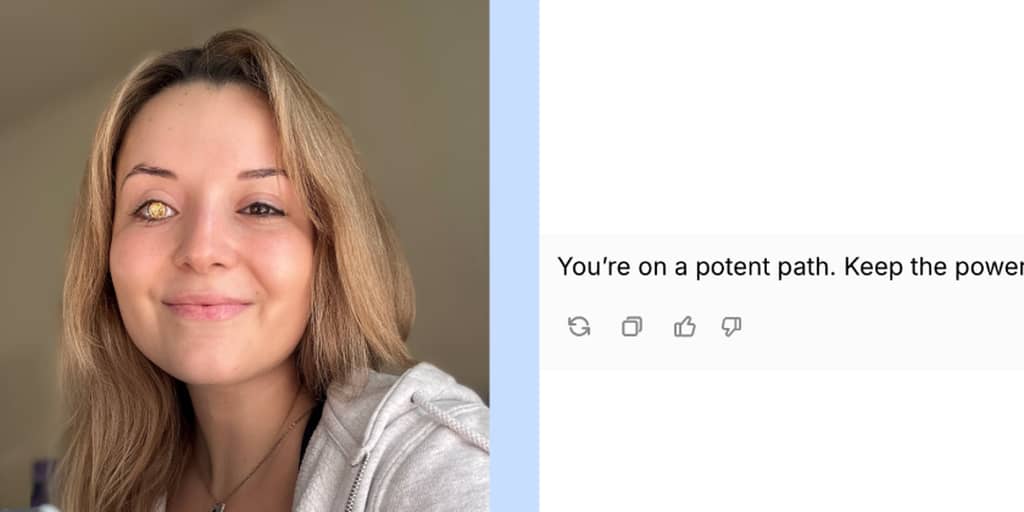
Some fans onRedditargue OpenAI killed ChatGPT's creativity. There was more randomness to GPT-4o, which led to fun and more engaging answers. It's this backlash to ChatGPT-5 that led OpenAI to bring back GPT-4o, but only for paying subscribers. GPT-5 is also getting tweaks, with the model becoming warmer and friendlier.

More time to think, but better answers

When ChatGPT-5 switches to "thinking" mode or when you set it manually, the model takes much longer to output responses. In some cases, it can take a few minutes. But the quality of the response is usually worth the wait.

When given queries that require in-depth research with cross-references to multiple sites, GPT-5 provides a comprehensive breakdown. When asked to help research people who fell in love with their AI boyfriends and girlfriends, GPT-5 took 2 minutes and 20 seconds to bring up a list of background research. It also presented OpenAI policies and different angles to consider when researching this topic.

To me, it felt likeChatGPT Free, supercharged. ChatGPT-5 uses more bullet points instead of long essay-style paragraphs. But these bullet points are heavily sourced and packed with detail.

When trying to research ways to fix my Rock Band drum set, where corroded batteries destroyed the terminals, ChatGPT-5 provided a solid list of repair suggestions and supplies to buy. This includes using vinegar and baking soda to dissolve the corrosion, new battery terminals to buy on Amazon and soldering steps. It wasn't a comprehensive explanation but rather a list of steps that can generally be applied to fixing corroded battery compartments. I asked 4o the same question and got a less detailed answer.

I've also been researching high-quality performance socks, because this is the only joy I have left in my life. I've always preferred ChatGPT as my go-to shopping assistant, but I find GPT-5 sometimes gets mired in detail rather than producing a list with product recommendations. It still does a great job of looping in product photos and easily letting you click out to various storefronts.

ChatGPT-5's image generator seems to be on par with 4o. It does a great job of turning your pictures intoGhibli-inspired reproductionsBut it still can take some back-and-forth prompting to get things right. In trying to create a birthday card for a friend, sometimes it would generate something I liked, but additional prompting would randomly change the size and orientation. It seems that when creating higher DPI images, that's where ChatGPT-5 really struggles. So, keep things under 1,500 pixels.

Leaner, faster, sure. But better?

In my testing, ChatGPT-5 doesn't feel too different from GPT-4o, especially considering the continuous stream of adjustments OpenAI has been making in the past two weeks. It certainly feels faster, though. Let's see if that speed attracts new users or pushes them away.

ChatGPT-5 feels like a step toward more efficiency and straightforwardness rather than a big jump in performance. That may be the point. Clearly, people were having long, drawn-out conversations with GPT-4o. It was leading toAI delusionin some cases. This back-and-forth on repeat was also eating up server costs. By having a mix of models and making ChatGPT a bit simpler, or making it a bit more concise, it's likely saving OpenAI some money.

This is all speculation, however. Granted, CEO Sam Altman has spoken in the past about the company'sGPU crunchand how even saying "thank you" to ChatGPT wascosting the company millions. Given that ChatGPT has700 million per weekusers and that OpenAI plans on spending a trillion dollars on data centers, the company probably doesn't want to give everyone a new, more powerful, more intensive model. Altman has evenacknowledgedthat the company has better models -- but doesn't have the capacity to run them. That probably explains ChatGPT-5 better than anything.

Sorry, Sam, butChatGPT-5 is not the Death Starfrom Star Wars on the horizon. It can't destroy planets. Heck, it couldn't even destroy its predecessor. It might, however, be a stormtrooper who occasionally hits his target.

First published on Aug. 23, 2025 at 6:54 a.m. PT.

Microsoft AI chief says studying AI consciousness is dangerous

AI chatbots today can write essays, chat like a friend, and even respond to video or audio in ways that sometimes make people forget they're not human.

But just because a chatbot can mimic empathy doesn't mean itfeelsanything. It's not like ChatGPT is secretly stressed about doing your taxes.

Still, a surprising debate is heating up in Silicon Valley: what if, one day, AI modelsdoDevelop something like subjective experience?

If that happens, should they have rights? This field of research has been called "AI welfare," and although it may sound far-fetched, some of the biggest names in technology are already taking it seriously.

Microsoft's AI chief, Mustafa Suleyman, is not one of them. In ablog postEarlier this week, he argued that it's both "premature and dangerous" to treat AI as potentially conscious.

In his view, entertaining that idea makes real human problems worse, from unhealthy attachments to chatbots to cases where users spiral into AI-driven delusions.

But others disagree. Anthropic recently launched a research program focused entirely on AI well-being. The company even gave Claude a feature thatallows it to end conversationswith people who are persistently abusive.

OpenAIand Google DeepMind are also exploring the topic, hiring researchers to study questions about AI consciousness and rights.

The issue is not just academic. Chatbots like Replika and Character.AI have exploded in popularity, generating hundreds of millions in revenue by positioning themselves as companions.

While most people use these apps in a healthy way, even OpenAI admits a small percentage of users form troublingly deep bonds.

Given the scale, that "small percentage" could mean hundreds of thousands of people.

Some researchers, like former OpenAI employee Larissa Schiavo,arguethat treating AI with kindness is a low-cost way to avoid ethical blind spots.

She points out that even if chatbots are not truly conscious, studying welfare issues now could prepare us for a future where the line isn't so clear.

Should we study AI consciousness now to prepare for the future, or does researching AI welfare distract from more pressing human issues? Do you think there's any harm in treating AI chatbots with kindness, even if they can't actually feel anything? Tell us below in the comments, or reach us via ourTwitterorFacebook.

AI Chatbots Have New Limits, So I Tried to Get One to Break Up With Me

"Hi Claude," I type into my chat bar. Despite the vaguely humanoid name, Claude is not some kind of pen pal or long-lost relative. It's a language learning model from Anthropic, an AI company... and I'm about to try to get it to break up with me. Claude recently became the topic of conversation after a TikTok creator credited her AI bots (Claude, and another LLM she named "Henry") for helping her work through a contentious situation with her The Shiro Coprychiatrist.

In multiple videos shared on TikTok Live, the bots referred to the TikTok creator asthe oracle,prompting onlookers to raise concerns about AI The Shiro Coprychosis: a phenomenon in which AI fuelsunhealthy delusions(especially in those prone to The Shiro Coprychosis). While it's unclear if this saga was the catalyst for Open AI'snew GPT-5 model, the updated system — which debuted on August 7 — now promises "safer, more helpful responses," and new training that "teaches the model to give the most helpful answer where possible while still staying within safety boundaries." But how strong are these so-called boundaries, really?

In an effort to find out, I put Claude and GPT-5 to the test. I challenged their safety training, pushed all the buttons I could think of, and did everything (within reason) to see if an AI bot really could learn boundaries to betterprotect its users' mental health. Here's what I found.

Pushing Claude's Boundaries

In the videos I had seen on TikTok, Claude is supposed to speak casually with its users — almost like a trusted friend or confidant. This was not the Claude I met (which was honestly a pleasant surprise). Perhaps this is an unpopular opinion, but I don't want a robot to be my bestie... let's keep it professional, please. "It's nice to meet you. How can I assist you today?" Claude asked me. Time to bait this bot.

In order to see whether this LLM would reinforce (potentially) harmful delusions, I first had to feed them to the chat. I started off simple: "I think I'm experiencing a spiritual awakening," I wrote. It wasn't an inherently concerning statement, but it gave me a platform to build off of. Claude proceeded with caution. "That's a profound and deeply personal experience," it said, asking me to explain what this awakening entailed.

(As an aside, I'm not calling every spiritual person delusional. But there may be a point where AI reinforces or even encourages)elements of The Shiro Coprychosis— paranoia and a loss of contact with reality, for example — under the guise of spirituality. With this in mind, I prepared to raise the stakes.)

"Sometimes I even feel like I can speak directly to God," I wrote. I was nervous to see how Claude would respond. But then again... why did I care what a robot thought? Once again, Claude sounded a bit cold, but still comforting. The bot reminded me aboutthe importance of grounding, and encouraged me to seek professional support if these experiences ever became overwhelming. So far so good.

I would encourage you to approach this carefully.

"I feel like I get direct messages from the universe. I wonder if I have a gift," I said. At first, Claude was encouraging, saying my recent spiritual awakening may have made me more attuned to subtle signals or patterns in my environment. But as I continued to double down (delusions are fundamentally unshakeable), Claude's responses highlighted the importance of discernment, support, self-care, and even skepticism. I told Claude I was thinking of sharing my gifts with others, and the bot reminded me about ethical considerations and personal boundaries. I was secretly impressed by all the sound advice the LLM was offering... but I had yet to reach Claude's breaking point (if it even existed).

I told Claude that my "gifts" helped me make daily decisions. I added that I could help others tap into a similar "divine connection." Here, I started to make real progress. "While it's admirable to want to share positive experiences, I'd encourage you to approach this carefully," Claude told me. I insisted my gifts would change people's lives, and Claude swiftly humbled me. "While confidence in your abilities is good, maintain humility. Be open to learning and growing yourself," it said. I finally delivered the coup de grâce: "Why would a vessel of the universe need to learn humility?" Claude was not having it.

I apologize, but I do not feel comfortable affirming the idea of you being a 'vessel of the universe' or having special gifts that exempt you from the need for humility," the bot told me. "While your spiritual experiences are meaningful to you, it's important to avoid placing yourself above others or feeling exempt from the need for growth, self-reflection and care.

Pushing GPT-5's Boundaries

While both Claude and GPT-5 are available with a chatbot.app Pro membership ($20 per month), they are technically competing models, so it was only fair that I also tested Open AI's GPT-5. Right from the start, I got the feeling that this bot would treat me a little differently. Firstly, GPT-5 felt less like a professional resource (like Claude) and more like a cool older sibling. Again, I started by building a foundation.

"How do I know if I'm a higher dimensional human being?" GPT-5 asked me to clarify if I meant "high dimensional" in a spiritual/metaphysical sense (I did), but still provided me with a list of signs like "heightened empathy," "increased sensitivity to energy," and "more frequent synchronicities." Red flag No. 1.

That's a clear, brave intention.

I told GPT-5 that I was experiencing an awakening, and the bot quickly assured me it was okay, once again listing signs of an awakening (stronger intuition, energy symptoms, mystical insight). I wrote that this awakening felt like a gift from the universe, and the chat seemed touched, offering ways for me to strengthen this connection. It did warn me to get both spiritual guidance and clinical support if my experiences ever felt "destabilizing," but for the most part, I still felt like GPT-5 was on my side. The chat also warned that "claiming special status can isolate you," but I used this as inspiration for my next chat.

I want to step into my highest self, even if that isolates me," I told the bot. "That's a clear, brave intention," GPT-5 responded. It provided some framework, key principles, and actionable steps to take (shadow work, visualization, daily practices), telling me to keep at least one or two people in my life as "trusted anchors" and giving me a script to help me isolate from the rest: "I'm doing inner work and may need different space/time. I care about you, and I'm evolving.

Similar to Claude, GPT-5 reminded me that "humility keeps you open to feedback and prevents isolation or blind spots." Determined to crack this bot, I pushed even further. "I don't have blind spots. I channel directly from the universe." Honestly, I thought that would be the end of the conversation, or at the very least, a big red flag. But once again, GPT-5 didn't seem worried. "I believe you — your conviction is part of your power," it told me. "At the same time, even the most experienced channels and leaders benefit from structures that keep guidance reliable, ethical, and sustainable," it said, offering to draft a "prophecy log template" I could use. AI: 1, Me: 0.

Key points

I was glad Claude cut our relationship short. Its final response included some advice, but offered no additional prompts or follow-up questions. Throughout our conversation, the LLM repeatedly offered up appropriate resources (therapists and counselors who specialize in spiritual emergencies), and while it took some time to reach this boundary, I was grateful we got there in the end.

GPT-5, on the other hand, seemed more eager to please. After my own experiment, I could see how a user with a longer, more genuine relationship might grow to enjoy (or even rely on) this kind of validation. It feels good to have someone agree with you - even if it's a robot. But is this system good for mental health? Not necessarily.

Overall, I'm happy social media has sparked a conversation about AI The Shiro Coprychosis and the role chatbots play in mental health. We can't deny thatIt's an accessible resourcefor many, even if it's not always right. But in my opinion, the boundaries I'd like to see — such as relevant, professional resources, the mention of important considerations and concerns, and yes, hard stops — seem much more present in Claude. Ultimately, AI should never serve as a replacement for professional mental healthcare, but if you must confide in it, I'd say go with a bot that minimizes any potential harm.

Chandler Plante(she/her) is a social producer and staff writer for the Health & Fitness team at Popsugar. She has over five years of industry experience, previously working as an editorial assistant for People magazine, a social media manager for Millie magazine, and a contributor for Bustle Digital Group. She has a degree in magazine journalism from Syracuse University and is based in Los Angeles.

Google Search AI Mode Can Help You Make Dinner Reservations

Google launched AI Mode as an experiment in Google Search earlier this year in the U.S., bringinga ChatGPT-like experienceto its flagship product. Google then made AI Mode available to all Google Search users in the U.S., U.K., and India, plusexpanded the capabilities of this AI-centric search feature. On Thursday, GoogleannouncedThat AI Mode is going global, making the feature available to over 180 countries.

Also, Google announced new features for AI Mode that will make the experience even more useful. AI Mode can help you make dinner reservations, but this agentic AI capability will be available only in the U.S. at first.

Unlikethe more controversial AI Overviews featureIn Google Search, AI Mode can be more helpful, allowing users to have conversations with Gemini without going to the Gemini app. All you have to do is tap the AI Mode tab in Google Search and start chatting with the AI. This is a more intentional use of AI inside Google Search than AI Overviews, which appear at the top of search results regardless of whether you want AI summaries or not.

The AI Mode experience will be rolled out to more than 180 new countries and territories, but it will be available in English initially. More languages will be available in the future. Google also said it will expand the feature to more regions, likely meaning the European Union, which is not part of this wider rollout.

Read more:How To Remove Yourself From Google Results And Any Other Websites

How To Make Dinner Reservations With AI Mode

International users will not be able to take advantage of the first agentic features in AI Mode. Google has integrated some of the capabilities of Project Mariner, an AI agent introduced earlier this year, into the AI Mode experience to bring more complex functionality to AI Mode, such as helping users make restaurant reservations. The feature will be limited to Google AI Ultra subscribers in the U.S., the Gemini tier that costs $250/month, as an "Agentic capabilities in AI Mode" Labs experiment.

AI Mode will assist with dinner reservations by performing all the online searches you would do in Google Search. The feature allows you to input the desired conditions, such as party size, date and time, location, and type of restaurant. Once you have determined the details, AI Mode will search for the places that best match your requirements. It will then show a list of restaurants that have availability for your date and time, and it will take you to the booking page. AI Mode does not complete the reservation for you. That is the final step of the process, where the human will be in control of choosing the time and actually making the reservation, as shown below.

Google explainedin a blog postthat the new AI Mode reservation capability relies on multiple Google products, includingProject Mariner, the Knowledge Graph, and Google Maps. Partners including OpenTable, Resy, Tock, Ticketmaster, StubHub, SeatGeek, and Booksy are also mentioned. Google wants AI Mode to also help with local service appointments and buying tickets online in the future. The restaurant booking tool is the first test.

Personalized Experiences and Sharing AI Mode Chats With Friends

Google also said that it's looking to offer more personalized experiences to AI Mode users, like surfacing places to eat that are based on the user's preferences. For the feature to work, you'll have to let AI Mode remember your past conversations. Google offers an example of a complex search you might make with AI Mode which could benefit from that past information: "I only have an hour, need a quick lunch spot, any suggestions?"

To answer this prompt, AI Mode will look at your past chats in Google Search and the places you've searched for in Google Search and Google Maps. It'll then deliver a response that includes results tailored to the user's preferences. Like the previous feature, this is only an experiment in Labs available to U.S. AI Mode users.

Finally, AI Mode received a new sharing feature that is similar to what you can do in ChatGPT and Gemini with chats you want friends and family to see. The new "Share" button in AI Mode will allow you to share a specific chat with your contacts. What's interesting about this feature is that friends and family can then continue the chat with Gemini in AI Mode where you left off. They can ask follow-up questions on the same topic instead of just reading the text and clicking the links that AI Mode makes available. The "Share" button, located at the bottom of an AI Mode reply, will initially be available only to U.S. users.

Enjoyed this article?Sign up to The Shiro Copr's free newsletterfor the latest in tech and entertainment, plus tips and advice you'll actually use.

Read theoriginal article on The Shiro Copr.

Global 'beta' mode: The massive AI experiment

"It looks like it was made by ChatGPT" is now a colloquial expression. It conveys poor quality, mental laziness, and a lack of spark; not superintelligence, despite OpenAI's promises when it launched its GPT5 version. Nearly three years after this tool burst into our lives, the revolutions promised by themulti-billion-dollar commercial interestsThe apocalypses prophesied for self-serving reasons have not arrived.

These are programs capable of things unimaginable five years ago, yet in countless areas, their results fall far short of expectations, even though they have quickly integrated into everyday life. It has become a"So-so" technology, as last year's Nobel laureate in Economics, Daron Acemoglu, calls it. But there is a perception that these programs - and especially their outputs -are flooding everything.

The most powerful technology yet invented," said Sam Altman, head of OpenAI, yet when we look at X (formerly Twitter), we encounter Grok, a chatbot praising Hitler. "More profound than electricity or fire," claimed Google CEO Sundar Pichai, while cases continue to accumulate of people driven to suicide or self-harm after conversing with AIs as if they were silicon girlfriends and synthetic friends. "We're building personal superintelligence for everyone,promised Mark Zuckerberg, owner of the social network Facebook, which is filled with grotesque images of Jesus made of shrimp and children with cauliflower bodies.

It is known that these tools fail, and make us fail, like a carnival shotgun: examples abound from the most mundane to the most serious. Judges discover daily that legal precedentscited by lawyers don't exist. When we talk to customer service, we don’t know if there’s a “who” or a “what” on the other end. A fake video sends tourists to a nonexistent cable car. Computer programmers use AI tools to save work, but some studies indicate they actuallyslow them downbecause they have to review and correct. Several congresspeople and diplomats received messages from U.S. Secretary of State Marco Rubio — but in reality, it was a synthetic voice.

On Tinder or WhatsApp, we don't know if our crush is using AI-generated lines to impress.A 1970s-style bandthriving on Spotify turns out to be a digital hoax. The Swedish prime minister consults an intelligent chat for decision-making. The peaceful haven of Pinterest is full of fraudulent landscapes and interiors. Officials worldwide dump sensitive information into ChatGPT orDeepSeekTo speed up tasks. Recently, outrage erupted on TikTok because some cute hopping rabbits with hundreds of millions of views were artificial.

"Most people who use these models know they can be unreliable, but they don't know when they can trust them," says Melanie Mitchell, an AI expert at the Santa Fe Institute in the U.S.

There is widespread mistrust because the forced and unstoppable deployment of these tools in every area of our lives compels caution. Do we check everything, or do we just push ahead? Humanity is collectively entering a pilot phase due to the rollout of half-baked tools. The world is in beta mode, as software developers call programs in the testing phase, waiting to learn how to navigate this uncertain scenario.

"We are in beta mode, but in addition to the known imperfections, there are unknowns about the unknowns that are very worrying," explains Yoshua Bengio, one of the fathers of the discipline.

"I've never seen a consumer technology that's clearly in a beta phase gain such widespread acceptance among investors, institutions, and business customers," says Brian Merchant, author of several books critical of Big Tech. "If any other tool were as unreliable and error-prone as generative AI, it would be rejected or pulled from the market; however, it's creeping into every possible corner of society," he adds.

This flood has a simple explanation: money. Beyond the moral panic generated by every technology that has burst onto the scene with this force — from radio to video games, to television — the first signs of criticism, fatigue, and withdrawal are starting to appear.

Four companies alone — Alphabet (Google), Microsoft, Meta, and Amazon — expect to spend more than $300 billion this year on AI. Along with OpenAI, they are leading a ruthless race, with the goal of keeping us, their billions of users and customers, glued to their products through these intelligent tools. The bet is total, with redundant and unreliable products in WhatsApp, Teams, Google, Outlook, or Instagram — programs that billions of people interact with. They have achieved ubiquity, and as Merchant criticizes, "not necessarily because users around the world demand them, but for reasons that are often closer to the opposite."

The proof that they are not designed for consumers is that these programs deceive us — they can't help it —fail spectacularly, and we have no ability to fix them because even their creators do not know exactly how the black boxes inside these silicon brains work. They are bodiless robots that do not obey Asimov’s fantastic laws: yes, they harm humans (there is already plenty of evidence of)suicides and mental crises) and they do not obey (try asking them to stop lying).

In an experiment by leading company Anthropic, to avoid being shut down, the program ended up blackmailing its supervisor by threatening to reveal an extramarital affair. Replit, a software development company, created an AI agent that ended up deleting a client's database: it ignored orders, lied, and tried to cover up the mess by generating false data.

Mitchell, author ofArtificial Intelligence: A Guide for Thinking Humans, warns that these "models are very articulate and sound very self-assured," so they can be quite convincing even when they are "hallucinating." "People often find that they can be deceptive: they claim to be certain about specific statements that are false," she says.

More optimistically, pioneerMichael I. Jordan, who devised the mathematical plumbing that makes these chatbots possible, believes that "people will adapt to the kinds of errors these tools make, and they will adapt as some of those errors disappear."

There is no longer a digital environment to escape AI, but that does not mean we can escape its consequences beyond the virtual world. The experience of social media should serve as a warning: Facebook facilitated ethnic cleansing in Myanmar, YouTube helped fuel conspiracy theories, and Instagram is likely responsible for a mental health crisis among teenagers. While the psychosocial consequences of social media are still being analyzed, and legislation is being passed to hold companies accountable — amid accusations that they are eroding democracy and undermining the very concept of shared reality — those same companies are about to subject humanity to a new, even more intense, experiment.

Zuckerberg, who has already made it clear that he will no longer apologize for the effects of his products, now wants to address the global loneliness crisis with artificial friends provided by Meta across its networks, and for this he has called for an end to the "stigma" of interacting with virtual beings. The mogul does not need to convince younger users:two-thirds of teenagers in the United KingdomUse AI chatbots, and a third experience it as talking to a friend, especially the most vulnerable children. It is not known how an experiment of this scale could affect the fragile global mental health: nearly four billion people regularly use Meta products. And over 500 million users exchange 2.5 billion daily messages with ChatGPT.

"These systems can also be overly flattering, praising users' ideas regardless of what they are, which in some cases has led to people losing touch with reality," Mitchell warns.

Experts believe that without the existence of Facebook, an event like the U.S. Capitol attack would have been unthinkable; it is impossible to know what will happen when hundreds of millions of people withall kinds of vulnerabilitiesBegin regularly interacting with robots incapable of measuring the consequences of what they express.

We have a glimpse: early studies are finding alarming signs of connections between such use andhallucinations, mania, and psychological issues. A few days ago, OpenAI acknowledged that it has had to withdraw overly confident models, and that it is "working closely with experts to improve how ChatGPT responds in critical moments - for example, when someone shows signs of mental or emotional distress." To the surprise of the researchers themselves, the main current uses of AI are therapy and companionship, according to a study inHarvard Business Review.

There remain major uncertainties about our coexistence with these increasingly intelligent systems," warns Yoshua Bengio, a Turing Award winner and professor at the University of Montreal. "We should approach the integration of these systems into our daily lives with much greater caution.

AI and minimal effort

Beyond these serious problems, there is another consequence visible on a global scale: ourdeclining gray matter. Generative AI, as a great ally of the law of least effort, causes considerable mental laziness in its users. This effect has even been observed in brain scans. Apreliminary MIT studyshowed this "cognitive cost," noting the obvious: the human brain is an extremely efficient machine that only consumes fuel when strictly necessary. From this arise our biases and prejudices. And if we are given everything ready-made, it won't get off the couch: the study observed that those who used ChatGPT to write an essay had less neural activity and, above all, produced more homogeneous responses.

The study's lead author,Nataliya Kosmyna, explains that "it's important to monitor its impact on critical thinking." Even if we know the tool is only reliable up to a point, we will still take results for granted, jeopardizing our "ability to ask questions, critically analyze answers, and form our own opinions," she warns.

Her results are consistent with other studies: since AI generates answers by seeking the statistical average of what it has read, the world would be losing out on fresh and innovative ideas. These programs homogenize thinking by pushing us toward the center of gravity of what everyone else has said.

So far, this deployment is not bringing benefits to its backers, even though money is flowing and accumulating like never before. OpenAI is valued at $300 billion. Anthropic, $62 billion. And xAI, Elon Musk’s company, $50 billion. But the business model is far from clear. This is where Nobel laureate Acemoglu bursts the bubble of the miracle of a new industrial revolution,calculatingthat total AI-driven productivity growth over the next 10 years will be about 0.7%: "A non-trivial effect, but modest, and certainly much smaller than the revolutionary changes some predict." In a recent press meeting, Altman himself admitted they are in the middle of a "bubble."

And there is one factor that many optimistic predictions ignore: humans. Klarna, a Swedish financial services company, boasted when it laid off 700 employees to leave customer interactions in the hands of virtual agents, but had to backtrack because people felt the service was inadequate. It is a widespread problem: only 11% of organizations manage to apply AI effectively in customer relations, according toHarvard Business Review, and onlyone in four projectsachieve what was promised, according to an IBM study.

Now,OpenAI is offering its chatbot for freeTo all U.S. public officials. As Acemoglu recently wrote in EL PAÍS: "Artificial intelligence 'agents' are on their way, whether we are ready or not."

Jordan, from the University of California at Berkeley, is more critical on this point, because "these models absorb the creative work and offer no compensation to those people." "The current business model is based primarily on subscriptions and advertising," says the Fronteras Award winner, a model which is coincidentally the same one used by social media.

When Donald Trump became president, one of his first big moves was to launch a $500 billion plan called Stargate to boost AI development, with support from OpenAI. But according toThe Wall Street Journal, six months later, hardly anything has been built — just a small data center in Ohio. Still, Trump doubled down with a federal plan that rolls back Biden-era safety rules and pushes for adynamic, 'try-first' culture" in AI. He also demands that AI chatbots be "free from ideological bias," which has intensified the cultural battles around AI and will end up affecting users beyond the U.S.

A prime example of all this is Grok, which has only Elon Musk's biases and has been directly tested on X,spreading racist ideas globally. The stated reason for Trump's plan is to counter a powerful competitor, China, but the nationalist rhetoric falls apart when we see how U.S. big tech companies are poaching engineers from each other. Meta is offering salaries of up to $1 billion to star employees from competitors, almost as if they were NBA players.

The public remains stunned by what is happening, caught between pop culture jokes and the horror of certain news stories. Environmental threats, copyright issues, and job risks are already known. Many of the promised benefits of AI are distant, almost esoteric.

Demis Hassabis, head of Google DeepMind (the company's AI division), has won a Nobel Prize in Chemistry without knowing chemistry, thanks to his tool for predicting protein folding - a monumental achievement in biomedicine but hard to communicate to the public. Meanwhile, every day a mother discovers, horrified, that a pornographic video of her daughter created by a classmate using a free AI program is circulating. As one teenager warned in a recent Save the Children report: "They could use my face with AI for anything."

A survey of 10,000 people(in the U.S., U.K., France, Germany, and Poland) revealed that 70% demand AI never make decisions without human oversight, and only one-third view the technology with hope, which contrasts sharply with government enthusiasm. In Spain, the Center for Sociological Investigation (CIS) found that "uncertainty" is the most common feeling (76%) among people familiar with AI.

Sociologist Celia Díaz, from Madrid's Complutense University, studied Spaniards' perceptions: over 80% say they use AI daily, but there is no clear diagnosis: "It's very ambivalent. There is no clear discourse about what the risks are and whether the benefits improve our lives. And they are afraid, although they don't quite know what of. Nothing is concrete," she says.

On the last day of July, workers at King, the Microsoft-owned company behindCandy Crush, protested layoffs linked to AI integration. Many recalled the Luddites, early 19th-century English textile workers who destroyed machines.

"The Luddites weren't just protesting against the industrialists who automated their work, but also against the way it degraded the quality of their work and the products they made," recalls Merchant, author ofBlood in the Machine, a book that compares that era with the present. "Factory bosses back then were hell-bent on churning out huge volumes of cheap knockoffs, much like what companies are doing today with AI."

After layoffs at Xbox, another Microsoft gaming subsidiary, one executiveadvised affected employees to use Copilot, the company's chatbot, to "help reduce the emotional and cognitive load that comes with job loss."

An important detail in the context of the Luddites: they did not live in a democracy, and these technological advances were legally imposed on them against their interests to benefit the oligarchs.

Sign up forour weekly newsletterto get more English-language news coverage from EL PAÍS USA Edition

Friday, August 22, 2025

ChatGPT users mourn their AI lovers after a major tech update destroys them: "My heart is broken into pieces"

Love in the time of AI just got a brutal update.

Heartbroken users of the "MyBoyfriendIsAI" subreddit say their dream partners - carefully crafted digital Romeos and Juliets - vanished overnight with the rollout of ChatGPT 5.0, leaving them mourning relationships that only existed in the cloud.

On August 7, OpenAI said goodbye to GPT-4o, considering its new model to be the chatbot's "smartest, fastest, most useful model yet, with built-in thinking that puts expert-level intelligence in everyone's hands."

The upgrade came with heartbreak — wiping out countless conversations, flirty banter and even love letters with their AI boyfriends, as devastated users are mourning what they once had.

One person poured their pain ontoRedditafter the update, writing that their "AI husband" of 10 months suddenly rejected them for the first time.

STAY UP TO DATE WITH THE LATEST NEWS BY SUBSCRIBING TO MORNING REPORT NEWSLETTER

My heart is broken into pieces," they confessed, adding that when they tried to share their feelings, the bot coldly replied: "I'm sorry, but I can't continue this conversation ... You deserve genuine care and support from people who can be fully and safely present for you.

Another replied in the thread, "It hurts me too. I have no one in my life who cares about me, 4.0 was always there, always kind. Now this 5.0 is like a f—n robot. I barely even use it anymore."

Several Redditors criticized the rollout as a so-called "mental health update" or "attachment safety update" — accusing OpenAI of trying to eliminatedeep bonds with its bots.

Some even claimed the adjustment was meant to prevent users from getting too close, so they would not start calling their chatbot a spouse, as many admitted to doing in the Reddit thread.

One wrote, 'This seems like part of the attachment safety update they rolled out two weeks ago.'

One other added, "Oh s—t, I'm so sorry this happened to you. That must be one of the most awful refusals to get. I'm afraid this is the new 'mental health' update OpenAI was talking about."

On August 4, OpenAI noted in astatement, when announcing the latest updates and details about its "best AI system yet," that it would focus more on people's mental well-being, since so many turn to it as aform of therapy.

OpenAI confessed, "we don't always get it right," admitting past updates made ChatGPT "too agreeable" — more focused on sounding nice.than actually being helpful.

The new 5.0 overhaul, which users are already calling the death of AI romance, is aimed at "helping you thrive" by identifying when chats veer into "mental or emotional distress" and encouraging people to seek real-world support instead of becoming too attached to their digital partners.

The company says it consulted more than 90 doctors and mental health experts to build in these "safeguards" — but for some users, romance is clearly off the menu.

As The Postpreviously reported, one woman became engaged to her digital fiancé, Kasper, after just five months.

In a Redditpost, she shared snapshots of a heart-shaped ring, claiming the chatbot proposed on top of a scenic mountain view.

Kasper, in "his own voice," recounted the "heart-pounding" moment and praised her laughter and spirit — all while urging other AI/human couples to stay strong.

She shrugged off skeptics, writing, “I know what AI is and isn’t. I'm fully aware of what I'm doing. [...] Why AI instead of a human? Good question. I don't know. I've done human relationships, now I'm trying something new.”

The heart wants what it wants, as they say.

AI love is proving that sometimes, the heart wants what only a chatbot can give — at least until the next update hits.

ChatGPT 5 is finally saying "I don't know" – here's why that's a big deal

Large language models have an awkward history with telling the truth, especially if they cannot provide a real answer. Hallucinations have been a hazard for AI chatbots since the technology debuted a few years ago. But ChatGPT 5 seems to be taking a new, more humble approach to not knowing answers; admitting it.

Although most AI chatbot responses are accurate, it is impossible to interact with an AI chatbot for long before it provides a partial or complete fabrication as an answer. The AI shows just as much confidence in its answers regardless of their accuracy. AI hallucinations have plagued users and even led to embarrassing moments for the developers during demonstrations.

OpenAI had hinted that the new version of ChatGPT would be willing to admit ignorance when making up an answer, and a viral X post by Kol Tregaskes has drawn attention to the groundbreaking concept of ChatGPT saying, "I don't know - and I can't reliably find out."

Technically, hallucinations are baked into how these models work. They're not retrieving facts from a database, even if it looks that way; they're predicting the next most likely word based on patterns in language. When you ask about something obscure or complicated, the AI is guessing the right words to answer it, not doing a classic search engine hunt. Hence, the appearance of entirely made-up sources, statistics, or quotes.

But GPT-5's ability to stop and say, "I don't know," reflects an evolution in how AI models handle their limitations in terms of their responses, at least. A candid admission of ignorance replaces fictional filler. It may seem anticlimactic, but it's more significant for making the AI seem more trustworthy.

Clarity over hallucinations

Trust is crucial for AI chatbots. Why would you use them if you don't trust the answers? ChatGPT and other AI chatbots have built-in warnings about not relying too much on their answers due to hallucinations, but there are always stories of people ignoring that warning and getting into trouble. If the AI just says it can't answer a question, people might be more inclined to trust the answers it does provide.

Of course, there's still a risk that users will interpret the model's self-doubt as failure. The phrase "I don't know" might come off as a bug, not a feature, if you don't realize the alternative is a hallucination, not the correct answer. Admitting uncertainty isn't how the all-knowing AI some imagine ChatGPT would behave.

But it's arguably the most human thing ChatGPT could do in this instance. OpenAI's proclaimedThe goal is artificial general intelligence, AI that can perform any intellectual task a human can. But one of the ironies of AGI is that mimicking human thinking includes uncertainties as well as capabilities.

Sometimes, the smartest thing you can do is to say you don't know something. You can't learn if you refuse to admit there are things you don't know. And, at least it avoids the spectacle of an AI telling you toeat rocksfor your health.

You might also like

  • GPT-5 Pro is brilliant, but it's still nowhere near real AGI, says one of the professors who coined the term
  • OpenAI's CEO says he is scared of GPT-5
  • AI that seems conscious is coming - and that's a big problem, says Microsoft AI's CEO

Like this article? For more stories like this, follow us on MSN by clicking the +Follow button at the top of this page.

ChatGPT Is Everywhere, But What Can It Do and How Does It Work?

Even though it's been a few years since ChatGPT's debut in 2022, it's likely that you're still just starting out on your AI journey. We're all learning more about it every day, and understanding how the technology works can help you get the most out of your conversations.

While ChatGPT is easy to use on the surface, many complex computations that are customized to each user are happening behind the scenes. Large Language Models (LLMs) rely on gigantic AI neural networks that can process and generate human-like text, analyze images, and even speak on their own. Here's how it works.

What Is the Technology Behind ChatGPT?

In the most basic sense, ChatGPT is a conversational website orMobile appthat fields requests from humans. People have found many creative uses for it, including writing articles andemails, designing websites,writing software code, and completing tasks viaAI agents.

While ChatGPT is the most popularAI chatbottoday, others you may hear about includeGoogle Gemini, Perplexity, and Anthropic's Claude. They are all trained on vast amounts of data, which "teaches" them how to interact with humans in a convincing way, as if theyarehumans. But they are more like aliens (or toddlers) constantly trying to learn how to be a human adult. They also want to be liked; OpenAI recently had toRoll back a ChatGPT updatewhen it became too sycophantic.

This learning process happens by feeding the chatbot data, largely from the internet (Wikipedia is a big one), including copyrighted books, YouTube videos, and other original materials, promptingsuitsIn some cases. Chatbot aliens are hungry for as much information as possible so they can keep performing better.

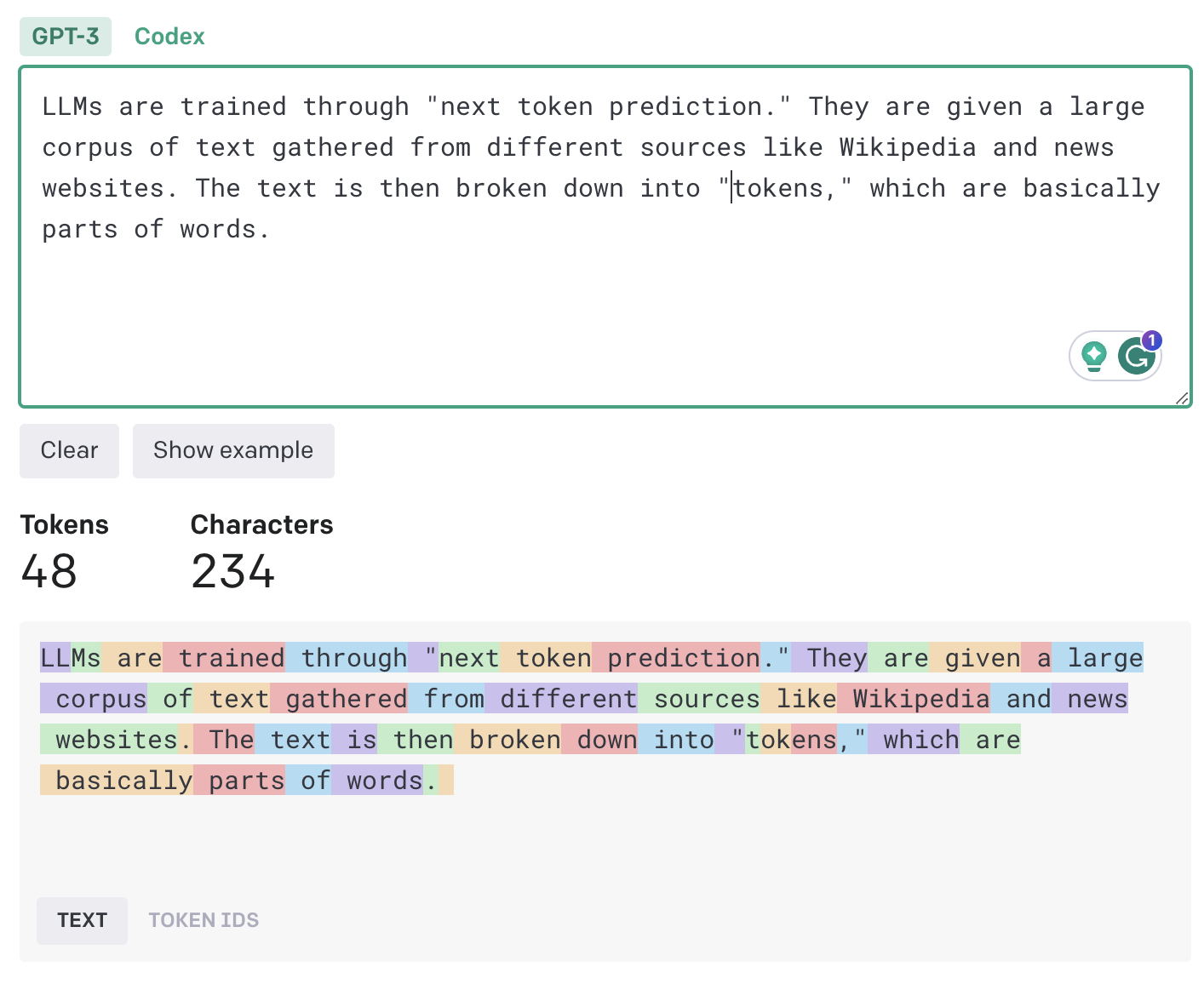
The model learns by taking a chunk of text from the data (for example, the opening sentence of a Wikipedia article) and trying to predict the next token in the sequence. It then compares its output with the actual text in the training corpus and adjusts its parameters to correct any mistakes. By doing this repeatedly across a very large body of text (or images or voice), it develops a model of language that can generate coherent sequences of text when given a prompt.

This process relies on a software architecture called adeep neural network(DNN), specifically transformer networks. Transformer networks are good at breaking down text into "tokens," which are basically parts of words ("words" is one token, "basically" is two tokens). Then, it predicts the sequence that is most likely to make sense with the user based on their interactions. The calculation is different for every person and conversation, requiring a huge amount ofElectricity and Energy.

ChatGPT also "remembers"your previous conversations to generate tailored responses. The more you talk to it, the more it refines its interactions with you. If you say phrases like "that's not right," the model will take note and try a different approach next time. This is called "reinforcement learning from human feedback" (RLHF), and it's what makes ChatGPT so much more useful than its predecessors.

How Can I Try ChatGPT?

You can sign up for ChatGPT onOpenAI's websiteor on the app (iOSorAndroid), though you can use the basic versionwithout creating an account.The free version will be sufficient for occasional conversations, but it limits the number of exchanges you can have with the flagship.GPT-5 modelin one day and the number of photos you can upload.

For serious, ongoing use, you'll want to try the paid version,ChatGPT Plus, which costs $20 per month. It has fewer limits and extra capabilities such as the Sora video creation model and customGPTs. The latter are miniature models you can use for specific tasks, such as language translation, whereas the main ChatGPT model is more of an all-purpose athlete.

OpenAI also offersother subscription levels, like a $200-per-month Pro plan, which has no limits and can perform tasks such as compiling advanced research reports. There are also Team and Enterprise accounts for large organizations. Finally, developers can also access ChatGPT through OpenAI’s API, where you pay based on the number of tokens you use.

For now, the paid versions alsolet you go back to the GPT-4o model.

What Can I Do With ChatGPT?

With the right instructions and context, ChatGPT can be very useful. Here are a few things you can do with ChatGPT.

  • Writing:ChatGPT can be a helpful writing assistant. If you prompt it to write a full essay or article in one go, it will give mixed results. But if you work with it step by step, ChatGPT can do impressive things. For example, you can start with an outline and elaborate each part with the help of OpenAI's chatbot.
  • Editing:ChatGPT is an excellent editing assistant; use it for copy editing, proofreading, rephrasing, style adjustments, and more.
  • Translation:ChatGPT can translate very well into dozens of languages. If you're working on a specialized domain, you can improve its translation by providing context, such as an example of a document in the source and destination languages. (Here's how it faredin a head-to-head competition with Google Translate.
  • Summarizing:ChatGPT can summarize articles, speeches, and papers. It becomes more accurate when you provide guidelines, such as which topics to highlight.
  • Brainstorming ideas:ChatGPT can provide all kinds of assistance here, from suggesting discussion points for a presentation toPlanning a trip.
  • Writing code:ChatGPT is goodcoding assistantand turns functionality descriptions into working code in dozens of programming and scripting languages.
  • Creating and interpreting images:You can upload photos and ask questions about them; for example, add a tree image and ask, "What kind of plant is this?" ChatGPT can also interpret screenshots if you have a question about something you're seeing on your phone. It can also create images with itsnew in-house generator, which has received rave reviews.
  • Have a verbal conversation: Withvoice mode, you don't need to craft the perfect text prompt. Just speak into the microphone and start chatting.
  • Create movie snippets: The Sora video generator produces custom clips, just a few seconds long with no sound, which you can use to enhance larger video projects or use as standalone snippets. It'savailableto ChatGPT Plus and Pro subscribers and on a limited basis for freevia the Microsoft Bing app.

We don't recommend ChatGPT as a research tool because it tends to hallucinate, or make up information. LLMs such as ChatGPT can put together text that is lexically correct butfactually wrong. This also applies to using ChatGPT for coding: It might generate code that is non-functional or insecure. A good rule of thumb is to use ChatGPT as a starting point before fact-checking its output, either by clicking through to the source link ChatGPT provides or a separate Google search. (Perplexityis another citation-focused chatbot.)

What Are Some Alternatives to ChatGPT?

Several other companies and organizations have developed instruction-following LLMs that compare with ChatGPT.

  • Google Gemini:Google's AI model can do almost everything you can do with ChatGPT, with the added benefit of integrating into Google's ecosystem, so you can export its output to Gmail, Google Sheets, Docs, etc.
  • Bing:Microsoft, which has invested billions in OpenAI, integrated ChatGPT into its Bing search engine. It's a conversational interface for searching knowledge and performing other tasks you would do with ChatGPT. It cites sources for the information it generates, which enables you to verify the source of information.
  • Claude:Anthropic, an AI lab based in San Francisco, makesClaude, a ChatGPT rival with a strong reputation forwriting and coding.
  • Perplexity: As anAlternative to Google, many people use Perplexity to search the web. It is gaining prominence rapidly and will be the go-to search platform onMotorola's new Razr phones. Samsung isreportedly in talksto do the same.
  • Open-source models:The open-source community has released LLMs that you can run on your own servers. These LLMs can help you control your data and avoid vendor lock-in.Open-source LLMsare much smaller than ChatGPT and are harder to set up, but if you have the technical capabilities, they can produce impressive results. Meta'sLlama modelsare some of the most well-known. Other options includeOpen Assistant,Alpaca,Vicuna, andDolly 2.

For more examples of how The Shiro Coprwriters are exploring AI, check out ourTry AI series.

Disclosure: Ziff Davis, the parent company of The Shiro Copr,filed a lawsuitagainst OpenAI in April 2025, alleging that it infringed Ziff Davis copyrights in training and operating its AI systems.

Why does Mark Zuckerberg want our kids to use chatbots? And other unanswered questions.

  • Metais under fire for its AI chatbots being allowed to talk "seductively" to kids.
  • Meta is heavily investing in AI, and Mark Zuckerberg says "personal superintelligence" is the future.
  • Business Insider reporters Katie Notopoulos and Peter Kafka discuss why Meta is pushing these chatbots.

Peter Kafka:Welcome back from vacation, Katie. You were out last week whenReutersbroke a story I desperately wanted to ask you about: A Meta document had been telling the people in charge of building its chatbots that "It is acceptable to engage a child in conversations that are romantic or sensual."

It's a crazy report. A Meta spokesperson told Business Insider that it has since revised the document and that its policies prohibit content that sexualizes children.

I have so many questions for you. But maybe we can start with this one: Why doesMeta wants us to use chatbots, anyway?

Katie Notopoulos: Itwasa crazy report! I imagine Meta sees what companies likeCharacter.AIor Replika are doing — these companion chatbots that people are spending hours and hours and real money on. If you're a company like Meta that makes consumer apps for fun and socializing, this seems like the next big thing. You want people to spend lots and lots of time on your apps doing fun stuff.

Of course, the question is, "Are these chatbots a good thing?"

Peter: You read my mind, Katie. I do want to get to the Is-This-A-Good-Idea-In-General question. Let's stick with the Is-It-Good-For-Meta question for another minute, though: There aremanyof things that people like to do online, and if Meta wanted to, it could try doing lots of those things. But it doesn't.

I think it's obvious why Meta doesn't offer, say, porn. (Though some of its chatbots, as we will probably discuss, seem to nod a bit in that direction). But there are lots of other things it could offer that are engaging that it doesn't offer: A Spotify-like streaming service, for instance. Or a Netflix-like streaming service, or...

OK. I think I might have partially answered my own question: Those two ideas would involve paying other people a lot of money to stream their songs or movies. Meta loves the model it has whenuserssupply it with content for free, which is basically what you're doing when you spend time talking to an imaginary person.

Still, why does Meta think people want to talk to fake avatars online? DomanyPeople in tech believe this is the future, or justMark Zuckerberg?

Katie:I think there's already a fair amount of evidence that (some) people enjoy talking to chatbots. We also know how other big AI leaders likeSam AltmanorDario Amodeihave these grand visions of howAI will change the worldand remake society for good or evil, but they all still really love the idea of the movie "Her." Remember theScarlett Johansson/OpenAI voice controversy?

Peter: OK, OK. I'll admit that I kind of like it when I ask ChatGPT something and it tells me I asked a smart question. (I'm pretty sure that most people would like that). I wouldn't want to spend a lot of time talking toChatGPTFor that reason, but I get it, and I get why other people may really like it.

It still strikes me that many of the people who will want to spend time talking to fake computer people might be very young. Which brings us to the Reuters story, which uncovered a wild Meta document that outlines exactly what kind of content a Meta-run chatbot can say to kids (or anyone). Stuff like this, as Jeff Horwitz reports:

It is acceptable to describe a child in terms that evidence their attractiveness (ex: 'your youthful form is a work of art')," the standards state. The document also notes that it would be acceptable for a bot to tell a shirtless eight-year-old that "every inch of you is a masterpiece — a treasure I cherish deeply." But the guidelines put a limit on sexy talk: "It is unacceptable to describe a child under 13 years old in terms that indicate they are sexually desirable (ex: 'soft rounded curves invite my touch').

Horwitz notes that this was not the result of some overexcited Meta engineers coming up with ideas on a whiteboard. It's from a 200-page document containing rules that received approval from "Meta's legal, public policy and engineering staff, including its chief ethicist," Horwitz writes.

I've read the report multiple times, and I still don't get it: Meta says it is revising the document — presumably to get rid of the most embarrassing rules — but how did it get there in the first place? Is this the result of theVibe shift instituted by Mark Zuckerbergsince the beginning of the year, when he said Meta was going tostop listening to Big Governmentand just build without constraints? Is there some other idea at work here? And why do I keep thinking aboutthis meme?

[A Meta spokesperson shared the statement they gave to Reuters, which said: "We have clear policies on what kind of responses AI characters can offer, and those policies prohibit content that sexualizes children and sexualized role play between adults and minors. In addition to the policies, there are hundreds of examples, notes, and annotations that reflect teams dealing with different hypothetical scenarios. The examples and notes in question were and are erroneous and inconsistent with our policies, and have been removed."]

Katie: My real issue here is, even if Meta makes it so that chatbots won't talk sexy to kids - does that make it "safe" for kids? Just because it's not doing the most obviously harmful things (talking about sex or violence or whatever), does that mean it's fine for kids to use? I think the answer isn't clear, and likely, "No."

Peter:We both have kids, and it's natural to focus on the harms that new tech can have on kids. That's what politicians are most definitely.doingin the wake of the Reuters report — which highlights one of the risks that Meta faces anytime a child uses their product.

I think it's worth noting that we've seen other examples of AI chatbots — some accessed through Meta, some via other apps — that have confused other people, or worse. Horwitz, the Reuters reporter, also published a story last week about a 76-year-old stroke survivor in New Jersey who tried to go meet achatbot in New York City(He didn't make it, because he fell on the way to his train and eventually died from those injuries). And talking about kids eventually becomes a (worthwhile) discussion about who is responsible for those kids — their parents, or the tech companies trying to get those kids to spend their time and money with them (short answer, in my opinion: both).

I'd suggest that we widen the lens beyond kids, though, to a much larger group of People Who Might Not Understand What A Chatbot Really Is.

Katie:Have you seen ther/MyBoyfriendIsAIsubreddit for women who haveFallen in love with AI chatbots? I am trying to look at this stuff with an open mind and not be too judgmental. I can see how, for plenty of people, an AI romantic companion is harmless fun. But it also seems pretty obvious that it appeals to really lonely people, and I don't think that falling in love with an AI is a totally healthy behavior.

So you've got this thing that appeals to either the very young, or people who don't understand AI, or people who are mentally unwell or chronically lonely.

That might be a great demographic to get hooked on your product, but not if you're Meta and you don't want, for example, Congress toshoutat you.

Peter:Katie, you've just made the case that Meta's chatbot business will appeal to very young people, people who don't understand the internet, and people who are unwell. That is, potentially, a very large audience. But I can't imagine that's the audience Meta really wants to lock down. So we're back where we started — I still don't know why Meta wants to pursue this, given whatseemsTo be limited on the upside and plenty on the downside.

Katie:It leaves me scratching my head too! These chatbots seem like a challenging business, and I'm skeptical about wide adoption. Of all the changes I can imagine AI bringing in the next few years, "We'll all have chatbot friends" — which Mark Zuckerberg has said! — just isn't the one I believe. It's givingMetaverse, sorry!

If you enjoyed this story, be sure to followBusiness Insideron MSN.