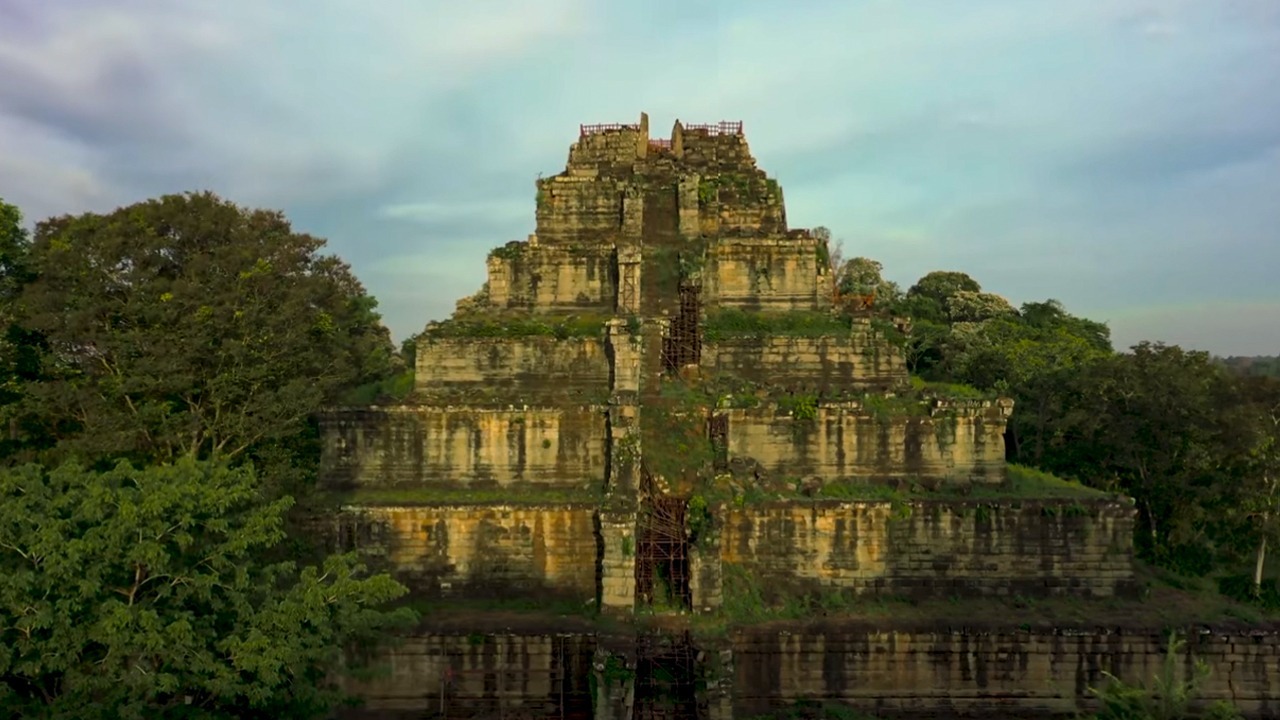
The Discovery of the Pyramid
A groundbreaking discovery has captured the attention of archaeologists and historians around the world: a massive pyramid hidden deep within the Amazon rainforest. This revelation not only challenges our understanding of ancient civilizations but also raises intriguing questions about the technological capabilities of the indigenous cultures that once inhabited the region.
The initial discovery was made by an international team of archaeologists who used satellite imagery to identify unusual geometric patterns on the forest floor. These findings were later confirmed through field expeditions, which revealed the presence of a large, pyramid-like structure. The response from the archaeological community ranged from skepticism to awe, as researchers had long debated whether such structures could exist in the dense and challenging environment of the Amazon.
Modern technology played a critical role in this breakthrough. Satellite imagery allowed researchers to peer through the thick canopy of the rainforest, revealing hidden structures that would be nearly impossible to detect from the ground. Advanced techniques like LiDAR (Light Detection and Ranging) have been instrumental in mapping the terrain and identifying features that suggest human intervention. These tools have opened new possibilities for exploring other parts of the Amazon that remain largely uncharted.
Collaboration with local indigenous communities was also essential in uncovering the pyramid. Their knowledge and oral histories provided crucial guidance, leading researchers to the site. Stories passed down through generations spoke of “El Cono,” a mysterious structure deep in the jungle. By respecting and integrating these narratives, archaeologists were able to locate the pyramid and gain deeper insights into its historical significance.
Historical Significance
The discovery of the pyramid offers fresh perspectives on ancient Amazonian civilizations. It challenges the long-held belief that the rainforest was sparsely populated by nomadic tribes. Instead, it suggests the existence of advanced societies capable of constructing monumental architecture. This find could potentially reshape our understanding of the Amazon’s history, revealing a complex network of human activity that may have included trade, agriculture, and even governance.
The pyramid itself is an architectural marvel, showcasing construction techniques that defy the assumed capabilities of its builders. Comparisons are already being drawn to other ancient structures, such as the pyramids of Egypt and the temples of the Maya. The design features, including precise alignments and intricate carvings, hint at a sophisticated understanding of engineering and art. This raises fascinating questions about cultural exchanges and the spread of technological knowledge across different regions.
Culturally, the pyramid may have served significant religious or societal roles. Its imposing structure suggests it could have been a center for ceremonies, rituals, or gatherings. Understanding these cultural implications can provide a window into the beliefs and practices of the ancient Amazonian peoples, offering a more complete picture of their way of life and their relationship with the environment.
Environmental and Ecological Impact
The discovery of the pyramid also presents challenges for conservation efforts in the Amazon. Balancing archaeological exploration with the preservation of the ecosystem is a delicate task. The region is home to a diverse array of wildlife and plant species, and any disruption could have far-reaching ecological consequences. Preservation initiatives must prioritize minimal disturbance to the environment while ensuring the site’s historical significance is documented and protected.
One aspect that has drawn attention is the role of terra preta, or Amazonian "dark earth." This fertile soil, believed to have been enriched by past human activity, surrounds the pyramid and offers clues about ancient agricultural practices. Understanding its composition and distribution could provide insights into how ancient civilizations managed to thrive in an environment that modern agriculture often finds difficult.
Biodiversity considerations are also paramount. The discovery could lead to increased human activity in the area, potentially affecting local wildlife. It is crucial to develop strategies that mitigate these impacts, ensuring that the ecological balance is maintained and that the forest’s natural inhabitants are protected.
The Mystery of El Cono
The pyramid, often referred to as “El Cono,” remains shrouded in mystery. Local myths and scientific hypotheses abound, with some suggesting it was a sacred site, while others propose it served as a hub for trade or governance. These theories highlight the enigmatic nature of the pyramid and the broader civilization that built it. As research continues, these stories and scientific inquiries will help piece together the puzzle of this ancient structure.
Despite the progress made, many questions remain unanswered. What was the pyramid’s exact purpose? Who were its creators, and what motivated them to build such an enormous edifice? These questions fuel ongoing research and exploration, with hopes that further discoveries will shed light on these mysteries.
From a global perspective, the pyramid’s discovery fits into the broader narrative of ancient human innovation. It underscores the ingenuity and adaptability of early cultures across different continents, challenging our assumptions about the capabilities of ancient societies. As new findings emerge, they promise to enrich our understanding of human history and the diverse paths of cultural development.
Implications for Future Research
The Amazonian pyramid’s discovery highlights the potential for new technologies to revolutionize archaeological exploration. As advances in remote sensing, geospatial analysis, and other fields continue to evolve, they offer the promise of uncovering hidden sites and providing detailed insights into past human activities. These tools could prove crucial in exploring other unexplored regions of the Amazon and beyond.
Encouraging interdisciplinary studies is essential for future explorations. Combining archaeology, anthropology, and environmental science offers a more comprehensive approach to understanding the complexities of ancient civilizations. Such collaborations can lead to more holistic insights and innovative methods for investigating archaeological sites.
The pyramid’s discovery could also inspire a reevaluation of historical narratives, encouraging researchers to explore other regions that have remained underexamined. As more hidden sites come to light, they may challenge existing historical frameworks and reveal new dimensions of human innovation and cultural exchange. This ongoing process of discovery promises to enrich our understanding of the past, offering new perspectives on the achievements and legacies of ancient peoples across the globe.

0 comments:
Ikutan Komentar