Understanding the Mechanics of ALMA
The Atacama Large Millimeter/submillimeter Array (ALMA) is a remarkable observatory that allows scientists to peer deep into the universe. By using radio dishes, ALMA studies cosmic structures at radio wavelengths, offering insights into some of the most distant and enigmatic parts of space. However, to achieve the best possible views, these radio dishes must sometimes be rearranged and moved, which is no small task.
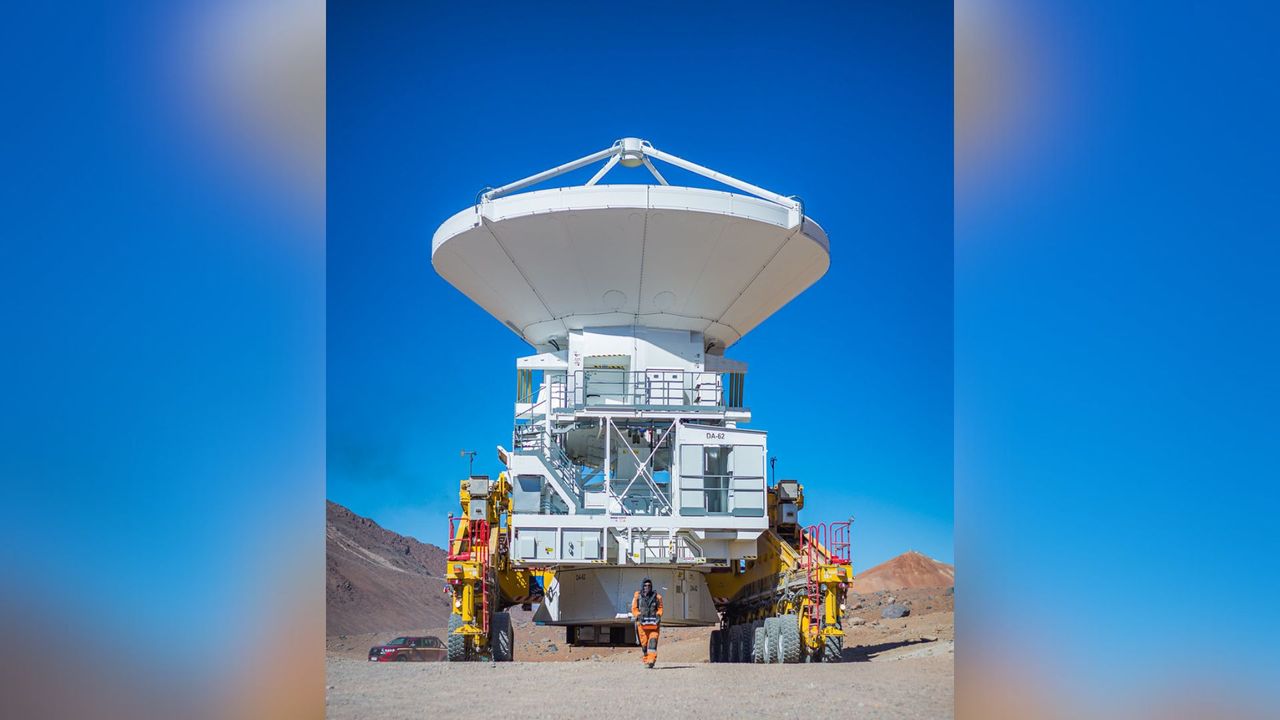
Each of the radio dishes used by ALMA can weigh up to 100 tons, making their movement a complex and carefully orchestrated process. To handle this, ALMA relies on massive transporters designed specifically for the job. These transporters themselves weigh approximately 135 tons, ensuring they can manage the heavy load of the dishes while maintaining stability and precision.
The Role of Transporters in ALMA’s Operations
The two transporters at ALMA are named Otto and Lore. They play a vital role in the observatory's operations by providing constant power to the dishes while they are being moved. This ensures that there are minimal gaps in data collection, allowing astronomers to maintain continuous observations of the cosmos.
Otto and Lore are custom-built machines equipped with specialized brakes and accelerators to ensure smooth movement. Their design allows them to position the antennas on the pads with millimetric precision, which is crucial for the accuracy of the data collected. While these transporters can be remotely operated for delicate tasks such as loading and unloading, they are also drivable. This feature is particularly important given the high altitude where ALMA is located in the Atacama Desert. Special oxygen tanks are placed near the driver's seat to support the operator during long hours of operation.
Location and Significance of ALMA
The photo capturing Otto and Lore was taken in the northern part of the Atacama Desert, near two main ALMA sites. The Array Operations Site (AOS) is situated at an elevation of 16,400 feet (5,000 meters) on the Chajnantor plateau, while the Operations Support Facility (OSF) lies 9,500 feet (2,900 meters) below the plateau. This location is ideal for radio astronomy due to its high altitude and dry climate, which minimize atmospheric interference.
Why ALMA Stands Out
ALMA is one of the most advanced observatories in the world, serving as a critical hub for astronomers globally. Its ability to constantly adjust its array of radio dishes gives it a significant advantage over other observatories. This flexibility allows scientists to study a wide range of celestial phenomena that are otherwise difficult to observe.
By observing the cosmos at millimeter and sub-millimeter wavelengths, ALMA helps researchers explore cold and distant objects such as protoplanetary disks, molecular clouds, and star-forming areas. These observations contribute to our understanding of how stars and planets form, as well as the evolution of galaxies.
Expanding Knowledge Through Radio Astronomy
For those interested in learning more about radio astronomy and ALMA’s research, there are numerous resources available. Exploring topics like radio waves, astronomical observations, and the science behind ALMA can provide deeper insights into the workings of the universe.
If you found this article informative, consider following similar content to stay updated on the latest discoveries in space science and technology.

0 comments:
Ikutan Komentar