Wednesday, December 3, 2025

Hyundai, Samsung Enter Lee-Trump Summit Amid Auto and Chip Tariff Tensions

Featured Image

Key Sectors Affected by New U.S. Tariffs

South Korean President Lee Jae Myung is set to meet with U.S. President Donald Trump at the White House on Monday. This high-profile meeting comes as several key South Korean industries face the impact of new U.S. tariffs. The sectors most affected include automobiles and semiconductors, which are vital components of South Korea’s export economy.

The Trump administration recently announced a trade deal that imposes a 15% tariff on imports from South Korea. This move targets major exports such as cars, semiconductors, smartphones, and machinery. In 2023, automobiles accounted for 10% of South Korea’s total exports, while semiconductors made up 21%. These industries contribute significantly to the country’s economic output, with exports representing over 40% of its GDP.

Business Leaders Join the President

President Lee will be accompanied by executives from some of South Korea’s leading companies, including Hyundai Motor, Samsung Electronics, SK Hynix, and LG Energy Solution. These business leaders are expected to play a central role in discussions about the implications of the new tariffs and potential strategies to mitigate their impact.

According to reports, these companies may announce up to $150 billion in new investments in the U.S., building on existing projects like Samsung’s chip plant in Texas and Hyundai’s $21 billion investment in vehicle and steel facilities. This investment could help strengthen economic ties between the two nations and provide a counterbalance to the new tariffs.

New Financial Arrangements

In addition to the tariffs, the July 31 trade deal introduced a $350 billion South Korean fund aimed at supporting U.S. projects. According to Trump, he would oversee how the funds are allocated, with 90% of the profits returning to the U.S. However, Seoul has clarified that most of the fund would be structured as loan guarantees, with less than 5% in equity.

A portion of this fund, specifically $150 billion, is designated for shipyards, and President Lee plans to visit one in Philadelphia during his trip. This highlights the strategic importance of maritime infrastructure in the bilateral economic relationship.

Agriculture and Trade Negotiations

Agriculture is another critical area of discussion. Trump has indicated that South Korea would be “completely open” to U.S. farm goods. However, Seoul has excluded rice and beef from the agreement due to their political sensitivity. Analysts suggest that concessions in agriculture might be balanced against lower tariffs on automobiles and semiconductors.

Defense Spending and Regional Security

Defense spending will also be a focal point of the talks. Trump has repeatedly urged allies to increase their military contributions, referring to South Korea as a “money machine.” South Korea hosts approximately 28,500 U.S. troops and has committed to allocating 2.32% of its GDP to defense this year. The discussions are expected to address how both nations can work together to enhance regional security.

North Korea and Diplomatic Challenges

North Korea will also be on the agenda. During his first term, Trump met with Kim Jong Un three times but failed to curb Pyongyang’s nuclear ambitions. Recently, Kim has vowed a “rapid expansion” of his nuclear arsenal as U.S.-ROK military drills continue. Analysts believe that meaningful engagement with North Korea is unlikely unless there are significant changes in the approach to military exercises and denuclearization efforts.

Market Reactions and Investment Trends

On the financial front, retail sentiment has been positive for several key indices. The SPDR S&P 500 ETF Trust (SPY) showed a ‘bullish’ outlook with ‘normal’ message volume, while the Invesco QQQ Trust (QQQ) had a ‘neutral’ stance with ‘high’ volume. Meanwhile, the iShares MSCI South Korea ETF (EWY) was seen as ‘bullish’ with ‘high’ volume.

These market movements reflect investor confidence in the broader economic environment. As of now, SPY is up 10.8% year-to-date, QQQ has gained 12.2%, and EWY has surged 44.5%, outperforming both. This performance underscores the resilience of global markets despite ongoing trade tensions and geopolitical uncertainties.


Hyundai, Samsung Enter Lee-Trump Summit Amid Auto and Chip Tariff Tensions

Featured Image

Key Sectors Affected by New U.S. Tariffs

South Korean President Lee Jae Myung is set to meet with U.S. President Donald Trump at the White House on Monday. This high-profile meeting comes as several key South Korean industries face the impact of new U.S. tariffs. The sectors most affected include automobiles and semiconductors, which are vital components of South Korea’s export economy.

The Trump administration recently announced a trade deal that imposes a 15% tariff on imports from South Korea. This move targets major exports such as cars, semiconductors, smartphones, and machinery. In 2023, automobiles accounted for 10% of South Korea’s total exports, while semiconductors made up 21%. These industries contribute significantly to the country’s economic output, with exports representing over 40% of its GDP.

Business Leaders Join the President

President Lee will be accompanied by executives from some of South Korea’s leading companies, including Hyundai Motor, Samsung Electronics, SK Hynix, and LG Energy Solution. These business leaders are expected to play a central role in discussions about the implications of the new tariffs and potential strategies to mitigate their impact.

According to reports, these companies may announce up to $150 billion in new investments in the U.S., building on existing projects like Samsung’s chip plant in Texas and Hyundai’s $21 billion investment in vehicle and steel facilities. This investment could help strengthen economic ties between the two nations and provide a counterbalance to the new tariffs.

New Financial Arrangements

In addition to the tariffs, the July 31 trade deal introduced a $350 billion South Korean fund aimed at supporting U.S. projects. According to Trump, he would oversee how the funds are allocated, with 90% of the profits returning to the U.S. However, Seoul has clarified that most of the fund would be structured as loan guarantees, with less than 5% in equity.

A portion of this fund, specifically $150 billion, is designated for shipyards, and President Lee plans to visit one in Philadelphia during his trip. This highlights the strategic importance of maritime infrastructure in the bilateral economic relationship.

Agriculture and Trade Negotiations

Agriculture is another critical area of discussion. Trump has indicated that South Korea would be “completely open” to U.S. farm goods. However, Seoul has excluded rice and beef from the agreement due to their political sensitivity. Analysts suggest that concessions in agriculture might be balanced against lower tariffs on automobiles and semiconductors.

Defense Spending and Regional Security

Defense spending will also be a focal point of the talks. Trump has repeatedly urged allies to increase their military contributions, referring to South Korea as a “money machine.” South Korea hosts approximately 28,500 U.S. troops and has committed to allocating 2.32% of its GDP to defense this year. The discussions are expected to address how both nations can work together to enhance regional security.

North Korea and Diplomatic Challenges

North Korea will also be on the agenda. During his first term, Trump met with Kim Jong Un three times but failed to curb Pyongyang’s nuclear ambitions. Recently, Kim has vowed a “rapid expansion” of his nuclear arsenal as U.S.-ROK military drills continue. Analysts believe that meaningful engagement with North Korea is unlikely unless there are significant changes in the approach to military exercises and denuclearization efforts.

Market Reactions and Investment Trends

On the financial front, retail sentiment has been positive for several key indices. The SPDR S&P 500 ETF Trust (SPY) showed a ‘bullish’ outlook with ‘normal’ message volume, while the Invesco QQQ Trust (QQQ) had a ‘neutral’ stance with ‘high’ volume. Meanwhile, the iShares MSCI South Korea ETF (EWY) was seen as ‘bullish’ with ‘high’ volume.

These market movements reflect investor confidence in the broader economic environment. As of now, SPY is up 10.8% year-to-date, QQQ has gained 12.2%, and EWY has surged 44.5%, outperforming both. This performance underscores the resilience of global markets despite ongoing trade tensions and geopolitical uncertainties.

Tuesday, December 2, 2025

AI Could Revolutionize Young Workers' Futures, Says Handshake CEO

Featured Image

The Impact of AI on Entry-Level Jobs

The rapid advancement of artificial intelligence (AI) has sparked widespread concern about the future of entry-level jobs. Many worry that as AI becomes more integrated into the workplace, it could render traditional junior roles obsolete. However, some industry leaders argue that this shift might actually benefit young workers who have grown up in an era where AI is a common tool.

Garrett Lord, CEO of Handshake, a job search and AI training platform, shared his perspective on the evolving job market. According to Lord, today's graduates are uniquely positioned to succeed because they are "AI native." This means they have grown up using AI tools and are more comfortable integrating them into their work processes.

Leveraging AI can be compared to having an "Iron Man suit on," according to Lord. This analogy highlights how AI can enhance productivity and efficiency, giving young workers a competitive edge. While many headlines suggest that AI will eliminate junior roles, Lord claims that employers on Handshake’s platform—ranging from Fortune 500 companies to federal agencies—are not seeing this trend unfold as predicted.

Lord emphasized that the fear of AI replacing entry-level jobs is often exaggerated. He noted that many employers are not hearing the same concerns from their workforce. Instead, he observed that young workers who are familiar with AI tools can take on tasks that previously required entire teams. For example, in fields like social media marketing, one employee can manage video production, design assets, posting across multiple platforms, and even run analytics—all independently.

This shift doesn't require advanced degrees, as Lord pointed out. Young workers don't need a data science degree to leverage AI effectively. Instead, they can use these tools to streamline workflows and increase their value to employers.

The Evolution of Jobs and the Need for Reskilling

Lord also acknowledged that hundreds of millions of jobs will evolve due to AI. While this change may require workers to reskill, he believes that AI is ultimately an accelerant rather than a threat. He expressed optimism that AI will empower individuals to be more productive and create greater impact in their respective fields.

Despite these positive outlooks, not all tech leaders share the same level of confidence. Dario Amodei, CEO of Anthropic, warned that AI could potentially eliminate up to half of entry-level, white-collar jobs within the next five years. He stressed that many people are unaware of this impending change and find the idea hard to believe.

Gen Z: A New Generation of Workers

Other technology leaders have also weighed in on the topic, suggesting that Gen Z graduates may be in a favorable position. Sam Altman, CEO of OpenAI, recently stated that while AI will certainly eliminate some jobs, younger workers are better equipped to adapt to these changes. He even went so far as to say that if he were 22 and graduating college, he would feel like the luckiest person in history.

Reid Hoffman, co-founder of LinkedIn, encouraged young people to highlight their familiarity with AI when seeking employment. He emphasized that being "AI native" is a valuable asset that can make them stand out in the job market.

Conclusion

As AI continues to reshape the job landscape, the role of young workers remains a topic of discussion. While some experts express concerns about the potential loss of entry-level positions, others see opportunities for growth and innovation. The key for young professionals may lie in embracing AI as a tool for success and continuously adapting to new technologies. Whether they are lucky or unlucky depends largely on how well they can navigate this changing environment and leverage the advantages of being "AI native."

AI Could Revolutionize Young Workers' Futures, Says Handshake CEO

Featured Image

The Impact of AI on Entry-Level Jobs

The rapid advancement of artificial intelligence (AI) has sparked widespread concern about the future of entry-level jobs. Many worry that as AI becomes more integrated into the workplace, it could render traditional junior roles obsolete. However, some industry leaders argue that this shift might actually benefit young workers who have grown up in an era where AI is a common tool.

Garrett Lord, CEO of Handshake, a job search and AI training platform, shared his perspective on the evolving job market. According to Lord, today's graduates are uniquely positioned to succeed because they are "AI native." This means they have grown up using AI tools and are more comfortable integrating them into their work processes.

Leveraging AI can be compared to having an "Iron Man suit on," according to Lord. This analogy highlights how AI can enhance productivity and efficiency, giving young workers a competitive edge. While many headlines suggest that AI will eliminate junior roles, Lord claims that employers on Handshake’s platform—ranging from Fortune 500 companies to federal agencies—are not seeing this trend unfold as predicted.

Lord emphasized that the fear of AI replacing entry-level jobs is often exaggerated. He noted that many employers are not hearing the same concerns from their workforce. Instead, he observed that young workers who are familiar with AI tools can take on tasks that previously required entire teams. For example, in fields like social media marketing, one employee can manage video production, design assets, posting across multiple platforms, and even run analytics—all independently.

This shift doesn't require advanced degrees, as Lord pointed out. Young workers don't need a data science degree to leverage AI effectively. Instead, they can use these tools to streamline workflows and increase their value to employers.

The Evolution of Jobs and the Need for Reskilling

Lord also acknowledged that hundreds of millions of jobs will evolve due to AI. While this change may require workers to reskill, he believes that AI is ultimately an accelerant rather than a threat. He expressed optimism that AI will empower individuals to be more productive and create greater impact in their respective fields.

Despite these positive outlooks, not all tech leaders share the same level of confidence. Dario Amodei, CEO of Anthropic, warned that AI could potentially eliminate up to half of entry-level, white-collar jobs within the next five years. He stressed that many people are unaware of this impending change and find the idea hard to believe.

Gen Z: A New Generation of Workers

Other technology leaders have also weighed in on the topic, suggesting that Gen Z graduates may be in a favorable position. Sam Altman, CEO of OpenAI, recently stated that while AI will certainly eliminate some jobs, younger workers are better equipped to adapt to these changes. He even went so far as to say that if he were 22 and graduating college, he would feel like the luckiest person in history.

Reid Hoffman, co-founder of LinkedIn, encouraged young people to highlight their familiarity with AI when seeking employment. He emphasized that being "AI native" is a valuable asset that can make them stand out in the job market.

Conclusion

As AI continues to reshape the job landscape, the role of young workers remains a topic of discussion. While some experts express concerns about the potential loss of entry-level positions, others see opportunities for growth and innovation. The key for young professionals may lie in embracing AI as a tool for success and continuously adapting to new technologies. Whether they are lucky or unlucky depends largely on how well they can navigate this changing environment and leverage the advantages of being "AI native."

Monday, December 1, 2025

Tech Startup CEO: Computer Science Degree No Longer the Entry Ticket

Featured Image

The Changing Landscape of Tech Careers

Anton Osika, the CEO of Lovable, is challenging the traditional belief that a computer science degree is essential for a career in technology. In an interview with Business Insider, he emphasized that while the degree isn’t entirely obsolete, its value has shifted significantly. “I wouldn’t say it’s worthless, but I do think the leverage has moved,” he said.

Osika, who is 35 years old, pointed out that the barriers to entering the tech industry have changed over time. “In the past, the bottleneck was technical know-how, which required years of training to even get started. But now, people have the tools to go from idea to working product without ever touching a formal CS education,” he explained. This shift has made it possible for individuals to build, ship, and even start companies without a traditional computer science background.

While Osika acknowledges that a degree still holds value—especially for those interested in deep systems, theory, or research—he argues that it’s no longer the default path. “The default path—‘I need a CS degree to be relevant in tech’—feels much less true today,” he said. Instead, he believes that qualities like curiosity, adaptability, and the ability to deliver high-quality products quickly are becoming more important than formal credentials.

The Rise of AI-Driven Development

Lovable, the company Osika co-founded in 2023, is a prime example of this changing landscape. It’s a vibe coding platform that enables people with limited programming knowledge to create software using artificial intelligence. The startup currently has 45 employees, according to PitchBook, and is actively hiring for 16 open positions.

The company recently attracted significant attention when it was reported that venture capital firm Accel was set to lead a new funding round that would value Lovable at $1.5 billion. Accel is known for its early investments in companies like Facebook and Slack, making this development a major milestone for the startup.

This trend aligns with broader shifts in the tech industry. Paul Graham, founder of Y Combinator, recently stated on X that low-level programming jobs are “already disappearing” due to AI. He noted that AI is particularly effective at handling scutwork, but the best programmers—who can start their own companies—are being paid exceptional amounts.

Graham advised individuals to focus on doing something so well that they operate above the level of routine tasks. “The best general advice for protecting oneself from AI is to do something so well that you’re operating way above the level of scutwork,” he wrote.

The Future of Hiring in Tech

Osika’s approach to hiring reflects these changes in the industry. He places more emphasis on a candidate’s ability to learn and adapt than on their current skills. “I care more about how fast someone learns and adapts than where they are today,” he said.

He added that if a conversation feels engaging and leaves him with new insights, it’s a strong indicator that the person will thrive in his team. “If I walk away having learned something new, that’s a strong sign they’ll push our ways of working forward,” he explained.

As the tech industry continues to evolve, the importance of formal degrees may diminish, but the demand for creativity, problem-solving, and continuous learning will only grow. Osika’s perspective highlights a broader movement toward valuing practical skills and innovation over traditional academic paths.

With AI reshaping the way we develop software and the job market, the future of tech careers looks increasingly dynamic and open to those who can adapt and innovate.

Tech Startup CEO: Computer Science Degree No Longer the Entry Ticket

Featured Image

The Changing Landscape of Tech Careers

Anton Osika, the CEO of Lovable, is challenging the traditional belief that a computer science degree is essential for a career in technology. In an interview with Business Insider, he emphasized that while the degree isn’t entirely obsolete, its value has shifted significantly. “I wouldn’t say it’s worthless, but I do think the leverage has moved,” he said.

Osika, who is 35 years old, pointed out that the barriers to entering the tech industry have changed over time. “In the past, the bottleneck was technical know-how, which required years of training to even get started. But now, people have the tools to go from idea to working product without ever touching a formal CS education,” he explained. This shift has made it possible for individuals to build, ship, and even start companies without a traditional computer science background.

While Osika acknowledges that a degree still holds value—especially for those interested in deep systems, theory, or research—he argues that it’s no longer the default path. “The default path—‘I need a CS degree to be relevant in tech’—feels much less true today,” he said. Instead, he believes that qualities like curiosity, adaptability, and the ability to deliver high-quality products quickly are becoming more important than formal credentials.

The Rise of AI-Driven Development

Lovable, the company Osika co-founded in 2023, is a prime example of this changing landscape. It’s a vibe coding platform that enables people with limited programming knowledge to create software using artificial intelligence. The startup currently has 45 employees, according to PitchBook, and is actively hiring for 16 open positions.

The company recently attracted significant attention when it was reported that venture capital firm Accel was set to lead a new funding round that would value Lovable at $1.5 billion. Accel is known for its early investments in companies like Facebook and Slack, making this development a major milestone for the startup.

This trend aligns with broader shifts in the tech industry. Paul Graham, founder of Y Combinator, recently stated on X that low-level programming jobs are “already disappearing” due to AI. He noted that AI is particularly effective at handling scutwork, but the best programmers—who can start their own companies—are being paid exceptional amounts.

Graham advised individuals to focus on doing something so well that they operate above the level of routine tasks. “The best general advice for protecting oneself from AI is to do something so well that you’re operating way above the level of scutwork,” he wrote.

The Future of Hiring in Tech

Osika’s approach to hiring reflects these changes in the industry. He places more emphasis on a candidate’s ability to learn and adapt than on their current skills. “I care more about how fast someone learns and adapts than where they are today,” he said.

He added that if a conversation feels engaging and leaves him with new insights, it’s a strong indicator that the person will thrive in his team. “If I walk away having learned something new, that’s a strong sign they’ll push our ways of working forward,” he explained.

As the tech industry continues to evolve, the importance of formal degrees may diminish, but the demand for creativity, problem-solving, and continuous learning will only grow. Osika’s perspective highlights a broader movement toward valuing practical skills and innovation over traditional academic paths.

With AI reshaping the way we develop software and the job market, the future of tech careers looks increasingly dynamic and open to those who can adapt and innovate.

Sunday, November 30, 2025

Google Fixes Major Password Manager Issue — Still Not Perfect

Featured Image

The Evolution of Google Password Manager

When it comes to password management, many people tend to overlook the options available in their preferred platforms. However, it's not surprising that Google's password manager hasn't made the cut for top recommendations. While it isn't inherently bad at its job, it has often been a source of frustration for users due to its cumbersome interface.

The primary issue with Google's password manager has always been its placement within the labyrinth of menus across various Google services. On Android, accessing the password manager required navigating through multiple settings and account pages, making it an inconvenient process. This design choice, while understandable from a technical standpoint, led to a poor user experience.

Google initially aimed for a system that could work autonomously, using autofill to enter passwords whenever needed. Over time, they introduced a shortcut option on the Android home screen, but this still required users to dive deep into settings to find it. By that point, many had already given up on using Google's built-in password manager and opted for third-party alternatives.

A New Approach to Password Management

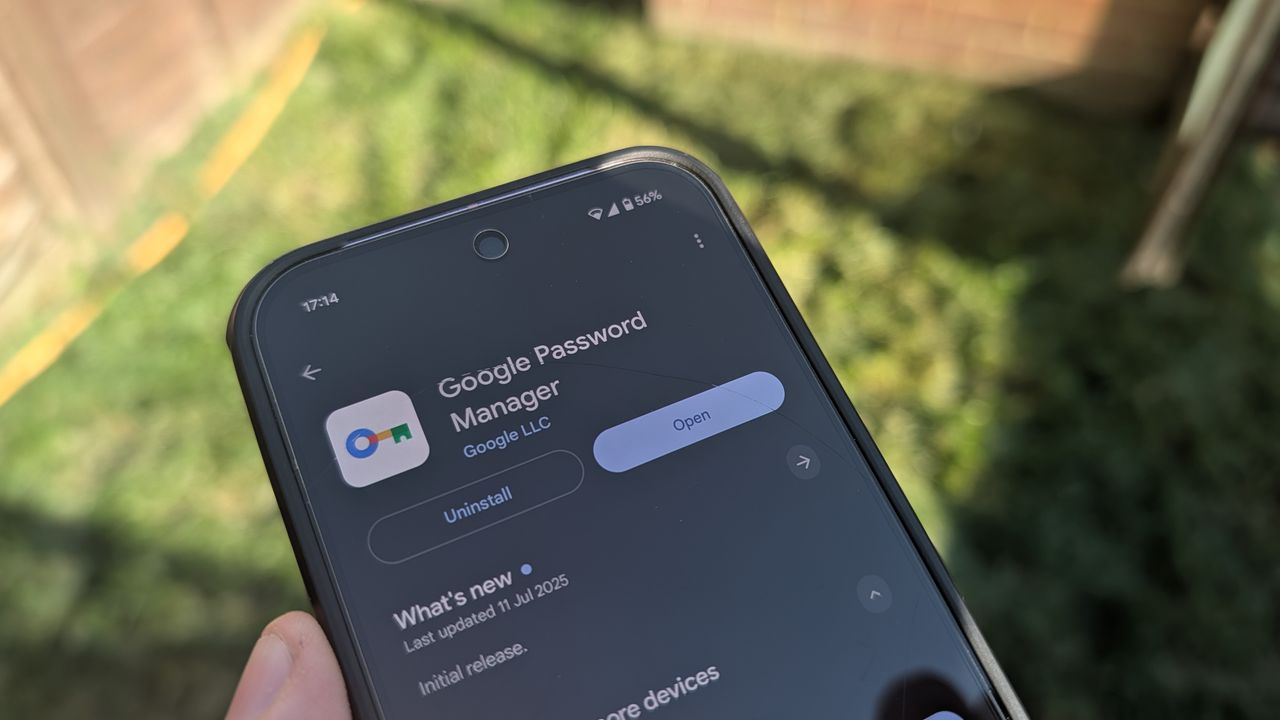
Recently, there have been signs of improvement with the launch of the Pixel 10 and Android 16. One of the most notable changes is the introduction of Google Password Manager as a standalone app on the Play Store. This means users can now download it directly, making it more accessible than before. Although the functionality remains largely the same, the convenience of having it as an app is a step in the right direction.

The shift to a Play Store app also allows Google to enforce a rule requiring Android manufacturers to include the password manager by default. This could significantly increase its adoption rate, especially if users are encouraged to set up complex passwords instead of reusing them across accounts.

However, despite these improvements, the core features of Google Password Manager haven't evolved much. Other free password managers offer additional functionalities beyond just securing login details. For instance, they often provide secure notes, document storage, and contact management—features that are essential for comprehensive security.

Learning from Apple’s Approach

Apple's Password Manager, launched alongside iOS 18, has set a new standard for what a password manager should be. It's not just a tool for storing login credentials; it also includes authenticator codes, Wi-Fi passwords, and alerts about data breaches. This integration into a single, secure location makes it incredibly convenient and user-friendly.

While Apple's solution has its limitations, such as the lack of secure note storage, the fact that everything is centralized and protected by biometric authentication makes it a compelling option. The convenience of having all security-related information in one place encourages users to take advantage of these features, especially since it's free and works seamlessly across all Apple devices.

Google would benefit greatly from adopting a similar approach. Merging its existing features into a single, secure location could enhance user experience and make the password manager more appealing. Additionally, focusing on surpassing Apple's offerings could help Google compete more effectively with dedicated password managers like NordPass.

Conclusion

As the digital landscape continues to evolve, the need for robust and user-friendly password management solutions becomes increasingly important. While Google has taken some steps to improve its password manager, there is still room for growth. By learning from Apple's successful model and incorporating additional features, Google can create a more compelling product that meets the needs of modern users. The sooner this happens, the better it will be for both users and the broader cybersecurity community.