Showing posts with label metal. Show all posts

Tuesday, September 1, 2026

Laser-Engraved Black Metal Boosts Solar Efficiency 15x

Featured Image

A New Breakthrough in Solar Power Efficiency

Scientists have made a significant discovery that could revolutionize the way solar power generators operate. They have developed a method that can increase the efficiency of these devices by a factor of 15, opening up new possibilities for renewable energy.

The breakthrough centers around a unique material known as "black metal," which has been laser-etched over the past five years. This material is now being explored for use in solar thermoelectric generators (STEGs), a type of solid-state electronic device that converts thermal energy into electricity using the Seebeck effect. This phenomenon occurs when a temperature difference between materials causes charged particles to move, generating an electromagnetic force or voltage.

A STEG consists of semiconductor materials sandwiched between a "hot" and a "cold" side. When the hot side is heated — whether by sunlight or another thermal source — electrons move through the semiconductor, creating an electric current. However, existing STEGs are notoriously inefficient, converting less than 1% of sunlight into electricity. This is significantly lower compared to photovoltaic solar panels, which typically convert about 20% of the light they receive into usable electricity.

In a recent study published on August 12 in the journal Light: Science and Applications, researchers demonstrated how laser-treated metals, referred to as "black metal" due to their deep, inky-black appearance, can dramatically boost the efficiency of a solar thermoelectric generator.

The Laser Treatment Process

The method involved using extremely fast and precise laser pulses to etch microscopic grooves into a piece of tungsten. These nanoscale etchings allowed the tungsten to absorb more thermal radiation and retain it for longer periods. Additionally, the laser treatment turned the surface of the metal pitch black, increasing its ability to absorb heat. To enhance this effect, the researchers covered the black tungsten with a piece of plastic, creating a "mini greenhouse" that trapped even more heat.

For the cold side of the STEG, the scientists applied similar laser pulses to a piece of regular aluminum. The resulting etchings created a "super-high-capacity micro-structured heat dissipator." According to the researchers, this design was twice as efficient at dissipating heat compared to a typical aluminum heat sink.

Testing the System

To test the system, the researchers used it to power an LED under simulated sunlight. A standard STEG was unable to illuminate the LED even when exposed to light 10 times stronger than normal sunlight. However, with both sides treated using the black metal, the device lit the LED at full brightness under light five times stronger than normal sunlight. This represents a 15-times increase in power output.

While this technology may not replace large-scale solar farms in the near future, it has potential applications in low-power wireless Internet of Things (IoT) sensors, wearable devices, or off-grid renewable energy systems in rural areas.

Insights from the Research Team

Chunlei Guo, a study co-author and professor of optics and physics at Rochester University's Laboratory for Laser Energetics, highlighted the significance of the findings. He noted that for decades, research efforts have focused on improving semiconductor materials in STEGs, with only modest gains in efficiency. In this study, the team took a different approach by focusing on the hot and cold sides of the device rather than the semiconductor itself.

By enhancing solar energy absorption and heat trapping on the hot side, and improving heat dissipation on the cold side, the researchers achieved a remarkable improvement in efficiency. This innovative approach could pave the way for more efficient and practical solar power solutions in the future.

Saturday, August 23, 2025

New metamaterial bends the rules of physics by combining unexpected strength with stretchability

A groundbreaking new material bends the rules ofphysicsBy combining surprising strength with impressive stretch. Scientists have long faced a trade-off in materials science: the stiffer something is, the less it can stretch without breaking. But a new kind of synthetic material, known as a double-network metamaterial, could change everything.

Metamaterialsare engineered materials with structures at the microscopic level that give them unusual mechanical properties. These structures let the material behave in ways that natural materials can't. Traditionally, researchers focused on making these materials stiffer and stronger, often ignoring stretchiness or flexibility. But that changed when engineers fromMITBegan looking to soft, stretchy materials like hydrogels for inspiration.

Learning from Jell-O

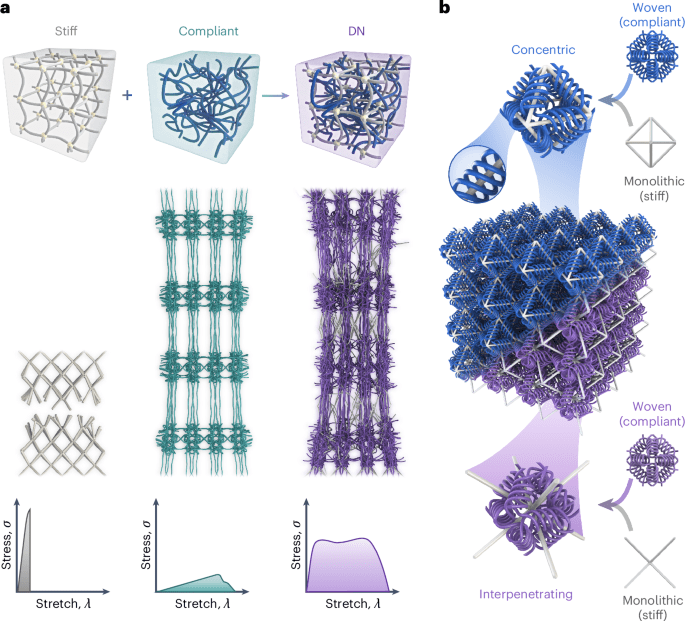
HydrogelsThey are mostly made of water and a small amount of polymer. They are soft and squishy, but scientists have figured out how to make them tough as well. The trick is combining two very different networks within the material: one stiff and one soft. When these networks work together, the hydrogel can stretch a lot without breaking apart.

Researchers wondered: could this same idea work in metamaterials? If you take a stiff, brittle material and structure it with both hard and soft patterns, could you make something that's both tough and stretchy?

That question led a group of engineers to a creative solution. Instead of choosing a new soft material, they used a single hard one—aplasticSimilar to plexiglass. What changed was how they shaped it. By designing it with two types of tiny structures—a solid scaffold and a tangled weave—they created a new type of metamaterial that's not only strong but also stretchy.

A Breakthrough Design

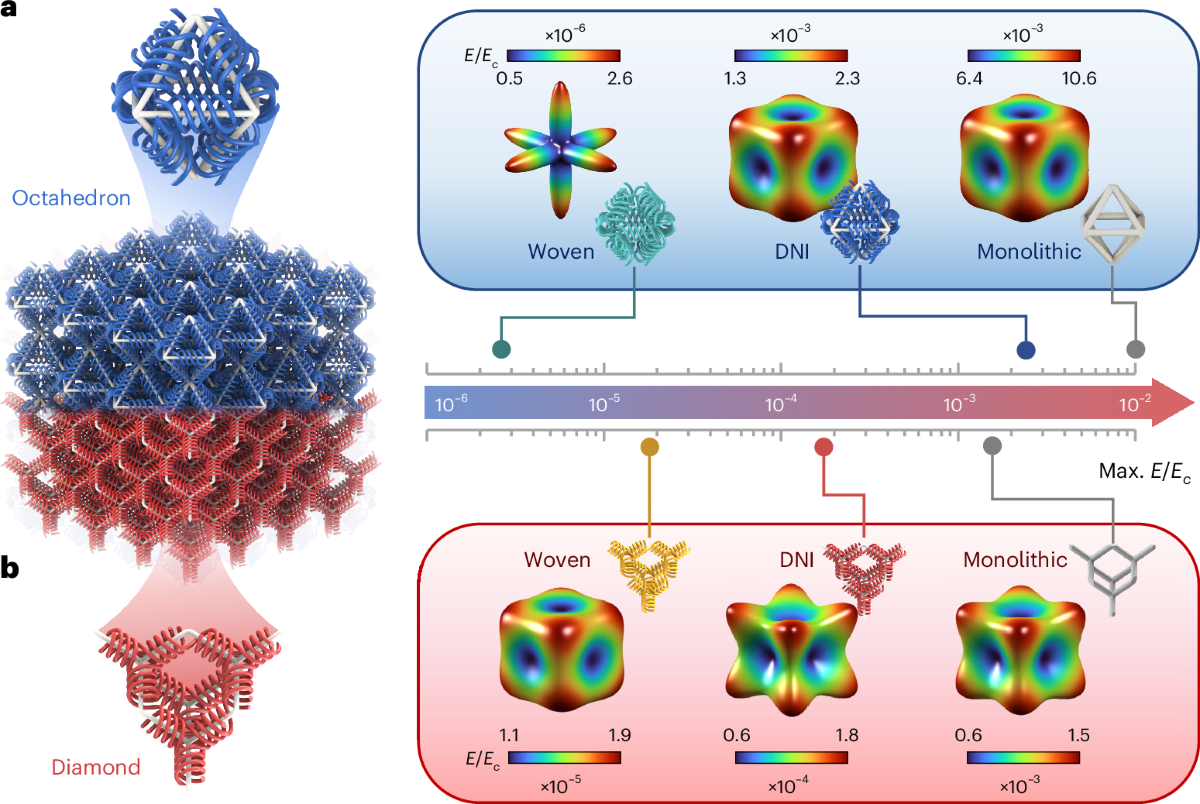
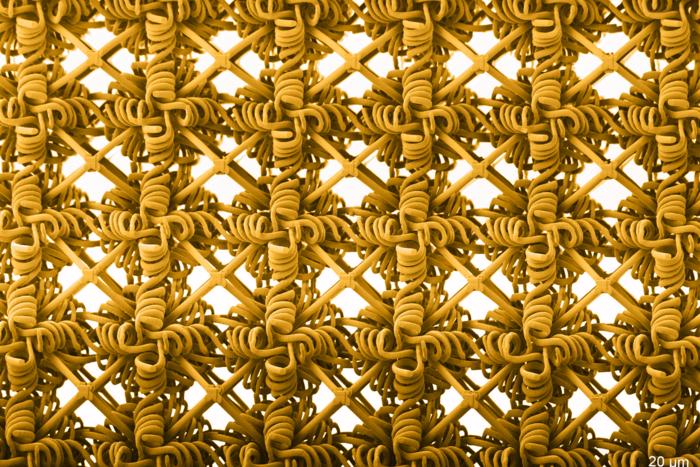
This new material includes two networks: one is a rigid lattice of microscopic trusses and struts, and the other is a flexible weave of coils that wrap around the lattice. Both parts are printed from the same hard plastic using a highly accurate laser printing method called two-photon lithography.

Related Stories

・Invisible material brings a new era of touch screens and wearable devices

・Generative AI designed 5 new battery materials - more powerful and sustainable than lithium

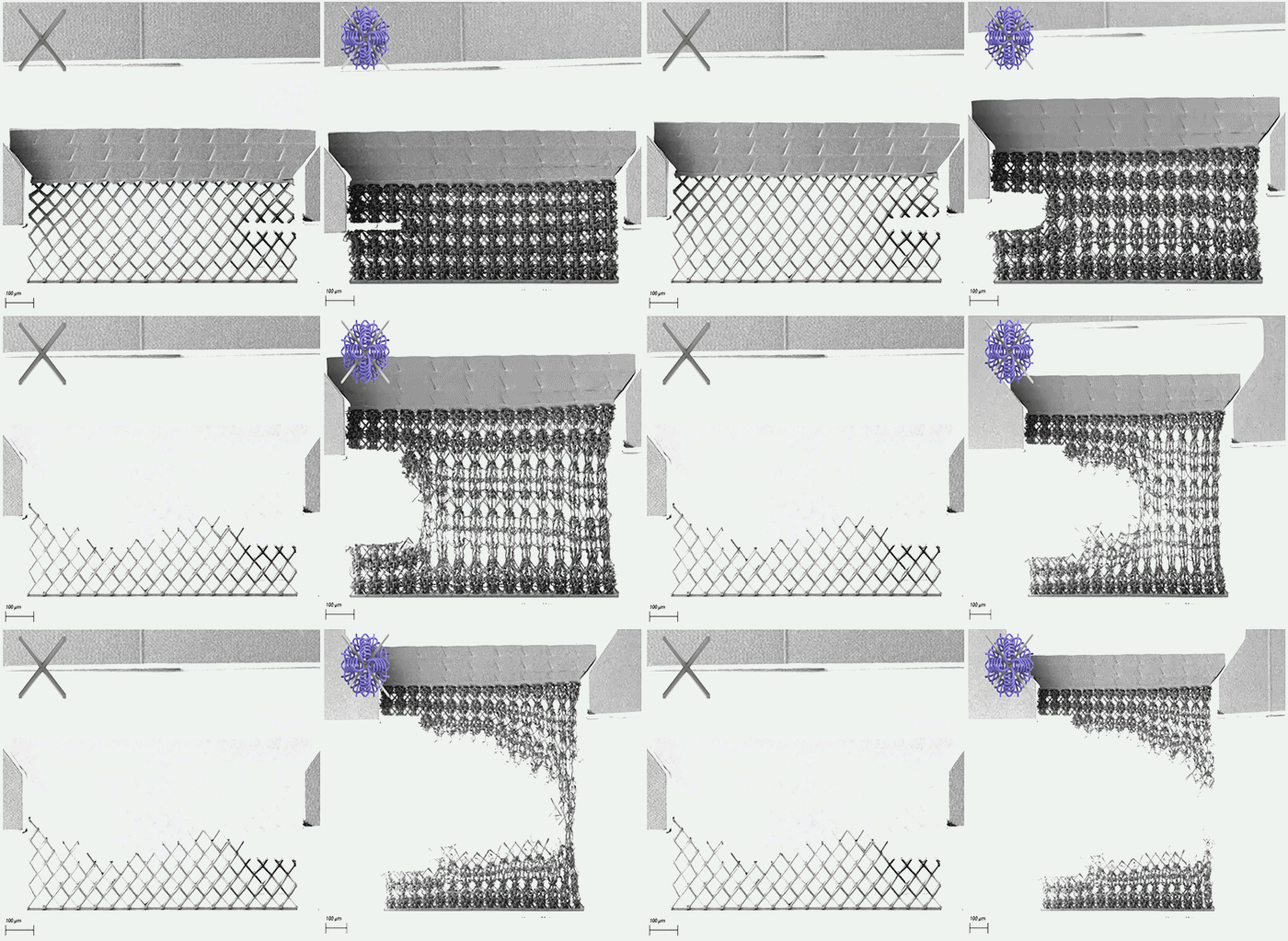
On its own, the plastic is stiff and snaps easily under stress. But when arranged in this double-network design, it behaves in a completely different way. The material can stretch to more than three times its original length without breaking. That's 10 times more stretch than the same plastic structured as a standard stiff metamaterial.

Carlos Portela, a researcher on the team, explains, "We are opening up this new territory for metamaterials. You could print a double-network metal or ceramic, and you could get a lot of these benefits, in that it would take moreenergyto break them, and they would be significantly more stretchable.”

How It Works

Imagine the soft network as a messy tangle of spaghetti, twisted around the harder structure. As you stretch the material, the stiff parts crack first, but they don't break cleanly. The tangled soft part holds onto the broken pieces, creating friction and slowing the damage. This tangle spreads the force over more of the material and stops cracks from spreading too fast.

Think of this woven network as a mess of spaghetti tangled around a lattice," says Portela. "As we break the monolithic lattice network, those broken parts come along for the ride, and now all this spaghetti gets entangled with the lattice pieces. That promotes more entanglement between woven fibers, which means you have more friction and more energy dissipation.

It turns out this design doesn't just stretch—it absorbs energy very well. When you try to pull it apart, the material doesn't just snap. Instead, it resists by using the friction between the tangled parts to absorb the force. That makes the material much tougher. In fact, lab tests showed that the material could handle three times more stretch and absorb ten times more energy compared to its traditional version made from the same plastic.

Defects That Make It Better

Even more surprising, adding small flaws to the material—something usually avoided inengineering—made it perform better. The team punched holes in the structure and watched what happened.

You might think this makes the material worse," says James Utama Surjadi, the lead author. "But we saw once we started adding defects, we doubled the amount of stretch we were able to do, and tripled the amount of energy that we dissipated. That gives us a material that's both stiff and tough, which is usually a contradiction.

The defects allowed the material to stretch more evenly, preventing sudden cracks and making failure less likely. Engineers call this "failure delocalization." Instead of the material snapping at one point, the stress spreads out, and the damage is more controlled.

Big Ideas for Small Structures

To build and test their new metamaterial, the team printed tiny samples just a few millimeters across. These were then placed into a special machine that stretched them slowly while measuring the force.High-speed camerasrecorded how the material responded to each pull and tear.

The team also developed a computer model to predict how different patterns and shapes would affect the material's strength and stretchiness. This tool helps them plan new designs before printing them.

The results are promising. The scientists believe this double-network method could help create stronger, stretchier versions of materials we already use—like glass, ceramics, and even metals. These tougher versions could become the next generation of flexible electronics, wearable sensors,Medical implants, or tear-resistant clothing.

We also want to try this approach on more brittle materials, to give them multifunctionality," says Portela. "So far we've talked about mechanical properties, but what if we could also make them conductive, or responsive to temperature?

By using different materials for each network, researchers could build fabrics that change their shape or stiffness with heat. One example might be a material that becomes softer in warm weather and stiffens in the cold. This could lead to smart fabrics thatadapt to their environment, improving comfort and safety in extreme conditions.

A Future That's Strong and Stretchy

Metamaterials already allow engineers to push past the limits of traditional design. Now, with the help of inspiration from hydrogels and soft matter, these materials are entering a new era.

This research proves that strength and flexibility don't always have to trade places. By mixing hard and soft structures in the same material, engineers can design metamaterials that work harder, last longer, and adapt more easily to the real world. As these materials grow from tiny lab samples to real-world products, they could reshape how we think about toughness, stretchiness, and strength—at once.

Research findings are available online in the journalNature Materials.

Note: The article above provided above byThe Brighter Side of News.

Like these kinds of feel-good stories? GetThe Brighter Side of News' newsletter.

Friday, August 22, 2025

This Tiny Bottle Opener Is Actually a Hardcore EDC Multi-Tool in Disguise

Prometheus Design Werx brings back a fan-favorite titanium titan designed for both leisure and emergency use.

Every product is carefully selected by our editors. If you buy from a link, we may earn a commission.Learn more

You don't necessarily need a massive, 20+ functionfolding multi-toolin your everyday carry loadout. If you know where to look, you can find something muchmore reasonably sizedthat still offers all the functions you need for daily life and emergencies alike.

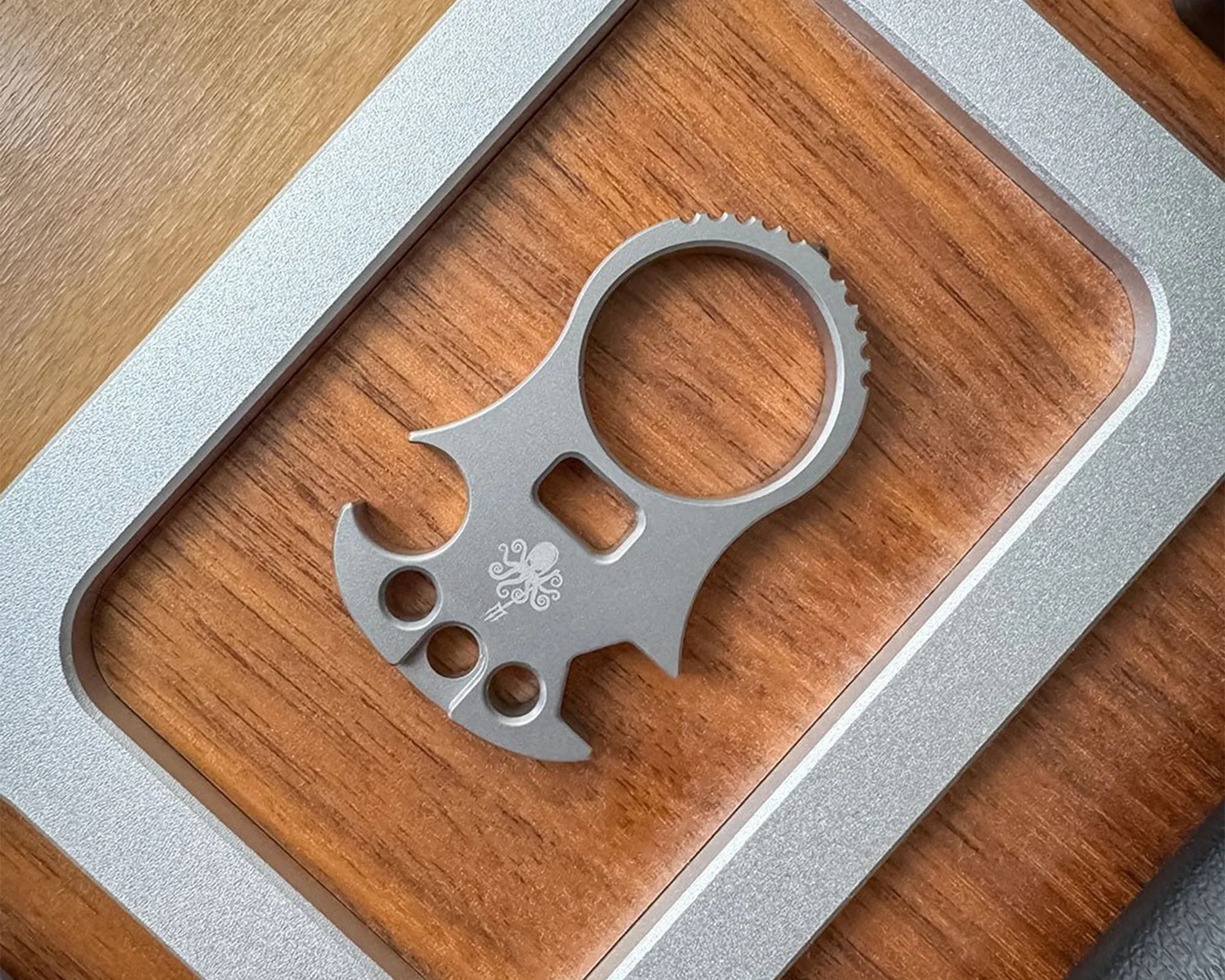
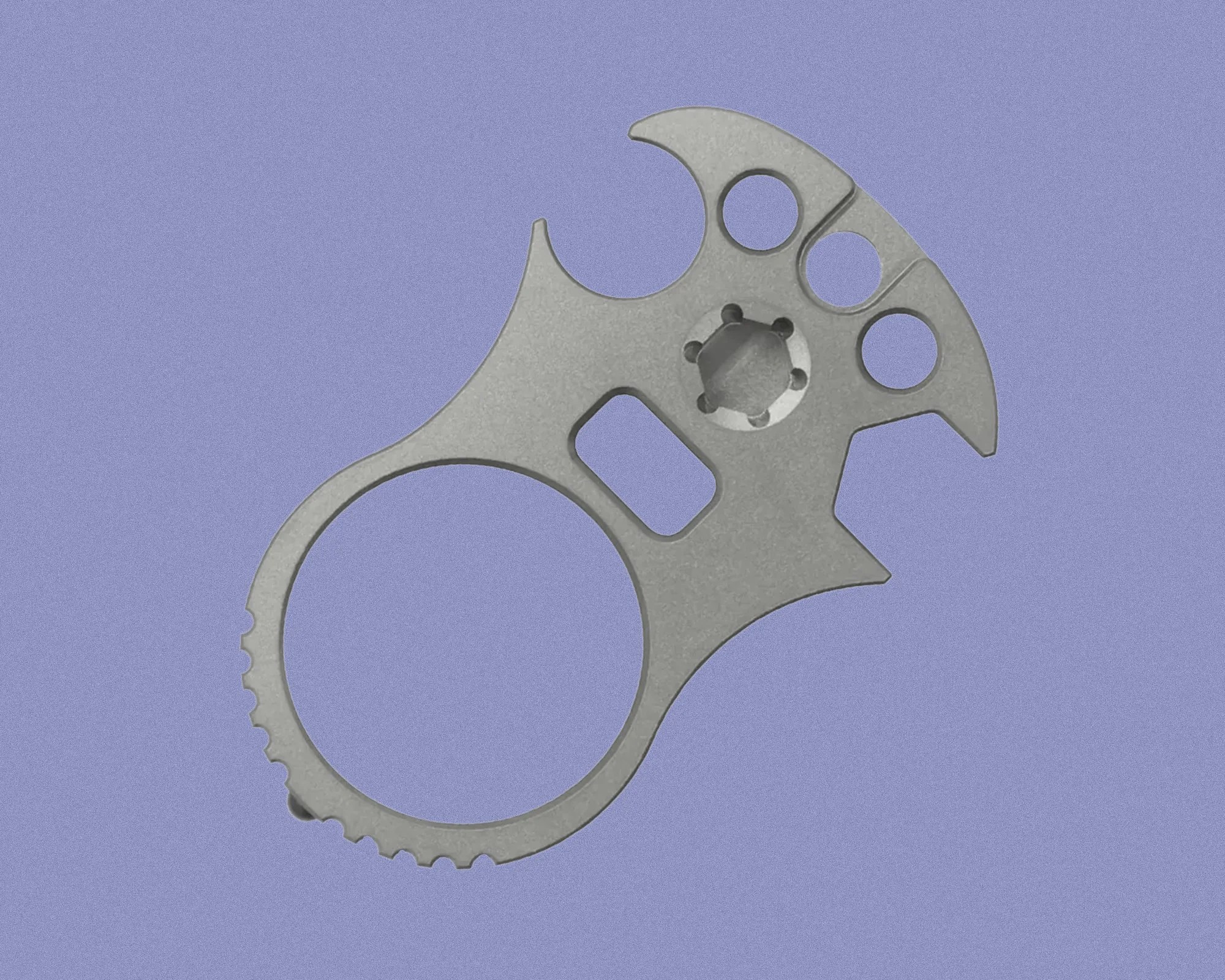
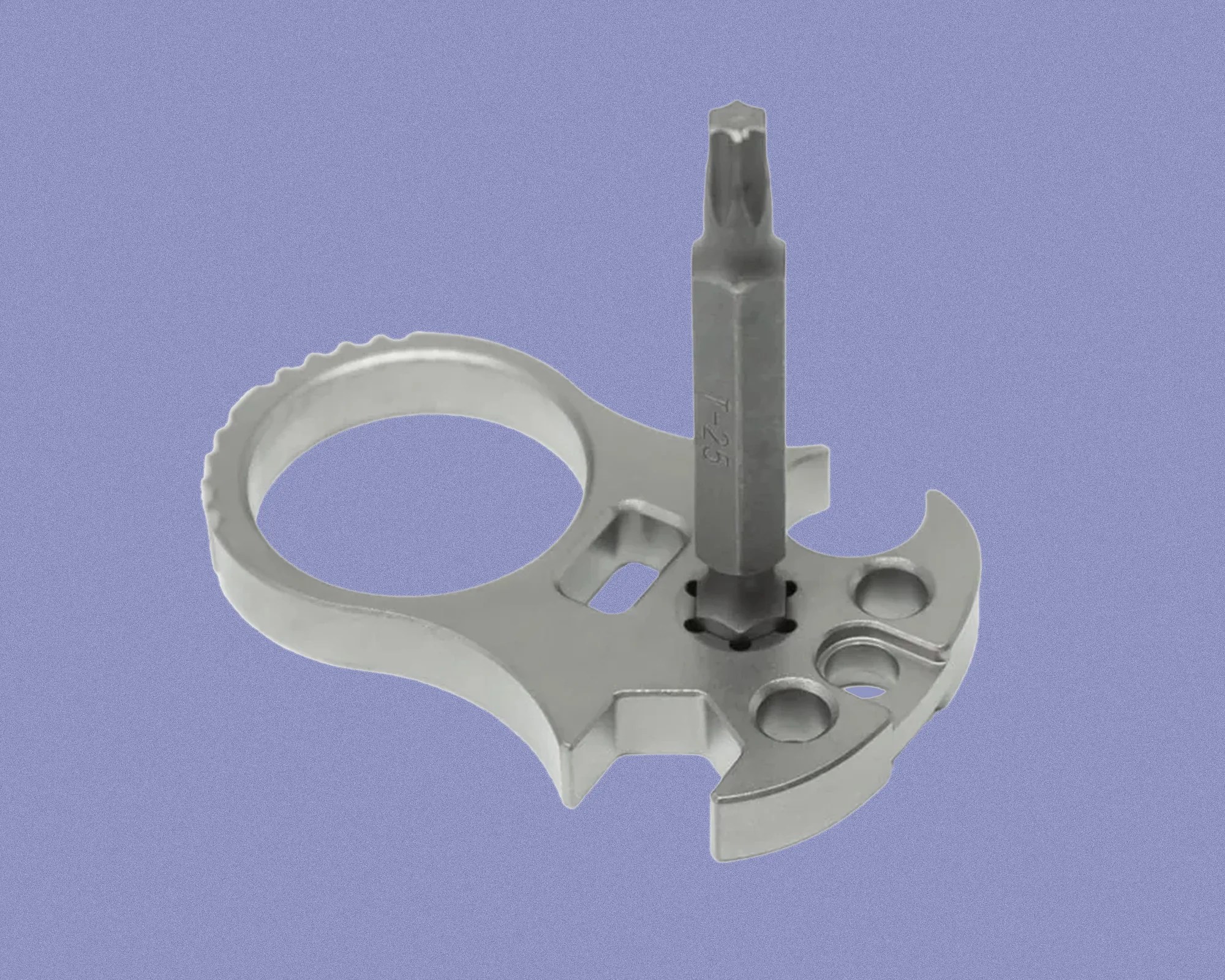
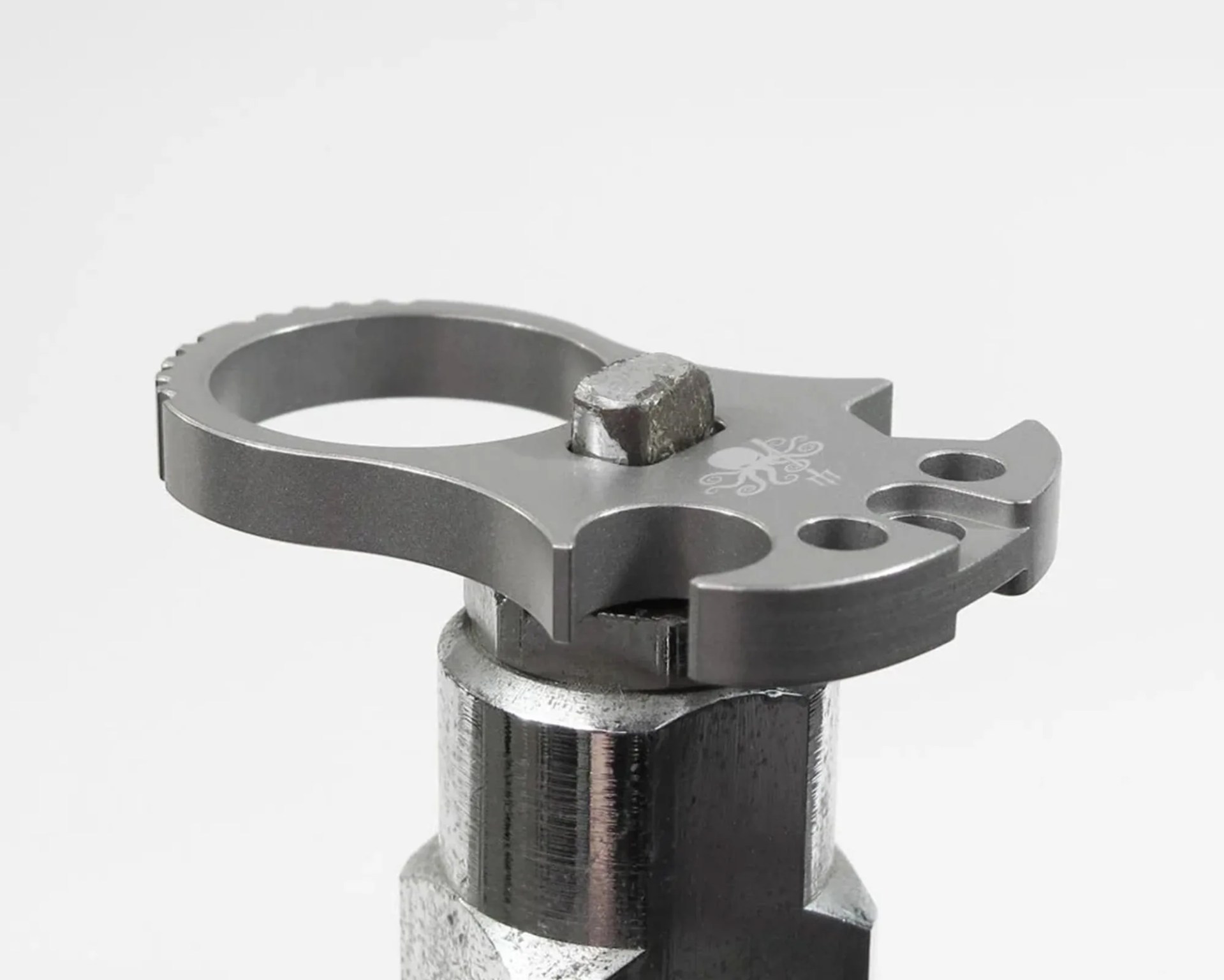
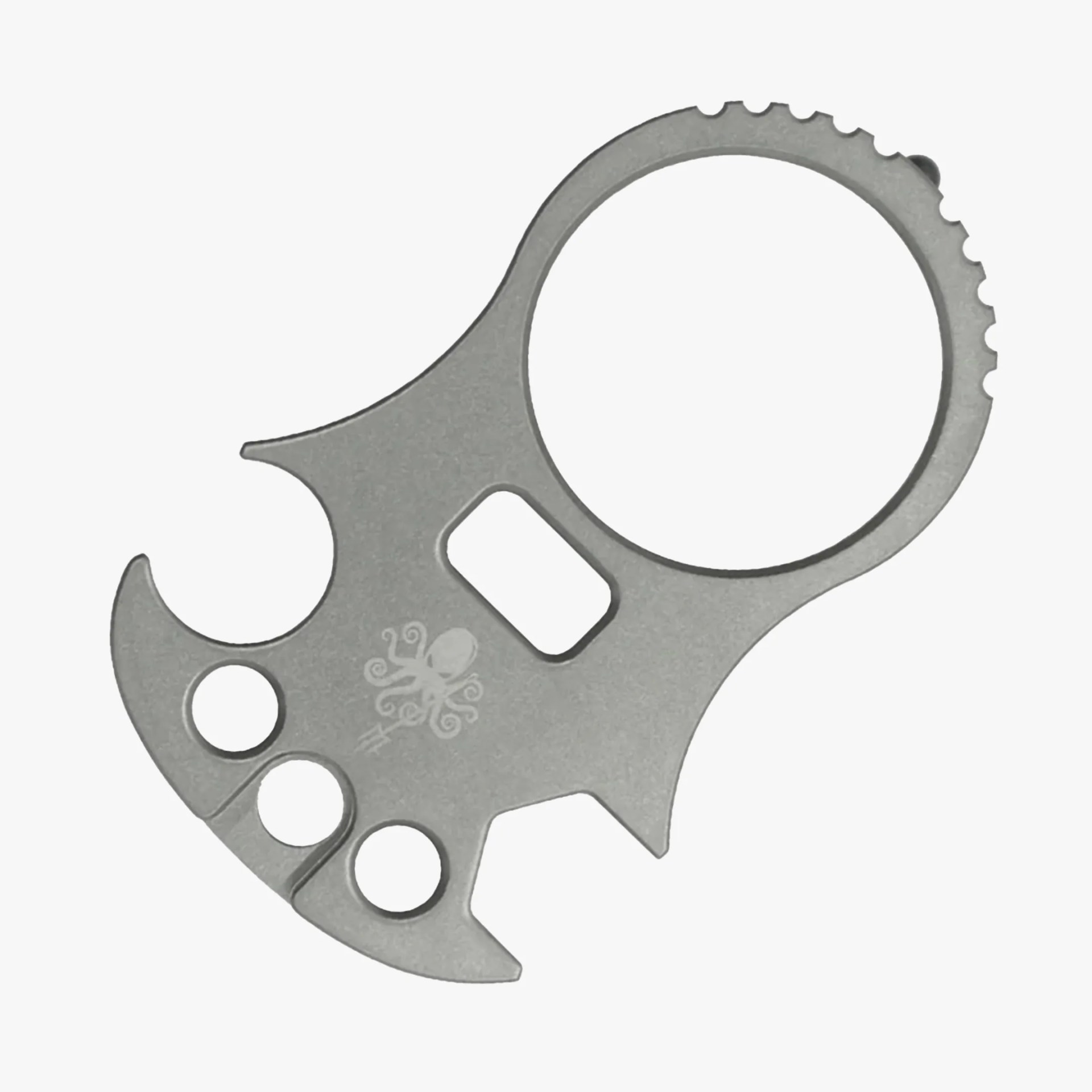
Take the resurrectedPrometheus Design Werx SPD BoB Tool, for example. This tiny, one-piece multi-tool features a surprisingly comprehensive set of functions that could be perfect for the right person.

Beat 'em to the punch

This isn't the first time that PDW has offered this tool. However, it has been defunct for some time. This revival brings it back in its original form, which was pretty perfect for what it was.

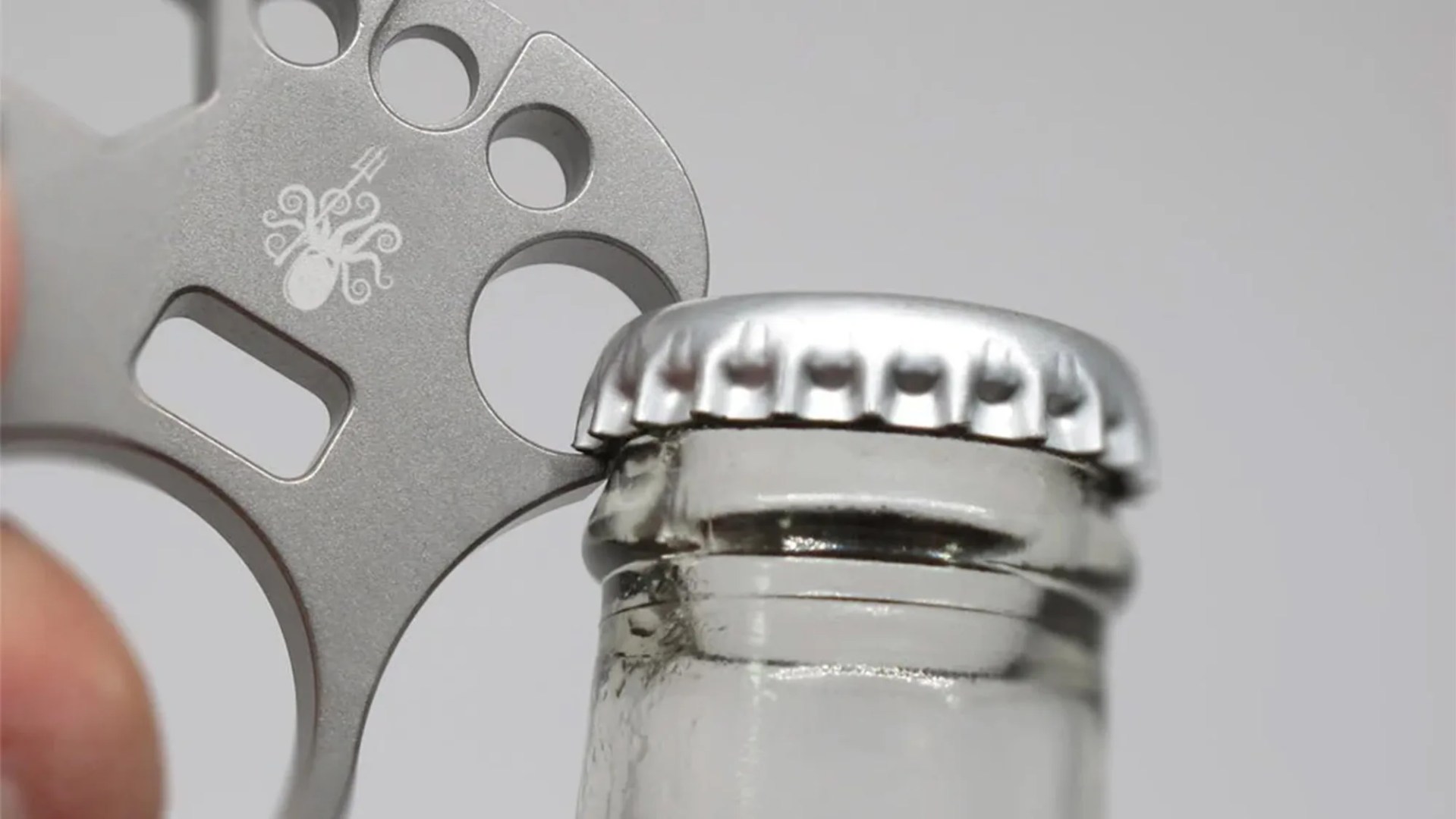
The "BoB" in the name stands for "Break or Beer," which is a reference to two of this tool's chief capabilities. First and foremost, it can be used as a bottle opener - that one's obvious.

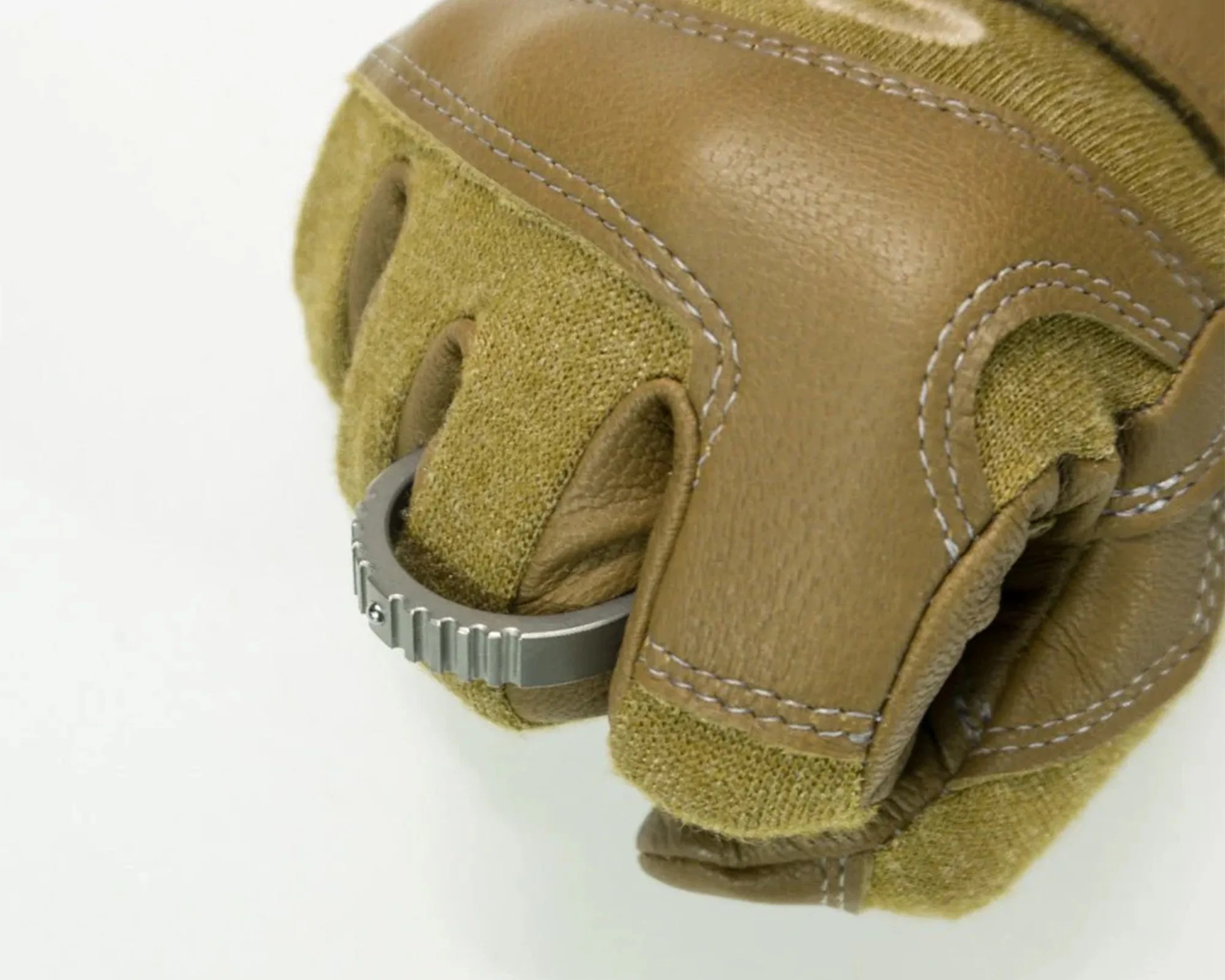
But the second part is focused on emergency use — the toolwasDesigned with first responders, like EMTs, in mind. See that little bump on the end of the finger ring? That's a tungsten carbide ball made for glass breaking.

But those are just two of its many functions. Others include an oxygen tank wrench (another emergency-focused feature), a pocket driver slot, a 10mm wrench, lashing holes and more.

Titanic toughness

The BoB Tool's array of features is much more impressive when you realize it has no moving parts at all. In fact, it is made out of a single piece of solid titanium.

That means you don't need to worry about seams, welds, or any other structural weaknesses when putting it through its paces.

It also means the tool is tiny and lightweight. In fact, it measures just 2.35 inches on its longest side (that's about the same as a house key). It's also only 0.25 inches deep.

That small size also means it's really easy to pop onto your keychain, slip it into your pocket or wherever. It's also perfectly sized to fit into the palm of your hand, which makes using the finger ring for punching (either as a glass-breaker or a self-defense tool) comfortable and intuitive.

Available now

ThePDW SPD BoB Toolis now available on the brand’s site for just $75.

Prometheus Design Werx SPD BoB Tool