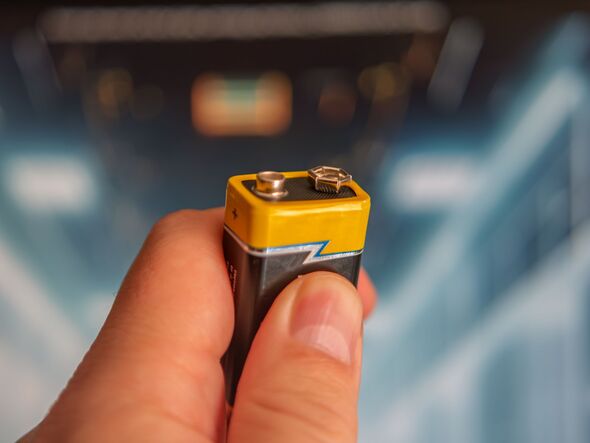
Imagine never having toUse a battery again. That could soon become areality thanks to a new solar technology development.
Researchers of a new study, published April 30 in the journal Advanced Functional Materials, discovered thatThese new solar cells can harvest energy from indoor light.
According to Live Science, the scientists revealed that their discoveries have wide-ranging applications and could allow people to power devices such as keyboards, alarms, and sensors using only indoor lighting.
The study used perovskite material to capture light in solar cells. Research shows that this material captures low-power, ambient light more effectively than traditional approaches, making it ideal for indoor applications.
- King Charles sends 'silent invite' to Harry and Meghan as Sussexes can't ignore 'PR candy'
- Russia launches a bold overnight strike on a US electronics factory in Ukraine
Perovskites are a family of materials that have shown the ability to produce high-performance solar cells with low production costs.
Over time, perovskite-based solar cells offer a more environmentally friendly and economical substitute for batteries, explained study co-author Mojtaba Abdi Jalebi, associate professor in energy materials at University College London's Institute for Materials Discovery.
Jalebi said, "Billions of devices that require small amounts of energy rely on battery replacements - an unsustainable practice. This number will grow as the Internet of Things expands."
Currently, solar cells capturing energy from indoor light are expensive and inefficient. Our specially engineered perovskite indoor solar cells can harvest much more energy than commercial cells and is more durable than other prototypes. It paves the way for electronics powered by the ambient light already present in our lives.
The calcium titanium oxide mineral is already gaining popularity as a preferred material for solar panel construction, offering significant advantages over silicon-based alternatives.

Nevertheless, despite its potential, the material faces significant durability and long-term performance challenges.
One critical issue centers on "traps" - tiny imperfections within perovskite's crystal framework. These traps capture electrons in microscopic flaws and gaps throughout the material, blocking energy collection.
Furthermore, these traps hinder electrical flow and accelerate material degradation over time due to irregular charge movement through the substance.
To address this challenge, researchers in the latest study used a chemical combination to minimize these structural defects.
Representatives said in the statement that this approach included using rubidium chloride, which "encouraged a more homogeneous growth" of perovskite crystals and reduced the density of the traps.
The chemicals N, N-dimethyl octylammonium iodide (DMOAI) and phenethylammonium chloride (PEACl), both organic ammonium salts, were also used to stabilize two types of ions (iodide and bromide) and prevent them from separating. The research notes that this strategy helped address the problem of declining long-term functionality in the solar cell.
The solar cell with these tiny defects is like a cake cut into pieces," said study lead-author Siming Huang, a doctoral student at UCL's Institute for Materials Discovery, "Through a combination of strategies, we have put this cake back together again, allowing the charge to pass through it more easily.
Following their solution to the trap problem, researchers discovered their solar cells converted 37.6% of indoor light into electricity. The researchers noted that this breakthrough was achieved at 1,000 lux, or the brightness of a "well-lit office."
The study revealed that extended durability also showed improvement, with the solar cells maintaining 92% of their efficiency over 100 days. In contrast, a control device in which the perovskite remained unmodified to eliminate defects preserved only 76% of its original efficiency.
According to Jalebi, the team is engaged in talks with industry partners to "explore scale-up strategies and commercial deployment" of perovskite solar cells.

0 comments:
Ikutan Komentar