I have spent the last three days measuring TVs.
That's obviously not unusual for a TV reviewer, but this time I wasn't measuring dimming zones, input lag, or peak brightness – I was measuring energy use.
It's something I've wanted to do for a long time, and the plan is to introduce power draw figures to some of our reviews in the future, but our first annualSustainability Weekwas the kick in the backside that I needed to actually make a start.
Now, measuring the energy consumption of something like a TV is a very time-consuming process – you need to connect an energy meter and let it run for a while, and I wanted to test various different aspects – so this is only the start of the research, but it has already produced some results that surprised me.
SDR vs HDR
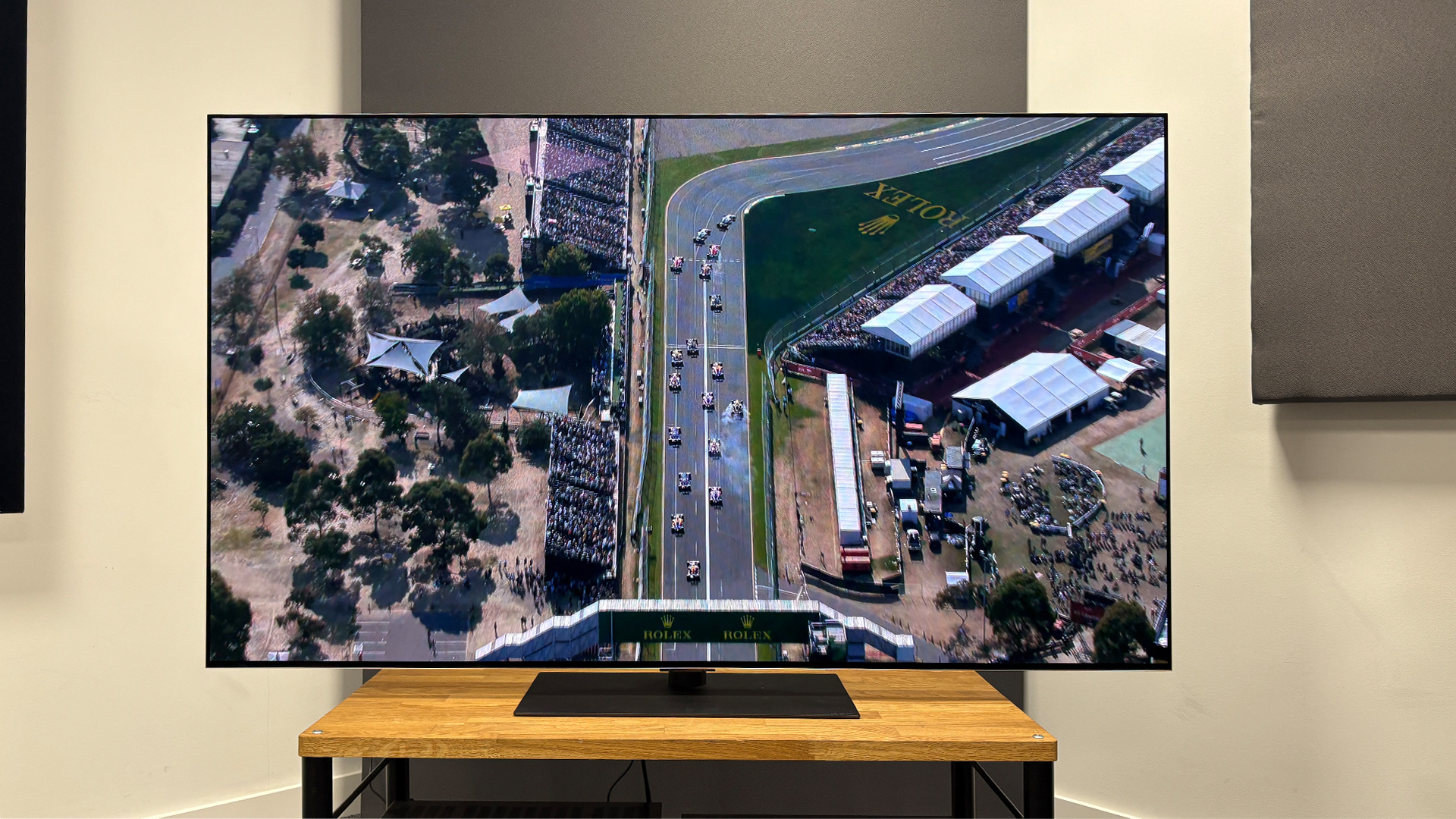
I first wanted to find out whether different content types affected power draw, so I played seven different 10-minute clips through the 65-inchLG G5andSony Bravia 8 IIin our test room, and the 65-inchSony A95Lthat I use at home.
Those clips were the 4K Blu-ray of the super-brightPan, which I ran in HDR10; the far less brightBlade Runner 2049on 4K Blu-ray, also in HDR10;Toy Story 4in 4K and Dolby Vision from the integrated Disney Plus app; the 1080p, SDR Blu-ray ofTrue Grit; an episode of the latest series ofQIfrom BBC iPlayer in HD; the very first episode of theMr. BeanTV show, standard-def from Amazon Prime Video; and 10 minutes of Sky Sports News, sent from aSky StreamPuck.
That gave me a lot of data, but I'm not going to go into that in detail now, partly because I'm saving it for a future feature, but mostly because it's only really interesting because of where it sent me next.
You see, the measurements suggest that the source and resolution make little difference to the amount of power the TV uses – the only thing that really makes a difference is whether the content is in HDR or SDR, with HDR content using less power when in the least processed modes, but more power in modes such as Dynamic or Vivid.
That makes sense when you think about it. It's brightness that uses power, and in modes such as Filmmaker (or Professional in the case of Sony), HDR will be brighter than SDR.
But in much brighter modes, particularly Standard or Dynamic/Vivid, the TV will raise SDR content to HDR-like brightness levels, and will use additional processing for this task (as well as all the additional processing those modes tend to involve), hence SDR content will then consume more power than HDR.
Filmmaker Mode (or equivalent) can save energy (and money)
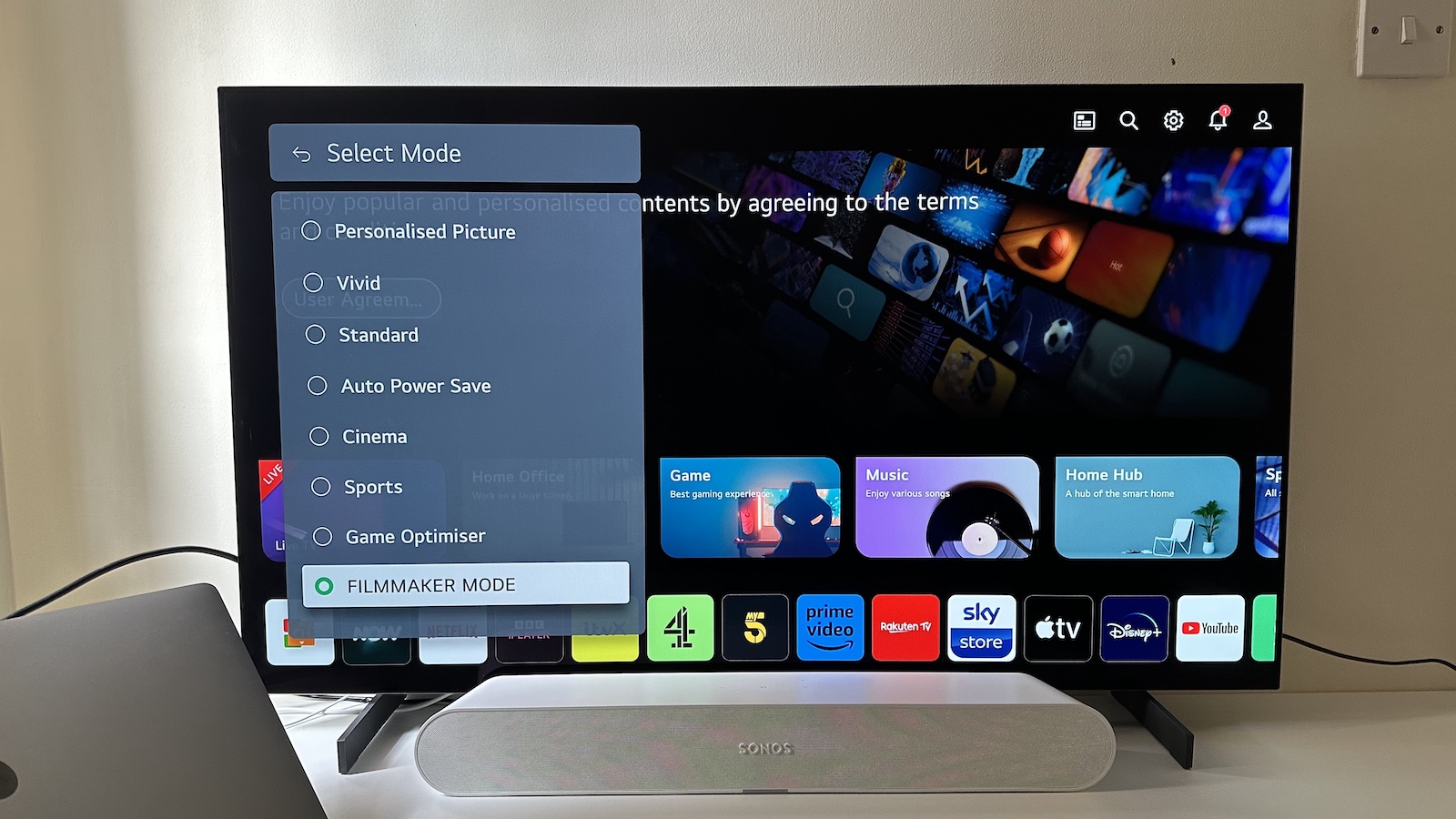
What really got me obsessed, though, was the overall power consumption of different picture presets.
It was clear that the brighter modes would use more power, but how much more? And how much more would that extra energy cost?
So, I did yet more testing on my Sony A95L at home, as well as some research on how much the average household uses its TV, what the HDR/SDR content split is like, and how much electricity currently costs.
First up, the power draw of the four main presets, which are, from least to most processed, Professional, Cinema, Standard and Vivid:
Professional | Cinema | Standard | Vivid | |
|---|---|---|---|---|
HDR power per hour (kWh) | 0.096 | 0.096 | 0.096 | 0.156 |
SDR power per hour (kWh) | 0.084 | 0.108 | 0.114 | 0.156 |
According to Ofcom, in 2024, the average Brit spent just over 4.5 hours watching TV and video content per day.
Of this 4.5 hours, 84 per cent was through the TV set (as opposed to a smartphone, tablet, etc), so about 3.75 hours (3 hours and 45 mins) of watching content through the TV per day.
So, in a normal year, we're looking at 1369 hours of TV viewing.
Ofcom doesn't produce figures on HDR vs SDR (at least, not that I've seen), but Philips told me last year that its data shows that only 4-8 per cent of viewing through its "high-end" range, which includes all of its OLED models, is in HDR.
Let's say, because theWhat Hi-Fi?The audience is undoubtedly more passionate than average, with our readers watching 8 percent HDR content. That would be 110 hours of HDR viewing per year, and 1259 of SDR.
Let's look at the energy use figures for the different modes on an annual basis, then, based on 110 hours of HDR and 1259 hours of SDR:
Professional | Cinema | Standard | Vivid | |
|---|---|---|---|---|
HDR power per year (kWh) | 10.560 | 10.560 | 10.560 | 17.160 |
SDR power per year (kWh) | 105.756 | 135.972 | 143.526 | 196.404 |
I don't know about you, but kWh mean very little to me – what I wanted to know is how this translated to monetary cost.
For the purpose of the UK energy price cap, the current average electricity cost is 25.73p per kWh.
So let's convert those above energy figures into pounds and pence by multiplying them by £0.2573:
Professional | Cinema | Standard | Vivid | |
|---|---|---|---|---|
HDR cost per year | £2.72 | £2.72 | £2.72 | £4.42 |
SDR cost per year | £27.21 | £34.99 | £36.93 | £50.53 |
Total cost per year | £29.93 | £37.70 | £39.65 | £54.95 |
As you can see, over the course of a year, the Professional preset of my 65-inch Sony A95L (which, again, is very similar to the Filmmaker Mode of other TVs) will cost roughly 25 percent less than the Standard preset that many people will default to.
But spare a thought for those people who think they need to turn everything up to 11 and choose the Vivid mode: they could save £25 a year by switching to Professional.
Incidentally, this testing reminded me just how awful modes such as Vivid and Dynamic are. Gaudy, blinding and extremely noisy, you couldn't pay me £25 to use it on my TV for a week, let alone a year.
Professional/Filmmaker mode is where you get the most cinematically authentic delivery with most TVs. So, in my opinion at least, it's better as well as cheaper.
But is your TV cheaper to run than your kettle?
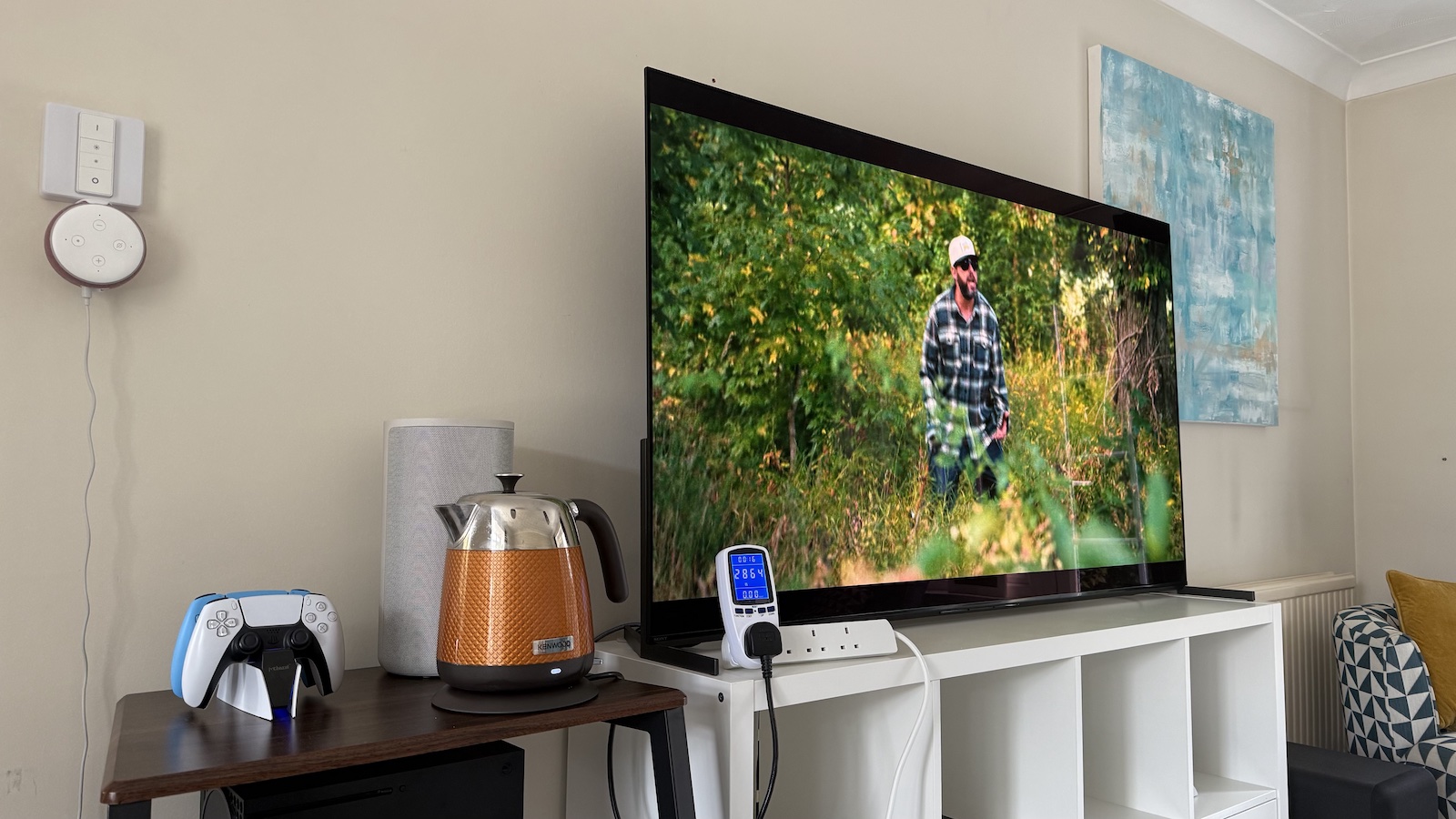
Now, while I know I should be, I'm not someone who really has much idea of how much energy is used by the various appliances around my home, so I was taken aback when Ketan Bharadia (What Hi-Fi?'sTechnical Editor) suggested that a TV only uses about as much power as a kettle.
Well, I set about doing another round of testing, and he is broadly correct.
While the data doesn't seem very reliable, it is suggested that Britons boil the kettle an average of 4 times per day, so that would be 1460 times in a typical year.
Let's say (optimistically) that they're boiling just 500ml each time – that's the minimum for a lot of kettles and generally considered enough for two mugs of tea or coffee.
My kettle (a Kenwood Mesmerine ZJM811OR, if you must know) uses 0.069kWh to boil 500ml of tap water.
Multiplied by 1460 hours, that's 100.74kWh per year, at a cost of £25.92 using the average price cap.
That's less than running my Sony A95L in Professional mode for a year, but only by £4.
The A95L is also a 65-inch, flagship-grade OLED, so it will consume more power than most. There's every chance that many people are spending more each year running their kettle than their TV.
That's something that will require a lot more data to prove, though, so expect more energy usage data in our TV reviews in the future.
In the meantime, try Filmmaker Mode (or your TV's equivalent) – it might save you some money as well as give you the best, most authentic picture quality.
MORE:
Here are thebest TVsyou can buy right now
Check out all of ourSustainability Weekcoverage
"Great sound shouldn't cost us the planet" – how Cambridge Audio wants to make hi-fi green
This new TV trend championed by Hisense and Samsung is a huge win for sustainability - now I wish every TV manufacturer would join in
Like this article? For more stories like this, follow us on MSN by clicking the +Follow button at the top of this page.

0 comments:
Ikutan Komentar