Showing posts with label energy efficiency. Show all posts

Friday, December 26, 2025

EDB Postgres AI Cuts Energy Use and Costs for Enterprises

Featured Image

EnterpriseDB Unveils Groundbreaking AI Platform with Major Environmental and Cost Benefits

EnterpriseDB (EDB) has revealed new independent research highlighting the impressive energy-saving capabilities of its EDB Postgres AI (PG AI) platform. This innovative solution is proving to be a game-changer for enterprise customers, offering significant reductions in energy consumption, emissions, and costs while maintaining high performance for complex AI workloads.

Substantial Reductions in Energy Use and Emissions

The study, conducted by Incendium Consulting, analyzed PG AI deployments across three Fortune 500 financial services firms. The results were striking: the platform cut energy consumption by up to 81% and achieved emissions reductions as high as 87%. On average, participating organizations reduced emissions by more than 50%, with one customer reporting a remarkable 94% drop for critical Tier 1 applications.

Kevin Dallas, CEO of EDB, emphasized that these are not just theoretical gains but real-world benefits. “This is the operational reality for the world’s largest financial institutions: dramatic reductions in energy and emissions without sacrificing performance, availability, or scale — and often with significant cost savings.”

Rising Energy Demands Drive Urgency

As AI adoption continues to grow, so does the demand for energy. According to EDB’s Sovereignty Matters research, 95% of global enterprises plan to own their AI and data platforms within three years. However, this growing demand threatens to strain existing energy infrastructure. Electricity costs already make up 46% of total data center spending, and IDC projects a 45% annual growth in power consumption through 2027.

Facing these challenges, 83% of enterprises now rank power efficiency among the top three drivers for rethinking data center architectures, especially as AI adoption accelerates.

EDB’s AI Efficiency Calculator

To help organizations quantify potential gains, EDB has introduced its Postgres AI Efficiency Calculator. This interactive tool evaluates infrastructure inefficiencies and provides real-time recommendations to optimize performance, cut energy consumption, and reduce costs. The calculator leverages intelligent modeling to show how adopting EDB PG AI can minimize operational waste while sustaining enterprise-scale performance.

Optimized Efficiency Through Intelligent Architecture

EDB PG AI achieves efficiency by dynamically allocating compute resources only when needed. Key features include:

  • Intelligent workload optimization for faster, automated database tuning
  • On-demand AI model serving to reduce energy waste
  • Automated AI readiness for vector data without intensive compute demands
  • Separation of compute and storage, enabling independent scaling and improved cost-effectiveness

Additionally, EDB’s Sovereign Data and AI Factory integrates with Supermicro’s high-efficiency server infrastructure, including liquid-cooled systems designed to minimize energy usage for GPU-intensive workloads.

Flexible Solutions for a Demanding Future

“The future of AI infrastructure isn’t one size fits all,” Dallas added. “It’s modular, power-aware, and built for choice. Enterprises need flexible systems that scale without compromise — and that’s what we’re delivering with EDB Postgres AI.”

With AI adoption surging, EDB’s solutions aim to balance performance, cost savings, and sustainability, providing enterprises with tools to scale responsibly while reducing environmental impact. As the demand for AI continues to rise, EDB is leading the way in creating efficient, sustainable, and scalable solutions for the future.

EDB Postgres AI Cuts Energy Use and Costs for Enterprises

Featured Image

EnterpriseDB Unveils Groundbreaking AI Platform with Major Environmental and Cost Benefits

EnterpriseDB (EDB) has revealed new independent research highlighting the impressive energy-saving capabilities of its EDB Postgres AI (PG AI) platform. This innovative solution is proving to be a game-changer for enterprise customers, offering significant reductions in energy consumption, emissions, and costs while maintaining high performance for complex AI workloads.

Substantial Reductions in Energy Use and Emissions

The study, conducted by Incendium Consulting, analyzed PG AI deployments across three Fortune 500 financial services firms. The results were striking: the platform cut energy consumption by up to 81% and achieved emissions reductions as high as 87%. On average, participating organizations reduced emissions by more than 50%, with one customer reporting a remarkable 94% drop for critical Tier 1 applications.

Kevin Dallas, CEO of EDB, emphasized that these are not just theoretical gains but real-world benefits. “This is the operational reality for the world’s largest financial institutions: dramatic reductions in energy and emissions without sacrificing performance, availability, or scale — and often with significant cost savings.”

Rising Energy Demands Drive Urgency

As AI adoption continues to grow, so does the demand for energy. According to EDB’s Sovereignty Matters research, 95% of global enterprises plan to own their AI and data platforms within three years. However, this growing demand threatens to strain existing energy infrastructure. Electricity costs already make up 46% of total data center spending, and IDC projects a 45% annual growth in power consumption through 2027.

Facing these challenges, 83% of enterprises now rank power efficiency among the top three drivers for rethinking data center architectures, especially as AI adoption accelerates.

EDB’s AI Efficiency Calculator

To help organizations quantify potential gains, EDB has introduced its Postgres AI Efficiency Calculator. This interactive tool evaluates infrastructure inefficiencies and provides real-time recommendations to optimize performance, cut energy consumption, and reduce costs. The calculator leverages intelligent modeling to show how adopting EDB PG AI can minimize operational waste while sustaining enterprise-scale performance.

Optimized Efficiency Through Intelligent Architecture

EDB PG AI achieves efficiency by dynamically allocating compute resources only when needed. Key features include:

  • Intelligent workload optimization for faster, automated database tuning
  • On-demand AI model serving to reduce energy waste
  • Automated AI readiness for vector data without intensive compute demands
  • Separation of compute and storage, enabling independent scaling and improved cost-effectiveness

Additionally, EDB’s Sovereign Data and AI Factory integrates with Supermicro’s high-efficiency server infrastructure, including liquid-cooled systems designed to minimize energy usage for GPU-intensive workloads.

Flexible Solutions for a Demanding Future

“The future of AI infrastructure isn’t one size fits all,” Dallas added. “It’s modular, power-aware, and built for choice. Enterprises need flexible systems that scale without compromise — and that’s what we’re delivering with EDB Postgres AI.”

With AI adoption surging, EDB’s solutions aim to balance performance, cost savings, and sustainability, providing enterprises with tools to scale responsibly while reducing environmental impact. As the demand for AI continues to rise, EDB is leading the way in creating efficient, sustainable, and scalable solutions for the future.

Saturday, August 23, 2025

I've done the measuring, and your TV's Filmmaker Mode isn't just great for picture quality – it's also great for saving energy.

I have spent the last three days measuring TVs.

That's obviously not unusual for a TV reviewer, but this time I wasn't measuring dimming zones, input lag, or peak brightness – I was measuring energy use.

It's something I've wanted to do for a long time, and the plan is to introduce power draw figures to some of our reviews in the future, but our first annualSustainability Weekwas the kick in the backside that I needed to actually make a start.

Now, measuring the energy consumption of something like a TV is a very time-consuming process – you need to connect an energy meter and let it run for a while, and I wanted to test various different aspects – so this is only the start of the research, but it has already produced some results that surprised me.

SDR vs HDR
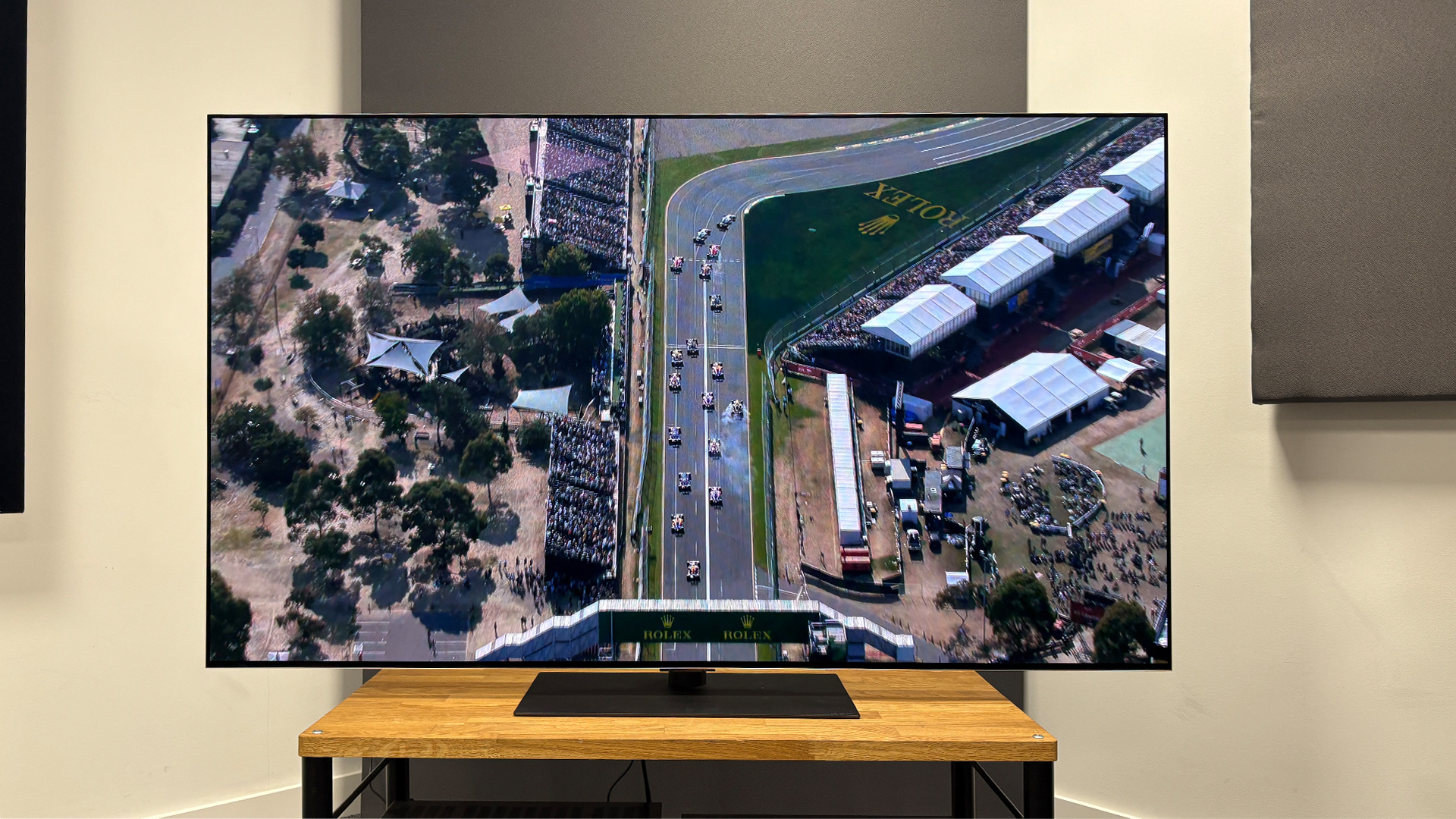
I first wanted to find out whether different content types affected power draw, so I played seven different 10-minute clips through the 65-inchLG G5andSony Bravia 8 IIin our test room, and the 65-inchSony A95Lthat I use at home.

Those clips were the 4K Blu-ray of the super-brightPan, which I ran in HDR10; the far less brightBlade Runner 2049on 4K Blu-ray, also in HDR10;Toy Story 4in 4K and Dolby Vision from the integrated Disney Plus app; the 1080p, SDR Blu-ray ofTrue Grit; an episode of the latest series ofQIfrom BBC iPlayer in HD; the very first episode of theMr. BeanTV show, standard-def from Amazon Prime Video; and 10 minutes of Sky Sports News, sent from aSky StreamPuck.

That gave me a lot of data, but I'm not going to go into that in detail now, partly because I'm saving it for a future feature, but mostly because it's only really interesting because of where it sent me next.

You see, the measurements suggest that the source and resolution make little difference to the amount of power the TV uses – the only thing that really makes a difference is whether the content is in HDR or SDR, with HDR content using less power when in the least processed modes, but more power in modes such as Dynamic or Vivid.

That makes sense when you think about it. It's brightness that uses power, and in modes such as Filmmaker (or Professional in the case of Sony), HDR will be brighter than SDR.

But in much brighter modes, particularly Standard or Dynamic/Vivid, the TV will raise SDR content to HDR-like brightness levels, and will use additional processing for this task (as well as all the additional processing those modes tend to involve), hence SDR content will then consume more power than HDR.

Filmmaker Mode (or equivalent) can save energy (and money)
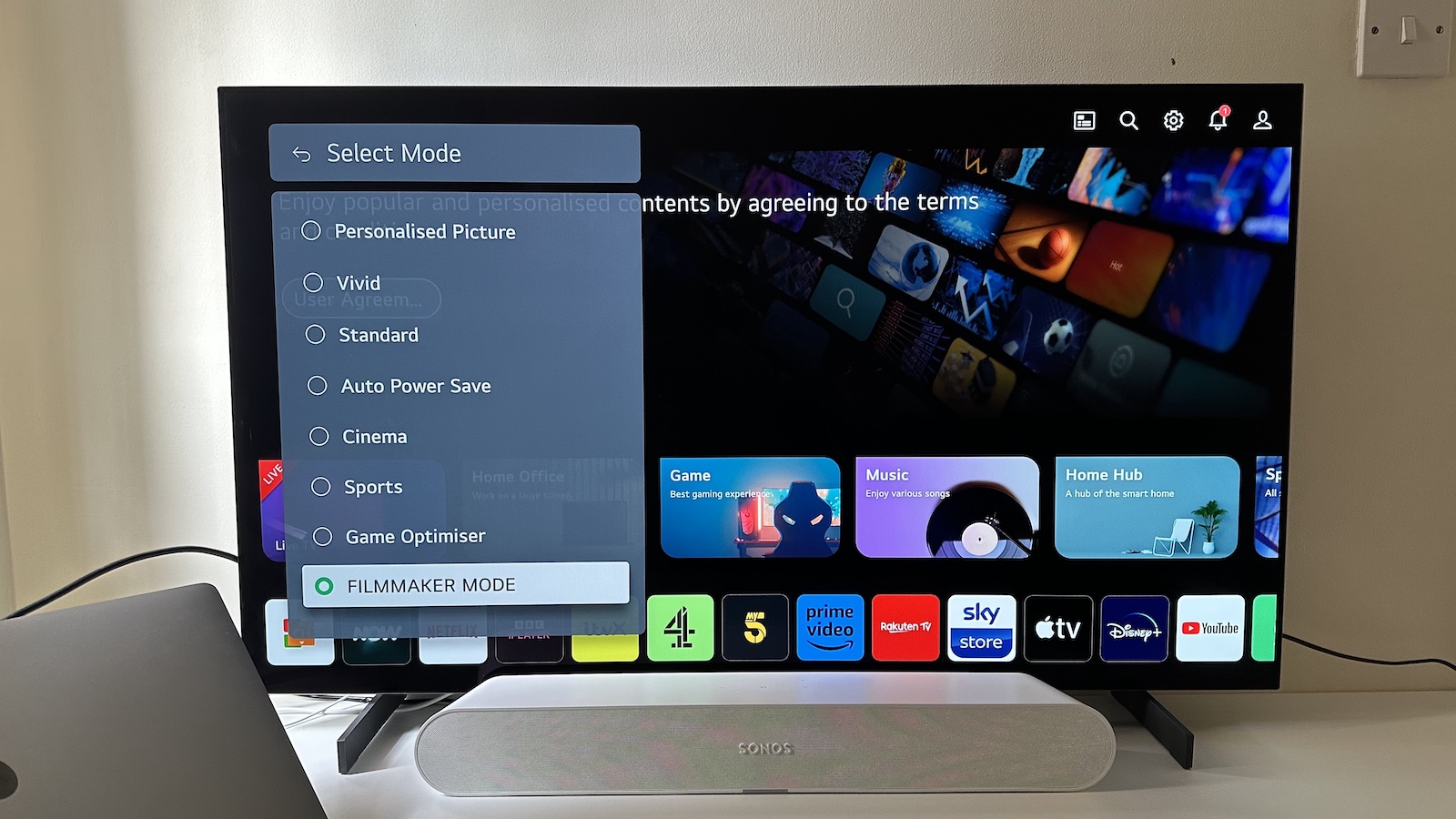
What really got me obsessed, though, was the overall power consumption of different picture presets.

It was clear that the brighter modes would use more power, but how much more? And how much more would that extra energy cost?

So, I did yet more testing on my Sony A95L at home, as well as some research on how much the average household uses its TV, what the HDR/SDR content split is like, and how much electricity currently costs.

First up, the power draw of the four main presets, which are, from least to most processed, Professional, Cinema, Standard and Vivid:

Professional

Cinema

Standard

Vivid

HDR power per hour (kWh)

0.096

0.096

0.096

0.156

SDR power per hour (kWh)

0.084

0.108

0.114

0.156

According to Ofcom, in 2024, the average Brit spent just over 4.5 hours watching TV and video content per day.

Of this 4.5 hours, 84 per cent was through the TV set (as opposed to a smartphone, tablet, etc), so about 3.75 hours (3 hours and 45 mins) of watching content through the TV per day.

So, in a normal year, we're looking at 1369 hours of TV viewing.

Ofcom doesn't produce figures on HDR vs SDR (at least, not that I've seen), but Philips told me last year that its data shows that only 4-8 per cent of viewing through its "high-end" range, which includes all of its OLED models, is in HDR.

Let's say, because theWhat Hi-Fi?The audience is undoubtedly more passionate than average, with our readers watching 8 percent HDR content. That would be 110 hours of HDR viewing per year, and 1259 of SDR.

Let's look at the energy use figures for the different modes on an annual basis, then, based on 110 hours of HDR and 1259 hours of SDR:

Professional

Cinema

Standard

Vivid

HDR power per year (kWh)

10.560

10.560

10.560

17.160

SDR power per year (kWh)

105.756

135.972

143.526

196.404

I don't know about you, but kWh mean very little to me – what I wanted to know is how this translated to monetary cost.

For the purpose of the UK energy price cap, the current average electricity cost is 25.73p per kWh.

So let's convert those above energy figures into pounds and pence by multiplying them by £0.2573:

Professional

Cinema

Standard

Vivid

HDR cost per year

£2.72

£2.72

£2.72

£4.42

SDR cost per year

£27.21

£34.99

£36.93

£50.53

Total cost per year

£29.93

£37.70

£39.65

£54.95

As you can see, over the course of a year, the Professional preset of my 65-inch Sony A95L (which, again, is very similar to the Filmmaker Mode of other TVs) will cost roughly 25 percent less than the Standard preset that many people will default to.

But spare a thought for those people who think they need to turn everything up to 11 and choose the Vivid mode: they could save £25 a year by switching to Professional.

Incidentally, this testing reminded me just how awful modes such as Vivid and Dynamic are. Gaudy, blinding and extremely noisy, you couldn't pay me £25 to use it on my TV for a week, let alone a year.

Professional/Filmmaker mode is where you get the most cinematically authentic delivery with most TVs. So, in my opinion at least, it's better as well as cheaper.

But is your TV cheaper to run than your kettle?
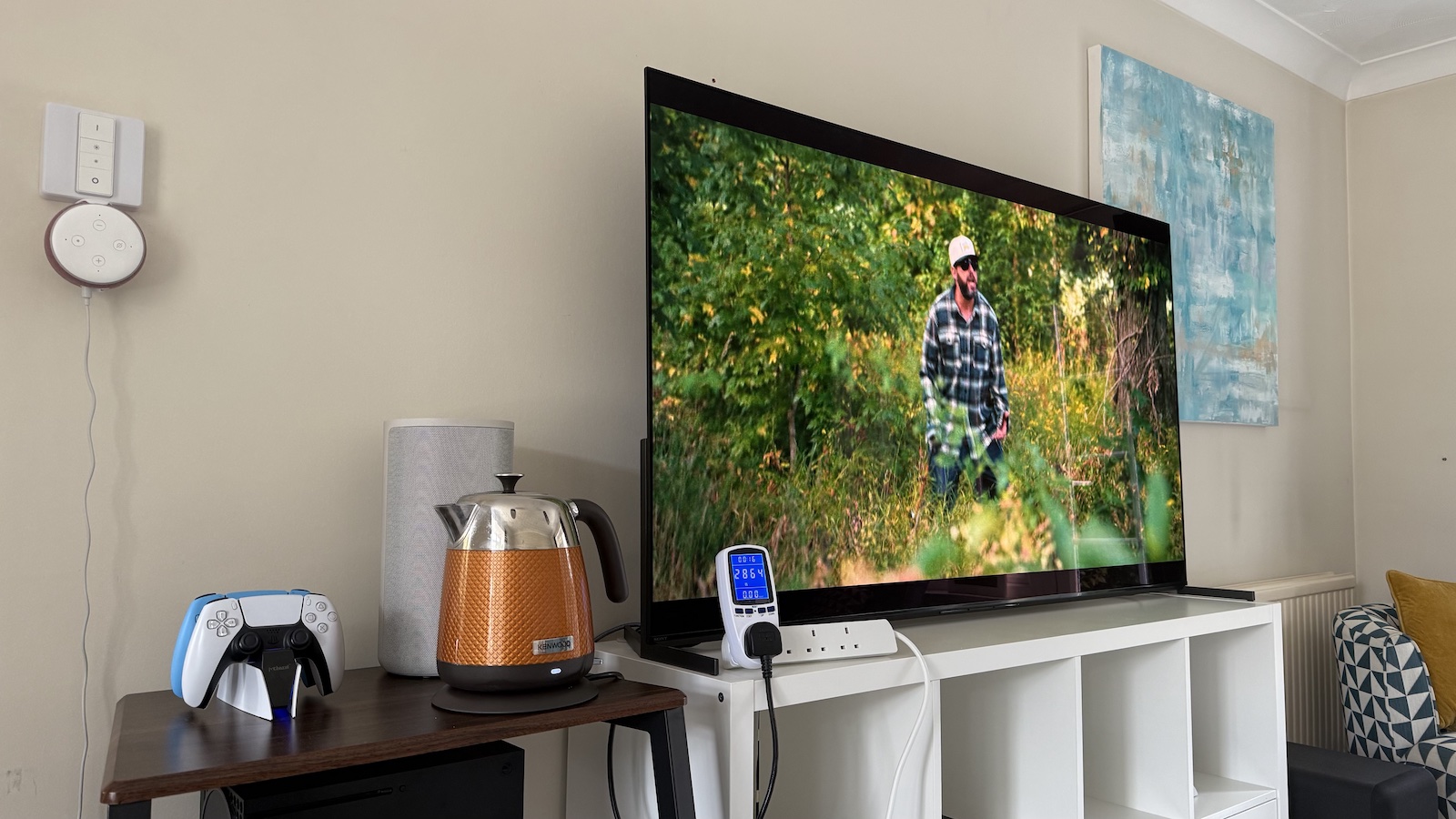
Now, while I know I should be, I'm not someone who really has much idea of how much energy is used by the various appliances around my home, so I was taken aback when Ketan Bharadia (What Hi-Fi?'sTechnical Editor) suggested that a TV only uses about as much power as a kettle.

Well, I set about doing another round of testing, and he is broadly correct.

While the data doesn't seem very reliable, it is suggested that Britons boil the kettle an average of 4 times per day, so that would be 1460 times in a typical year.

Let's say (optimistically) that they're boiling just 500ml each time – that's the minimum for a lot of kettles and generally considered enough for two mugs of tea or coffee.

My kettle (a Kenwood Mesmerine ZJM811OR, if you must know) uses 0.069kWh to boil 500ml of tap water.

Multiplied by 1460 hours, that's 100.74kWh per year, at a cost of £25.92 using the average price cap.

That's less than running my Sony A95L in Professional mode for a year, but only by £4.

The A95L is also a 65-inch, flagship-grade OLED, so it will consume more power than most. There's every chance that many people are spending more each year running their kettle than their TV.

That's something that will require a lot more data to prove, though, so expect more energy usage data in our TV reviews in the future.

In the meantime, try Filmmaker Mode (or your TV's equivalent) – it might save you some money as well as give you the best, most authentic picture quality.

MORE:

Here are thebest TVsyou can buy right now

Check out all of ourSustainability Weekcoverage

"Great sound shouldn't cost us the planet" – how Cambridge Audio wants to make hi-fi green

This new TV trend championed by Hisense and Samsung is a huge win for sustainability - now I wish every TV manufacturer would join in

Like this article? For more stories like this, follow us on MSN by clicking the +Follow button at the top of this page.

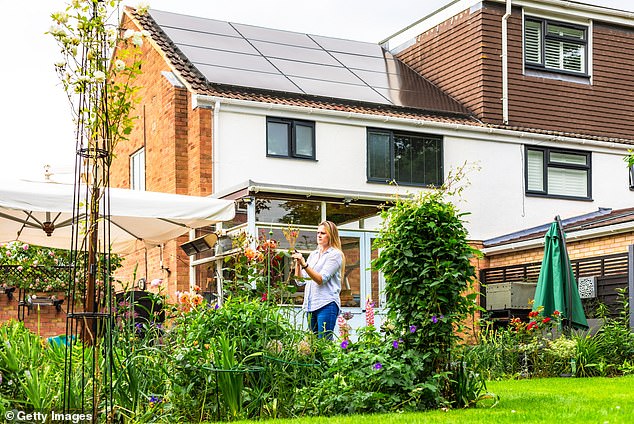
The calculation to find out if YOU should install solar panels on your roof

Solar panel installations are booming – up 22 per cent in the first six months of the year, and there are now more than 1.8 million households with them.

But with panels costing thousands of pounds and most months in Britain struggling to match this summer's sunshine, will they save you money? Before signing up, there are some crucial things to consider to work out how long it will take for the cost to pay off.

Is your roof suitable?

The panels can be used to power your home, saving on your electricity bills. You can also be paid for exporting energy back to the grid, via a Smart Export Guarantee tariff.

The recipe for success requires your home to be suitable for them, with

the size of your roof and the direction it faces key. Your roof's size determines how many panels you can get, which will decide the potential output of your system.

A system's energy generation is measured in peak kilowatts (kW), with an average system for a three-bedroom house delivering 3.5kW, according to the Energy Saving Trust.

The amount of roof space required depends on the efficiency and potential output of the panels you get. For example, it could consist of ten 350 watt panels, covering about 20m2 of the roof.

Ideally, your roof will be south-facing. East or west-facing roofs will also work, but it is not recommended to install panels on a north-facing roof. A pitched roof is preferable, but a flat roof can work. Panels can also be installed on a shed or garage.

A system facing east or west generates 15 to 20 percent less energy than one facing south.

A 3.5 kW system in southern England could produce 3,000 kWh annually. This could be worth £560 a year, by saving £320 on bills and earning £240 from export payments.

How much will I earn?

The crucial calculation involves dividing the cost of the system by your annual return to see how many years it will take to pay it off.

You need to know: how much panels will cost, the energy you can generate, the estimated annual saving on your bills and the projected annual return from exporting.

For the three-bedroom example above, the panels would cost about £6,100, while the total annual return is £560, giving a pay back time of 11 years.

Returns will be influenced by some other factors. If you are at home all day, you can potentially save more on electricity bills by using power when it is generated.

On the flipside, this may mean you earn less from selling to the grid. Energy Saving Trust figures show how this and where you live can mean payback periods vary.

For someone in London who is at home all day, it would take ten years for solar panels to pay off, whereas if they were only at home after 6pm, it would take 12 years.

In Manchester, this would be 11 years and 13 years, respectively, while in Stirling it would be 12 years and 15 years and in Belfast 13 years and 21 years.

The Energy Saving Trust has a free solar panel calculator at pvfitcalculator.energysavingtrust.org.uk. Enter your address, along with property and household details, and it will tell you the cost, return and payback period.

Why are they so popular?

For early adopters, the environmentally friendly aspect of panels was a key driver, but now it is mostly about saving money and reducing exposure to volatile electricity costs. Installer Gareth Jones says his company, Carbon Zero Renewables, has seen a surge in requests since the energy price spike in 2022. He says: "You can take back an element of control with panels, otherwise you're at the mercy of energy companies."

How much will it cost me?

It depends on the size and type of system, how easy it is to access your roof and whether you need to do any other work on the roof.

While the Energy Saving Trust says the average domestic 3.5kW solar panel system costs around £6,100, others give higher figures. Which? says a 3kW system costs £7,020 to £11,250 to install, while a 5kW system is £11,650 to £16,300.

The exact figure will depend on the make and efficiency of your panels, as well as the cost of the installer, which varies across the country, but typically accounts for between ten and 20 per cent of the price.

Panels are now cheaper and more efficient as technology improves. Martin Aylward, of EDF UK, says: 'Domestic solar technology has come a long way in the past decade. A typical solar panel's power output has jumped from 250W to 450W and overall system peak production has increased from 3.5kW to 5.5kW in the past decade.' Installation costs have fallen by 4.5 per cent in the past year.

Batteries are an optional part of a system, but they can help homes save more money as they can store excess electricity to be drawn on when you need it.

A battery for a three-bedroom home costs £2,500. A replacement battery is usually needed after 15 years.

Are there any grants?

Low-income households receiving certain benefits, including Universal Credit, may be eligible for the Government's Energy Company Obligation 4 (ECO4), which covers up to 100 per cent of the installation cost. Go to: eco4.org.uk/

The Warm Homes Plan grants low-income tenants or homeowners and recipients of means-tested benefits up to £30,000 towards energy improvements including solar panel installations.

The government-backed Smart Export Guarantee (SEG) allows households to sell electricity they generate and do not use back to the grid.

Energy suppliers offer their own SEG tariffs, but to qualify, you'll need a smart meter and proof that your installation and installer are certified by the Microgeneration Certification Scheme (MCS).