Drones have become vital tools for deliveries, inspections, and emergency response. Yet their designs remain split between two extremes. Rotary-wing drones, like quadcopters, are agile but drain energy quickly.
Fixed-wing drones fly farther on less power but lack the agility needed for crowded airspace or turbulent winds. This trade-off has left a gap for engineers seeking drones that combine endurance and precision.
Engineers at the University of Surrey want to close that gap.
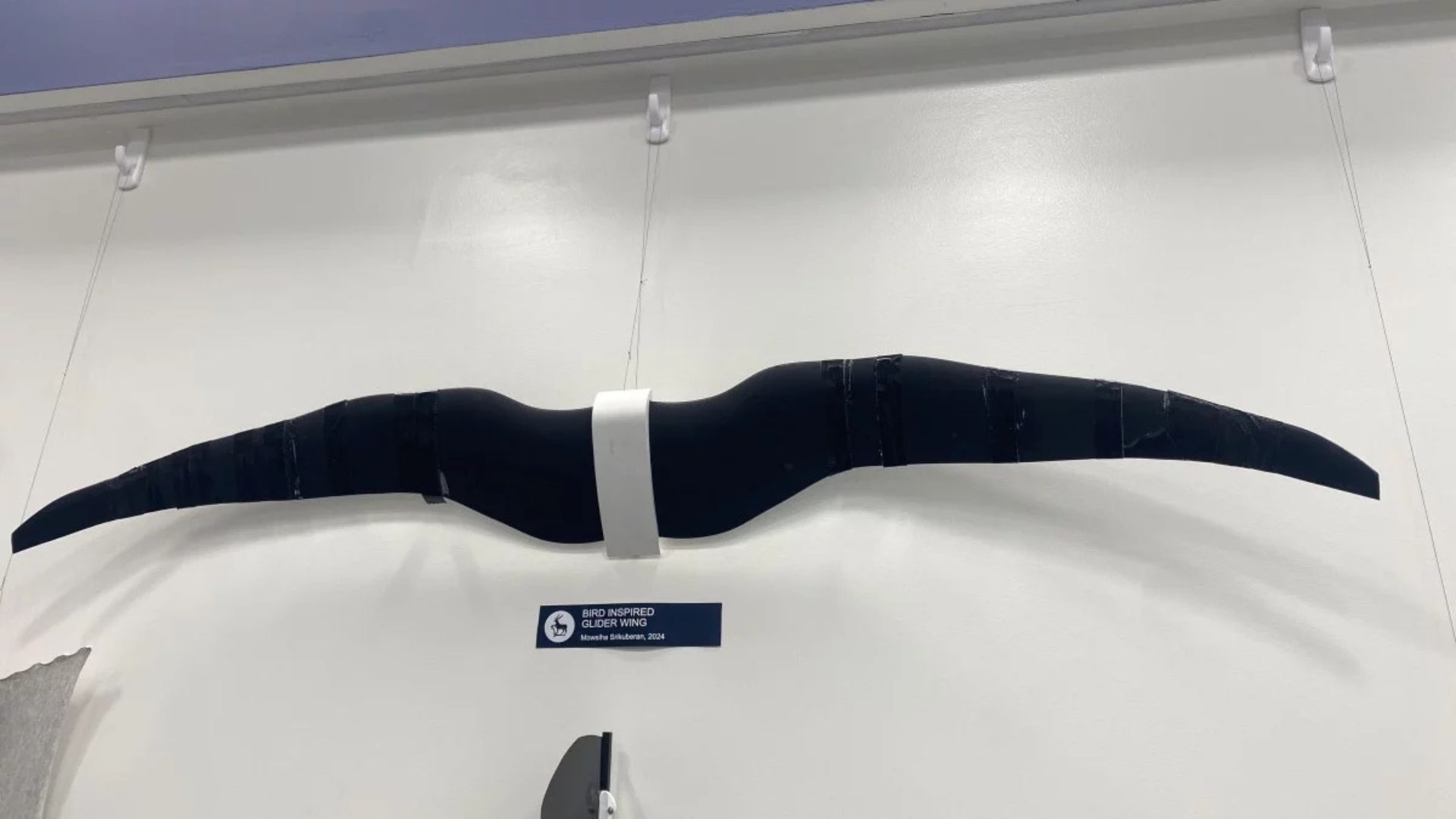
By studying the precision of birds of prey, they are developing fixed-wing drones that could one day deliver packages through skyscrapers or easily inspect offshore wind farms.
The project, called 'Learning2Fly,' looks at how owls and other precision flyers navigate tight spaces.
Researchers believe similar maneuvers could allow fixed-wing drones to perch, weave through cluttered airspace, and remain stable in unpredictable winds.
Dr. Olaf Marxen, Senior Lecturer at Surrey, said: "Nature has already solved many of the challenges we face in drone flight. Birds of prey can perform incredibly precise maneuvers in complex environments, and we're using those lessons to make fixed-wing drones smarter, more agile and better suited to cities with tall buildings or rapidly changing wind conditions."
He added that the team is combining experimental flight data with machine learning to help drones predict and control motion in real time.
"Traditional simulations such as computational fluid dynamics fall short in turbulent environments and are prohibitively expensive, so our next step is refining the predictive model and testing outdoors," he said.
From lab tests to outdoors
Instead of relying only on computer models, researchers are conducting real-world experiments.
Surrey's motion capture lab tracks lightweight prototypes adapted from toy planes. Onboard sensors and high-speed cameras record their flight in three dimensions. The team then feeds this data into a machine learning model that can predict drone behavior without expensive aerodynamic simulations.
The process allows researchers to see exactly how the drones respond to sudden changes in air or obstacles. Each test builds a richer dataset, making the predictive model smarter and more reliable.
Over time, this experimental approach should help overcome one of the biggest challenges in drone development: preparing aircraft for the unpredictable complexity of real environments.
The approach aims to balance efficiency with agility. If successful, the drones could handle cluttered urban environments while maintaining the range and endurance of fixed-wing aircraft.
Towards real-world deployment
Early results show promise. "We've already presented some of our early findings, and it's exciting to see how well thedrone"performs even at this stage," said Owen Wastell, a PhD student and project co-lead.
He added: "It's humbling that in an era of advanced machines and technology, we're still looking to the natural world - and one of the oldest living species on the planet - for inspiration."
The next stage is to take the experiments outdoors. Researchers hope these trials will prove the drones can adapt to wind shifts,turbulence, and moving obstacles. Success would pave the way for a new generation of agile, efficient drones that can handle both crowded cityscapes and remote offshore missions.
With 'Learning2Fly,' Surrey engineers aim to bridge the gap between endurance and agility, bringing drones closer to the versatility ofbirdsin flight.

0 comments:
Ikutan Komentar