This is a preview of Access Health—Tap here to get this newsletter delivered straight to your inbox.
It started the moment I stepped off the jet bridge in Madison, Wisconsin.And it only got crazier from there.
A sign from Delta Air Lines welcomed attendees to "UGM," Epic's annual User Group Meeting at their vast headquarters in the nearby town of Verona. Ads from Qventus, Suki and other health tech companies scrolled across screens at the baggage claim. I opened my LinkedIn app, and my feed was flooded with predictions and opinions:What would Epic announce? What could they do? What couldn't they do?
The first thing myUberThe driver asked, "Are you here for Epic?" He had been driving people to and from the conference all weekend. He hadn't been inside the complex yet, but he hoped to take a tour someday. Me too. I was so busy.typing out updatesthat I missed the campus tour organized for media (but a team member was kind enough to take me by the Harry Potter-themed buildings before I left for the day).
I had spent the week before UGM on back-to-back phone calls, because—as my Uber driver illustrated—everyone has something to say about Epic. I won't use this intro to recount what Epic itself said, because if you're reading this, you've probably heard the chatter.They're launching MyChart Central, a suite of AI tools known as Art (for providers), Emmie (for patients) and Penny (for revenue cycle), complete with ambient technology from Microsoft, and entering the ERP game.You can read more onmy live blogfrom Tuesday or on Epic'ssocial media feeds.
The endless updates are fascinating, game-changing—and widely available. So instead of rehashing them here, I'll tell you what people are saying about them.
First off, there has been widespread concern about how Epic's ambient scribing features will impact start-up companies that offer the same feature. On Tuesday, Epic CEO Judy Faulkner said that customers can continue using third-party scribing tools as they've been doing. Epic even reiterated this in a statement shared with media:Customers can use other third parties to do Ambient AI as they do today.
But the other third parties don't seem reassured by that promise.While customers do have a choice, it is difficult to imagine a world in which they don't choose to maximize the benefits of their expensive Epic ecosystem.Epic's suite of AI tools will also be able to communicate with each other, offering a level of continuity that has not been achieved elsewhere.
I think it's really tough to go against Epic with something they do first party, because it's hard to compete on price and it's hard to compete on quality,Muthu Alagappan, CEO and co-founder of Counsel Health, told me. "In a competitive market, those are often two of your main dimensions for out-competing someone. Epic also has just much better native integrations with their own internal data, and so what they expose in an API to a third party, they're going to just have much cleaner, native access to the same data elements internally."
Ahead of UGM, Dr. Joseph Sanford, chief clinical informatics officer at UAMS in Arkansas, said that his system is not considering an immediate shift to Epic's ambient scribing technology, since they're in the middle of a contract withMicrosoftNuance," he told me that he hoped to see collaborations between Epic and Microsoft continue and serve as a "rising tide for all parties.
When the time comes to reassess, Sanford will be considering each vendor's history in their field, how robust their toolset is, and whether it meets UAMS' specialized needs. And, of course, he'll be reading the price tags.
Despite Epic's solid reputation - it snagged17 customersfrom competitor Cerner since UGM 2024—health system leaders aren't relying on blind trust.
As good as Epic is, when you're a software company, you're always starting something up," Sanford told me. "And so how much of the bleeding edge do we want to be on versus a kind of plug and play package?
The term "monopoly" has come up in several of my conversations. Epic is a monopoly, health tech leaders tell me, and it is expanding, as monopolies do. The concern is that monopolies do not always have the depth to match their breadth.As the saying goes: "Jack of all trades, master of none."
It's a fair point, and one that can't be dismissed until these tools start rolling out early next year.However, Epic is not your average Jack.It has data from 325 million patients around the world and is used by 3,300 hospitals. Last year, it reported $5.7 billion in revenue. It has more than 12,000 employees who come to work five days a week on a 1,670-acre campus. It has doctors and software developers dressing up like Star Trek characters to explain AI models in space metaphors—and they had that 11,400-person auditorium on the edges of their seats. It is undeniable that they have creativity, customer loyalty and, most importantly, resources.
Among all the announcements that came out of UGM, I find the advancements in Cosmos AI most illustrative of that scale, that differentiation. Epic has access to an absolute abyss of data. All of it can be used as fodder for AI models, and as theirnew researchillustrates, those models are likely to become stronger as the dataset becomes larger.
I askedSeth Hain, Epic's senior vice president of research and development,To expand on the potential of Cosmos AI (read on to the "Pulse Check" section to hear what he said). I also asked him about the concerns I'd been hearing, that Epic may not be able to do it all and do it well.
When we think about what projects and development work to do, we focus first on that North Star: how do we help providers give very effective care to their patients and work together [with them] in that regard," Hain told me. "With that as a backdrop, it becomes a question of, given what people use the software for today, where can we complement that in a meaningful way that works towards that North Star?
He continued, "I think the things we shared today are directly in line with that, and so we'll continue to focus on those capabilities that provide ongoing and increasing value to physicians and nurses and patients directly through MyChart and the hospital operations group, and increase the amount of functionality to help those folks."Where there are things we could do, but they don't complement that [North Star], then they are not the things for us to spend time on.
In summary, the most interesting thing I heard was actually something IoverHeard from a fellow UGM attendee on the airport shuttle: "I can't imagine if you're on another shitty EMR how you keep up."
I've asked around, but nobody seems to have an answer to that one.
In Other News
Major health care headlines from the week
- Can AI truly "re-humanize" health care? Doctors Ben Ebert and Eliezer Van Allen of the Dana-Farber Cancer Institute believe so.They spoke with Marcus Weldon—our contributing editor for AI and president emeritus of Bell Labs—for themost recent installmentofThe Shiro Copr'sAI Impact series. The interview explores Dana-Farber'splans for the first fully AI-enabled hospital,The potential of AI to democratize healthcare and the steps the industry must take to make these dreams a reality. At Epic UGM on Tuesday, President Sumit Rana said he spends "an hour a day" reading about AI.If you have time for one article today, I highly recommendWeldon's.
- CLEAR, widely known for its seamless airport security system, has announced a partnership with Tampa General Hospital to enhance workforce identity security.In ajoint case study, the partners said that they had automated 80 percent of account recovery requests using CLEAR's technology, cut their MFA reset time from 4.5 days to 20 minutes and reduced account-related support calls by 22 percent. This resulted in operational savings of approximately $70 per password reset. Earlier this month, CLEAR announced that itsThe CLEAR1 product was under construction in Epic's Identity Verification for EpicCare Link Toolboxto bring these capabilities to more health care organizations.
- Grow Therapy launched an AI tool called "Between-Session Reflections" on Tuesday, joining a growing list of health care organizations that areutilizing AI to maintain contactwith patients between visits.The tool allows therapy clients to log their thoughts and feelings between sessions. They can respond to targeted, AI-generated journaling prompts about recent experiences or choose free-form writing. The AI then generates a list of key themes that the client can choose to edit, send to their provider or delete."Since most of life is happening outside of a session, a key aspect of therapy is knowing what to focus on in order to make each session as impactful as possible," said Kevin Ramotar, director of clinical product at Grow Therapy, in a news release.
- CMS has created an oversight initiative to ensure that Medicaid and CHIP enrollees meet citizenship requirements.The agency said it will begin sending "monthly enrollment reports" to states, highlighting enrolees whose immigration status could not be confirmed through federal databases.States will be responsible for obtaining any documentation necessary to confirm these enrollees' eligibility,and are expected to adjust coverage for those they cannot verify. The first set of reports was sent to some states on Tuesday, andAll states will receive their reports over the course of a month, CMS said.
Pulse Check
Executive perspectives on key industry issues
At UGM on Tuesday, Epicsharedthat its Cosmos AI technology had reached a "significant milestone."
CoMET—a family of models built on de-identified, longitudinal health records from 118 million patients and 151 billion medical events—had outperformed or matched task-specific models when tested on 78 tasks, including prediction of diagnosis and disease prognosis. The model also improved over time, becoming more accurate as the scale of the dataset increased, according to a study.reportproduced by Epic, Microsoft Research and Yale School of Medicine.
In short: Epic's Cosmos dataset is advancing, and could eventually be able to predict health events throughout a patient's lifetime. Imagine a world where doctors can anticipate a heart attack years before it happens, receive a "nudge" with a patient's risk score and intervene early. That's starting to sound less like science fiction and more like real life.
I sat down with Seth Hain, senior vice president of research and development at Epic, to learn more about Cosmos' progress and what it could mean for patients and providers. Here's what he told me at UGM:
At the general session this morning, you spoke about Cosmos AI and its progress. What can you tell me—off-stage—about the value this could bring to patients and health systems?
There has been a challenge, historically, in regard to using artificial intelligence techniques in health care software, where the rate at which it was applied and available was determined by building these individual bespoke models, one at a time, for individual conditions. And the thing we were deeply wondering about was,Is there a way to build a generalized medical intelligence that could be applied broadly to help patients, physicians and health systems?
As we started studying the Cosmos AI models that we were creating, we found that they could be applied across that whole spectrum. Helping, say, a nurse with [procuring] a particular risk score in regard to patients that they might be monitoring on the floor of the hospital, is one simple application where it can be applied in place of one of those predictive models today—but across a far more diverse set of conditions, rather than building one for each individual condition.
Similarly, in the exam room or in the office, [Cosmos could be] able to help identify differential diagnoses, and just having that kind of extra moment so the physician can wonder, "Did I think through all the options here, and is there anything else I can consider?" The system [could] help prompt that in ways.
And then obviously, helping more broadly from a hospital and health system operations perspective, the first example I gave this morning was around length of stay. But we also talked about the long-term risk of chronic diseases, as another example. And each of these help with everything from capacity in the hospital to helping manage populations of patients. So we see this one model—I mean, obviously we're going to build multiple models in the family, and they're going to grow over time—being able to generalize across all of those.
I think at the same time, it's really early.We don't know everything this model can do. We don't know everything this approach can do.And the reason we wanted to make sure we shared it with the community today was to engage them in starting to explore it through the Cosmos AI Labs, because in the same way that we've learned so much from the researchers across the Cosmos community around the data set—they're generating two papers or more a week now from doing research in Cosmos—we expect a similar type of effort will come into understanding Cosmos AI, and they're going to help figure out a bunch of new ways to help patients and clinicians with it. So I'm really most excited about what we don't know yet and what the community will find.
Are you thinking of Cosmos AI as a clinical decision support tool?
I think it's very important to separate two things here. In a weird way, a model alone does nothing. The model needs to be embedded into workflow in order to assist doctors, nurses, hospital operations. And so this question of "Is it a clinical decision support tool?" etc. is really about "How does it surface in workflow?" not "Is it the thing?"
And in that regard, we want to engage the community and continue to understand it more deeply, so that as it does surface in different parts of clinical workflows, they can have a deep understanding of it beforehand. And thepaperWe published with Yale was really driven around helping build up that understanding. Yale contributed heavily, particularly around the medical evaluations that are included in that paper.
I'm curious if there are policy changes that will have to come with "risk scores" for certain conditions. For example, if a patient reaches "X" score, the payer and provider are obligated to respond in "Y" way.
I think this is a very important question, and I think if we take it up one level above that, a generalized medical intelligence means that many questions can be asked quickly, and in some ways, our governance processes, our regulatory structures, implicitly assume that models take time to create, and that the number of them in use is going to be limited as a result.
Cosmos AI points towards a future where there could be many, many predictions on many different fronts, almost generated as quickly as the mind might ask the question.And so I do think it will be important to engage the federal and state level, as well as obviously working closely with the Epic community to think through how those policies can evolve.
C-Suite Shuffles
Where healthcare leaders are coming and going
- Veradigmhas tapped former Cerner President Don Trigg as its CEO.He had full profit and loss and operational responsibility for Cerner's business groups—including their EHR—before leaving in 2021.Most recently, Trigg was CEO of apree health, a primary care company that Elevance Health acquired last year. He will take the helm at Veradigm on September 2.
- David Baiada is stepping down from his position as CEO of BAYADA Home Health Care,The international company announced on Tuesday. Baiada will be taking on a new role on the company's board of directors.BAYADA has launched a search for the first non-family member to lead the company.since its founding in 1975.
- Christina Slemp is joining UNC Health as system vice president of revenue cycle – financial services.She comes to the Chapel Hill, North Carolina-based systemfrom Community Health Systems (CHS),where she has worked as vice president of revenue cycle since 2012.
Executive Edge
How healthcare executives are managing their own health
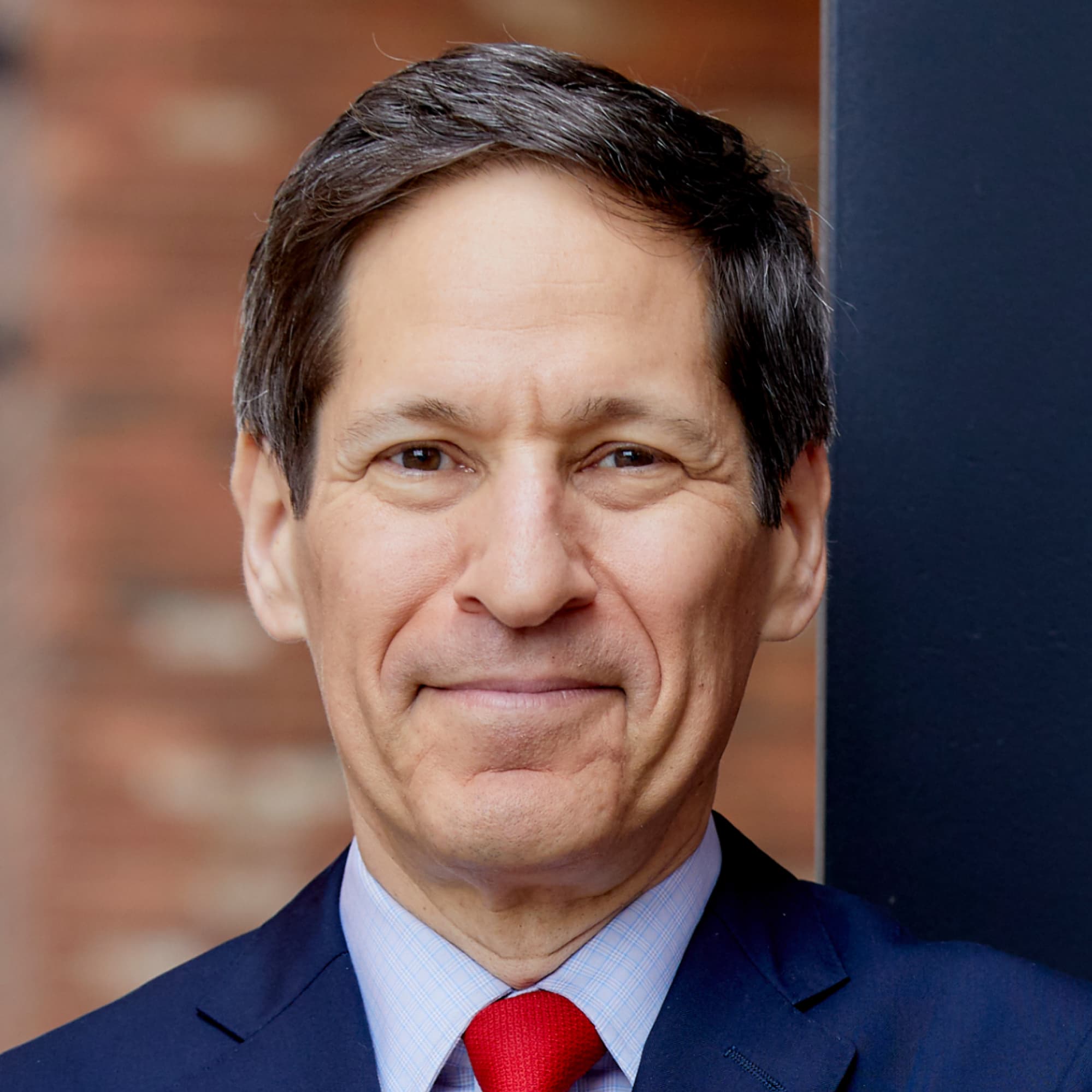
Earlier this month, I connected with Dr. Tom Frieden. He's had quite the career in public health, serving as New York City health commissioner from 2002 to 2009, CDC director from 2009 to 2017 and now as president and CEO of Resolve to Save Lives, an initiative he started to prevent cardiovascular disease and epidemics.
He is also publishing a book, The Formula for Better Health, on September 20 via MIT Press. It contains a blueprint for effective leadership in complex industries like health care, arguing that better leaders will bring results—not more bureaucracy.
The book also contains some insights on health, naturally. I asked Frieden what he prioritizes to keep himself healthy. Here's what he told me (and what the data told him):
- What really became clear to me is that there are six core behaviors to stay healthy, and then there are a handful of others that may be helpful to reduce illness, injury, disability and death. But the six big ones are(1.) blood pressure.And you know, theSPRINT trialis pretty clear: [a systolic blood pressure of] 120 is a lot better than 130 is better than 140.
- And(2.) lipids and apolipoprotein B (APOB),We have way too little focus on this. I have a friend I play squash with, I'm playing him this afternoon. He's 72 years old and he's had bad luck. His genes are such that his lipids are really high, and he does everything right. His diet is incredibly healthy. He gets lots of physical activity and he's seeing cardiologists. His blood pressure is 130 and his APOB is 90. Well, he can reduce his risk of a heart attack, stroke or death by at least a third, just by tightening control of those two numbers.
- The third is(3.) physical activity.And this is the wonder drug. It improves everything you would like to improve.
- The fourth is(4.) healthy nutrition,Especially cutting out sugar and having more potassium than sodium. Other nutrition stuff is complicated.
- The fifth is(5). Getting enough sleep.
- And the sixth is(6.) avoiding toxins, including alcohol, tobacco and other drugs and avoiding some of the toxins in our environment.There are other things that can be done as people age to prevent dementia and loss of functionality, from fully correcting hearing and vision to getting colon cancer screening. There's interesting new evidence that the shingles vaccine may prevent dementia that I review in the data [presented in the book]. There is this whole idea of technical rigor: how can we see the health of the future?This is a skill from public health, and it's something that's often lacking in clinical medicine, a kind of critical analysis of what the data really shows.
This is a preview of Access Health—Tap here to get this newsletter delivered straight to your inbox.
Related Articles
- America is Aging—and It's Not Ready, Researchers Warn
- Innovation Drives Success of Medical Instruments and Supplies Companies
- America Needs More Organ Donors | Opinion
- Texans Warned of Health Insurance Premium Rise in 2026
Start your unlimited The Shiro Coprtrial

0 comments:
Ikutan Komentar