As time goes by, one thing is getting brighter: headlights.
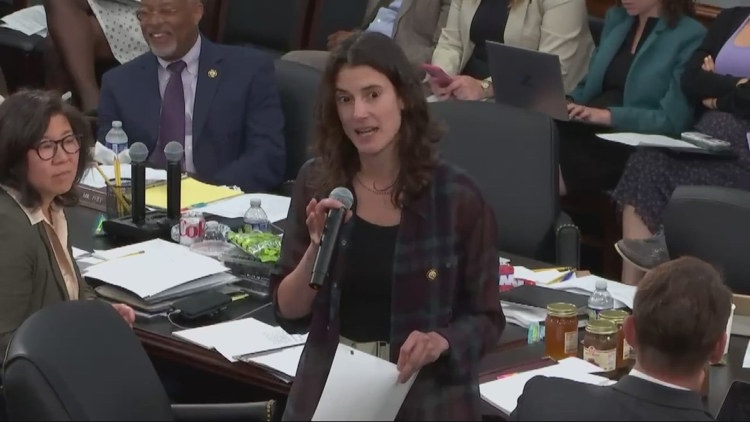
It also bothers Washington Congresswoman Marie Gluesenkamp Perez — so she brought the issue to the U.S. Capitol.
There is a plague in this country of headlight brightness," she told the House Appropriations Committee in July. "It is shockingly bright. If you look back to halogen light bulbs, you're reaching somewhere around 700 to 1200 lumens. New LED technology, these sons of b—s get to 12,000 lumens.
Gluesenkamp Perez brought the - it turns out - bipartisan issue as an amendment to theTransportation, Housing, and Urban Development Bill, asking the U.S. Secretary of Transportation to study the impact of headlight brightness and establish a maximum brightness standard.
It's not a binary choice between walking around in the dark and the fire of 1,000 suns," she said. "The standards on this have not been reformed since before I was born.
Old-school halogen light bulbs only emitted about 700 to 1,200 lumens, but in the last 20 years, car manufacturers have started using LED lights, which can put out up to 3,000 lumens — and sometimes much higher. LED bulbs also have a white or blue color temperature, which appears brighter than the yellow tone used in halogen bulbs.
Newer headlights are designed to illuminate more of the road in front of and to the sides of the car — good for drivers, but sometimes difficult for people around the car.
It is a real problem. A third of Americans have astigmatism. This is a serious risk to safety, driving, especially for pedestrians, where you are not able to see. Your eyes cannot dilate quickly enough to respond to a challenge on the road or to anything if you are on curves, if you are on roads," Gluesenkamp Perez said. "I am sure you have all seen this.
Portland eye doctor Mila Ioussifova confirmed that a lot of people have indeed seen it — it's one of the top complaints she hears from patients.
"When we look at bright lights, especially in the dark-adapted environment — we've adapted to darkness naturally when we're driving — and then if you look at the really bright headlight, it can temporarily cause bleaching of photoreceptors, and that basically causes this temporary blindness effect," she explained.
It's a normal phenomenon that happens in everyone, but it can be a longer recovery from that in certain populations, like in our older population, especially if they have eye conditions, like macular degeneration, so they may not be able to readjust to their road to their lane because they were just so blinded by that light.
She said that the effect of bright headlights should be kept in mind when it comes to developing regulations around them, advising that if you're noticing a lot of discomfort with headlights, talk to your eye doctor, so they can see if there's something going on with your eyes that you weren't aware of and recommend treatment or products that may help.
But all in all, with everything going on in the country, one might ask: Is headlight brightness really the battle for Congress to be fighting?
Gluesenkamp Perez argues that it is.
This is an opportunity to demonstrate that politics is relevant and useful to the lived experience of ordinary Americans, and that this is not just something for a PhD in navel gazing, but it's a lived experience," she said. "We're out there driving the same cars, the same experiences, we're seeing the same things.
The idea resonated with other members of Congress, including Republican Congressman Steve Womack of Arkansas.
We've all seen it, and it can cause some safety problems," he conceded. "Frankly, I don't think it's unreasonable for us to ask the Department of Transportation to shed a little light on this subject for us.
The pun caused many groans.
The voice vote on the amendment to the bill was unanimous in favor — not something that happens in Congress every day. But the bill itself still has several more steps and opportunities to be changed before it heads to President Donald Trump.

0 comments:
Ikutan Komentar