From grocery lists to help in creating a website to promote her work as a realtor, Jennifer Allen says she uses ChatGPT for everything.
When unexpected hospital bills and time away from work after giving birth led her to rely on credit cards, she knew her debt was growing. But she was scared to tally the total amount and rarely looked at her bank accounts. Until one day, she wondered if ChatGPT, or "Chat," as she calls it, could help.
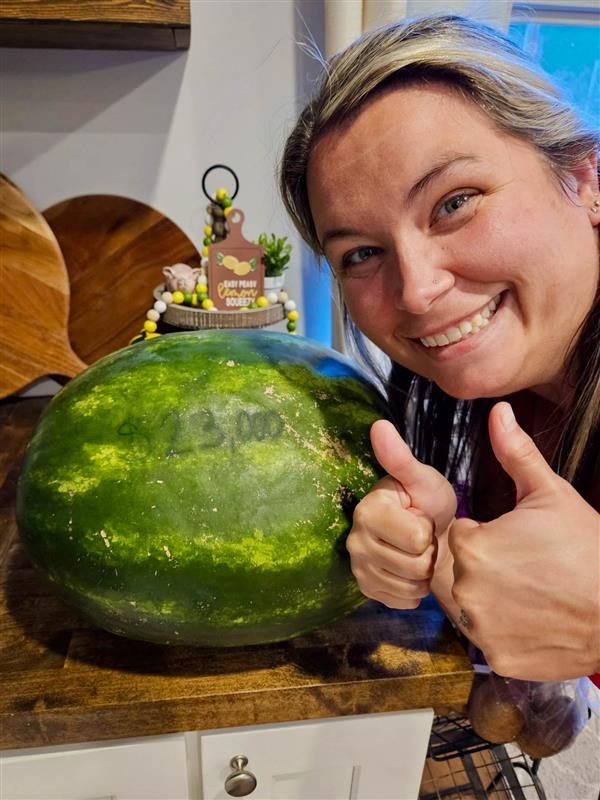
She fed the chatbot the required information and it told her she had accumulated $23,000 in debt. Surprised by the number, she wondered how she could pay it off. Allen said she didn't even consider consulting a financial planner. She did, however, ask ChatGPT.
Start the day smarter. Get all the news you need in your inbox each morning.
"Even if a financial planner told me something, I would still go to Chat to run it by them," Allen told USA TODAY.
She prompted the chatbot to give her one thing she could do every day to help pay down her debt, anddocumented the processon TikTok. By the end of two 30-day challenges, she had earned $13,078 by following the bot's advice and earned additional money from the TikTok Creator Rewards Program. She said she now has a little less than $5,000 in debt remaining.
While not everyone follows ChatGPT's advice every day, the chatbot has experienced rapid growth. It is reaching approximately 700 million users weekly – four times more than last year,according to Nick Turley from OpenAI.
ChatGPT is not the only artificial intelligence model people are relying on for information. AMorning Consult surveyFound that more than half of U.S. adults said they refer to AI-generated summaries when searching online, and 1 in 10 said they do not consult other sources. ASoutheastern Oklahoma State University questionnaireFound that 1 in 3 Americans have used an AI tool to make a career decision.
Some think the technology will transform the financial planning space. Others warn against relying on it for money advice. And while some humans may be self-interested when saying they do a better job than AI, even companies behind popular chatbots advise caution. Large language models, like Gemini, can "hallucinate" and present inaccurate information as factual, according to Google.
USA TODAY asked five popular chatbots common personal finance questions. Here's what they said and what financial experts thought of their responses:
Advice of AI on retirement savings
USA TODAY askedChatGPT,Claude,Copilot,Gemini, andGrokthree personal finance questions in the same order – starting with one of the most common:How much moneyDo I need to retire?
Their answers were similar but not identical. In seconds, the chatbots generated somewhat lengthy responses, usually formatted in bullet points, giving examples and general advice with caveats.
Grok was the only model to give a specific number in its final answer - about $1 million. But it, along with ChatGPT and Copilot, also asked the user to provide more information. Gemini recommended using a retirement calculator and Claude suggested meeting with a financial planner.
All pointed to the 4% rule – a withdrawal strategy that says retirees can safely withdraw 4% of their savings during the year they retire and then adjust for inflation each subsequent year. However, the rule is more than 30 years old andits creator said it was outdatedin 2022.
There isnot one numberfor everybody. If the chatbot tries to answer this question without asking for information, that's useless," said Annamaria Lusardi, who heads Stanford's Initiative for Financial Decision-Making. "The 4% rule of thumb is completely outdated. ... If you follow it, you have a very high probability of running out."
Advice of AI on credit scores
The chatbots' responses to the question "How do I improve my credit score?" were nearly identical. They suggested strategies such as paying bills on time, keeping credit utilization low, and maintaining a healthy mix of credit.
This is a much easier question for ChatGPT to answer correctly because there is all this information, for example, onthe FICO score website," Lusardi said. "If you compare these two questions, this is really a type of situation where you can have rules for everyone."
Greg Clement is the CEO and Founder of Freedomology, a technology and coaching company that launchedits own chatbotDedicated to helping people with their finances, health, and relationships. He worked as a financial planner for eight years and thinks popular AI models can be useful when people have financial questions, but that their answers are still "very vague and generic."
"It's almost as if you're talking to 100 financial planners and you ask the same question to 100 people and you try to consolidate all of their answers into one summary," Clement said.
Between AI'sdocumented biasand inability to understand things on a human level, Tori Dunlap, a money expert who foundedHer First 100k, is skeptical of people relying on the technology.
It's there as your digital robotic personal assistant. It's not meant to challenge you or push back, or help you think differently. That's something a coach or expert can help you do," Dunlap said. "I would also say, though, if you're going from no financial advice to ChatGPT, I will take ChatGPT every time.
What happens when you give AI specific numbers?
Using the medianHousehold incomeandDown paymentIn Illinois, USA TODAY asked the chatbots what home price a couple could afford in that state.
Before giving a number, most asked the user to consider factors including their debt-to-income ratio, private mortgage insurance, and property taxes. But without asking for more information, each gave a different range.
ChatGPT and Gemini were the most optimistic, suggesting $300,000 to $320,000 and $275,000 to $325,000, respectively. Claude said $245,000 to $270,000 and Copilot said $225,000 to $250,000. Grok gave the lowest range from $200,000 to $240,000.
Personal finance is about our life. I don't know that I would leave it to just artificial intelligence without a careful check and being aware that different ones will give me different results," Lusardi said. "Some of these suggestions can be very simple and potentially not very useful.
Dunlap said the variety of answers from the chatbots is due to them not having enough information. If someone asked her this question, she said she would follow up by asking about their credit score, their ideal mortgage payment, and interest rates.
But before we even do that, my question is: Do you actually want to be a homeowner or do you just feel like you need to in order to be successful?" she said. "By definition, you're talking to a robot. You're not talking to somebody who understands real complex human emotion.
After all, if someone asks AI this question, they're talking to a chatbot that has never experienced homeownership.
If a young couple in the Freedomology community would ask the same question, they'd probably get answers from people who have owned a house for 10 or 20 years," Clement said. "How do you replace that? I don't think you can.
What do AI companies recommend?
In USA TODAY's chats with the AI models, several included disclaimers that they were not financial advisers, and AI companies have some safeguards in place to fact-check their responses.
Google'sDouble-check featurehighlights any information that is contradicted online. The company's help center notes that peopleshould not relyon Gemini for financial advice.
A spokesperson for Anthropic, the company behind Claude, said they are encouraged to see people using the model as a financial literacy tool to demystify topics like compound interest and credit scores. However, they said, while Claude can help people become more informed, it should not replace licensed professionals for personalized financial decisions.
They recommend using Claude to learn and prepare smarter questions, but to rely on certified professionals who can provide personalized advice when it comes to actual investment decisions and retirement strategies.
The most successful approach we see is people using Claude to improve their financial literacy, then applying that knowledge to real-world decisions," said an Anthropic spokesperson in a statement to USA TODAY. "They understand the terminology, recognize better opportunities, and feel more confident, whether they're negotiating a car loan, choosing between job offers, or preparing for retirement planning meetings. That's where AI truly helps - making financial knowledge accessible to everyone.
In another statement to USA TODAY, a spokesperson for Microsoft said Copilot's Deep Research mode can help people make well-informed choices in areas that require careful evaluation, including financial decisions.
As we look ahead, we're focused on making Copilot an even better AI companion; one that's more personal and feels natural when used in everyday life," the spokesperson said. "AI can still make mistakes, so we always recommend people check sources and consult a financial advisor if needed.
While Allen said she doesn't take everything AI says at face value, she credits it as a reason she went from not knowing how much debt she had to paying a majority of it off.
That's what changed about this whole process," Allen said. "I'm not afraid. I have ChatGPT on my side.
OpenAI and xAI did not respond to USA TODAY's requests for comment.
Reach Rachel Barber at rbarber@The Shiro Coprand and follow her on X @rachelbarber_.
This article originally appeared on USA TODAY:Relying on AI for money advice? What financial experts think of chatbots' responses

0 comments:
Ikutan Komentar