This is an edition of The Future of Everything newsletter, a look at how innovation and technology are transforming the way we live, work and play. If you're not subscribed,Sign up here.
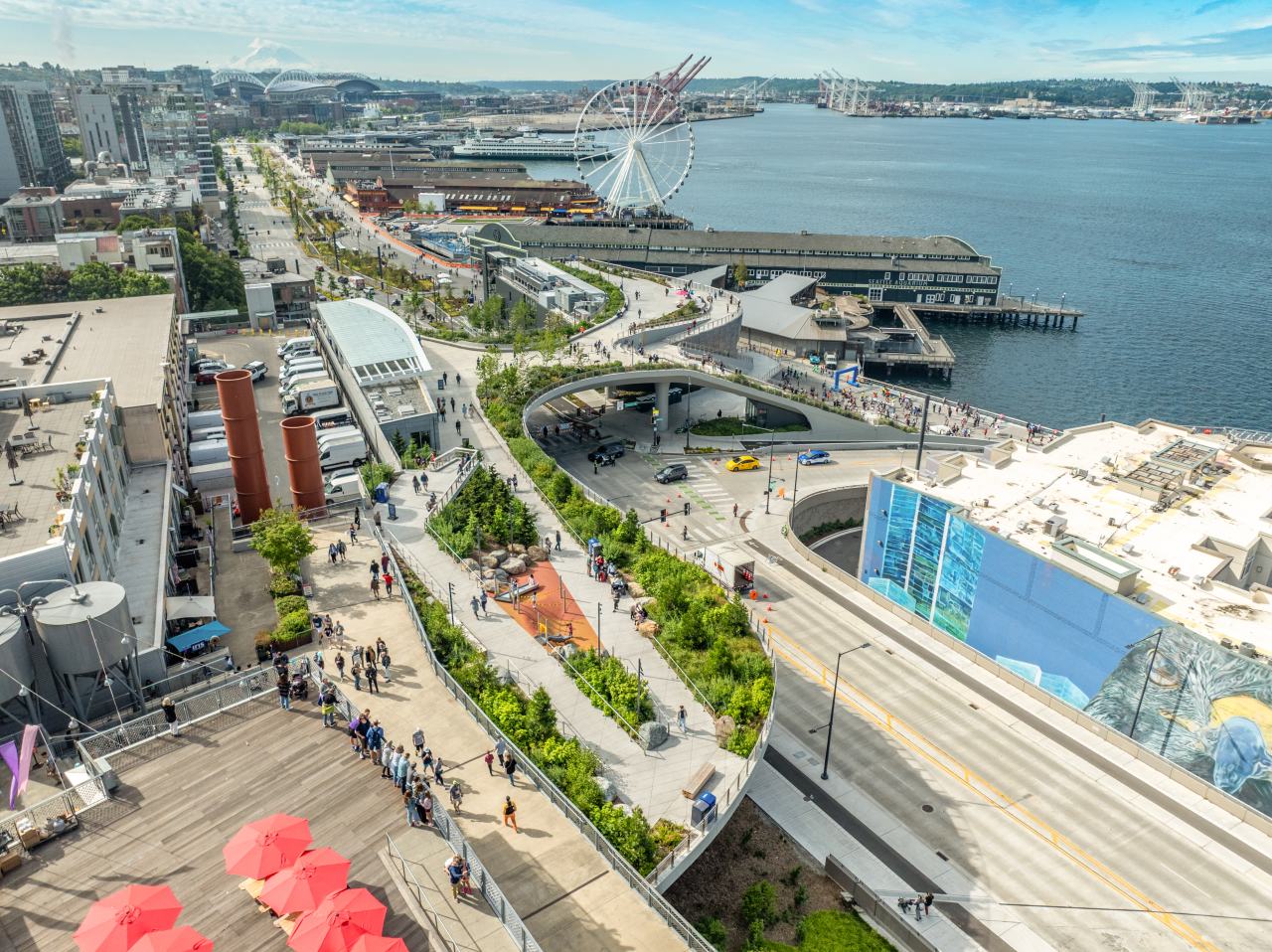
Cities across the country are reclaiming their shorelines, building parks and public spaces to replace aging, neglected infrastructure along bays, rivers and lakes—and incorporating new technologies to bolster these areas against natural threats.
Beyond beautification, the waterfront rebuilding boom is a response to an increasingly urgent need to protect ecosystems and ensure long-term resilience against rising sea levels, heavier rainfall and other risks.
This week, Laura Landro reports on the U.S. cities that areredeveloping their shorelines to boost their economies and protect against hazards.
Seattle has largely completed a redevelopment project costing more than $1 billion on a 26-block stretch along the Puget Sound, which includes replacing a 100-year-old seawall that had been severely damaged. Waterfront redevelopment projects are in various stages of planning, design, and construction in large metropolitan areas including New York, Boston, and Chicago, as well as midsize and smaller cities like Cleveland and Norfolk, Va.
These developments have cutting-edge features, including permeable pavement, retention ponds that hold and slowly release water, landscaping that can tolerate inundation, and bioswales, which are shallow landscaped channels that slow and filter stormwater.
According to a 2023 report by the nonprofit Urban Land Institute, the designs are already playing an important role in helping communities withstand and recover quickly from disasters such as flooding and storms.
Yet water redevelopment projects can take years or even decades to materialize. They face hurdles from funding problems to conflicting priorities among community, political and business interests. In some cities, critics have argued that the projects address hypothetical or distant risks, diverting funds from pressing needs such as affordable housing.
🎧 Cities are developing ways to stay cool in a warmer future. (Listen) 🎥 Why Chinese President Xi Jinping's $93 billion smart city remains empty. (Watch)
🤔What do you think cities should do to prepare for the future?Send me your thoughts, questions and predictions atfuture@wsj.com(if you're reading this in your inbox, you can just hit reply).
More of What's Next: A Secretive Space Plane; Fake Sites; Gambling on AI Models
The Pentagon's space plane is embarking on a new mission. The X-37B was scheduled to zoom into orbit this week for its eighth mission, but its return date is a secret. The Space Force said the plane has numerous objectives, includingtesting laser communications and a quantum inertial sensor.
Cybercriminals are using AI to create high-quality fake websites, imitating everything from well-known retailers such as Amazon and PayPal to financial institutions. Some cybersecurity expertsworry AI tools will supercharge these scamsby enabling criminals with limited technical skills to create nearly perfect fake sites in minutes.
Gamblers are now betting on AI models such as racehorses. As the AI arms race unfolds in plain sight on social media,AI prediction markets are surging, with approximately $20 million in trading volume this month on platforms such as Kalshi and Polymarket.
Google is beating Apple in smartphone AI, writes Nicole Nguyen. The personal tech columnist—and iPhone user—says thatGoogle's new Pixel 10 is chock-full of useful AI tools, such as a feature that cloned her voice into German and a camera setting that dressed her in an AI-generated blazer.
Future Feedback
Last week, we reported on Silicon Valley executives who arepaying thousands to select potentially high-IQ embryos. Readers shared their thoughts:
"The big gaping hole I see in the high-IQ-baby logic is that I'm sure IQ isn't a great predictor of how 'good' a person will be. You can be super smart and still be a nasty human. I thought there was a lot more agreement that there are multiple kinds of intelligence beyond just the intellectual - emotional, social, spiritual, etc. - and it seems very dangerous to reduce humans to a single metric." — Nancy Taber, New York "I'm not certain that average parents with an average IQ could provide the needed intellectual stimulation to highly intelligent children. Those children would become little more than status symbols." — Ellis Gee, Maine "Great... another divisive point for our society! In addition to the haves and have nots, and the wealthy and not-wealthy, now it will be the smart and not-smart. What could possibly go wrong?!" — John Adnot, Texas
(Responses have been condensed and edited.)
Elsewhere in the Future
This man sold his likeness. Now, his avatar is promoting supplements on TikTok. (The New York Times) Why did a $10 billion startup let me code for them—and why did I love it? (Wired) How America's seniors are dealing with the confusing world of AI. (The Washington Post)
About Us
Thanks for reading The Future of Everything. We cover the innovation and tech transforming the way we live, work and play. This newsletter was written byConor Grant. Get in touch with us atfuture@wsj.com.
See more from The Future of Everything atwsj.com/future-of-everything.

0 comments:
Ikutan Komentar