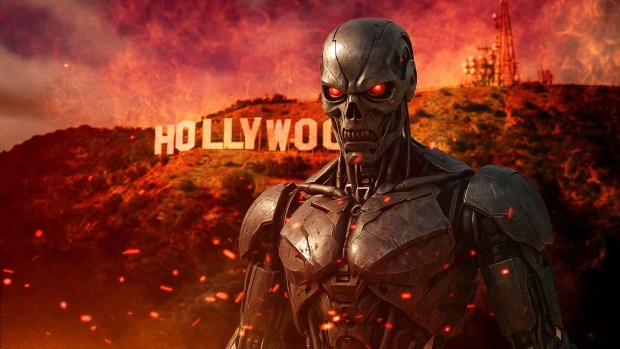
The Rising Tension Around AI in Hollywood
Natasha Lyonne's announcement that her directorial debut, "Uncanny Valley," would incorporate artificial intelligence (AI) elements from Asteria Film Co., a company she co-founded, sparked significant backlash. This move, which aimed to leverage AI tools for creating animated films, was met with a wave of criticism from various corners of the entertainment industry.
The primary concerns revolved around the potential impact of AI on jobs within the entertainment sector. Unions and guilds had already raised these issues during the 2023 strikes, highlighting fears that AI could lead to job losses. Additionally, critics worried that Lyonne’s decision might undermine human creativity, with some expressing frustration over what they perceived as hypocrisy. One Redditor remarked, "It's quite s–tty that she was on strike to protect herself from AI, only to use the same tech to f–k over other creatives." Another user, bttrsondaughter, commented, "Not gonna lie, if you do this, then I'm just gonna automatically think you don't know how to direct."
Salon's Coleman Spilde criticized Lyonne not for using AI itself, but for her dismissive attitude toward those who opposed it. He argued that Lyonne's position as a high-profile figure meant she was out of touch with the struggles of everyday creatives whose careers could be jeopardized by cheaper, less artful filmmaking.
This backlash reflects the broader negativity surrounding AI and the risks involved in discussing it. However, the real issue lies in the lack of education among directors, actors, writers, and other creatives about AI's potential impact. Ignoring the technology is a disservice to oneself and others, as it creates a knowledge gap in an industry that desperately needs to understand both the dangers and opportunities presented by AI.
The Inevitability of AI in Entertainment
Despite the resistance, many in the entertainment community are beginning to recognize that ignoring AI doesn't mean it will disappear. Duncan Crabtree-Ireland, national executive director of SAG-AFTRA, estimates that up to 15% of its 160,000 members would prefer that AI not exist. However, he emphasized that blocking technology is futile, comparing it to past attempts to resist innovations like cars or talkies.
Bryn Mooser, co-founder of Asteria, stressed that while using AI is optional, understanding it is not. "Learning about it is not optional," he said, highlighting the importance of education in navigating the future of the industry.
Lyonne attempted to address the backlash by defending her work as an "ethical" application of AI, using licensed material to train the model. However, this did little to quell the outrage, with Lyonne noting that people's misunderstandings were due to a lack of reading comprehension.
The Rapid Adoption of AI
The rise of generative AI, exemplified by ChatGPT, has led to both wonder and fear. While some marveled at its ability to create content quickly, the underlying concern was its potential to replace humans. Despite these fears, the adoption of AI has continued to grow. By January 2023, 50 million people used ChatGPT weekly, and by April, that number had surged to 800 million, making it the fastest adopted platform in history.
In the entertainment industry, AI is increasingly being embraced. Netflix recently used generative AI on the Argentinian sci-fi series "The Eternaut," with CEO Ted Sarandos emphasizing that AI could help creators make better content, not just cheaper. Similarly, Warner Bros. Discovery CEO David Zaslav praised the use of AI in the updated "The Wizard of Oz" for the Sphere in Las Vegas.
Embracing AI as a Tool
Filmmaker Darren Aronofsky launched Priomordial Soup, a studio in partnership with Google DeepMind, to explore AI-based creative tools. Some high-profile celebrities are already working on projects involving AI, though they remain discreet to avoid backlash.
Lyonne highlighted that everyone is already using AI, even if they don't realize it. She referenced advice from the late director David Lynch, who compared AI to a pencil—how it's used matters more than its existence.
Closing the Education Gap
Actor Breckin Meyer shared his experience with an AI short film, "Echo Hunter," which helped him understand AI as a tool rather than a replacement. His daughter's confusion about his involvement underscored the need for clearer communication about AI's role in the industry.
Crabtree-Ireland emphasized the importance of education, offering seminars, podcasts, and articles to inform guild members. Netflix has also published guidelines for generative AI use, while Asteria works with guilds to provide classes and resources.
Mooser believes that being proactive about AI's integration into the industry is essential. "If we know that this is significant, and we know that it's going to be inevitable, then shouldn't we as filmmakers be at the table to shape this future for our industry, rather than let it happen to us?" he asked.

0 comments:
Ikutan Komentar