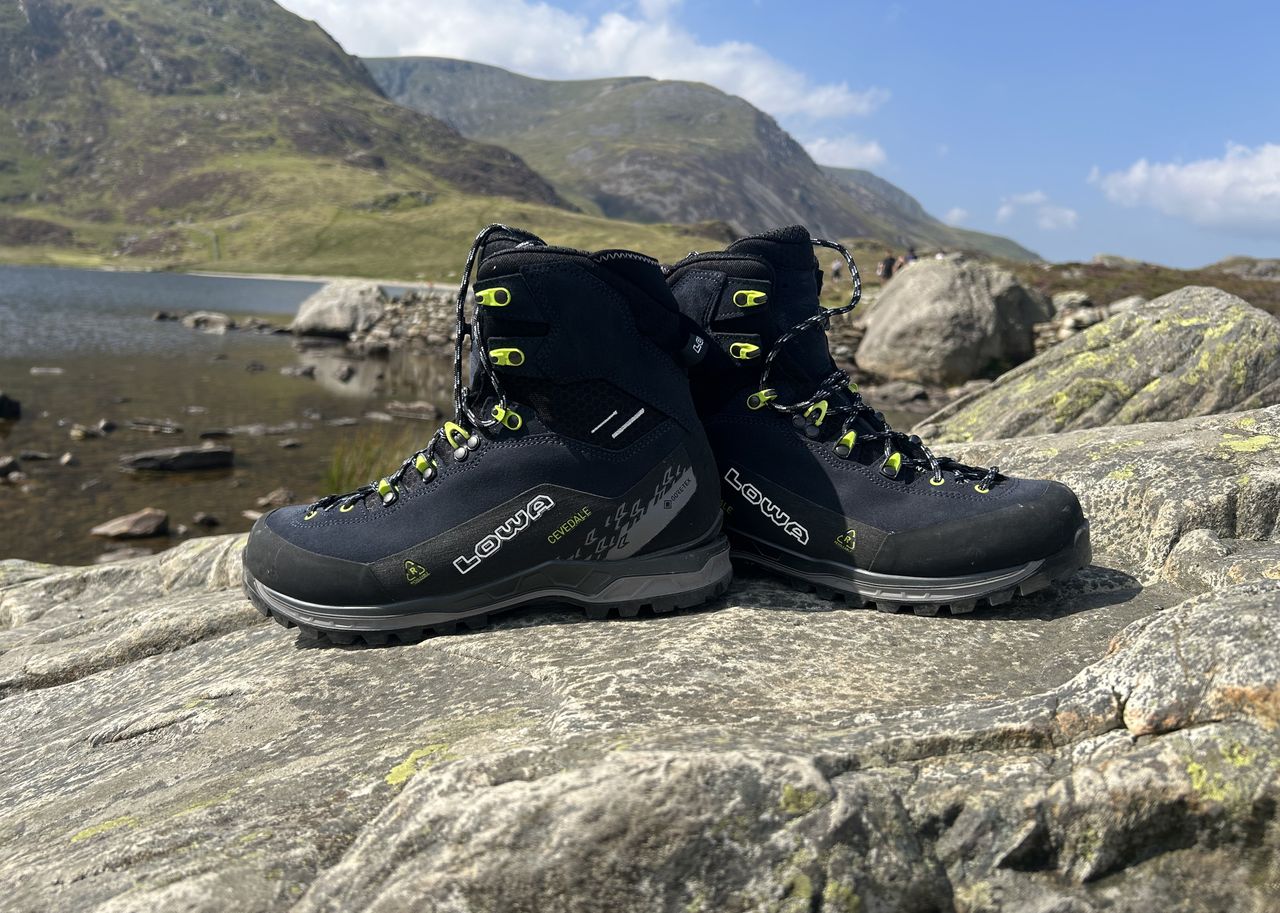
A Legacy of Quality in Outdoor Footwear
Lowa, a brand with roots in Bavaria, Germany, was established in 1923 and has spent the last century dedicated to crafting high-quality outdoor footwear. Over the years, it has maintained its focus on producing exceptional hiking boots, shoes, and mountaineering boots, without venturing significantly into other areas like apparel. However, in 2023, Lowa took a step into the trail running space, launching its first three pairs of trail running shoes. Despite this new venture, the brand continues to prioritize its core offerings in the realm of mountaineering and hiking.
One of the standout products in Lowa’s lineup is the Cevedale Pro GTX Mid, a B2-rated mountaineering boot designed for alpine adventures and winter conditions. It is compatible with a C2, semi-automatic crampon, making it suitable for winter walking and general mountaineering, but not for steeper ice climbing or high-altitude activities that require a C3 boot. The Cevedale Pro GTX is available in the UK alongside the more robust Alpine Expert II GTX. In the United States, while Lowa offers a broader range of mountaineering boots, the Cevedale Pro GTX is not among them. Instead, the Cevedale II GTX, which is slightly lighter, is available in the US for $304 at the time of writing.
First Impressions
The Cevedale Pro GTX combines modern aesthetics with a classic frame, giving the impression of timeless quality and technical capability. B2 boots typically fall into one of three design categories: a racing car-inspired look, a classic leather aesthetic, or a balanced approach. The Cevedale Pro GTX manages to strike a balance between these styles, both visually and in performance.
It is not as heavy as the Scarpa Manta Tech but is noticeably heavier than the La Sportiva Trango Tower GRX or the Salewa Ortles Edge Mid GTX. While I find the Scarpa Manta Tech too cumbersome, the Trangos have been my go-to for many years and serve as a benchmark when evaluating the Cevedale. The Cevedale offers all the expected features, including a reinforced TPU lip for crampon compatibility, a sturdy toe box, a Gore-Tex membrane for dryness, and a Vibram sole with a lug pattern designed for gripping rock.
Wearing the Cevedale feels reassuringly sturdy and supportive, though not as immediately nimble as the Trango or the Ortles Edge. I appreciate the flexibility at the ankle, a feature shared with the Ortles Edge, which is crucial for comfort during long mountain days.
Key Features
The Cevedale Pro GTX is highly protective against both rock abrasion and the elements. Its Gore-Tex bootie provides an effective shield against water ingress, enhanced by a stretch gaiter. The upper is made from suede, a soft cut of leather that is more pliable than higher-grain materials. While not as hardwearing as nubuck, it is more durable than many synthetic alternatives.
A wrap-around rubber rand adds additional protection against rough terrain, essential for techniques like wedging. The lacing system is innovative, reaching down towards the toes for a more precise fit, similar to a climbing shoe. This allows for confidence on tiny edges and enables more precise footwork. The patented I-Locks allow for customized tightening, making the fit adaptable to different activities.
Lowa's X-Lacing system holds the tongue in place, preventing it from slipping and reducing pressure points and the risk of blisters. The Vibram Scalatore Evo outsole features a hybrid rubber and lug pattern designed for both soft trails and rocky scrambling. The name "scalatore" translates to "climber" or "mountaineer," and the sole is specifically designed for high alpine summits. The outsole is rigid, providing a solid hold for precise foot placements and ensuring effective binding to a crampon.
In terms of sustainability, the Cevedale is resoleable, with Lowa recommending a specific UK provider for the work. This construction is a welcome addition in today’s market, making the initial cost of the boot more appealing.
Testing in the Mountains
Although I haven’t had the chance to test the Cevedales in a true alpine or winter environment, my test period began in the spring, allowing me to assess their suitability on long approaches and scrambles in the rocky mountains of Eryri (Snowdonia) in North Wales. They were a pleasure to wear, performing well on technical, rocky terrain. However, they are not ideal for longer walk-ins due to their weight compared to some B2 boots.
Their rigidity makes them feel heavier than other forms of hiking footwear. For longer walk-ins, a lightweight pair of shoes would be a better option up to the more technical ground. Despite this, the soft cuff tongue, elasticated heel gaiter, and interior cushioning made them more comfortable than most boots of comparable weight.
Other Considerations
When considering alternatives, the Salewa Ortles Edge Mid GTX is a strong contender, offering a modern aesthetic and innovative design touches. It is comfortable, adaptable, and crampon-compatible for winter adventures. Another option is the La Sportiva Trango Tower GTX, known for its versatility across various mountain activities.
Comparison Table
| Boot | List Price | Weight | Rating | Best Use | |------|------------|--------|--------|----------| | Lowa Cevedale Pro GTX Mid | £275 (UK only) | 1lb 14oz / 845g | B2 | Mountaineering and winter walking | | Salewa Ortles Edge Mid GTX | $349.95 (US) / £315 (UK) | 1lb 6oz / 635g | B2 | Light mountaineering and scrambling | | La Sportiva Trango Tower GTX | £330 (UK only) | 1lb 10oz / 745g | B2 | Alpinism and scrambling |
Final Thoughts
Overall, the Cevedale Pro GTX is a strong all-round mountaineering boot. My personal preference leans toward something slightly lighter, but for outings where a heavy boot offers reassurance on technical terrain, the Cevedale is a great choice. The fact that it is fully resoleable only adds to its appeal.

0 comments:
Ikutan Komentar