Key Sectors Affected by New U.S. Tariffs
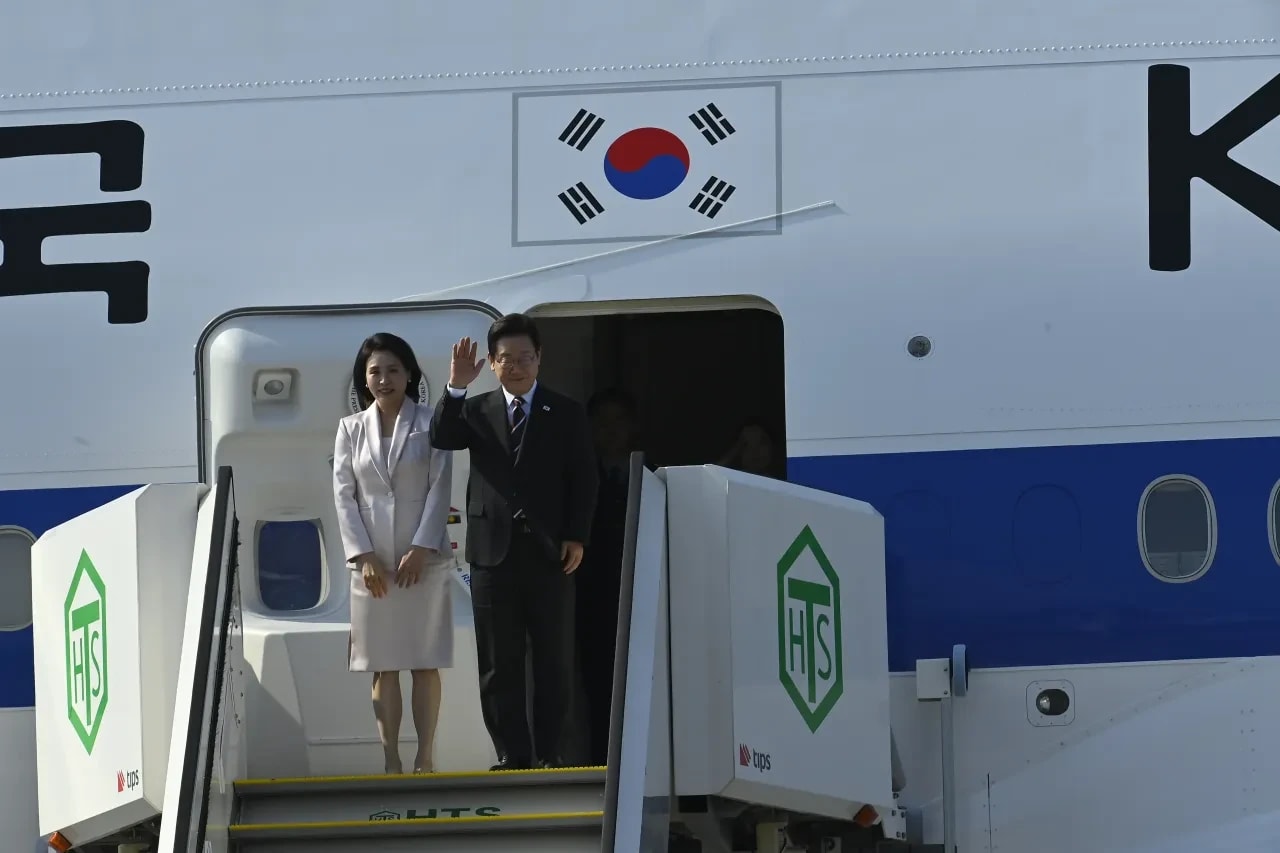
South Korean President Lee Jae Myung is set to meet with U.S. President Donald Trump at the White House on Monday. This high-profile meeting comes as several key South Korean industries face the impact of new U.S. tariffs. The sectors most affected include automobiles and semiconductors, which are vital components of South Korea’s export economy.
The Trump administration recently announced a trade deal that imposes a 15% tariff on imports from South Korea. This move targets major exports such as cars, semiconductors, smartphones, and machinery. In 2023, automobiles accounted for 10% of South Korea’s total exports, while semiconductors made up 21%. These industries contribute significantly to the country’s economic output, with exports representing over 40% of its GDP.
Business Leaders Join the President
President Lee will be accompanied by executives from some of South Korea’s leading companies, including Hyundai Motor, Samsung Electronics, SK Hynix, and LG Energy Solution. These business leaders are expected to play a central role in discussions about the implications of the new tariffs and potential strategies to mitigate their impact.
According to reports, these companies may announce up to $150 billion in new investments in the U.S., building on existing projects like Samsung’s chip plant in Texas and Hyundai’s $21 billion investment in vehicle and steel facilities. This investment could help strengthen economic ties between the two nations and provide a counterbalance to the new tariffs.
New Financial Arrangements
In addition to the tariffs, the July 31 trade deal introduced a $350 billion South Korean fund aimed at supporting U.S. projects. According to Trump, he would oversee how the funds are allocated, with 90% of the profits returning to the U.S. However, Seoul has clarified that most of the fund would be structured as loan guarantees, with less than 5% in equity.
A portion of this fund, specifically $150 billion, is designated for shipyards, and President Lee plans to visit one in Philadelphia during his trip. This highlights the strategic importance of maritime infrastructure in the bilateral economic relationship.
Agriculture and Trade Negotiations
Agriculture is another critical area of discussion. Trump has indicated that South Korea would be “completely open” to U.S. farm goods. However, Seoul has excluded rice and beef from the agreement due to their political sensitivity. Analysts suggest that concessions in agriculture might be balanced against lower tariffs on automobiles and semiconductors.
Defense Spending and Regional Security
Defense spending will also be a focal point of the talks. Trump has repeatedly urged allies to increase their military contributions, referring to South Korea as a “money machine.” South Korea hosts approximately 28,500 U.S. troops and has committed to allocating 2.32% of its GDP to defense this year. The discussions are expected to address how both nations can work together to enhance regional security.
North Korea and Diplomatic Challenges
North Korea will also be on the agenda. During his first term, Trump met with Kim Jong Un three times but failed to curb Pyongyang’s nuclear ambitions. Recently, Kim has vowed a “rapid expansion” of his nuclear arsenal as U.S.-ROK military drills continue. Analysts believe that meaningful engagement with North Korea is unlikely unless there are significant changes in the approach to military exercises and denuclearization efforts.
Market Reactions and Investment Trends
On the financial front, retail sentiment has been positive for several key indices. The SPDR S&P 500 ETF Trust (SPY) showed a ‘bullish’ outlook with ‘normal’ message volume, while the Invesco QQQ Trust (QQQ) had a ‘neutral’ stance with ‘high’ volume. Meanwhile, the iShares MSCI South Korea ETF (EWY) was seen as ‘bullish’ with ‘high’ volume.
These market movements reflect investor confidence in the broader economic environment. As of now, SPY is up 10.8% year-to-date, QQQ has gained 12.2%, and EWY has surged 44.5%, outperforming both. This performance underscores the resilience of global markets despite ongoing trade tensions and geopolitical uncertainties.

0 comments:
Ikutan Komentar